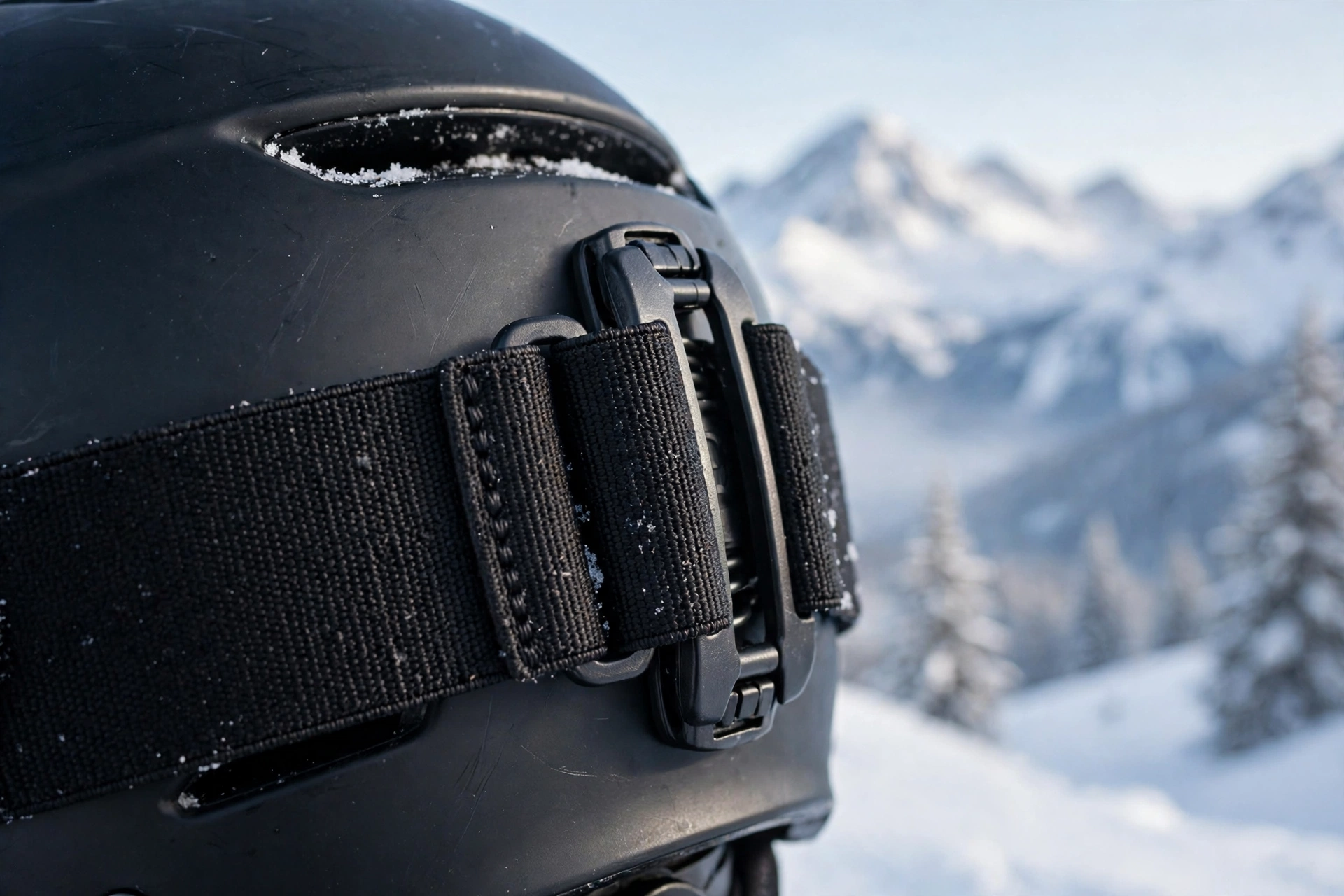
Ski helmets have a goggle clip on the back to anchor the goggle strap in one place, so the strap cannot slide up the shell, pull the helmet backwards, or come off in a fall — in general terms, the clip turns the goggle strap from a loose elastic band into a fixed part of the helmet system, which keeps both the goggles and the helmet where they belong.
It is a small plastic part that most skiers use without thinking about, yet it solves several problems at once. Understanding what it does helps you use it properly — and notice when it is broken or missing.
What Exactly Does the Goggle Clip Do?
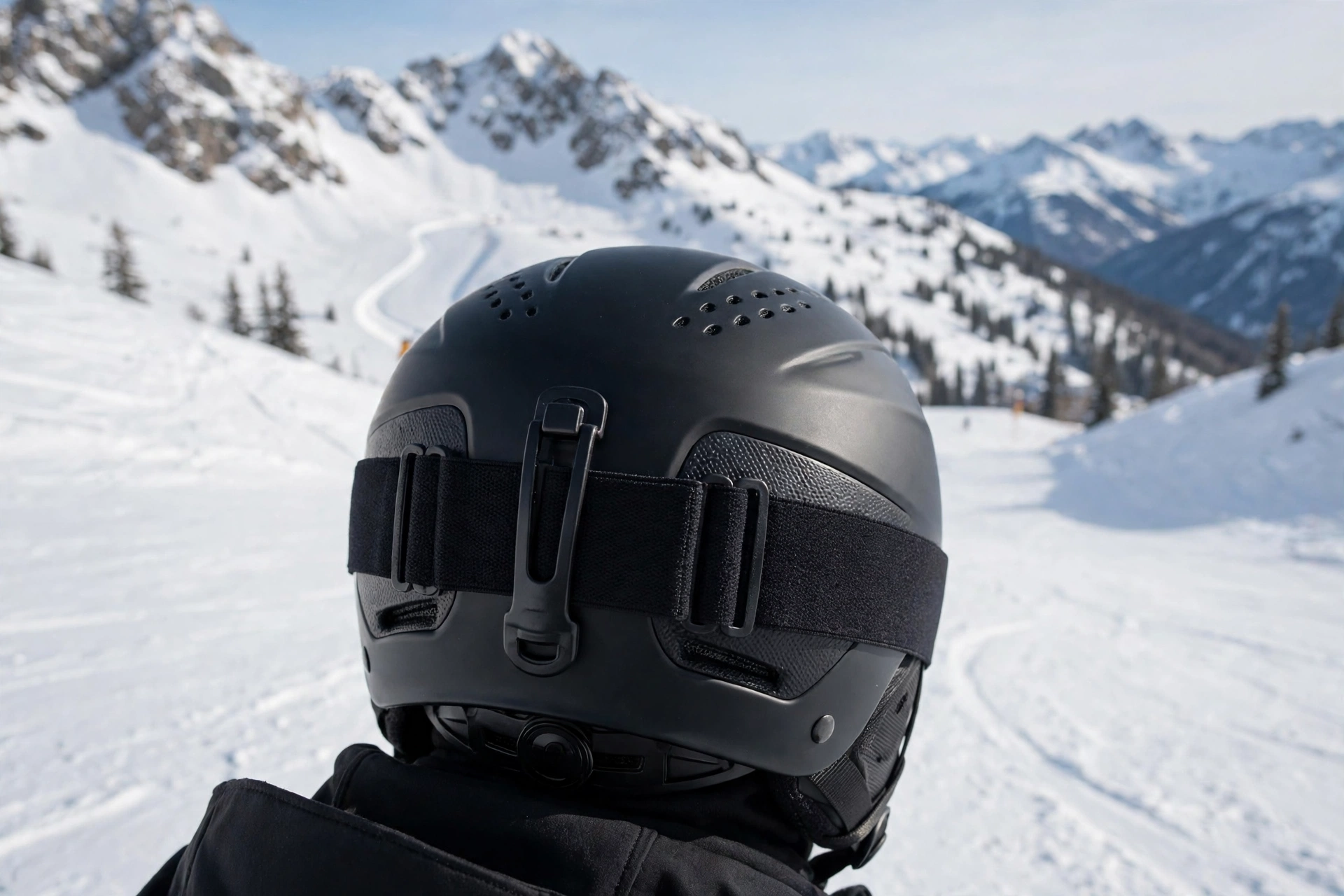
The clip holds the goggle strap at the widest, most stable part of the helmet’s rear. Without it, an elastic strap on a smooth, rounded shell migrates: it creeps upwards towards the crown on every head movement, and as it creeps, it drags the helmet backwards and lifts the goggles off your face.
By fixing the strap’s position, the clip keeps the strap’s tension even and level. The strap pulls horizontally around the helmet rather than at an upward angle, which means the goggles stay sealed against your face and the helmet stays level on your head. That stability matters on every run, but most on rough terrain where your head is moving constantly.
The clip also keeps the goggles attached in a fall. A strap that is free to slide can slip off the back of the helmet when you tumble, leaving your goggles somewhere in the snow and your eyes unprotected. A clipped strap is far more likely to stay put through a fall.
What Kinds of Goggle Clip Are There?
The most common type is a fixed clip or loop moulded into the rear of the shell, sometimes with a small gate that opens to admit the strap and snaps shut. These are simple, strong, and have nothing to lose — but they only accept straps of a certain width, so a very wide or very narrow strap may not sit well in them.
Some helmets use an adjustable clip that slides up and down a short track at the back. This lets you set the strap height to match your goggle frame and head shape, which is useful if the fixed position does not suit you. The trade-off is a slightly more complex part with more to wear out.
A few helmets use a strap retainer bar or a hook rather than a closed clip. These are quicker to use — the strap hooks on rather than threading through — but they can release more easily in a hard fall. Whatever type your helmet has, the test is the same: the strap should stay put when you tug it firmly in every direction.
How Should You Use the Clip Properly?
Thread the strap through the clip before you put the helmet on, and check that it sits fully in the clip, not half in and half out. A strap that is only partly clipped will work loose on the first run and give you the worst of both worlds: the feeling of security without the reality.
Keep the strap level. After clipping, the strap should run horizontally around the helmet at roughly the same height front and back. If it angles sharply upwards from the goggles to the clip, adjust the clip position if yours moves, or accept that this helmet and goggle combination may not pair well.
Check the clip each time you ski. Clips crack, gates wear, and retainer bars bend, especially after falls. A damaged clip that no longer grips the strap should be replaced — most makers sell the part cheaply — rather than ignored, since a broken clip is barely better than none.
What Happens If Your Helmet Has No Clip?
Some older or very basic helmets lack a clip, and some clips break and are never replaced. In that case, the strap’s grip depends entirely on friction and on any silicone gripper strip on the strap itself. In general terms, this works on gentle days but fails sooner on rough terrain, in powder falls, and as straps age and lose elasticity.
If your helmet has no clip, keep the strap as level as possible, make sure any gripper strip faces the shell, and check the strap position often during the day. Consider whether a helmet with a clip is worth the upgrade at your next purchase — it is a small feature that makes a daily difference.
Aftermarket stick-on clips exist, but treat them with care: they must bond to a flat section of shell, must not interfere with vents or the fit system, and should be tested thoroughly before relying on them. A stick-on clip that peels off mid-run is worse than no clip at all, because you will have trusted it.
Does the Clip Affect Safety or Goggle Fit?
Yes, indirectly but genuinely. A helmet that slips backwards because its strap is unanchored sits out of position, leaving the forehead exposed and the helmet’s impact management compromised. The clip’s job is to keep the helmet where it was fitted, and a helmet in position protects better than one that has crept back — including for the rotational forces described in this guide to what MIPS is for helmets.
The clip also protects the goggle seal. Goggles that stay sealed keep wind and snow out of your eyes, which keeps your vision clear — and clear vision is a safety feature in its own right on a busy slope. A goggle that keeps lifting off your face because its strap has migrated is a distraction you do not need at speed.
Finally, the clip saves goggles. A goggle lost in deep snow after a fall is rarely found, and a goggle that stays attached through a tumble is a goggle you still own at the end of the day. That small saving adds up over a season.
Frequently Asked Questions
Q: Can I ski without using the goggle clip?
A: You can, but the strap will tend to slide up the shell and pull the helmet backwards, especially on rough terrain. Using the clip takes seconds and keeps both helmet and goggles stable, so there is little reason to skip it.
Q: My goggle strap is too wide for the clip — what should I do?
A: Check whether the clip opens or adjusts to admit a wider strap, and whether your goggle maker offers a narrower strap option. If neither works, the helmet and goggle pairing may simply not suit each other, and trying a different goggle is better than forcing a strap that does not sit properly.
Q: The clip on my helmet is broken — can I still use the helmet?
A: Yes, the helmet itself is still usable, but the strap will be less stable until the clip is fixed. Replace the clip if the maker sells the part — it is usually inexpensive — and in the meantime keep the strap level and check its position often during the day.

Olivia
Writer at Helmet Today, covering helmet reviews, fit and riding safety.