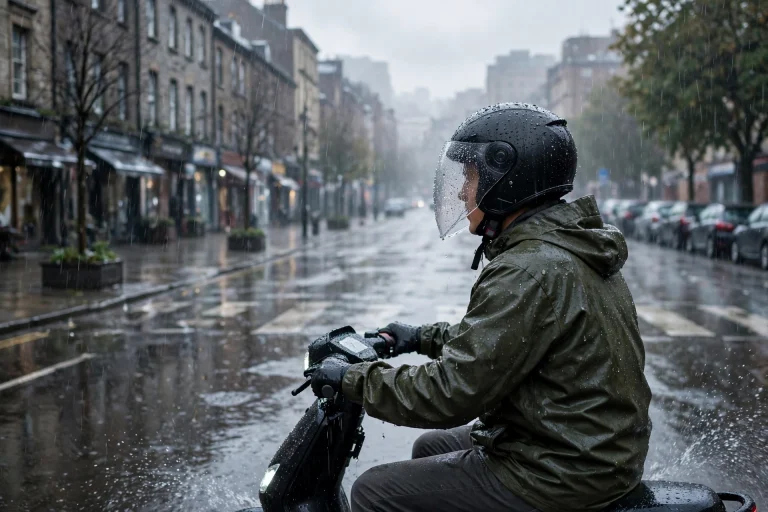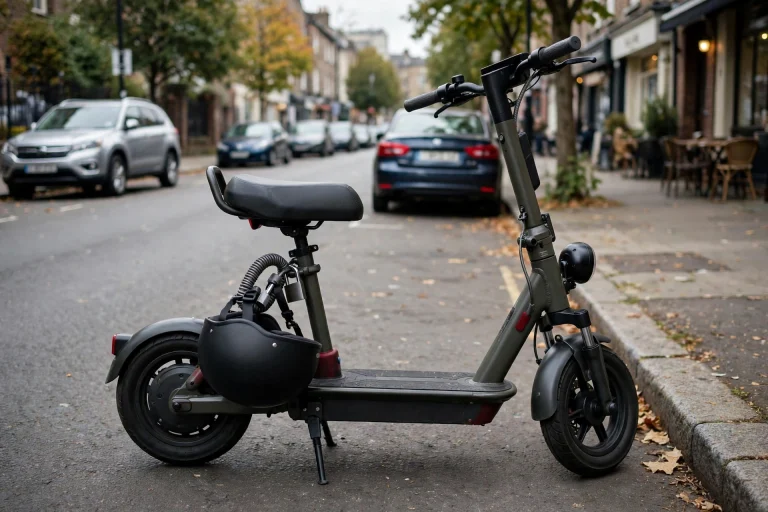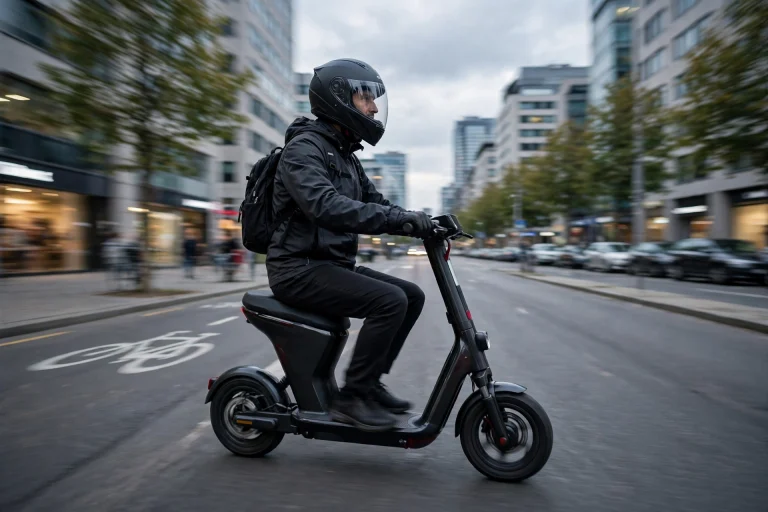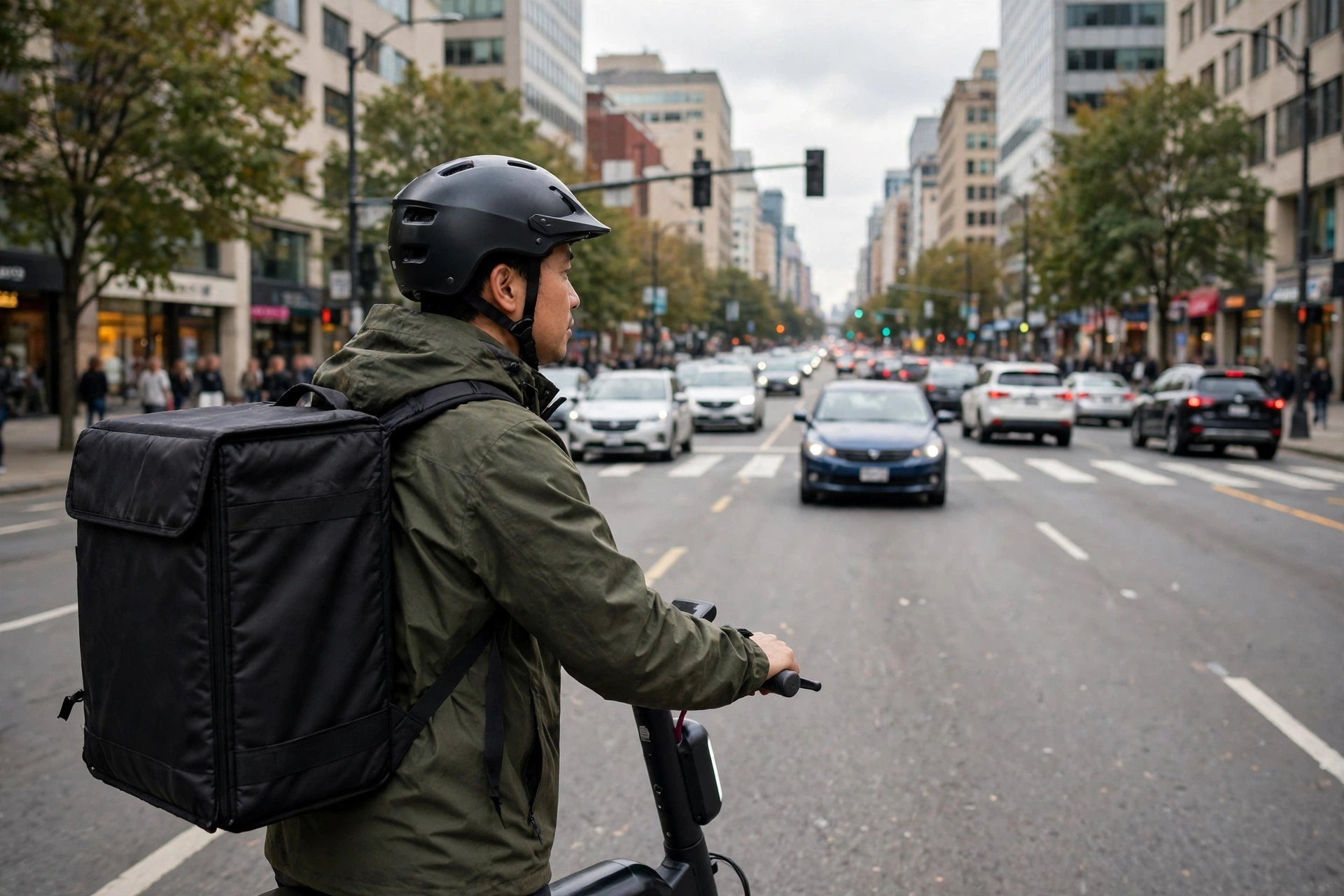
Helmet rules for e-scooter delivery riders vary by place and by the scooter’s speed and class, but in general terms, delivery riders are usually required to wear a certified helmet wherever private e-scooter riders must — and platforms and employers often add their own helmet requirements on top of the law.
Delivery riding adds a layer of complexity to scooter helmet rules. You are not just a rider; you are a worker, often on a company or platform account, riding all day in traffic, and the rules that apply to you may come from the law, the platform, your employer, and your insurance all at once.
Do Delivery Riders Have to Wear a Helmet by Law?
In most places with e-scooter rules, yes — where a helmet is required for e-scooter riders, it is required for delivery riders too, with no exemption for working. Some places require helmets only for certain scooter classes, speeds, or rider ages, so the exact rule depends on where you ride and what you ride.
Classification matters. A delivery rider on a low-speed standing scooter may fall under bicycle-style rules, while one on a faster seated machine may fall under moped or motorcycle rules, with a stricter helmet standard. The scooter’s class, not the delivery bag on your back, decides which rules apply.
Rules also change, and they change often for e-scooters. A city that had no scooter rules two years ago may have detailed ones now, and a rule that applied last season may have been updated. Check your current local rules rather than relying on what other riders tell you — and re-check periodically, since delivery riders are among the first to be affected when rules tighten.
What Helmet Standard Should a Delivery Rider Choose?
Choose a helmet that meets the standard your area requires for your scooter’s class, and when in doubt, choose the stricter one. A helmet certified to a motorcycle standard covers a bicycle-standard requirement in general terms, while the reverse is not true — so when your scooter sits near a class boundary, the stricter helmet is the safer bet.
Think about the riding you actually do. Delivery riding means long hours, all weather, stop-start traffic, and carrying a load that changes the scooter’s balance. A helmet that is comfortable for eight hours, ventilated in summer, and stable at your usual speeds is not a luxury — it is what keeps you wearing it on the last delivery of a long shift.
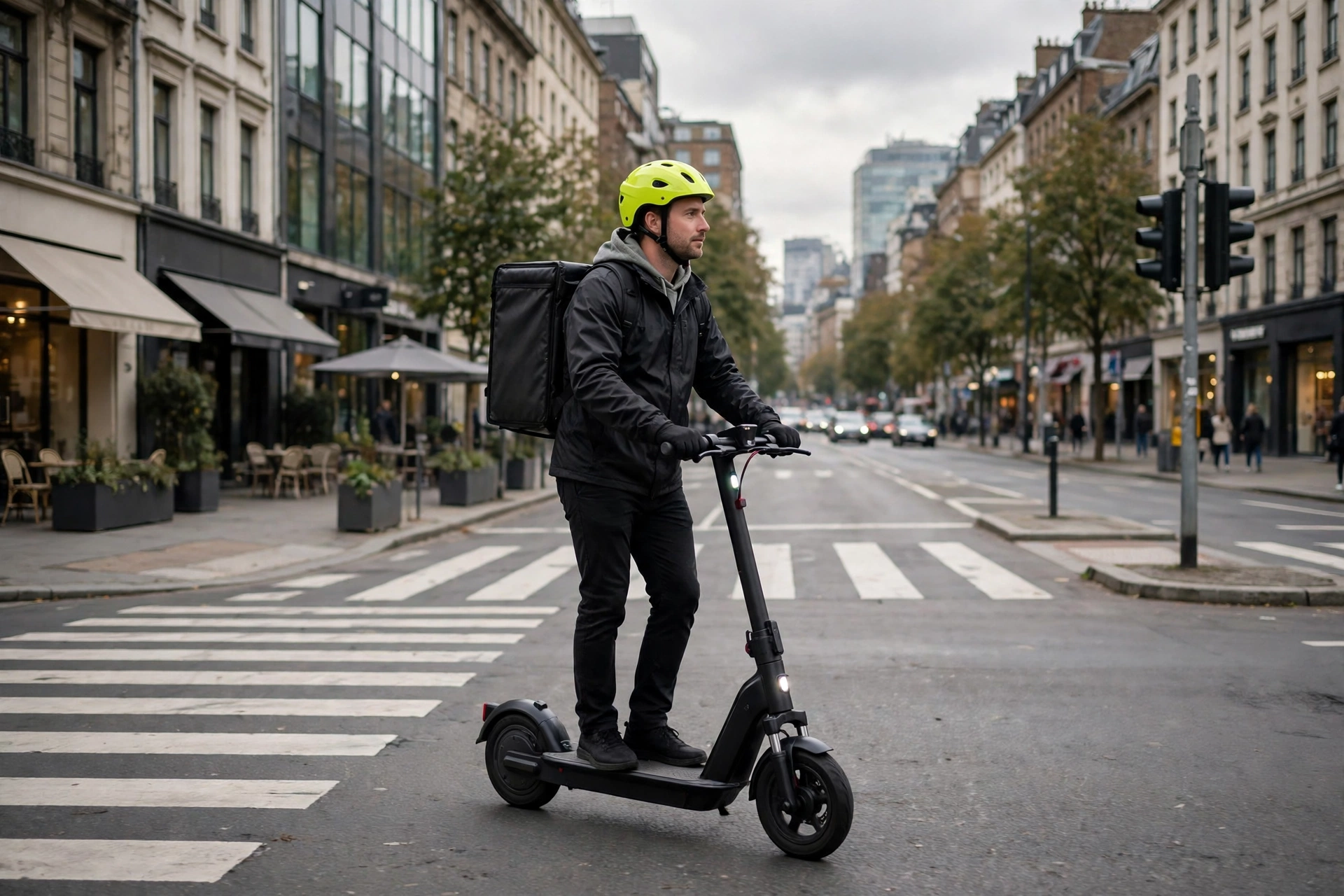
Visibility deserves extra attention for delivery riders. You ride in traffic all day, often at dusk and in rain, and a bright helmet with reflective details or a rear light makes you easier to see. Some delivery riders add a high-visibility cover; if you do, make sure it does not interfere with the helmet’s fit, vents, or certification.
What Do Platforms and Employers Require?
Many delivery platforms and employers set their own helmet rules, which can be stricter than the law. A platform may require a helmet on every delivery, require a photo check before shifts, or specify a helmet standard — and breaking the platform’s rule can mean losing work, even where the law would not penalise you.
Some employers provide helmets, others expect riders to supply their own. If a helmet is provided, check it before every shift: fit, strap, buckle, shell condition, and certification. A shared helmet that does not fit you, or that has an unknown impact history, is not a helmet you should rely on — raise it with the provider rather than riding in it.
Keep records where they matter. If your platform or employer requires a particular helmet or proof of one, keep the receipt, the certification details, and a photo of the helmet’s label. That record protects you if a requirement is ever questioned after an incident.
What Happens If a Delivery Rider Rides Without a Helmet?
The consequences stack up. There may be a fine under local traffic rules; the platform may suspend or deactivate your account; and your insurance — personal, platform, or employer — may refuse or reduce a claim after an incident where you were not wearing a required helmet. In general terms, riding unhelmeted as a delivery rider risks your income as well as your safety.
Liability is a further concern. If you are involved in a collision while breaking a helmet rule, the other party’s insurers may argue that your injuries were worsened by the breach, which can affect a claim even when the collision was not your fault. This is an area where local law matters, so treat it as a reason to follow the rules, not as legal advice.
The practical point is simpler: delivery riders crash more often than casual riders, because they ride more hours in worse conditions. A helmet rule exists because the risk is real and frequent, not theoretical — and a rider who delivers all day is exactly the rider who most needs one.
How Should a Delivery Rider Look After a Work Helmet?
Clean it regularly. A helmet worn for hours daily in traffic picks up sweat, dust, and rain fast, so wipe the shell and wash or wipe the liner on a regular schedule — weekly for a full-time rider is a reasonable starting point. A clean helmet is also a helmet you inspect, which catches wear early.
Store it properly between shifts. A helmet left under a scooter seat in heat and damp degrades faster than one kept on a shelf at home; if under-seat storage is your only option, dry the helmet fully before storing it and use a breathable bag to protect it.
Replace it after any impact, and on a schedule. Delivery helmets live hard lives, and a helmet that has been dropped, knocked, or worn daily for years should be judged honestly: if the fit has loosened, the foam has compressed, or the certification is out of date, replace it. The helmet’s protection, including the rotational-force management explained in this guide to what MIPS is for helmets, depends on a helmet in good condition and correct fit — both of which wear out faster in delivery use.
Frequently Asked Questions
Q: Does the platform’s helmet rule override the law?
A: No — the law sets the minimum, and the platform can add stricter requirements on top. You must satisfy both: the legal requirement where you ride, and whatever your platform or employer requires as a condition of work.
Q: Who pays for a delivery rider’s helmet?
A: It varies: some employers and platforms provide one, others expect riders to buy their own, and some offer a subsidy. Check your contract or platform terms — and if a provided helmet does not fit or is damaged, raise it rather than riding in it.
Q: Do helmet rules apply to delivery riders on private scooters?
A: In general terms, yes — the rules apply to the riding, not to who owns the scooter. Whether you ride your own scooter or a rented one, the helmet requirement for your area and scooter class still applies while you are delivering.

Olivia
Writer at Helmet Today, covering helmet reviews, fit and riding safety.