For rainy commutes, look for a scooter helmet with a visor or a peak that sheds water, a liner that handles damp without staying soggy, and a fit that stays stable when wet — in general terms, rain protection in a helmet is about keeping water out of your eyes and off the liner, not about waterproofing the shell, which is already waterproof.
Rain changes scooter commuting in ways that go beyond getting wet. Vision drops, roads get slippery, drivers see less, and a helmet that was comfortable on a dry day can become a fogged, dripping nuisance. Choosing with rain in mind makes wet commutes safer and far less miserable.
How Does Rain Affect Vision Through a Helmet?
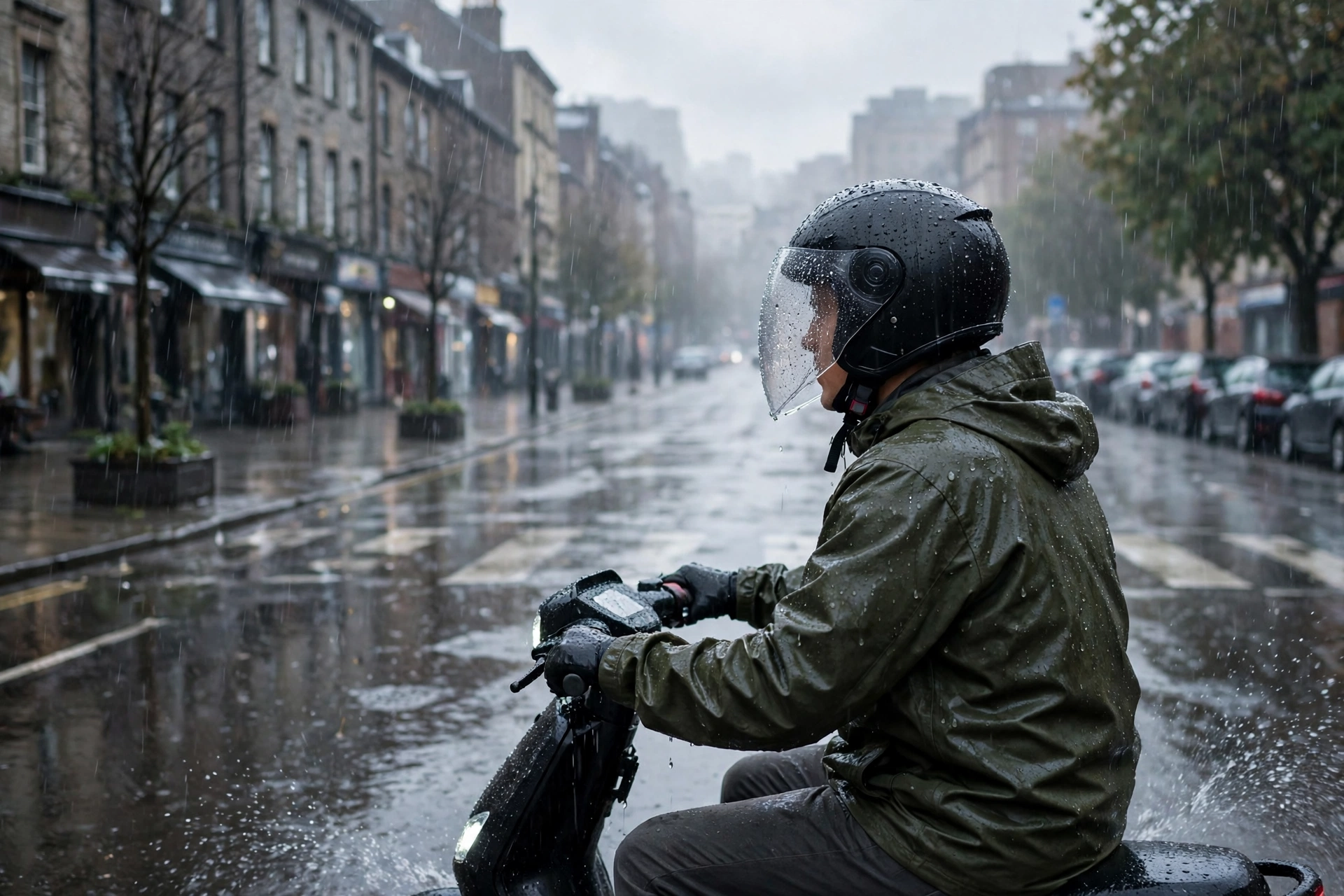
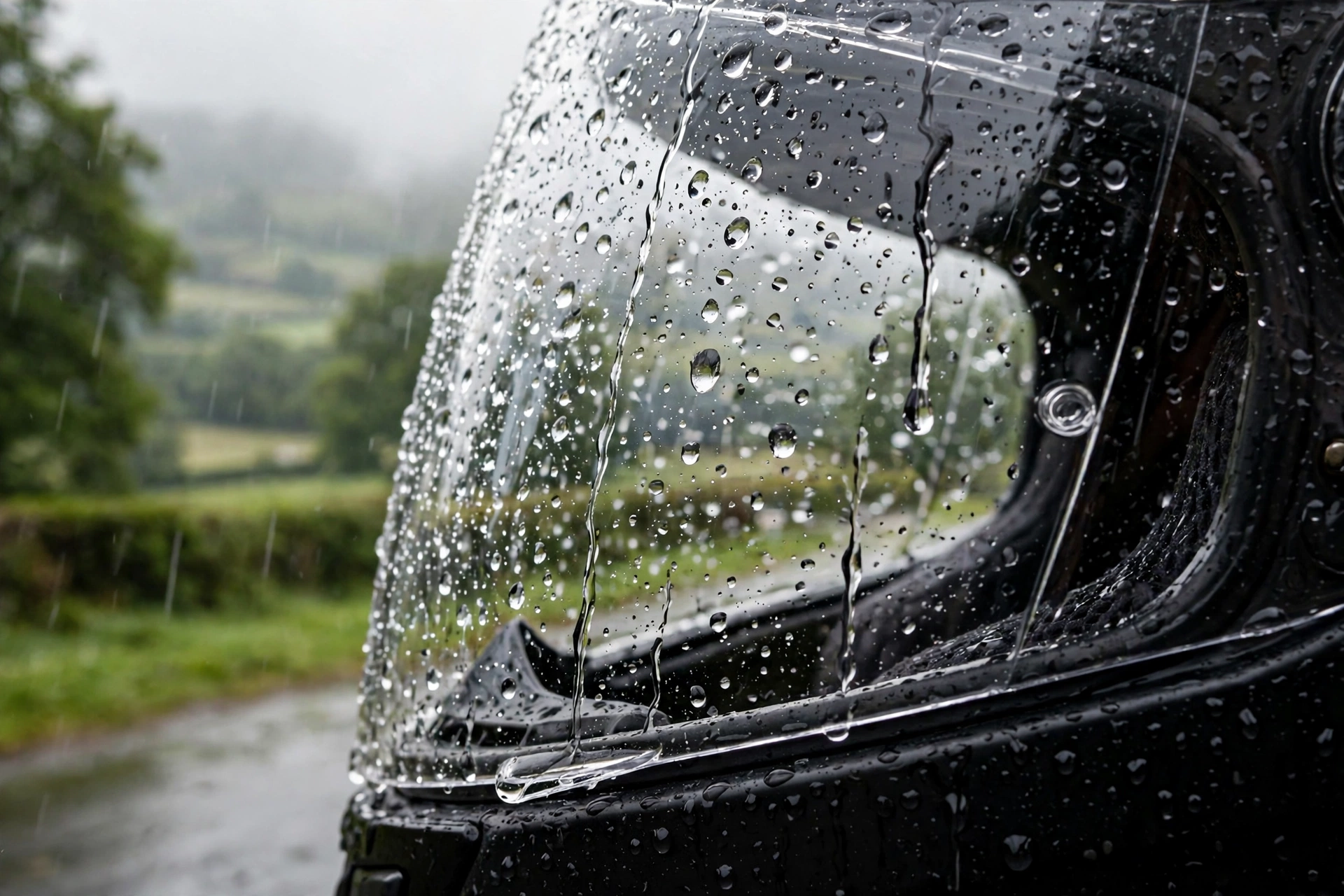
Water on a visor or glasses is the main problem. Drops bead, smear, and distort, especially at speed, and a visor without a way to shed water becomes a smeared window within minutes. A visor with a hydrophobic coating, or one treated with an anti-rain product, sheds drops far better than an untreated one.
Fogging is the second problem. Rain cools the outside of the visor while your breath and body heat warm the inside, and that temperature difference fogs the lens — often at the worst moment, such as pulling away from lights into traffic. A visor with anti-fog treatment, or a pinlock-style insert where available, helps, as does keeping some airflow through the helmet.
Peak and brim design matters too. A short peak or brim over the brow keeps direct rain off the top of the visor and out of your eyes, which reduces both dripping and fogging. A helmet with no peak at all leaves the visor fully exposed to falling rain.
What Visor and Eyewear Choices Work Best in Rain?
A clear visor is essential for rainy commuting. Tinted visors that are fine in sun become dangerously dark in rain and grey light, so a clear visor — or a photochromic one that lightens in dull conditions — is the right choice for wet days. Carry a clear visor or clear glasses as a spare if your usual set-up is tinted.
If you wear glasses under a helmet, rain is doubly annoying, since drops land on both the glasses and any visor. A helmet visor worn over glasses protects the glasses from direct rain, which is one of the strongest arguments for a visor helmet on a rainy commute.
Keep a microfibre cloth accessible. A quick wipe at a red light restores vision far better than any coating once drops have built up, and a cloth in a jacket pocket is the simplest rain tool there is. Wipe gently — grit on the cloth scratches visors, so keep the cloth clean and dry when not in use.
What About the Liner and Fit When Wet?
Liners get wet, and wet liners change fit. A liner that soaks up water becomes heavy, loses some of its cushioning, and can feel looser or tighter as it swells and then dries. Look for liners that are removable and washable, so a soaked liner can be taken out, dried, and cleaned rather than left to sour inside the helmet.
Fit stability matters more in rain because you adjust the helmet less — hands are on the bars, gloves are wet, and stopping to refit is inconvenient. A helmet with a secure fit system and a chin strap that stays snug when wet holds its position better than one that loosens as straps get damp.
Ear coverage helps in rain too. Covered ears stay warmer and drier, and reduce the wind-driven rain noise that makes a wet commute tiring. Open-ear helmets are fine in summer but less pleasant when rain is driving sideways.
How Do You Keep a Rain Helmet in Good Shape?
Dry it after every wet ride. Air-dry the helmet with the liner out if possible, in a ventilated spot, and never put it away damp under a seat or in a bag — damp storage breeds odour and degrades foam. A helmet that is dried properly after rain lasts far longer than one that is repeatedly stored wet.
Clean the visor properly. Rinse grit off with water before wiping, use a soft cloth, and avoid harsh chemicals that strip anti-fog or hydrophobic coatings. Reapply rain-repellent treatment periodically, since coatings wear off with cleaning and use.
Check the helmet after wet-weather use. Look for liner wear, strap condition, and buckle function, since wet grit accelerates wear on all three. Rain itself does not damage a helmet’s shell, but the damp, grit, and poor storage that come with it can shorten its life if ignored.
- Clear visor: clear, not tinted, with rain-shedding treatment
- Anti-fog: treated visor or insert, plus some airflow
- Peak or brim: keeps direct rain off the visor and eyes
- Dry after every ride: liner out, air-dried, never stored damp
What Else Matters for a Rainy Commute?
Visibility to others matters as much as your own vision. Rain reduces how well drivers see you, so a bright helmet colour, reflective details, and a rear light become more valuable, not less. A dark helmet in rain on a grey road is genuinely hard to spot.
Your jacket and helmet should work together. A high collar that meets the helmet without pushing it up keeps rain from running down your neck, while a hood worn over a helmet changes the fit and should be avoided. A neck gaiter under the collar seals the gap without disturbing the helmet.
Finally, ride for the conditions: rain changes braking, cornering, and visibility, and no helmet compensates for speed that the weather does not allow. The helmet’s job — including the rotational-force management explained in this guide to what MIPS is for helmets — is to protect you if things go wrong; riding to the conditions is what keeps things from going wrong in the first place.
Frequently Asked Questions
Q: Should I wear a tinted visor in rain?
A: No — tinted visors darken an already dull scene and reduce visibility in rain and grey light. Use a clear visor for rainy commutes, or a photochromic visor that lightens automatically in dull conditions.
Q: How do I stop my visor fogging in rain?
A: Use an anti-fog-treated visor or insert, keep some airflow through the helmet rather than sealing it fully, and avoid breathing directly onto the inside of the visor. A microfibre cloth for wiping at stops helps when fogging still occurs.
Q: Can rain damage my scooter helmet?
A: Rain itself does not damage the shell, but repeated damp storage degrades liners and foam, and wet grit wears straps and buckles faster. Dry the helmet fully after wet rides and it will last well; store it damp repeatedly and it will not.

Olivia
Writer at Helmet Today, covering helmet reviews, fit and riding safety.