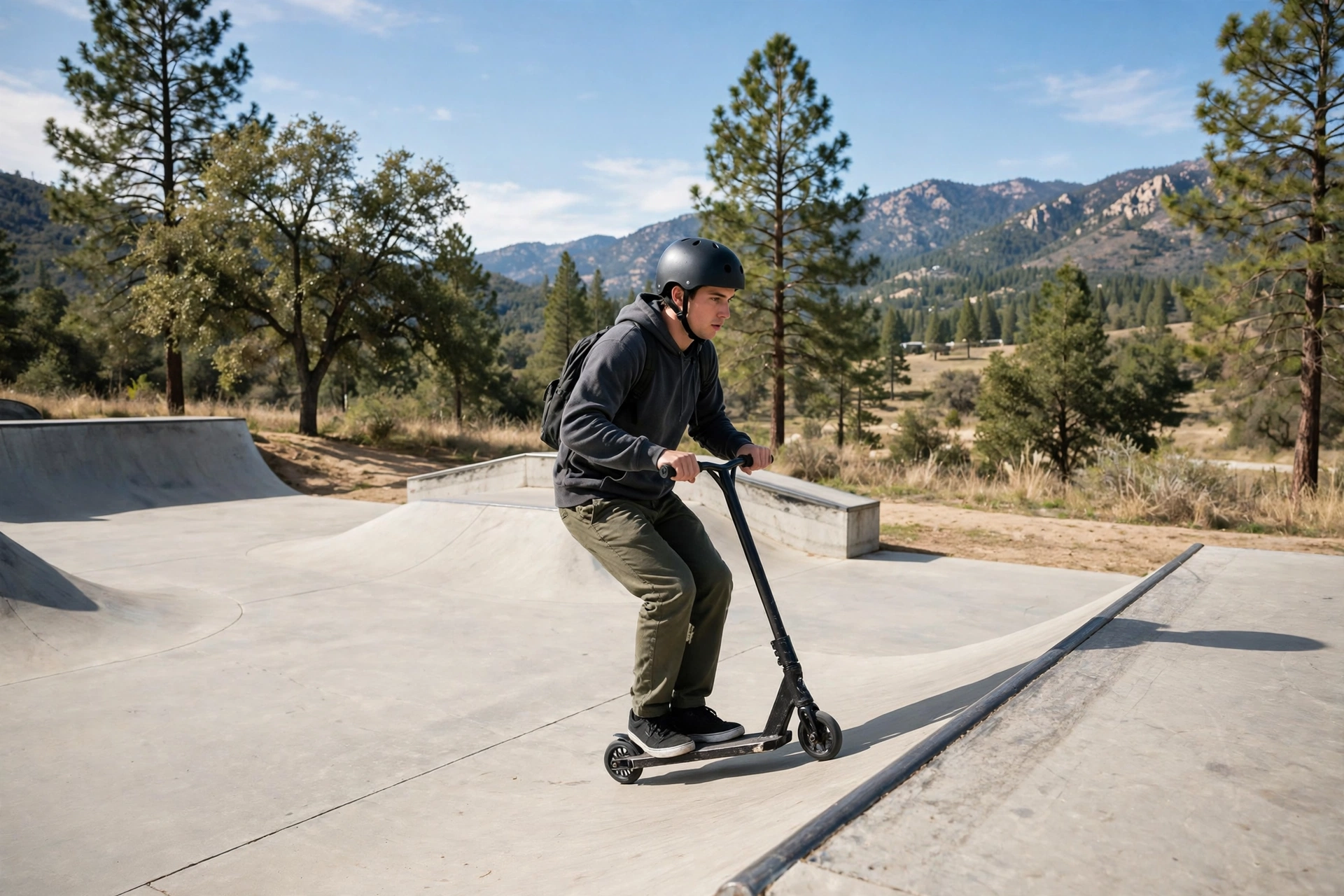
Yes, in general terms a skate helmet can be used for scootering — skate-style helmets suit the speeds and fall patterns of recreational scootering well. Scooter falls, like skate falls, are often sideways or backward onto hard ground, and a low-profile skate helmet covers the back and sides of the head in exactly the way those falls demand. The key conditions are that the helmet is certified, fits properly, and suits the kind of scootering you actually do.
Scootering covers a wide range, from gentle rides to the park to aggressive stunt riding and fast commuting. A helmet choice that is fine for one end of that range may not be enough for the other, so this guide breaks down when a skate helmet works for scootering, when it does not, and what to check before you ride.
Why Does a Skate Helmet Suit Scootering?
Skate helmets and scooter riding share a similar impact profile. Both involve relatively low speeds, hard surfaces, and falls that can go in any direction — forward over the bars, sideways off a deck, or backward after a missed trick. Skate helmets are tested for repeated lower-speed impacts, which matches the way scooter riders tend to fall: often, and not always catastrophically.
The shape helps too. A skate helmet sits low at the back of the head, covering the lower skull that is exposed in a backward fall. Scooter riders fall backward more often than cyclists do, because the rider stands upright on a small deck with the handlebar in front — a sudden stop can throw the rider backward rather than forward over the bars. That rear coverage is a real advantage.
Skate helmets are also built to be worn for long sessions. They are generally comfortable, well ventilated for their coverage, and easy to take on and off between rides. A helmet that is comfortable is a helmet that actually gets worn, and that matters more than any feature on a helmet left at home.
When Is a Skate Helmet Not Enough for Scootering?
The main exception is speed. A stunt scooter at a skatepark and a commuter scooter are one thing; a fast electric scooter travelling at road speeds is another. Higher speeds mean harder impacts, and they also bring traffic into the picture. For fast electric scooters, a helmet certified for higher-speed use — often a bicycle or motorcycle-style standard depending on local rules and the scooter’s speed — is the safer choice.
Aggressive stunt riding is another case to think about. Riders attempting big tricks, gaps, and high drops face harder falls and a higher chance of face or jaw contact. Some stunt riders choose a full-face helmet for that reason, trading some ventilation and hearing for extra protection around the face and chin. For casual park riding, an open-face skate helmet is the usual choice, but as tricks get bigger, the case for full-face protection gets stronger.
Age matters as well. Children on kick scooters fall frequently, and a certified skate helmet that fits a child’s head properly is an excellent choice — arguably the best one for that use. Just make sure the helmet is sized for the child, not borrowed from an adult, and that the straps are adjusted every time the helmet is put on.
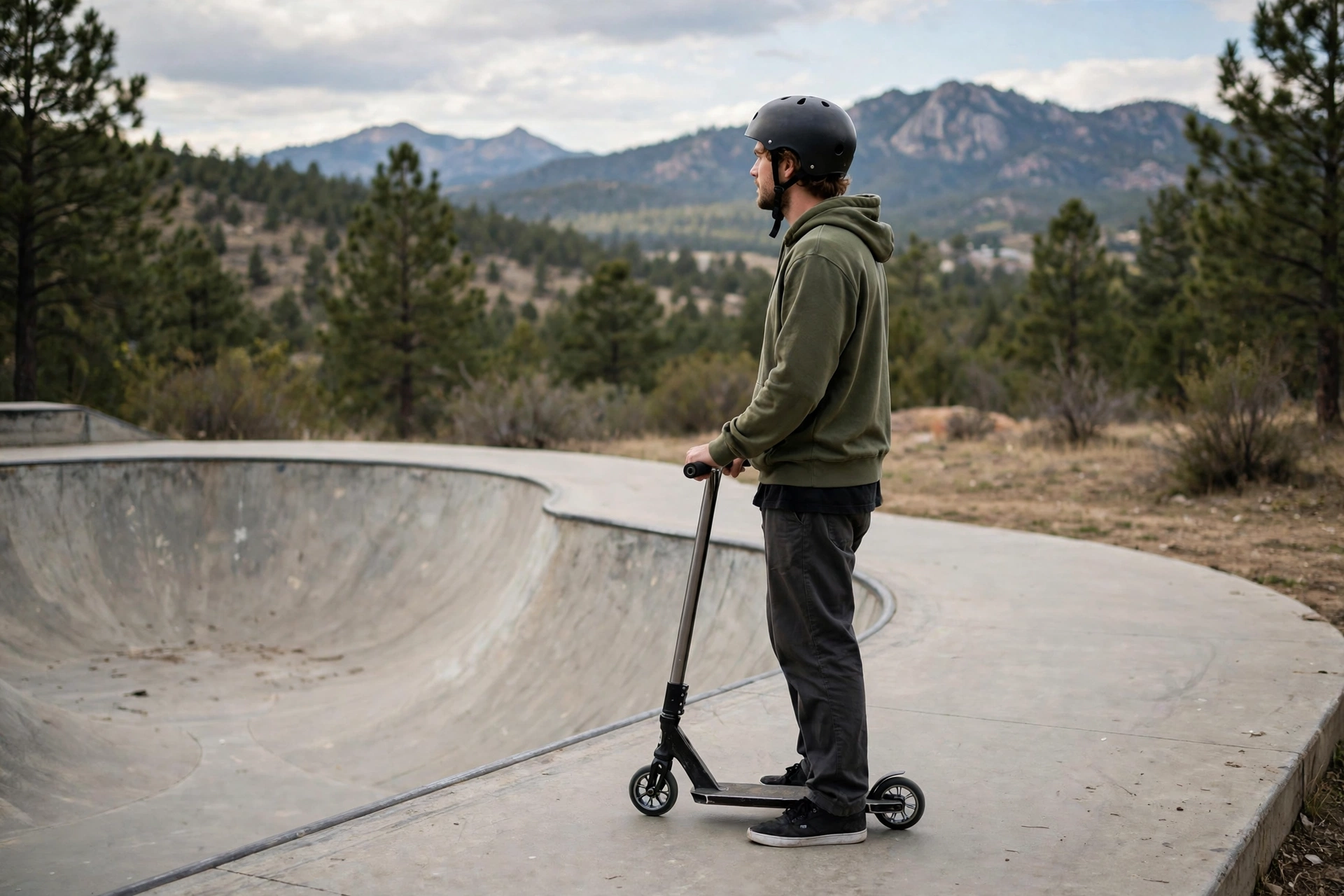
What Should You Check Before Using a Skate Helmet on a Scooter?
First, check certification. Look for the label inside the helmet naming the standard it meets. A certified helmet has been independently tested, while an uncertified one has not — and that distinction matters just as much on a scooter as on a skateboard. If the helmet is old, damaged, or has already taken a hard crash, replace it before relying on it for scootering.
Next, check the fit. The helmet should sit level, about a finger’s width above the eyebrows, and stay put when you shake your head. Straps should form a V under each ear and sit snug under the chin. Scooter riding involves a lot of head movement — looking for traffic, checking behind you, glancing down at the deck — so a helmet that shifts around will be a constant annoyance and a safety problem.
Consider visibility and hearing too. An open-face skate helmet keeps your ears uncovered, which helps you hear traffic and other park users. If you ride on roads, bright colours or reflective details on the helmet can help drivers spot you. Some riders add a small light to the helmet for evening rides, which is a sensible extra for commuting.
Finally, think about rotational impact protection. Scooter falls are often angled, and systems designed to reduce twisting forces in angled impacts are available on some skate-style helmets. This explanation of what MIPS means for helmets covers how one such system works and whether it might matter for your riding.
Does a Skate Helmet Meet Scooter Helmet Rules?
Rules for scooter helmets vary by place and by scooter type. Some areas require helmets for electric scooter riders, and some specify a standard the helmet must meet. Others have no helmet rule at all for kick scooters. Because the rules differ so much, check the rules where you ride rather than assuming one answer covers everywhere.
In general terms, a certified skate helmet satisfies many basic helmet requirements, since it is a certified protective helmet. But where a rule specifies a bicycle or motorcycle standard, a skate-only certified helmet may not technically qualify, even if it protects well in practice. If you ride an electric scooter on public roads, check both the helmet rules and the scooter rules for your area before settling on a helmet.
How Do You Keep a Scooter Helmet in Good Condition?
Scooter helmets live a rough life — tossed into bags, dropped on pavements, left in the sun. Store yours indoors away from heat and direct sunlight when you can, and keep it away from solvents and fuels that can weaken the shell. Wipe the shell with a damp cloth and mild soap, and remove the comfort padding for washing if the maker allows it.
Inspect the helmet regularly. Look for cracks in the shell, crushed or crumbling foam, frayed straps, and a buckle that no longer clicks firmly. Any of these is a reason to replace the helmet. And after any hard crash — a fall where your head hit the ground with force — replace the helmet even if it looks undamaged, because the foam inside may have done its job once and cannot be relied on to do it again.
Frequently Asked Questions
Q: Can my child wear a skate helmet on a kick scooter?
A: Yes, in general terms a certified skate helmet that fits properly is a good choice for a child on a kick scooter. Check the fit regularly as the child grows, and replace the helmet after any hard impact.
Q: Is a skate helmet legal for riding an electric scooter?
A: It depends on local rules and the scooter’s speed. Some places accept any certified helmet, while others specify a particular standard. Check the rules where you ride before relying on a skate helmet for road use.
Q: Should stunt scooter riders wear a full-face helmet?
A: For casual park riding, an open-face skate helmet is the usual choice. Riders attempting large tricks or high drops may prefer a full-face helmet for extra face and jaw protection.

Olivia
Writer at Helmet Today, covering helmet reviews, fit and riding safety.