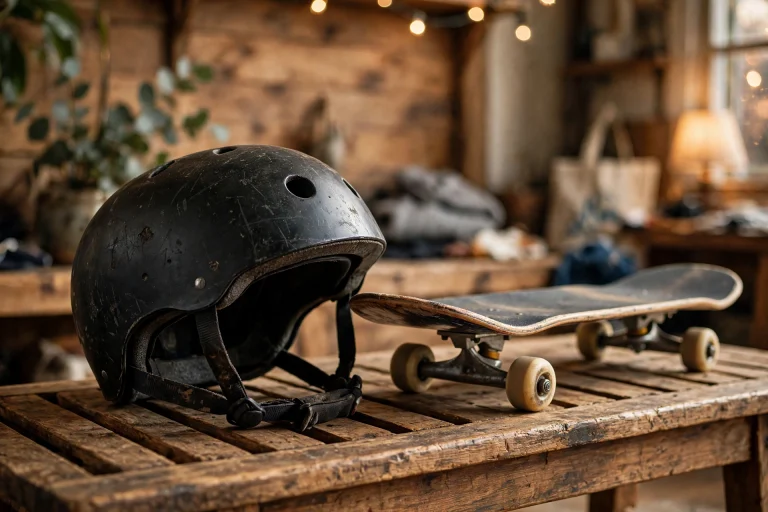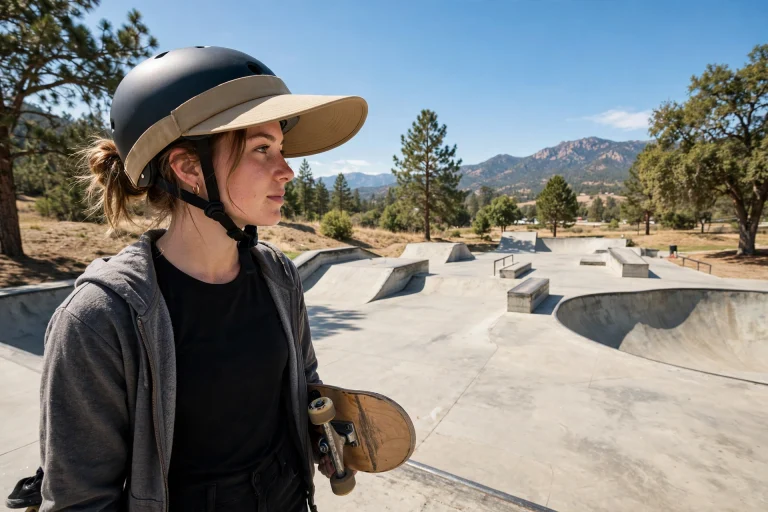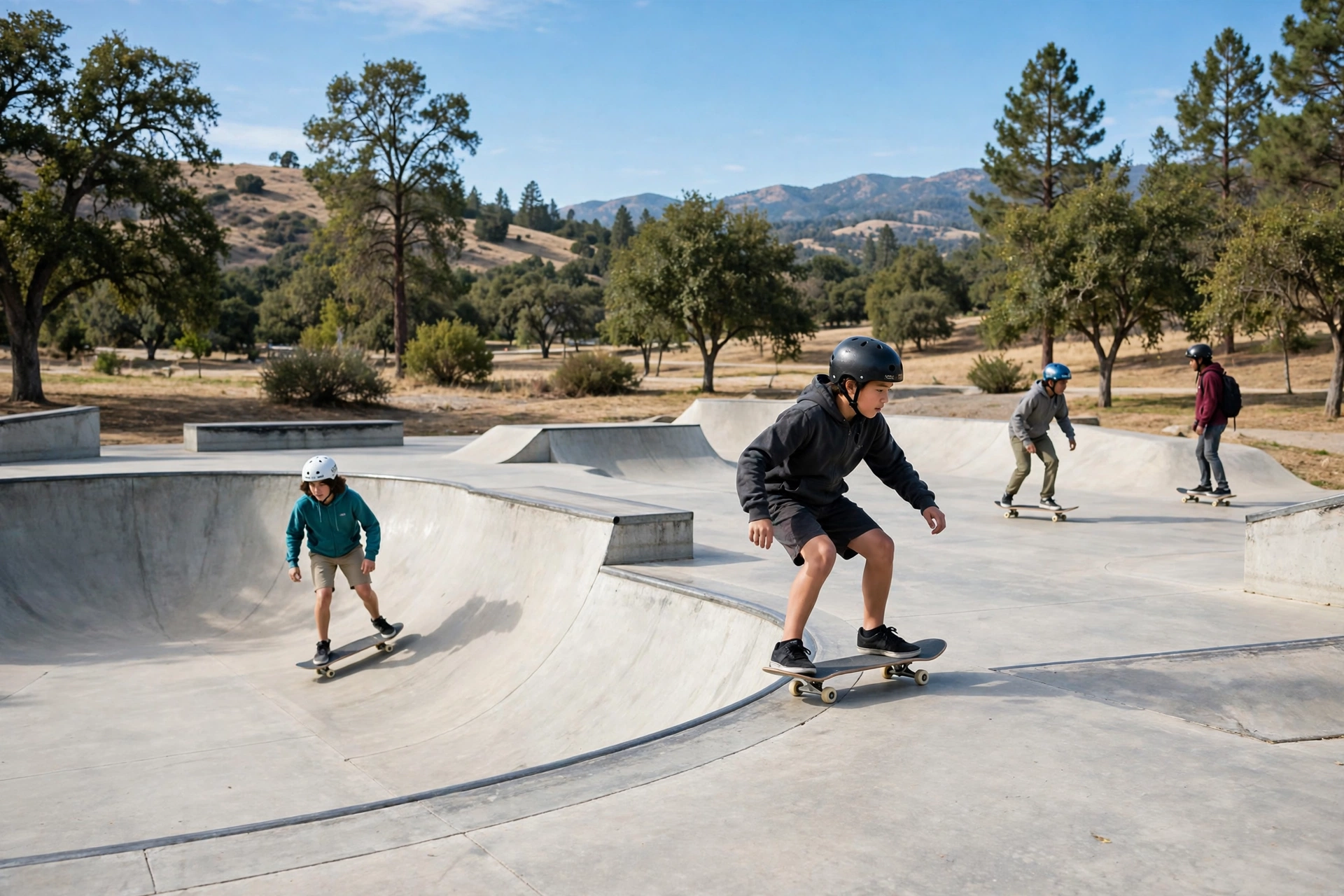
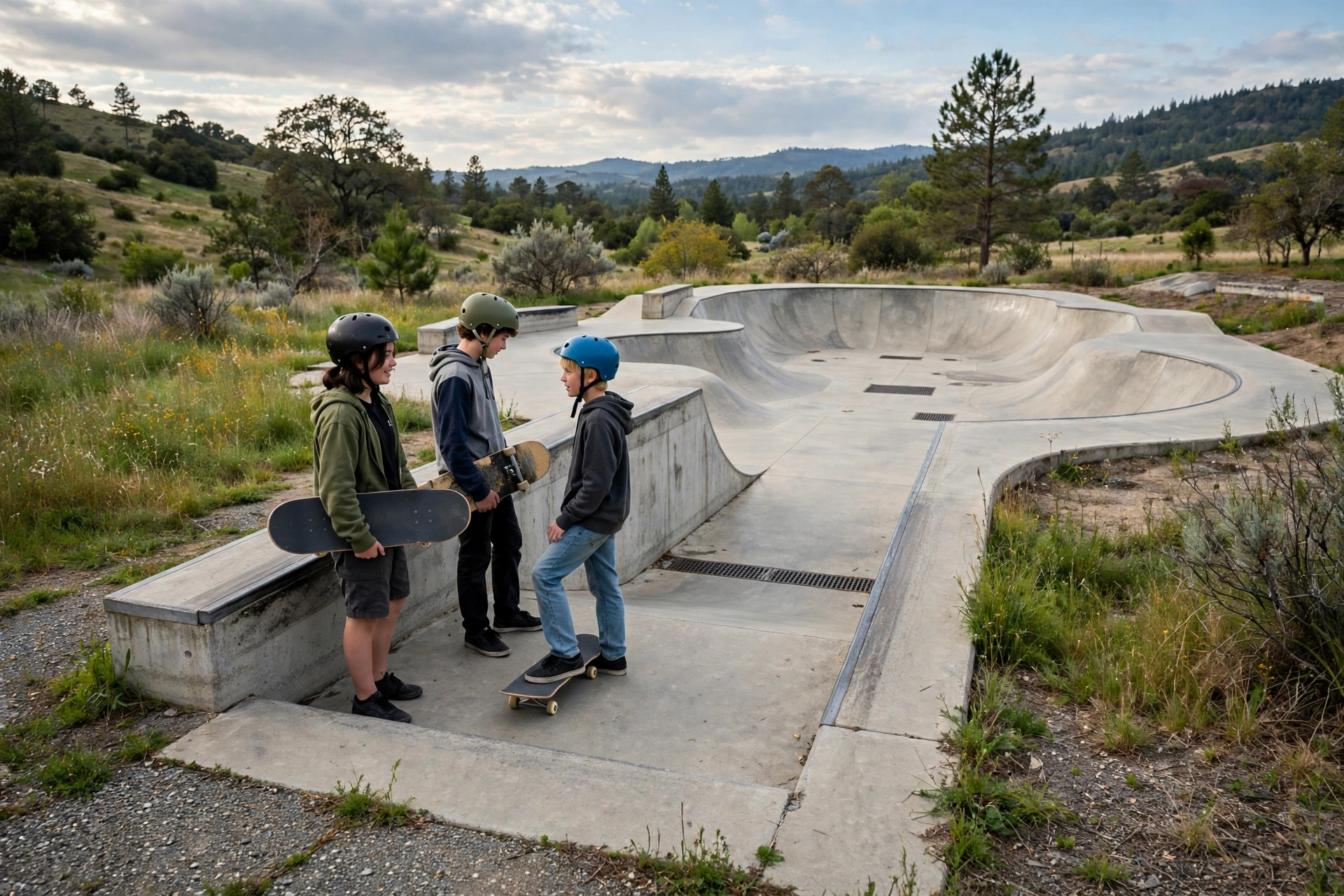
In general terms, many skateparks require helmets, but the rules vary widely — some parks require them for everyone, some only for younger skaters, and some merely recommend them. The only reliable way to know is to check the rules of the specific park you plan to visit, because there is no single rule that covers every skatepark.
Skatepark helmet rules frustrate skaters precisely because they are inconsistent. One park may turn away a rider without a helmet, while another down the road may not mention helmets at all. This guide explains the common patterns, why parks set the rules they do, and how to avoid being caught out.
Why Do Some Skateparks Require Helmets?
Skateparks set helmet rules for a few overlapping reasons. Safety is the obvious one: concrete bowls, ramps, and rails produce hard falls, and a helmet reduces the risk of serious head injury. Parks that host young riders or beginners have a particular interest in that protection.
Insurance and liability are another reason. Many parks operate under insurance policies that require helmet use, or under local authority rules that make helmets a condition of use. A park that ignores its insurer’s conditions risks losing its cover, so the helmet rule may be a business necessity rather than a preference.
Supervised parks — those with staff, lessons, or organised sessions — are the most likely to enforce helmet rules strictly. Staff can check at the gate, and sessions for children almost always require helmets. Unsupervised, open-access parks are less likely to enforce anything, though they may still post helmet rules on a sign.
Which Skaters Do Helmet Rules Usually Apply To?
Age is the most common dividing line. Many parks require helmets for riders under a certain age, while leaving adult riders to decide for themselves. The age threshold varies by park and by region, so a rule that applies to a teenager at one park may not apply at another.
Some parks apply the rule to everyone, regardless of age, particularly indoor parks and parks run by local authorities. Others apply it by activity: BMX riders and scooter riders may face different rules from skateboarders at the same park, reflecting the different risks and the different insurance arrangements for each sport.
Organised sessions are a special case. Lessons, clubs, camps, and competitions almost always require helmets for all participants, even at parks where casual riding does not. If you are signing a child up for a lesson, assume a helmet is required and bring one that fits — do not rely on a borrowed park helmet fitting properly.
Do Helmet Rules Apply to All Types of Riding?
Not always. Some parks set different rules for different users. A park may require helmets for BMX and scooter riders but not for skateboarders, or vice versa, depending on its history and its insurance. The logic is not always obvious from outside, which is another reason to check the specific park.
Certain features may also carry their own rules. A vert ramp or a large bowl may require helmets even in a park where the street section does not, because the falls from those features are harder. Staff at supervised parks can usually tell you which areas carry extra requirements.
Events change the picture too. A competition or a demo day at an otherwise relaxed park will usually run under stricter rules, with helmets required for competitors and sometimes for everyone on the course. If you are travelling to an event, check the event rules separately from the park’s everyday rules.
What Happens If You Arrive Without a Helmet?
At a supervised park with a strict rule, you will usually be refused entry or asked to leave the riding area until you have a helmet. Some parks hire helmets, which solves the problem on the spot — though a hire helmet should still be checked for fit and condition before you ride in it. A helmet that is the wrong size or visibly damaged is not a good substitute for your own.
At an unsupervised park, nothing may happen in practice, even if a rule is posted. That does not make riding without a helmet a good idea — it just means enforcement is absent. The risk of a head injury is the same whether or not anyone is checking, and the posted rule is a reasonable hint about what the park considers safe.
There can also be consequences beyond the gate. If you are injured while breaking a park’s posted helmet rule, it may affect an insurance claim or a liability dispute, depending on local rules. That is a legal question with local answers, but the practical advice is simple: following the posted rule avoids the issue entirely.
What Kind of Helmet Do Skateparks Expect?
Most parks that require helmets accept any certified skate-style helmet that fits properly. A low-profile skate helmet with good rear coverage is the standard choice, and it is what most parks have in mind when they write their rules. Some parks specify certified helmets, so an uncertified novelty helmet may not satisfy the rule even if it looks like a helmet.
Fit matters as much as the helmet itself. A helmet that is too loose, tipped back, or worn with unfastened straps may not count as wearing a helmet in the eyes of park staff, and it certainly does not protect properly. Put the helmet on level, fasten the straps snugly, and keep it on for the whole session.
If you are unsure whether your helmet qualifies, a certified skate helmet in the right size is the safest bet. For more on how modern helmets manage angled impacts, see this guide to what MIPS means for helmets. And whatever the park’s rule, remember that a helmet is a consumable: replace it after a hard crash or when its condition deteriorates.
Frequently Asked Questions
Q: Do all skateparks require helmets?
A: No. Rules vary by park, region, and rider age. Some parks require helmets for everyone, some only for younger riders, and some only recommend them. Always check the specific park before you go.
Q: Can I hire a helmet at a skatepark?
A: Some supervised and indoor parks offer helmet hire. Check the fit and condition of any hire helmet before riding, and bring your own helmet if you can, since your own helmet will fit better.
Q: Does a helmet rule apply during competitions?
A: In general terms, yes — competitions and organised sessions usually require helmets for all participants, even at parks where casual riding does not. Check the event rules separately.

Olivia
Writer at Helmet Today, covering helmet reviews, fit and riding safety.