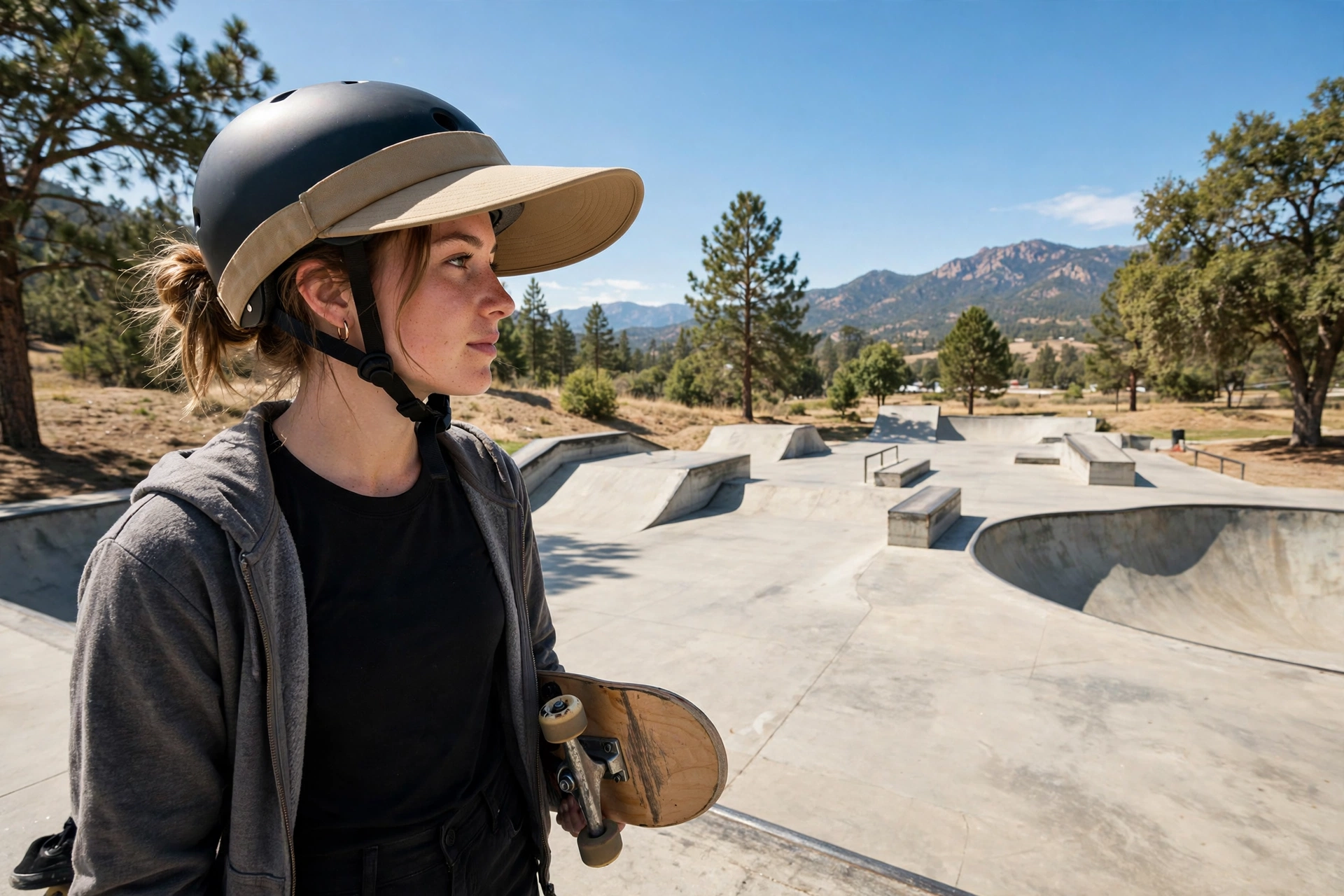
A skate helmet with a brim can help with sun protection in general terms, by shading your eyes and forehead from direct sunlight — but the brim is a modest shade aid, not a substitute for sunscreen or sunglasses. A small brim cuts glare from above and keeps some sun off your face, which makes outdoor skating more comfortable, but it does not block reflected light or protect your skin fully.
Skating outdoors means long hours in the sun, and a helmet that helps with glare is a genuine comfort advantage. This guide explains what a brim actually does, where it falls short, and how to combine it with other sun protection for outdoor sessions.
How Does a Brim Help in the Sun?
A brim works by blocking direct sunlight from above. When the sun is high, a short brim shades the eyes and the upper face, reducing squinting and glare. That matters for skating, because glare can hide cracks, pebbles, and changes in surface — and because squinting for hours is tiring and gives you a headache.
The forehead benefits too. The skin of the forehead and the top of the nose is exposed even under a helmet, and a brim throws a small patch of shade over it. That is not full sun protection, but it does reduce direct exposure during the middle of the day, when the sun is strongest.
A brim also helps in light rain and against drips from trees, and it can keep sweat from running straight into your eyes by channelling it slightly. Those are side benefits rather than the main point, but outdoor skaters notice them quickly.
What Are the Limits of a Brim for Sun Protection?
The biggest limit is that a brim only blocks light from above. Sunlight reflected off concrete, water, or light-coloured surfaces comes from below and from the sides, and a brim does nothing about that. Reflected glare is a major source of eye strain at a skatepark, where pale concrete bounces a lot of light back up.
Coverage is limited as well. A short skate-helmet brim shades a strip of the face, not the whole face, and it does not shade the ears, neck, or lower face at all. Those areas burn easily during long outdoor sessions, especially the ears and the back of the neck, which are often forgotten.
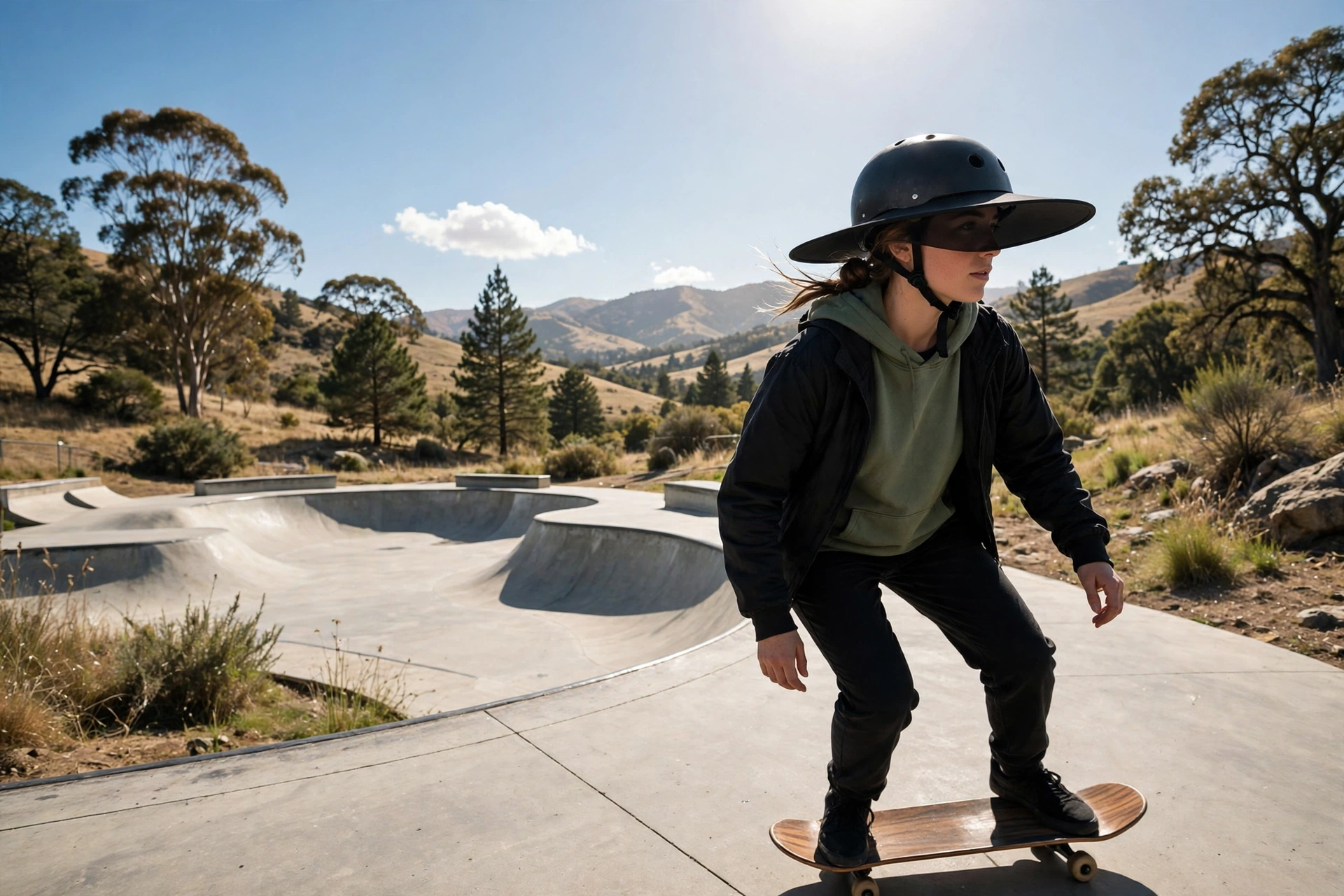
Angle matters too. A brim is most effective when the sun is high overhead. In the morning and late afternoon, when the sun is low, light comes in under the brim almost directly into your eyes. That is when sunglasses matter most, and a brim alone will not save you from low-angle glare.
Does a Brim Affect Helmet Safety or Fit?
In general terms, a small, flexible brim on a certified helmet does not compromise its protection, because the helmet has been tested with the brim in place. Problems arise when riders add a large, rigid brim or a cap underneath the helmet — both can change how the helmet sits and, in a fall, how it moves.
Never wear a cap with a stiff peak under a skate helmet. The peak lifts the helmet, changes its position, and can interfere with how the helmet absorbs impact. If you want extra shade, choose a helmet designed with a brim rather than improvising one underneath.
Check that the brim does not block your vision. A brim that is too long or sits too low can cut off your view of the ground ahead, which is dangerous when skating. The brim should shade without intruding into your line of sight when you look forward in a skating stance.
Also check the fit with the brimmed helmet. The same rules apply as for any skate helmet: level on the head, snug all round, straps forming a V under each ear. A brim is no excuse for a loose helmet, and a helmet that rocks because of an added accessory is worse than a plain helmet that fits.
What Else Should You Use for Sun Protection While Skating?
Sunglasses are the most important partner to a brim. They block glare from all angles, including reflected light and low sun, and they protect your eyes from dust and debris as well. Choose sunglasses that stay put while skating — a strap or a sport-style frame helps — and make sure they fit comfortably under or with the helmet without pushing it out of position.
Sunscreen is essential for the skin a brim does not cover: ears, neck, lower face, arms, and legs. Apply it before the session and reapply during long sessions, especially if you are sweating heavily. Sweat washes sunscreen away faster than most people expect, and a helmet strap line can hide a burn until it is too late.
Clothing helps too. A lightweight long-sleeve top and a neck gaiter or bandana can protect the neck and arms without overheating you. And plan around the sun when you can: skating in the early morning or late afternoon avoids the strongest midday sun, though low-angle glare then makes sunglasses even more important.
Staying hydrated matters as well. A brimmed helmet can feel hotter than a well-ventilated open helmet, and heat builds up during outdoor sessions. Drink water regularly, take shade breaks, and watch for signs of overheating in yourself and in younger skaters.
Is a Brimmed Helmet Worth Choosing for Outdoor Skating?
If you skate outdoors often, a brim is a worthwhile feature — modest, but genuinely useful. It reduces glare and shades the forehead at no real cost in weight or comfort, provided the helmet is certified and fits well. It is not a reason to choose an otherwise poor helmet, but as a tie-breaker between two good helmets, a brim is a sensible plus.
Do not let the brim become a false sense of security, though. A skater who trusts a brim for sun protection and skips sunscreen and sunglasses will burn and strain their eyes just the same. Think of the brim as one layer in a sun protection routine, alongside sunglasses, sunscreen, and sensible timing.
Finally, remember that helmet technology keeps evolving, including systems designed to reduce twisting forces in angled falls. If you are choosing a new outdoor helmet, this guide to what MIPS means for helmets explains one such system and whether it might matter for your skating.
Frequently Asked Questions
Q: Does a helmet brim replace sunglasses?
A: No. A brim blocks direct light from above only, while sunglasses block glare from all angles, including reflected light and low sun. Use both for outdoor skating.
Q: Can I add a brim to my existing skate helmet?
A: In general terms, it is better to buy a helmet designed with a brim than to add one yourself. Added accessories can change how the helmet sits and may interfere with its protection.
Q: Do brimmed helmets get hotter than normal skate helmets?
A: Slightly, in some cases, because the brim can reduce airflow over the forehead. Look for a brimmed helmet with good ventilation if you skate in warm conditions.

Olivia
Writer at Helmet Today, covering helmet reviews, fit and riding safety.