In general terms, yes — karting helmets do expire in practice, because the foam liner that absorbs impacts degrades over time, even if the helmet has never been crashed. There is rarely a printed expiry date, but age, use, and condition all count, and a helmet should be replaced when any of them tell you it is time.
This surprises many karters. A helmet that looks fine on the outside can have a liner that has hardened, compressed, or broken down inside, and that liner is the part that actually protects your head. Understanding what ages a helmet, and how to spot it, is essential for anyone who karts regularly.
Why Do Karting Helmets Age Even Without a Crash?
The impact-absorbing liner, usually expanded polystyrene foam, is designed to crush slowly in a crash and absorb energy. Over time, that foam is affected by heat, sunlight, sweat, and cleaning products, all of which gradually change its structure. A liner that has hardened or become brittle will not absorb energy in the same way as a new one.
The comfort padding ages too. Cheek pads and crown liners compress with use, which changes the fit: a helmet that once sat snugly may start to move around, and a moving helmet protects less well in a crash. Sweat also breaks down padding materials, and repeated washing, while necessary for hygiene, gradually wears them out.
The shell ages as well, though more slowly. Sunlight, temperature changes, and knocks from storage and transport can cause small cracks or weaken the shell material over years. These changes are often invisible under paint or graphics, which is why age alone is a reason to inspect a helmet carefully, even if it looks undamaged.
How Long Does a Karting Helmet Last in General Terms?
In general terms, a karting helmet used regularly lasts several years, while one used rarely and stored well can last longer — but there is no single number that applies to every helmet. Manufacturers sometimes give a recommended replacement period in the helmet’s documentation, and that guidance is worth following when it exists.
Use matters more than calendar age alone. A helmet worn several times a week at a busy centre will wear out faster than one worn a few times a year, because every session adds sweat, compression, and handling wear. Rental helmets, which are used by many drivers, age fastest of all, which is why centres should rotate and retire them on a schedule.
Storage matters too. A helmet stored in a cool, dry place, away from direct sunlight and heat, will last longer than one left in a hot car boot or a damp garage. Good storage slows the ageing process, but it does not stop it: foam still ages, just more slowly.
What Are the Signs a Karting Helmet Should Be Replaced?
The clearest sign is any crash or hard impact. If a helmet has taken a significant hit — a collision, a fall onto a hard surface, or a heavy drop — it should be replaced, even if it looks undamaged. The liner may have crushed internally, and that damage cannot be seen from outside.
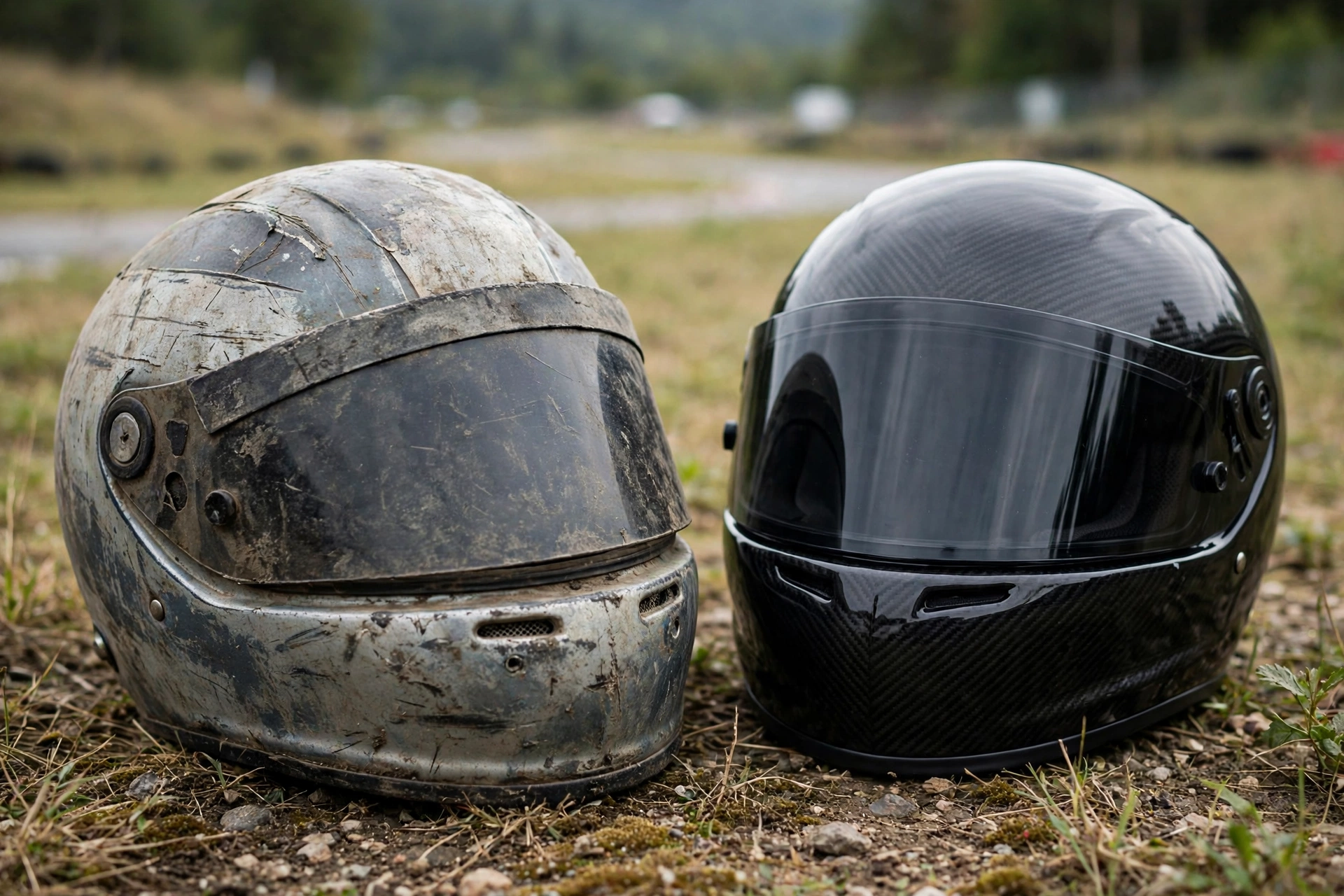
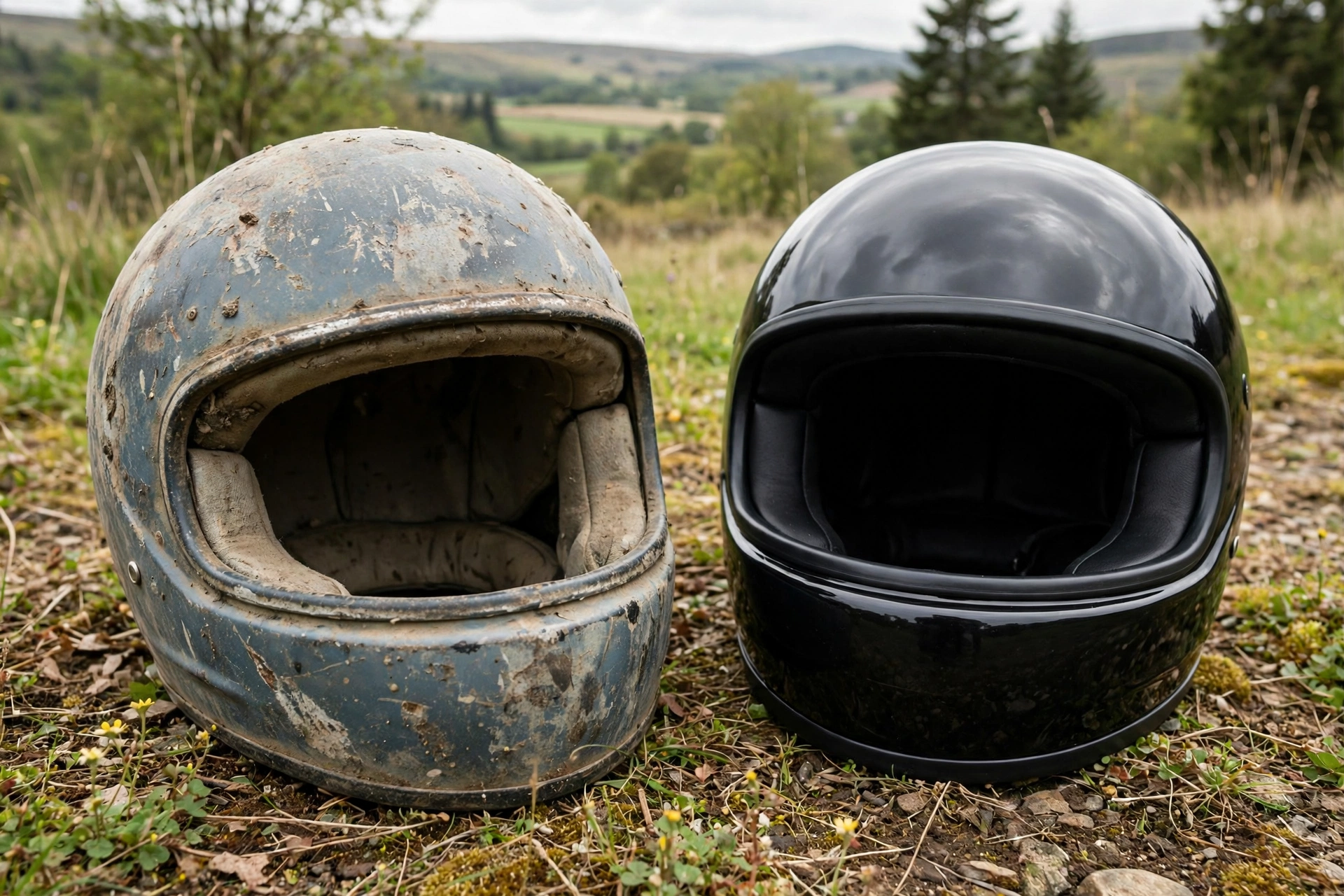
Other signs include a loose or shifting fit, compressed or torn padding, a cracked or deeply dented shell, a visor that no longer seals or stays in position, and a chin strap that is frayed or no longer holds firmly. Any one of these is a reason to retire the helmet, not a problem to live with.
Smell and condition can also be warning signs. A helmet that smells strongly of damp despite cleaning, or whose lining is discoloured and breaking apart, has reached the end of its useful life. Hygiene and protection go together here: a lining that is falling apart is not protecting you properly either.
Does Certification Affect When to Replace a Helmet?
Certification can affect replacement indirectly. Racing series update their accepted standards over time, and an older helmet meeting an older standard version may no longer be accepted, even if it is in good condition. That is a separate issue from physical wear, but it has the same result: the helmet can no longer be used for that racing.
For recreational karting, certification is less of a constraint, because centres set their own requirements. Even so, a helmet that meets a current standard is a better bet than a very old one, because standards improve as testing and materials improve.
The practical approach is to track both: the helmet’s physical condition and its certification status for the racing you do. When either one fails, replace the helmet. Keeping a note of the purchase date, ideally on the helmet’s bag or in a phone reminder, makes this easy to manage.
How Can You Make a Karting Helmet Last Longer?
Store it properly: cool, dry, out of sunlight, and in a bag that protects the visor. Clean it after use, wash removable linings as directed, and let it dry fully before storing. Avoid dropping it, stacking heavy items on it, or hanging it by its strap for long periods, which can stretch the strap and distort the padding.
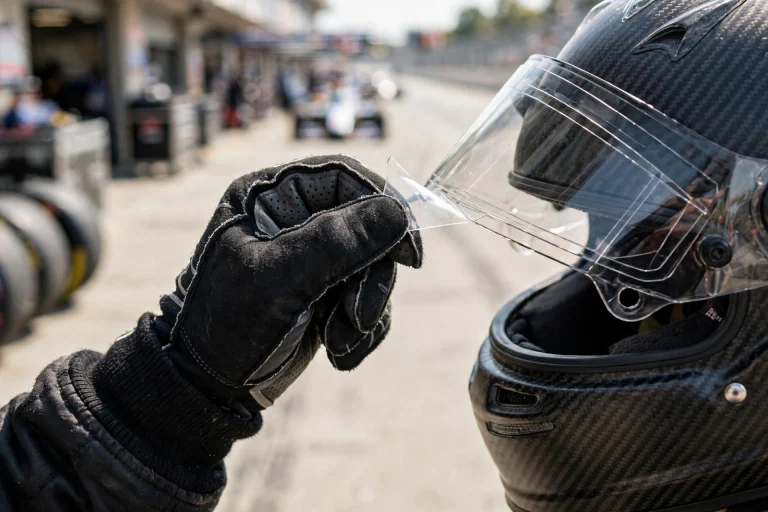
Handle the visor with care, because a scratched visor is often the first reason a helmet is retired, even when the shell and liner are fine. Keep a soft cloth in the helmet bag, and avoid wiping the visor with rough materials or dirty gloves.
Finally, remember that a helmet is a consumable safety item, not a lifetime purchase, and that fit is what makes any helmet’s protection work — including systems that address angled impacts, as explained in this guide to what MIPS means for helmets. Budgeting for a replacement every few years, and replacing sooner after any impact, is part of karting safely.
Frequently Asked Questions
Q: Is there a printed expiry date on karting helmets?
A: In general terms, no — most karting helmets do not carry a simple expiry date. Check the manufacturer’s guidance, note the purchase date, and replace the helmet when age, wear, or any impact tells you it is time.
Q: Can a dropped helmet still be used?
A: A light knock onto a soft surface is usually fine, but a hard drop onto concrete or a similar surface can damage the liner invisibly. When in doubt, have the helmet checked or replace it — the cost of a helmet is small compared with the risk.
Q: Do children’s karting helmets expire faster?
A: In general terms, children outgrow helmets before they wear out, so fit becomes the limiting factor. Check fit regularly, and replace a child’s helmet as soon as it is tight, loose, or uncomfortable, regardless of its age.

Olivia
Writer at Helmet Today, covering helmet reviews, fit and riding safety.