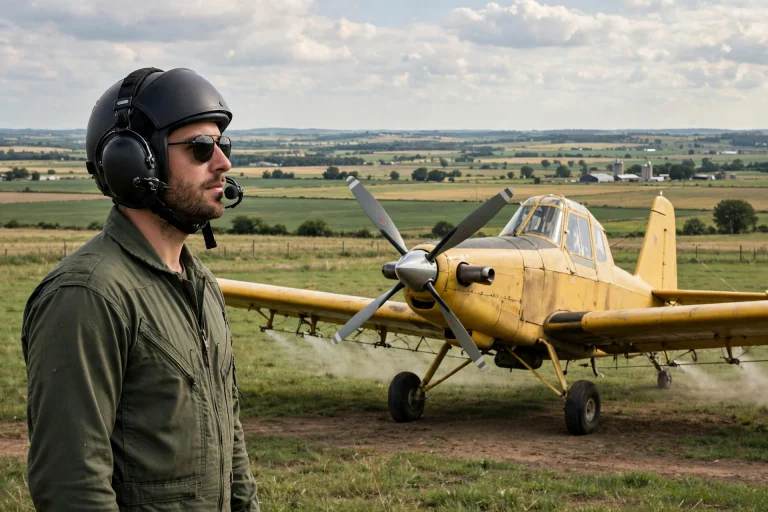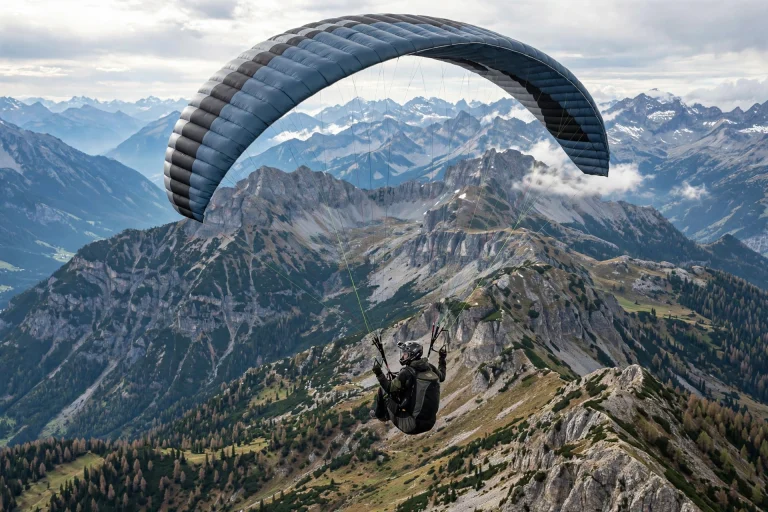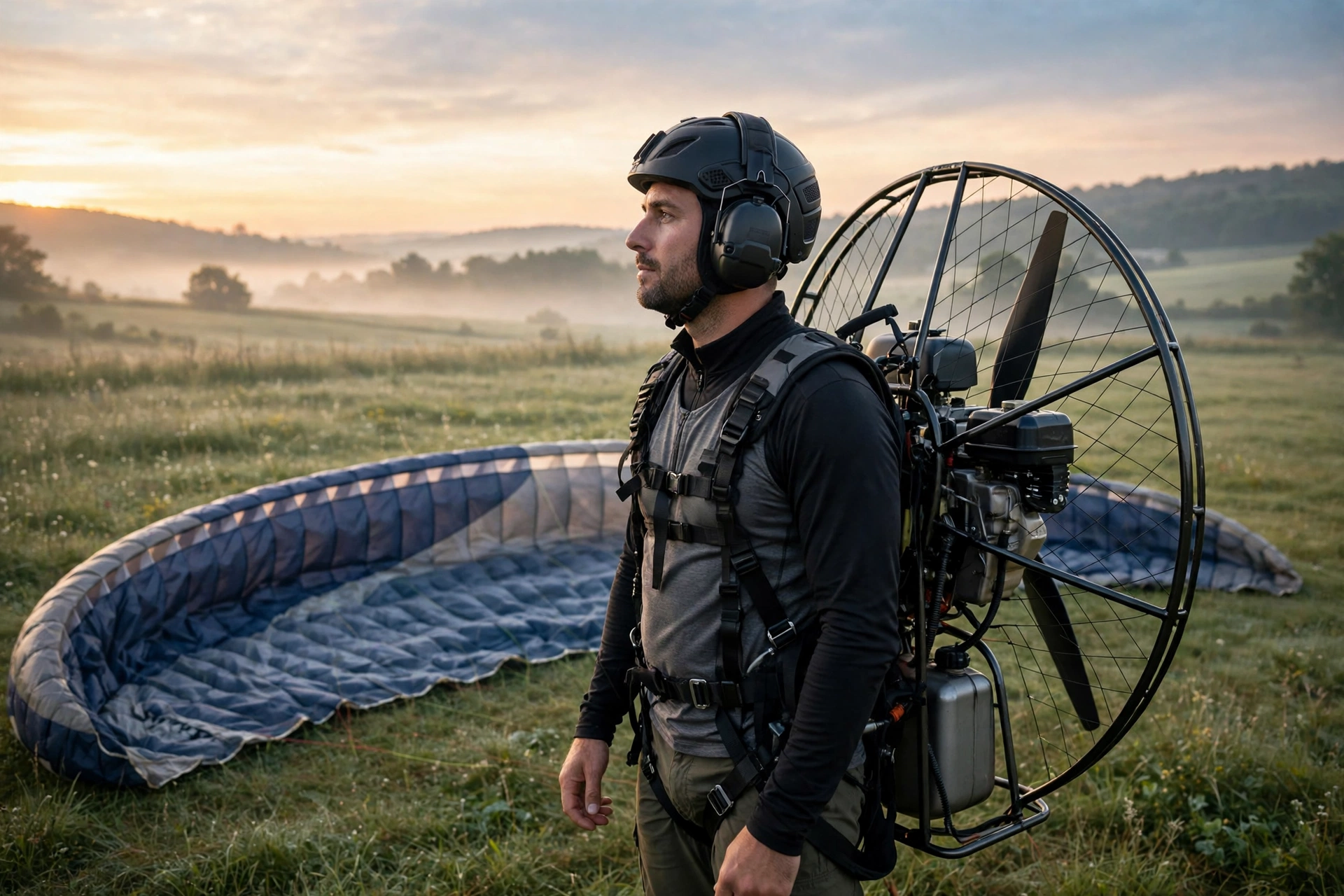
In general terms, yes — you need a helmet for paramotoring, because you are flying with a spinning propeller directly behind your head, and a helmet protects you from the propeller, from the lines and risers, and from a hard landing if anything goes wrong. Paramotoring is one of the most accessible forms of powered flight, but the propeller makes a helmet non-negotiable.
Paramotoring — also called powered paragliding — straps a small engine and propeller to the pilot’s back, under a paraglider wing. The pilot takes off on foot, climbs under power, and can fly for hours, landing on their feet. It looks relaxed, and often is, but the combination of a propeller, a wing overhead, and a foot launch creates risks that only a helmet addresses.
Why Is a Helmet Essential for Paramotoring?
The propeller is the most obvious reason. A paramotor propeller spins just behind the pilot’s head and shoulders, protected only by a net and a hoop. A helmet guards against contact with the propeller frame, the net, or debris thrown up by the propeller, and it protects the head if the pilot stumbles into the motor during launch or landing.
The wing is another reason. On launch, the paraglider wing rises overhead and can surge, collapse, or drag the pilot sideways, and the risers and lines can strike the head. In flight, a collapse or a turbulent patch can drop the pilot suddenly, and a helmet protects the head during the resulting landing, which may be harder and less controlled than planned.
Finally, paramotoring involves foot launches and landings on uneven ground — fields, beaches, and rough strips — where a trip or stumble can send the pilot to the ground with the weight of the motor on their back. A helmet turns a fall that could cause a serious head injury into a bruise and a story to tell at the clubhouse.
What Kind of Helmet Suits Paramotoring?
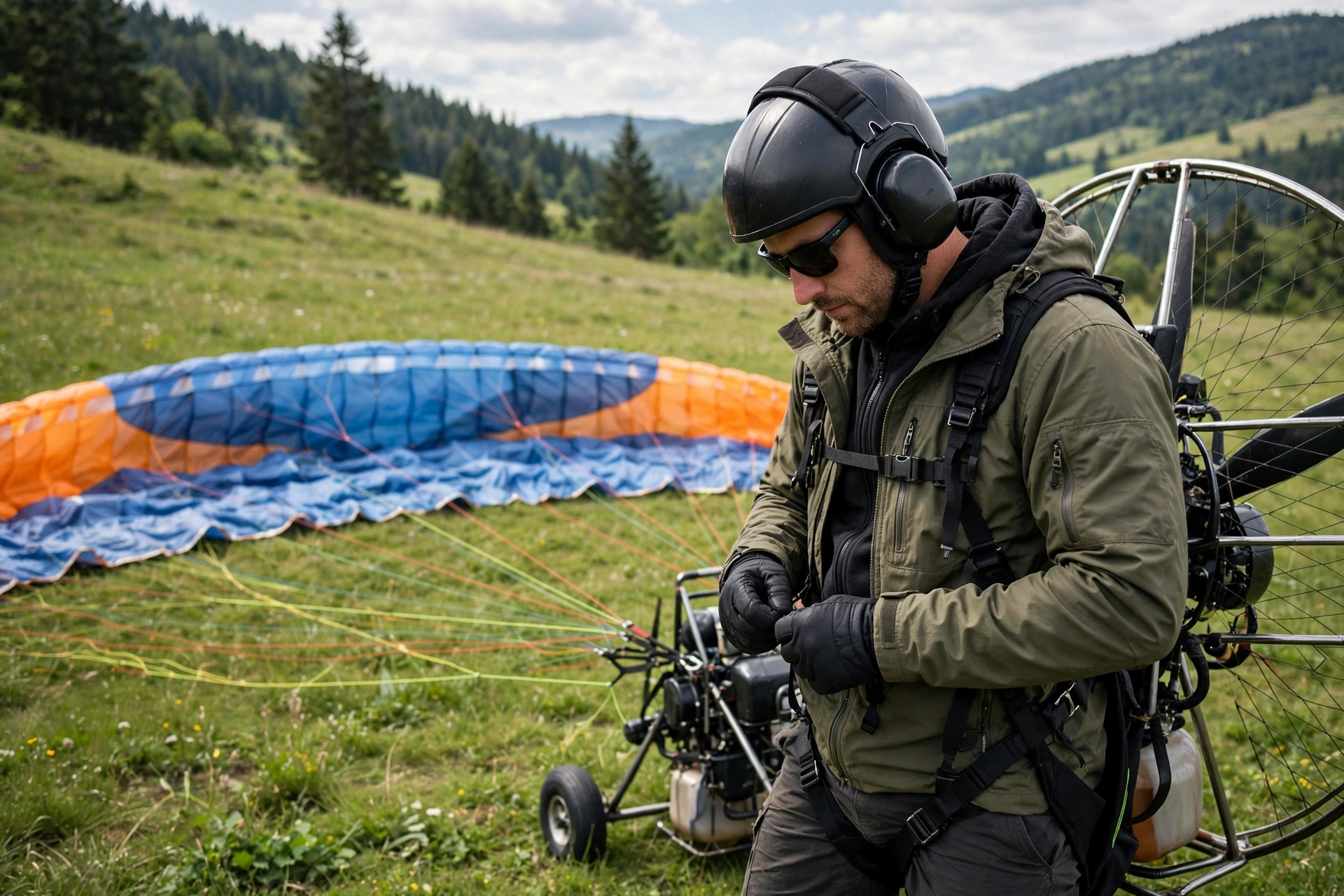
Most paramotor pilots wear a paragliding-style open-face helmet, often with a visor or goggles and built-in hearing protection. The open-face design keeps hearing clear for the radio and for the sound of the engine, which tells an experienced pilot a lot about how the motor is running. A visor protects the eyes from wind, insects, and propeller wash.
Noise is a bigger issue in paramotoring than in free-flight paragliding, because the engine sits right behind the pilot’s ears. Many paramotor helmets therefore include ear defenders or earmuffs, or are designed to work with in-ear protection and a radio headset. Protecting your hearing matters: hours of engine noise at close range will damage hearing over time without protection.
Communication is also important. Paramotor pilots often fly in groups, talk to instructors by radio, and coordinate with ground crew. A helmet with a built-in headset, or with room for a headset and a radio connection, makes all of that far easier than trying to manage a separate headset under a helmet that was not designed for it.
Do Paramotoring Rules Require a Helmet?
In most countries, paramotoring is regulated as an air sport, and helmets are required by the governing body, the training school, or the insurance policy — often by all three. Even where no law specifically mandates a helmet, flying without one would usually void your insurance and bar you from club sites and events. Check the rules for your country and your club before your first flight.
Training schools are strict about helmets, and rightly so. A student pilot is learning to manage a wing, a motor, and a foot launch at the same time, and the chances of a stumble, a dragged launch, or a hard landing are highest in the early flights. No reputable school will let a student fly without a helmet, and most provide loaner helmets for the first lessons.
If you are buying your own helmet, choose one certified for air sports and suited to paramotoring specifically — one that works with your headset and hearing protection. A general paragliding helmet may be fine, but a paramotor-specific helmet will already have the ear protection and communications fittings you need, which saves fiddly aftermarket additions.
How Should a Paramotoring Helmet Fit?
Fit follows the same principles as any helmet: level on the head, covering the forehead, snug with the chin strap fastened, and stable when you shake your head. For paramotoring, check the fit with the full set-up — headset, ear protection, and visor or goggles — since those additions change how the helmet sits and feels.
Weight matters, because the pilot already carries the weight of the motor on their back. A heavy helmet adds neck strain over a long flight, so look for a light helmet that still offers proper protection. Comfort over hours matters too: a helmet that presses on your ears or forehead will become a distraction, and a distracted pilot is a less safe pilot.
Check the helmet in the flying position as well. Sit in your harness with the motor on, lean back as you would in flight, and turn your head to check behind you. The helmet should not catch on the motor frame or the harness, and the ear protection should stay in place. A helmet that works standing in a shop but catches on the motor in flight is not the right helmet.
How Do You Look After a Paramotoring Helmet?
Paramotor helmets live a hard life: engine vibration, fuel fumes, dust from rough strips, and constant packing and transport. Store yours indoors, out of sunlight, away from fuel and solvents, and in a bag that protects the visor and ear cups. Never store a helmet next to fuel cans or in a workshop where solvents are used.
Clean the helmet regularly. Wipe the shell and visor after dusty flights, clean the ear cups and lining according to the manufacturer’s instructions, and check the chin strap, buckle, and headset wiring for wear. Engine vibration can loosen fittings over time, so a quick check before each flight is a good habit.
And remember that a helmet only protects you if it fits and is worn every flight — including the way it manages angled impacts, as explained in this guide to what MIPS means for helmets. Replace a helmet that has taken a hard knock or reached the end of its recommended life, and never fly without it, even for a short hop.
Frequently Asked Questions
Q: Can I wear a motorcycle helmet for paramotoring?
A: In general terms, no — motorcycle helmets are heavy, block hearing, and are not designed for air-sport use or for working with a radio headset. Use a helmet made for paragliding or paramotoring.
Q: Do I need ear protection with a paramotoring helmet?
A: Yes, in general terms. The engine sits close behind your ears, and hours of exposure will damage hearing without protection, so choose a helmet with built-in ear defenders or room for them.
Q: Can I borrow a helmet for my first paramotor lessons?
A: Yes — most training schools provide loaner helmets for students, which is a good way to learn what size and style suit you before buying your own.

Olivia
Writer at Helmet Today, covering helmet reviews, fit and riding safety.