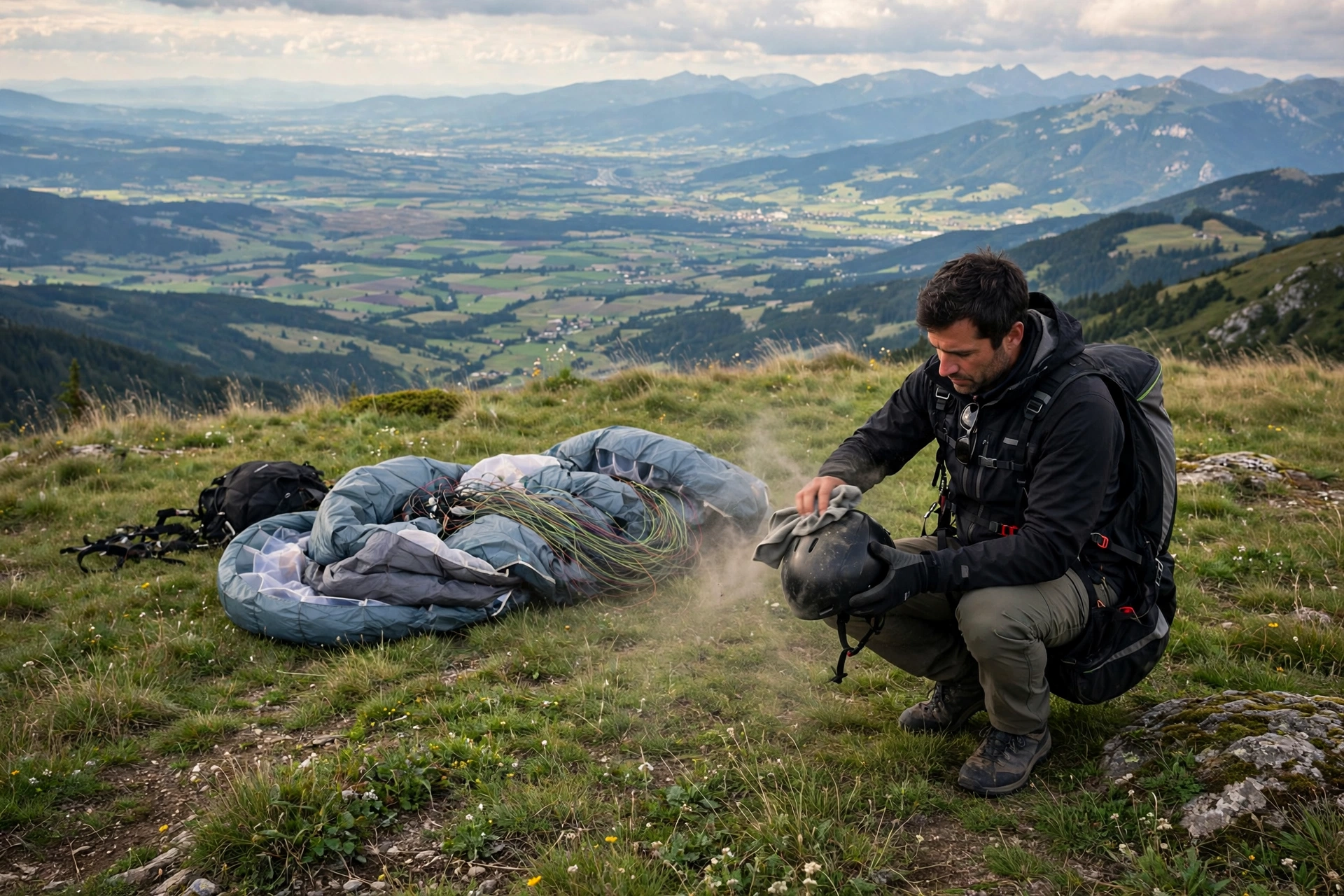
In general terms, to clean a paragliding helmet after dusty launches, brush off loose dust first, wipe the shell with a damp soft cloth, clean the lining gently according to its care guidance, and let everything dry fully in the shade before storing it. Dusty launches cake the shell, clog vents, and work into straps and padding, so a quick clean after flying keeps the helmet comfortable, hygienic, and easier to inspect.
Dusty launches are part of paragliding life. Dry launch sites, dirt tracks, and ploughed fields all throw up fine dust, and a launch run can coat a helmet in a single afternoon. The dust itself is not usually dangerous to the helmet, but left in place it grinds into straps, dulls visors, and makes the lining smell. A short cleaning routine after dusty days prevents most of that.
What Should You Do First After a Dusty Launch?
Start by shaking and brushing off loose dust outdoors, before you pack the helmet away. Hold the helmet upside down and tap it gently, then use a soft brush to clear dust from vents, crevices, and strap adjusters. This simple step removes most of the dust and stops it being ground deeper into the lining during packing.
Next, check the helmet for damage while it is still dusty, because dust can hide cracks and scrapes. Look over the shell for dents, deep scratches, or cracks, check the straps and buckles for fraying or grit, and look at the visor, if fitted, for scratches. A helmet that has taken a hard knock should be inspected carefully before its next flight, and dust removal makes that inspection possible.
Resist the urge to blast the helmet with a high-pressure hose or to scrub it aggressively. High pressure can force grit into vents and padding, and harsh scrubbing can scratch the shell and visor. Gentle methods clean just as well and do far less harm, which matters for equipment you trust in the air.
How Do You Clean the Shell and Visor?
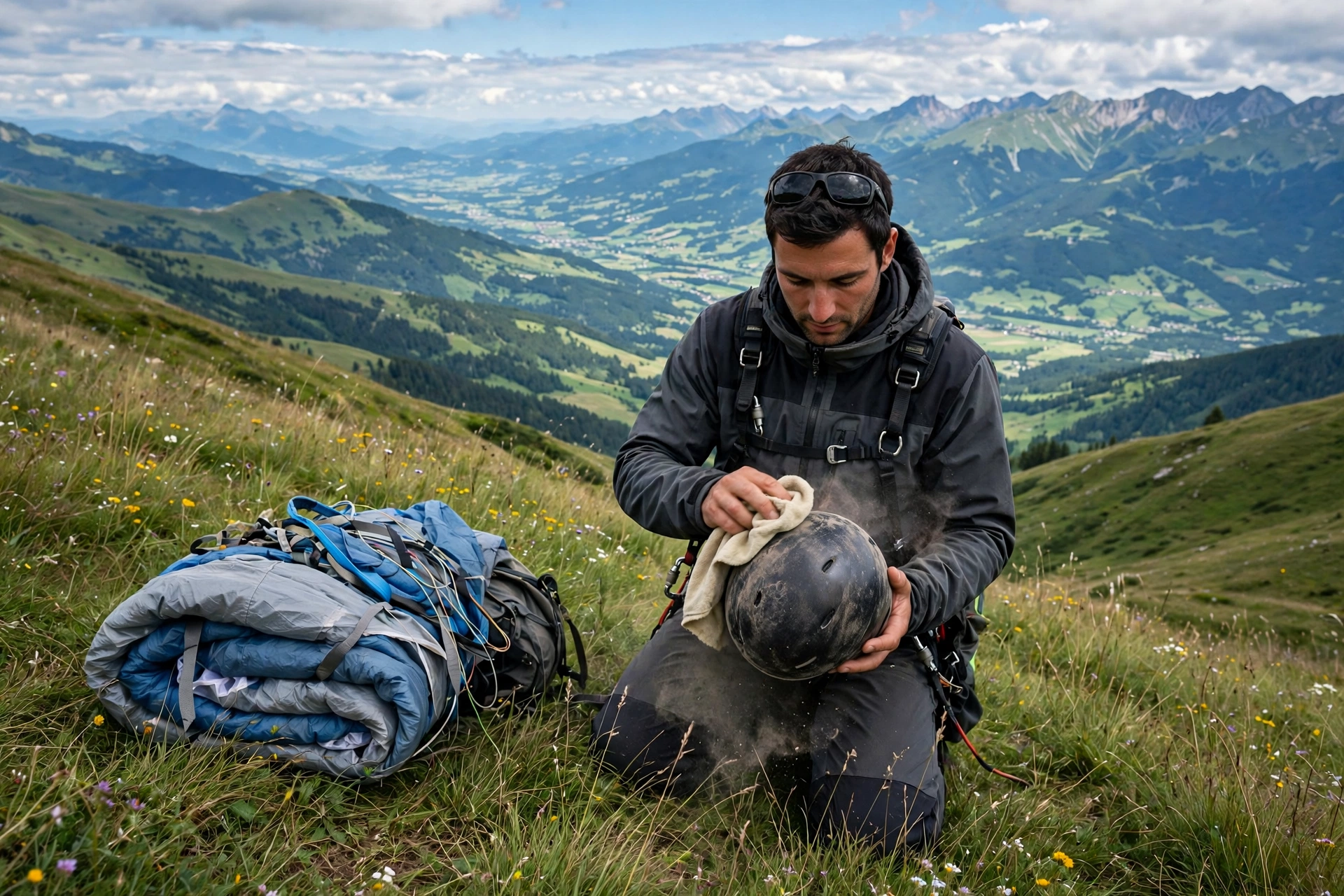
Wipe the shell with a soft cloth dampened with lukewarm water, adding only a small amount of mild soap if needed. Work in gentle circles, paying attention to the areas around vents and the base of straps, where dust collects. Rinse the cloth often so you are not wiping dust back across the shell, and dry the shell with a clean soft cloth afterwards.
For the visor, use even more care. Rinse loose dust off first with water, since wiping a dusty visor dry is how scratches happen. Then clean with a soft cloth and lukewarm water, and dry gently. Avoid solvents, abrasive cleaners, and paper towels, all of which can damage visor coatings. A scratched visor distorts vision, and in paragliding, clear vision matters for judging the wing, the landing, and other traffic.
Do not use strong chemicals, solvents, or petrol-based cleaners on the shell either. These can attack the shell material and weaken it over time, even if the damage is not visible at once. Mild soap and water are enough for dust, mud, and most launch-site grime, and they are safe for the materials helmets are made from.
How Do You Clean the Lining and Straps?
The lining is where sweat and dust combine, so it needs attention after dusty days. If the lining is removable, take it out and follow the manufacturer’s care guidance — in general terms, hand washing in lukewarm water with mild soap, then air drying, suits most removable linings. Check the guidance for your helmet before using a washing machine, since heat and agitation can damage some linings.
If the lining is fixed, wipe it with a damp cloth and mild soap, then wipe again with clean water to remove soap residue. Work the cloth into the padding gently rather than soaking it, since a sodden lining takes a long time to dry and can develop a smell. Pay attention to the forehead and cheek areas, where sweat and dust build up most.
Straps can be wiped with a damp cloth and mild soap as well. Grit in strap adjusters and buckles is worth clearing with a soft brush, since grit makes adjustment stiff and can wear the webbing over time. Let straps dry fully before packing, and check that buckles move freely once clean.
How Should You Dry and Store the Helmet After Cleaning?
Dry the helmet in the shade, in moving air, with vents open and the lining removed if possible. Shade matters because direct sun and heat can age shell materials and linings, and a helmet left on a hot car dashboard or in a sun-baked boot dries too fast and too hot. Patience here protects the helmet.
Make sure the helmet is fully dry before it goes back in a bag. Packing a damp helmet traps moisture, which leads to smells and, over time, can degrade padding. If you fly several days in a row, give the helmet overnight to dry between days, and keep it out of its bag when you can. A dry helmet is also easier to inspect, so drying time doubles as a chance to spot wear.
Store the helmet in its bag or a padded case, away from sharp objects, chemicals, and heavy gear that could press on the shell. Keep it out of prolonged heat, such as a car boot in summer. Good storage after cleaning is what turns a one-off clean into lasting care, and it keeps the helmet ready for the next dusty launch.
What Mistakes Should You Avoid?
The most common mistake is cleaning too aggressively — harsh chemicals, abrasive pads, or high-pressure water that damage the shell, visor, or lining. The second is the opposite: never cleaning at all, so dust and sweat build up until straps stiffen, linings smell, and damage hides under grime. A gentle, regular routine avoids both extremes.
Another mistake is drying with heat, such as a hair dryer on a hot setting or a radiator. Heat can distort linings and age shell materials, so air drying in the shade is always the safer choice, even if it takes longer. Similarly, do not store a wet helmet in a sealed bag, and do not hang it by a strap from a hook where it can swing and knock against hard surfaces.
Finally, remember that cleaning is not a repair. If inspection reveals a cracked shell, a damaged strap, or a visor that distorts vision, cleaning will not fix it, and the helmet should be assessed before further flight. The same care applies to every helmet: a clean, well-fitted helmet is the one that protects best, including helmets with systems for angled impacts, as explained in this guide to what MIPS means for helmets.
Frequently Asked Questions
Q: Can I wash a paragliding helmet under a tap?
A: In general terms, a gentle wipe with a damp cloth is safer than running the helmet under a tap. Soaking can trap water in padding and vents, while wiping cleans dust effectively without flooding the helmet.
Q: How often should I clean my paragliding helmet?
A: After dusty launches, a quick brush and wipe the same day is ideal. A deeper clean of the lining is worth doing regularly through the flying season, or whenever the helmet starts to smell or feel gritty.
Q: Will dust damage my paragliding helmet if I leave it?
A: In general terms, ordinary dust does not damage a shell quickly, but left in place it wears straps, clogs vents, hides damage, and makes linings smell. Regular gentle cleaning prevents those problems.

Olivia
Writer at Helmet Today, covering helmet reviews, fit and riding safety.