In general terms, to store a paragliding helmet with your wing, keep the helmet in its own padded bag or case, place it where nothing heavy presses on the shell, keep the whole kit dry and out of prolonged heat, and store the wing loosely rather than tightly compressed on top of the helmet. The helmet and the wing travel together, but they should not crush each other.
Paragliding kit lives a travelling life: car boots, gear bags, club rooms, and spare rooms all take turns as storage. The helmet is the most rigid item in the bag and the easiest to damage by careless packing, so a little organisation protects both the helmet and the wing it travels with.
Should the Helmet Go Inside the Wing Bag?
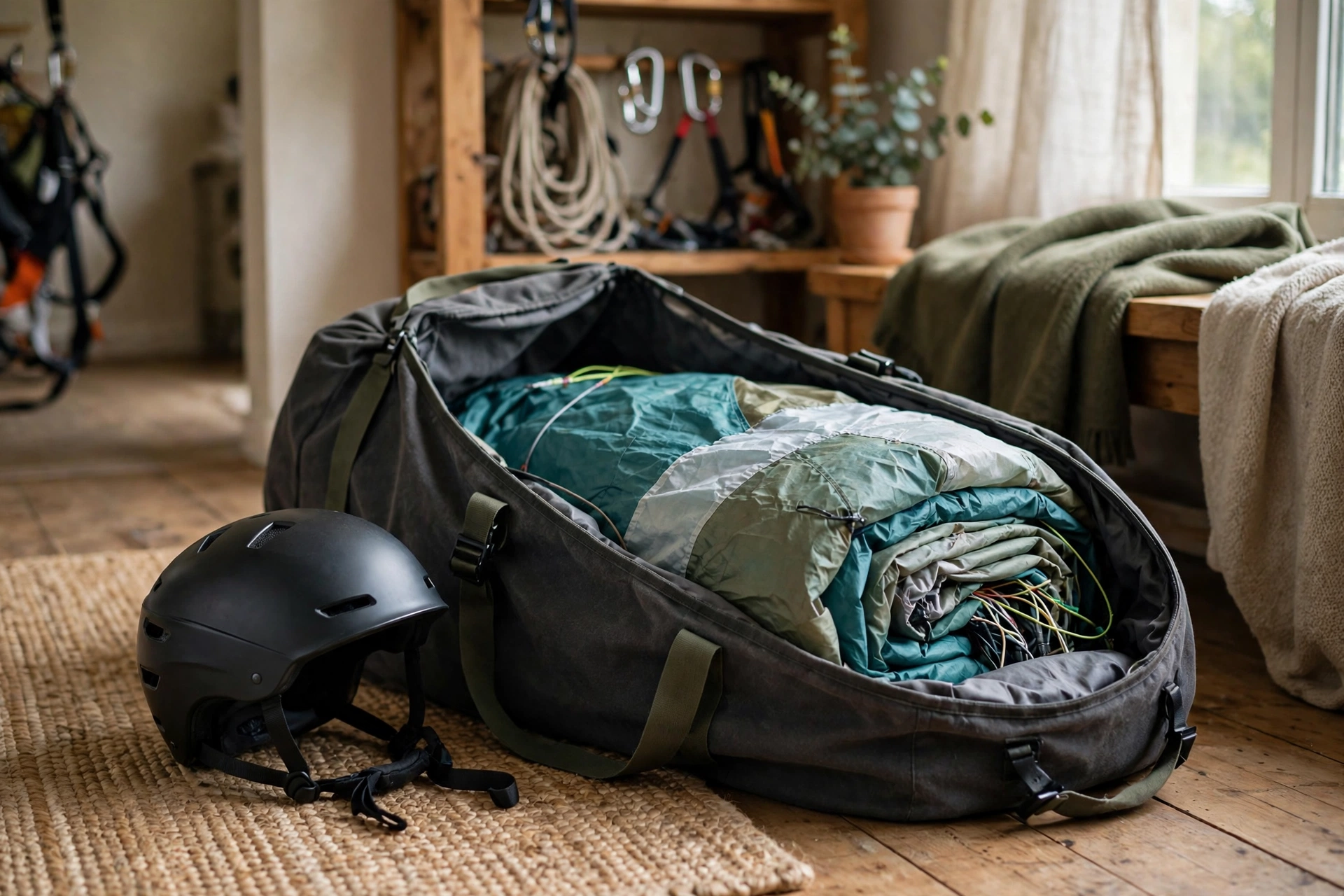
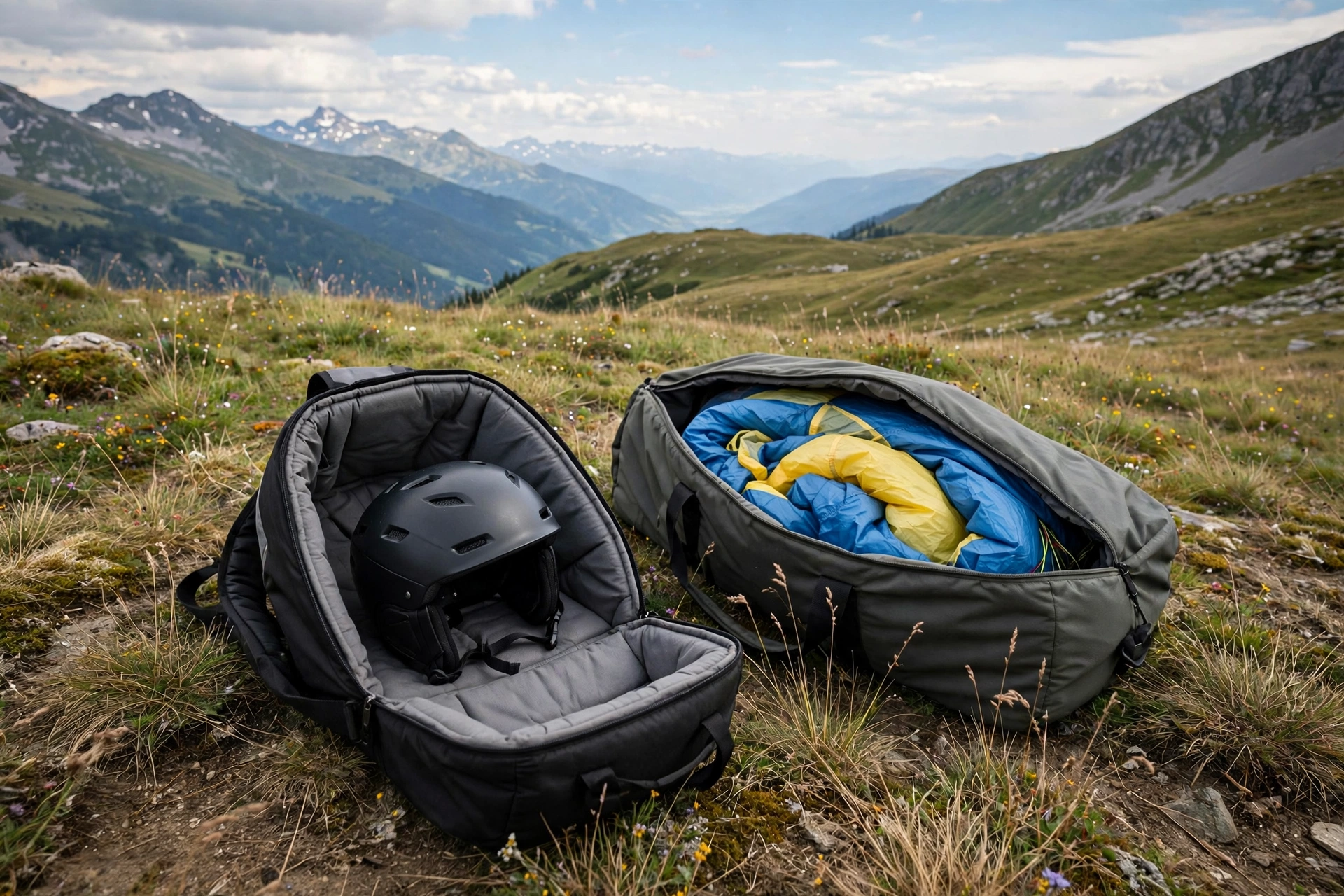
It can, provided it has its own protection. Many pilots carry the helmet in a separate padded helmet bag, then place that bag alongside or on top of the folded wing inside the main rucksack. The helmet bag stops buckles, zips, and hard edges from scuffing the shell or snagging the wing fabric, and it stops the wing from pressing directly on the helmet.
What to avoid is dropping a bare helmet into the same compartment as the wing and letting it rattle around. The helmet’s buckles and vents can catch wing fabric, and the wing’s weight can press on the shell in ways that deform lining over time. A helmet bag is a small investment that prevents both problems, and most pilots who fly regularly consider it essential.
If space is tight, pack the helmet last, on top of the folded wing, rather than underneath it. The wing is bulky but light, while the helmet is compact and hard, so the helmet on top avoids the wing’s weight pressing down on it. Keep straps tucked in so they cannot snag anything during packing or unpacking.
How Do You Protect the Helmet in Storage?
Keep the helmet in a padded bag or case whenever it is not in use. The bag protects the shell from scratches, the visor from scuffs, and the lining from dust. It also keeps the helmet together as a unit, so straps, buckles, and any accessories stay with it instead of wandering off into other bags.
At home, store the helmet on a shelf or in a cupboard, out of direct sunlight and away from radiators, heaters, and hot lofts. Prolonged heat ages shell materials and linings, and a helmet left in a sun-baked car boot or a hot attic will deteriorate faster than one stored at room temperature. Cool, dry, and shaded is the rule.
Keep the helmet away from chemicals, solvents, and fuels, which can damage shell materials even through fumes in an enclosed space. A garage shelf next to fuel cans is a poor home for a helmet. Similarly, keep it away from sharp tools and heavy objects that could fall on it or press into the shell.
What About the Wing When Storing Them Together?
The wing has its own storage needs, and they align well with the helmet’s. Store the wing dry, loosely folded or stuffed according to the manufacturer’s guidance, and out of prolonged sunlight and damp. A damp wing packed away wet can develop smells and fabric problems, just as a damp helmet lining can, so both items should be dry before they go into storage.
Avoid compressing the wing tightly for long periods if the manufacturer advises against it, and avoid placing heavy items — including the helmet, if unpacked — on top of a tightly packed wing. Pressure creases fabric and can affect the wing’s shape over time. The helmet bag on top of a loosely packed wing is fine; a bare helmet grinding into a compressed wing is not.
When you unpack for a flying day, inspect both items together. Check the wing for damage, tangles, and damp, and check the helmet for shell damage, strap wear, and lining condition. Packing and unpacking are natural inspection moments, and using them keeps small problems from becoming flying-day surprises.
How Do You Store Kit Between Flying Seasons?
Between seasons, clean both items before storage. Brush dust from the helmet, wipe the shell, clean the lining according to its care guidance, and let everything dry fully. Clean the wing’s bag, shake out dust, and make sure the wing itself is dry and clean. Storing dirty kit for months lets grime, smells, and fabric problems develop unseen.
Choose a storage spot that stays cool, dry, and stable through the off-season. A spare room cupboard beats a damp garage or a hot loft, and a shelf beats the floor, where kit can be kicked, flooded, or buried under other gear. If the kit must live in a garage, use sealed containers or bags to keep out dust and damp, and keep the helmet in its padded bag inside.
Check the kit once during a long break, rather than discovering problems on the first flying day of the new season. A mid-winter look at helmet and wing takes a few minutes and gives you time to replace worn straps, clean linings, or seek advice before you need the kit in the air.
What Storage Mistakes Should You Avoid?
The most common mistake is tossing the helmet loose into a bag full of heavy, hard gear, where it gets knocked, scratched, and pressed out of shape. The second is storing kit wet, which leads to smells and degraded padding and fabric. The third is storing kit in prolonged heat, which ages materials silently. All three are easy to avoid with a padded bag, a drying routine, and a sensible shelf.
Hanging the helmet by its chin strap from a hook is another habit to avoid. The helmet swings, knocks against walls, and the strap takes a constant load it was not designed for. A shelf or a bag is a better home, and it keeps the helmet’s shape intact.
Finally, remember that storage is part of care, not separate from it. A helmet that is stored well arrives at the launch site in the condition its maker intended, and a helmet that fits and is in good condition is the one that protects best — including helmets with systems for angled impacts, as explained in this guide to what MIPS means for helmets. Good storage is a quiet habit that pays off every time you fly.
Frequently Asked Questions
Q: Can I store my paragliding helmet in the same bag as my wing?
A: In general terms, yes, provided the helmet is in its own padded bag so its buckles and shell cannot snag or press on the wing fabric. Pack the helmet bag on top of, not underneath, the folded wing.
Q: Is it okay to leave paragliding kit in a car boot?
A: For a short trip, yes, but not as long-term storage. A car boot gets hot, and prolonged heat ages helmet materials and wing fabric. Move kit indoors to a cool, dry place between flying days.
Q: Should I clean my helmet before storing it for winter?
A: Yes. Clean the shell and lining, let everything dry fully, and then store it in its padded bag in a cool, dry place. Storing clean, dry kit prevents smells and material problems over the off-season.

Olivia
Writer at Helmet Today, covering helmet reviews, fit and riding safety.