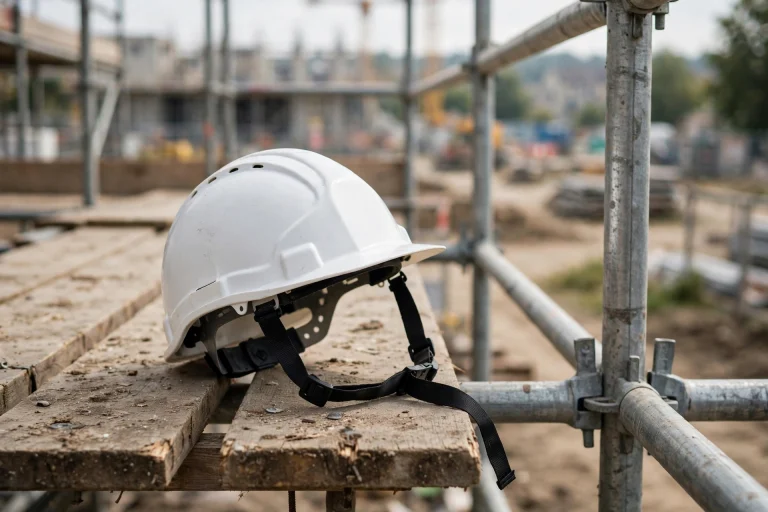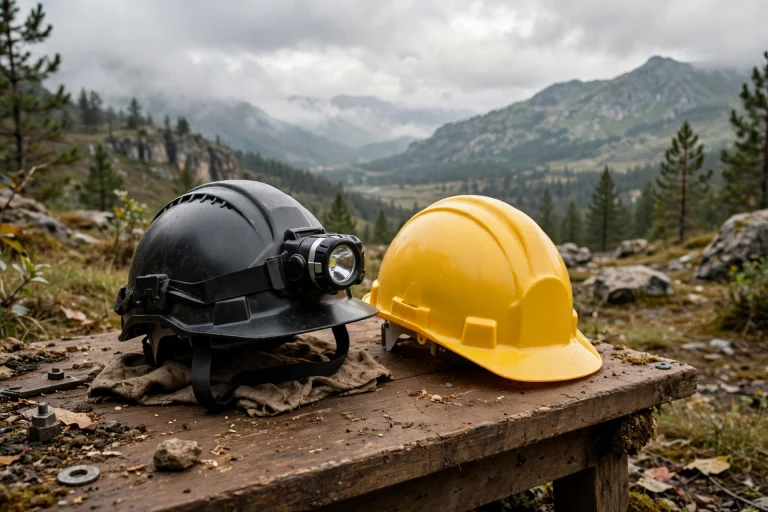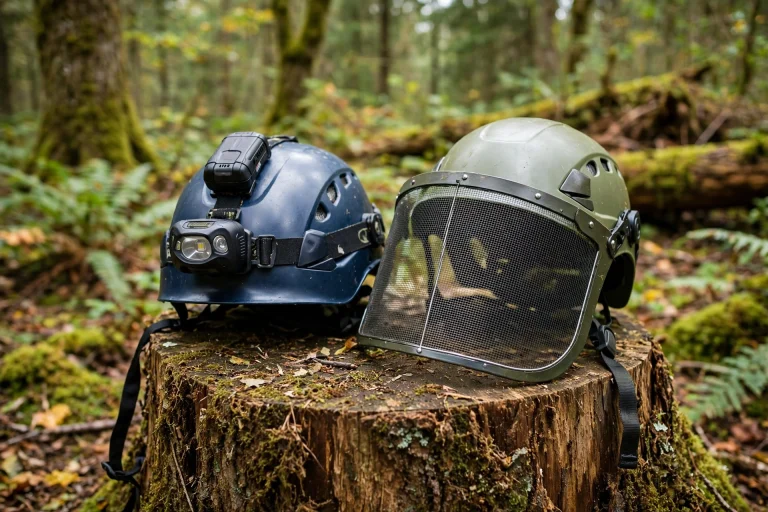
Work at height helmet chin strap rules, in general terms, require the strap to be fastened securely whenever you are working at height, with a design that keeps the helmet on your head during a fall or sudden movement. The core principle is simple: a helmet that comes off in a fall cannot protect you, so the chin strap is treated as part of the helmet, not as an optional extra. While exact requirements vary by workplace, industry guidance, and local rules, the practical expectation is consistent across most work-at-height jobs: strap fastened, properly adjusted, and in good condition, every time.
This article explains the general principles behind chin strap rules, how different strap designs work, and the checks that keep a strap doing its job. It describes rules in general terms only, since specific requirements depend on your employer, your site, and the regulations that apply to your work.
Why Is a Chin Strap Required for Work at Height?
When you work at height, you move in ways that can dislodge a helmet. You look up at anchors, lean out, climb, and sometimes swing or hang in a harness. A helmet without a fastened chin strap can slide off when you tip your head back or fall forward, and a helmet that falls away during a fall offers no protection at all. The chin strap’s job is to keep the helmet in place through all of these movements.
There is also the risk to people below. A helmet that falls from height becomes a falling object itself, which is a hazard for anyone working underneath. Keeping the helmet secured protects both the wearer and the crew below, which is why most work-at-height procedures treat a fastened chin strap as a basic requirement rather than a preference.
In general terms, the rule is not just about wearing a strap but about wearing it correctly. A strap left dangling, fastened loosely, or tucked away does not do the job, and site supervisors may treat it the same as not wearing a helmet at all. The habit to build is simple: helmet on, strap fastened, then start work.
How Do Different Chin Strap Designs Work?
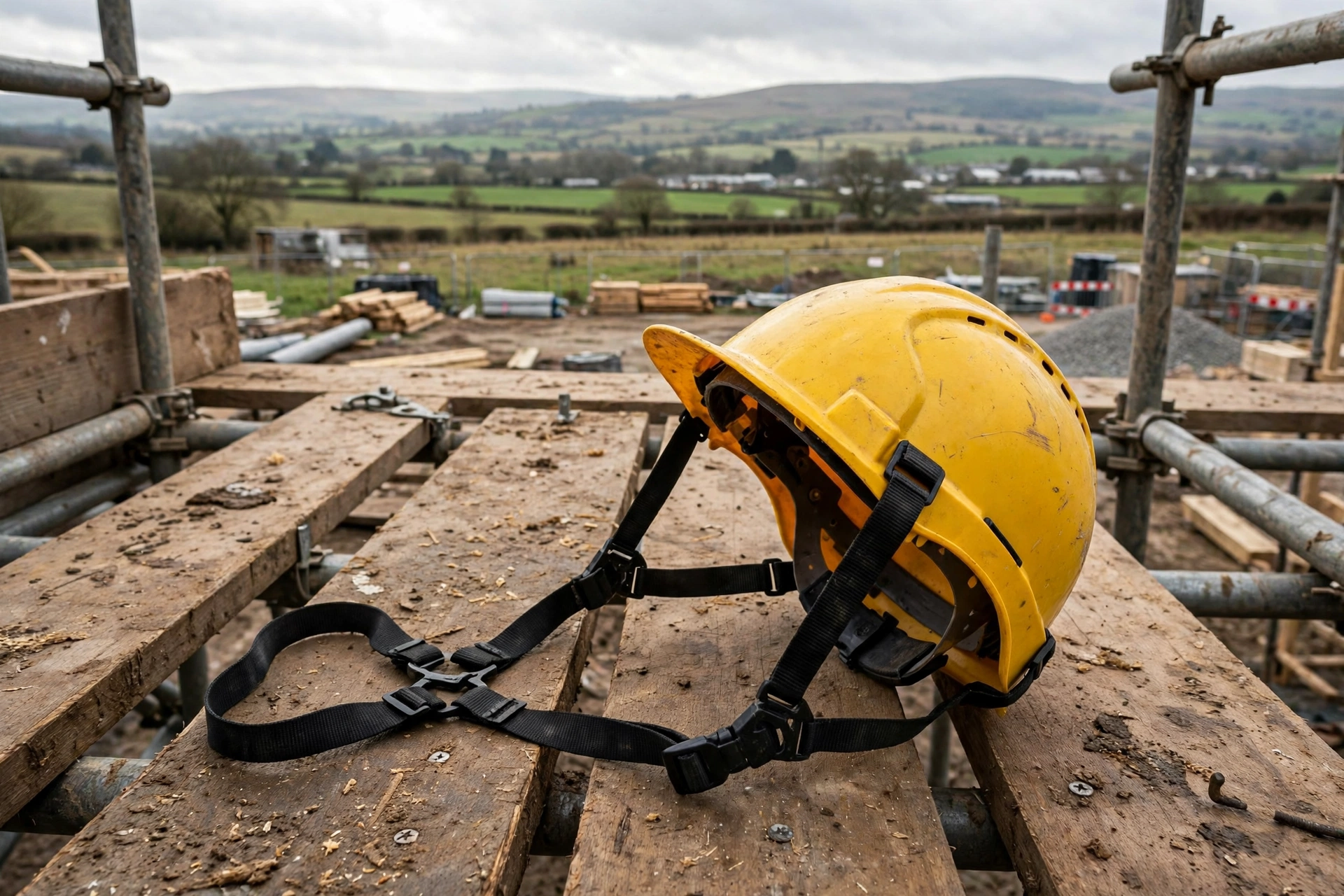
Most work-at-height helmets use a two-point or four-point chin strap. A two-point strap runs from each side of the helmet and fastens under the chin, which is simple and quick. A four-point strap adds rear attachment points, spreading the load more evenly and holding the helmet more securely during movement or a fall. In general terms, four-point straps are common on helmets designed specifically for work at height, since they resist shifting better.
Some straps are designed to release under a certain load, which is a feature on helmets meant for ground-level work where snagging is a risk. For work at height, a strap that releases easily can be a problem, since it may let go during a fall. This is why helmets for work at height usually use a strap that stays fastened under load. If you are unsure which type your helmet has, check the maker’s information and your site’s requirements before using it at height.
Adjustment matters as much as design. A strap should sit snugly under the chin, flat and centred, with no twists. You should be able to fit about two fingers between the strap and your chin, but the helmet should not tip or slide when you shake your head. Take a moment to adjust the strap each time you put the helmet on, since fit can change with layers, sweat, or a different head covering.

What Checks Should You Do Before Working at Height?
Check the strap itself first. Look for fraying, cuts, stretched webbing, and worn or cracked buckles. Test the buckle by fastening and unfastening it a few times; it should click shut firmly and release only when you intend it to. If the strap is damaged, replace it if spares are available, or take the helmet out of service.
Check the attachment points where the strap joins the helmet. These can wear or loosen over time, especially on helmets used daily. Pull gently on each attachment to confirm it is secure, and look for cracks around the mounting points. A strap is only as strong as its weakest connection.
Finally, check the fit with all your other gear on. A harness, a hood, or a balaclava can change how the strap sits, so fasten the helmet after you have put on the rest of your kit. Confirm that the helmet sits level, the strap is snug, and nothing pulls the helmet out of position when you move.
What Are Common Mistakes With Chin Straps?
The most common mistake is leaving the strap unfastened because it feels uncomfortable or gets in the way. This usually means the strap needs adjusting, not abandoning. If the strap presses on your throat or ears, reposition it or adjust the length; a well-adjusted strap should feel secure without discomfort. If discomfort persists, the helmet may be the wrong size or shape for you.
Another mistake is wearing the strap too loosely. A loose strap lets the helmet shift, which can block your view or leave parts of your head exposed. It also means the helmet is more likely to come off in a fall. Adjust the strap until the helmet stays put when you move your head, and recheck it after breaks, since straps can loosen during the day.
A third mistake is ignoring wear. Straps age with sun, sweat, and daily use, and a worn strap can fail when it is needed most. Build strap checks into your regular helmet inspection, and replace worn straps promptly. Understanding how helmets manage impact can also help you judge the whole system; a useful background read is what MIPS for helmets means and how liner systems work.
Frequently Asked Questions
Q: Must the chin strap be fastened for all work at height?
A: In general terms, yes. Most work-at-height procedures require the strap to be fastened whenever you are at height, since an unfastened helmet can come off in a fall.
Q: Is a four-point chin strap better than a two-point strap?
A: In general terms, a four-point strap holds the helmet more securely during movement, which is why it is common on work-at-height helmets. The right choice depends on your helmet and your site’s requirements.
Q: Can you replace a worn chin strap yourself?
A: If the maker supplies replacement straps for your helmet model, yes. If not, or if the attachment points are damaged, take the helmet out of service and replace it.

Olivia
Writer at Helmet Today, covering helmet reviews, fit and riding safety.