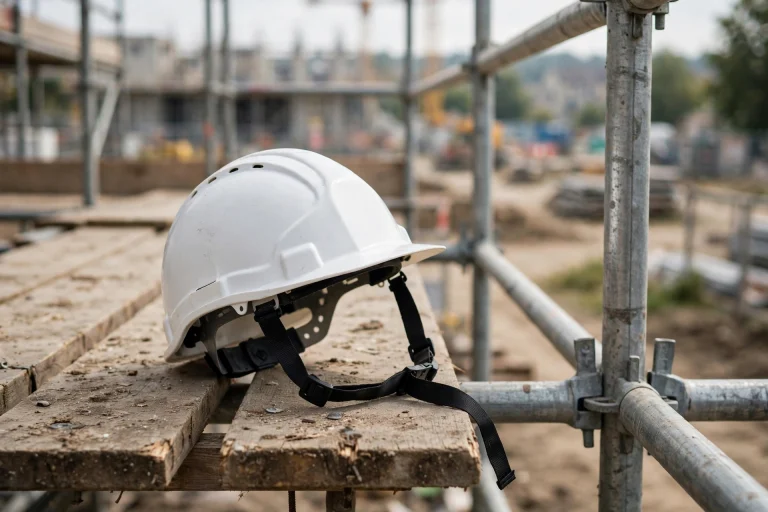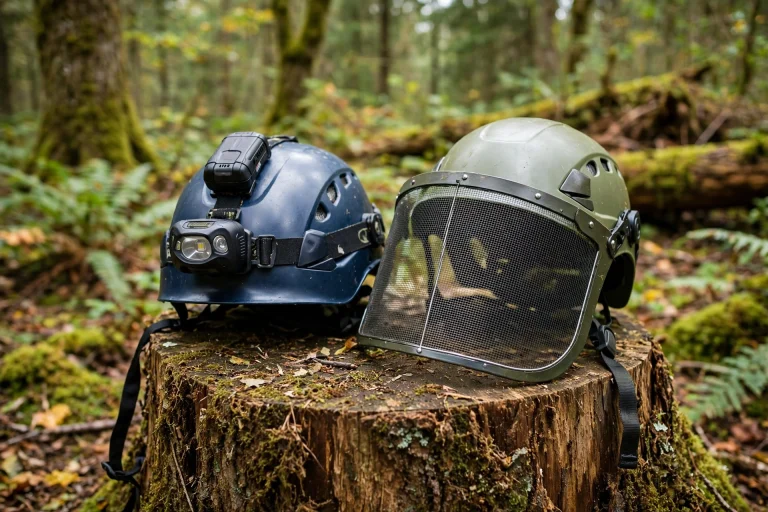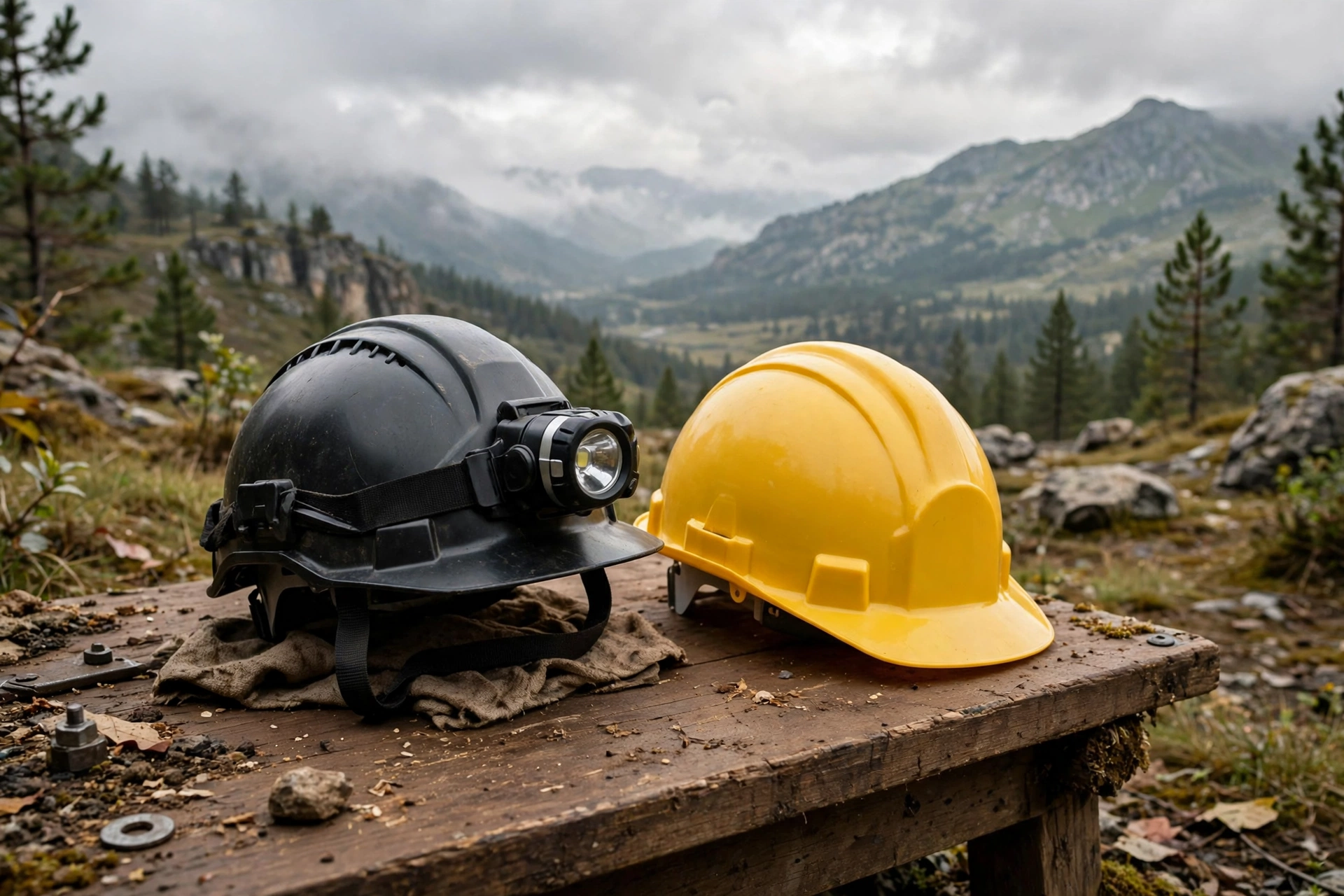
The difference between a mining helmet and a construction hard hat is mainly one of environment and accessories: a mining helmet is built for underground work, with a lamp bracket, and often a design suited to low, dark, dusty tunnels, while a construction hard hat is built for open building sites, where falling objects from above are the main risk. In general terms, both protect the head from impacts, but they are shaped by very different workplaces, and using one in the other’s environment can leave gaps in protection.
This article compares the two types side by side: their shells, their mounts and accessories, their use in different conditions, and how to tell which one a job actually needs. It describes the differences in general terms, since specific models and site requirements vary.
How Do the Shells Differ?
Both helmets use a hard outer shell with a suspension inside, but the shapes differ. A mining helmet often has a smaller, rounder profile that suits low tunnels and confined spaces, where a wide brim could catch on rock or timber supports. Many mining helmets also have a reinforced front area for a lamp bracket, since a headlamp is essential underground.
A construction hard hat, by contrast, often has a wider brim or a peak that helps deflect falling objects, rain, and sun. The brim also channels water away from the face and neck on open sites. In general terms, the construction hat is designed for work under open sky, where falling tools and materials come from above, while the mining helmet is designed for enclosed, low spaces.
Ventilation differs too. Construction hats often include vents for comfort in warm outdoor conditions, while mining helmets may have fewer vents or a design that keeps dust and water out in underground conditions. Neither choice is better in general; each suits its own environment. Weight can differ as well, since a mining helmet carrying a lamp and battery cable is balanced differently from a construction hat, so trying each type on is the best way to judge comfort.
What Accessories Set Them Apart?
The most obvious difference is the lamp. A mining helmet carries a headlamp bracket as a standard feature, and many include cable clips for a battery pack worn on the belt. Underground, a reliable lamp is not an accessory but a necessity, so the helmet is designed around it from the start.
Construction hard hats, on the other hand, commonly accept a wide range of accessories: visors, ear muffs, and chin straps, fitted to slots on the shell. While mining helmets can also carry some of these, the emphasis is different, with the lamp and a secure fit in low spaces taking priority.
Chin straps also differ in emphasis. Mining helmets often include a chin strap as standard, since underground work involves bending, crawling, and moving through tight spaces where a helmet can easily be knocked off. Construction hats may offer a chin strap as an option, used mainly when working at height or in windy conditions. In general terms, the strap’s importance depends on the job, not just the helmet type.
How Do Working Conditions Shape Each Helmet?
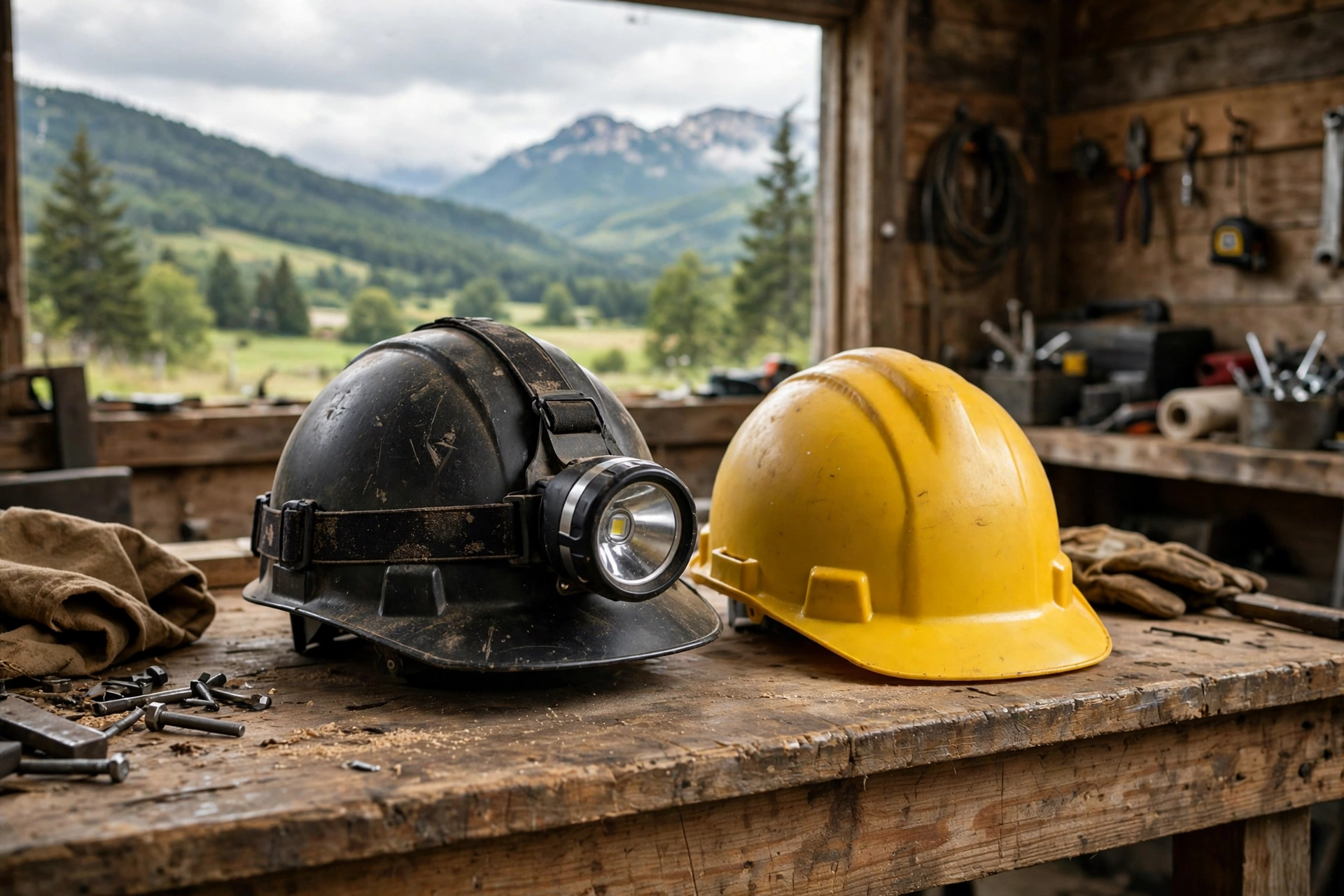
Underground, the hazards include low ceilings, falling rock, dust, water, and darkness. A mining helmet is designed to cope with all of these at once: a compact shape for low spaces, a lamp for darkness, and a shell that resists the damp, dusty conditions of a tunnel. Visibility is also a concern underground, and many mining helmets use bright colours or reflective markings to help workers spot each other in low light.
On a construction site, the hazards are different: falling tools and materials, swinging loads, sun, rain, and wind. A construction hard hat is designed for these: a brim for deflection and weather protection, a shell built for impacts from above, and compatibility with the visors and ear protection used around cutting and drilling equipment.
Because the environments differ so much, swapping helmets between them is not ideal. A construction hat underground may lack a proper lamp mount and may catch on low supports, while a mining helmet on an open site may lack the brim coverage and accessory options the job needs. In general terms, use the helmet designed for the environment you are actually working in, and check the site’s own rules before making any substitution, since some sites specify an approved helmet type for each work area and will not accept a substitute, so it is worth confirming the requirement before you buy or borrow kit for the actual job itself.
How Do You Choose the Right One for a Job?
Start with the environment. If the work is underground or in a tunnel, a mining helmet with a lamp bracket is the natural choice. If the work is on an open construction site, a construction hard hat with the right accessories is usually the better fit. If the job spans both, such as tunnelling work with surface activity, check the site’s requirements, since they may specify one type for each area.
Check the accessories you need. If you need a lamp, a mining helmet’s bracket is a strong advantage. If you need a visor and ear muffs for cutting work, a construction hat’s accessory slots may suit you better. Some modern helmets blur the line, offering lamp brackets and accessory slots together, so compare actual features rather than relying on the name alone. Also consider the colour and visibility markings, since bright shells and reflective strips help crews spot each other both underground and on busy open sites.
Finally, check fit and condition, whichever type you choose. A helmet that fits poorly or is damaged will not protect well, whatever its design. For background on how helmet liners manage impact forces, what MIPS for helmets means explains one modern liner system worth knowing about.
Frequently Asked Questions
Q: Can you wear a construction hard hat underground?
A: In general terms, it is not ideal. Underground work needs a lamp bracket and a compact shape, which a mining helmet provides, so check the site’s requirements before substituting.
Q: Can you wear a mining helmet on a construction site?
A: You can, but it may lack the brim coverage and accessory options a construction job needs, so compare features against the work before choosing it.
Q: What is the main visual difference between the two?
A: A mining helmet usually has a lamp bracket on the front and a compact shape, while a construction hard hat often has a wider brim or peak for deflecting falling objects and weather.

Olivia
Writer at Helmet Today, covering helmet reviews, fit and riding safety.