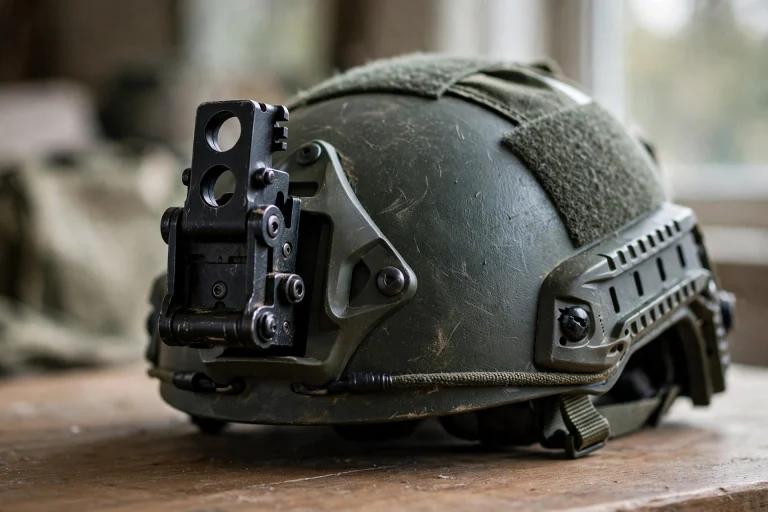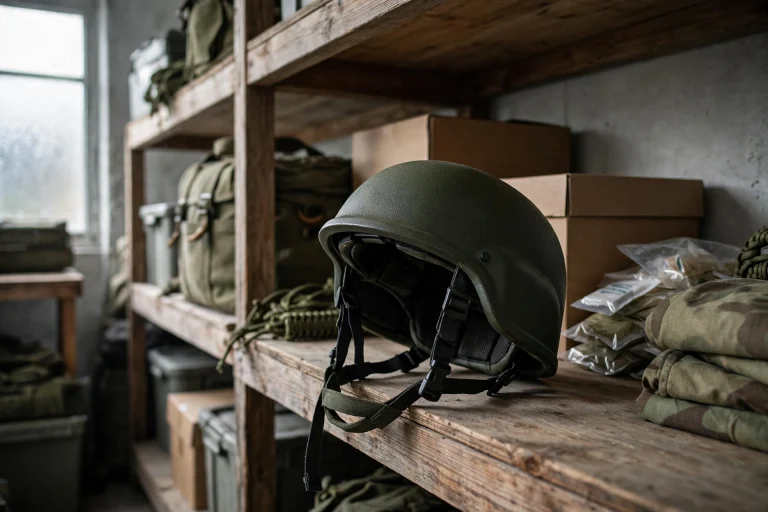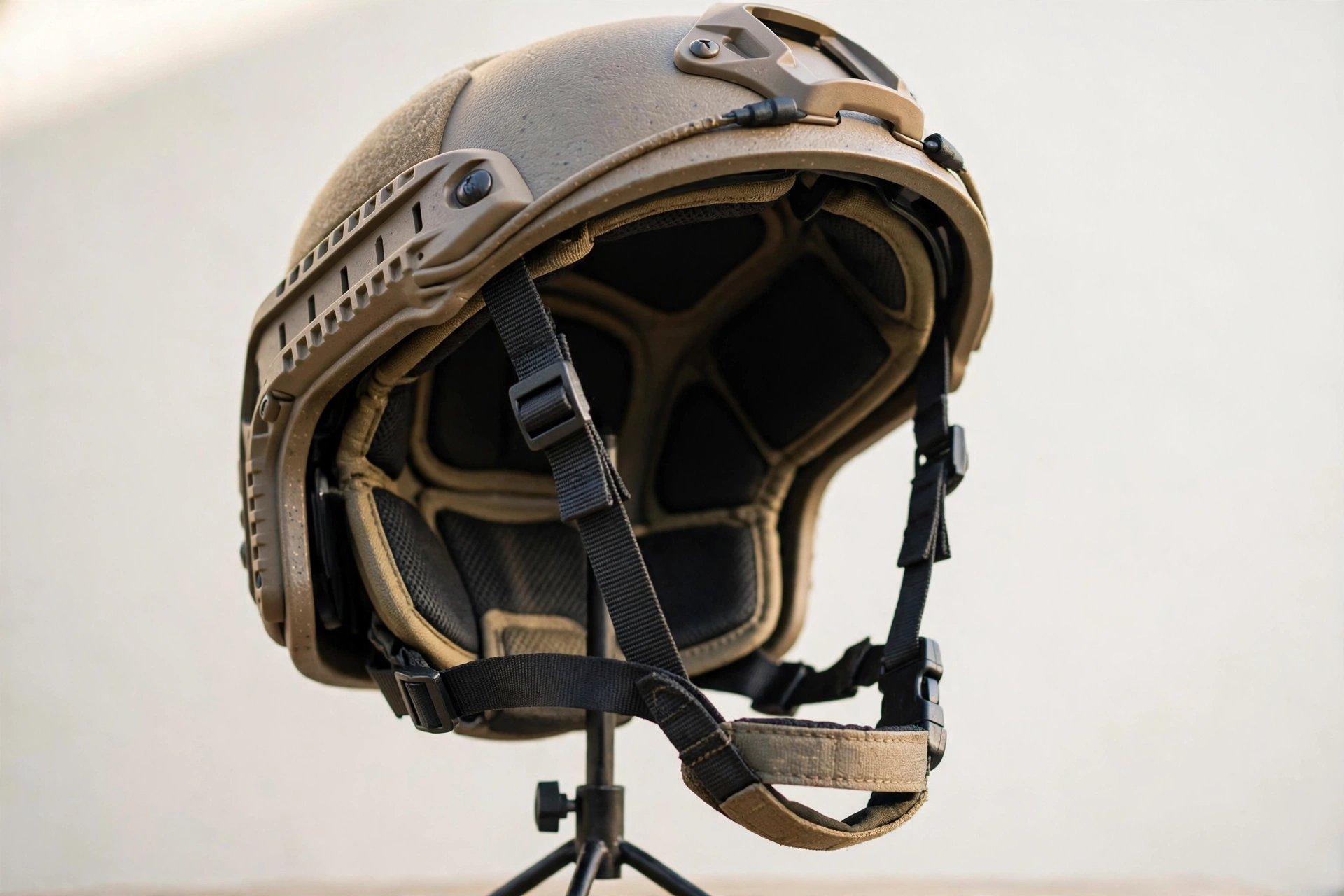
In general terms, ballistic helmets are heavier than everyday helmets, and that weight — worn for hours, often with accessories attached — can contribute to neck strain and fatigue, especially if the helmet fits poorly or is badly balanced. The risk is manageable, but it is real, and it is why fit, balance, and neck conditioning matter as much as the helmet’s protective rating.
Anyone who has worn a heavy helmet for a full day knows the feeling: a dull ache at the base of the skull, stiffness when turning the head, and tiredness that builds over the shift. This guide explains, in general terms, why ballistic helmets weigh what they do, how that weight affects the neck, and what can be done to reduce the strain.
Why Are Ballistic Helmets Heavy?
Ballistic protection comes from material, and material has weight. The layered fibres and resin that make up a ballistic shell need a certain thickness to absorb and spread the energy of a fragment or projectile, and that thickness translates directly into weight. A higher level of protection generally means more layers, and therefore a heavier helmet. Designers work hard to keep weight down — using lighter fibres and smarter shell shapes — but they cannot remove weight without also removing protection.
Accessories add to the total. Lights, cameras, night vision devices, and communication headsets all mount to the helmet, and a helmet that feels reasonable on its own can become noticeably heavy once fully equipped. In general terms, the weight on the head is the weight of the shell plus everything attached to it, and that total is what the neck has to carry, hour after hour.
How Does Helmet Weight Affect the Neck?
The head is already a heavy object for the neck to support, and adding a helmet increases the load. The neck muscles work constantly to hold the head upright and steady, and extra weight means extra work — particularly during movement, when the head turns, nods, or absorbs jolts from walking, running, or riding in a vehicle. Over hours, that extra work builds into fatigue, stiffness, and soreness, and fatigue can reduce alertness and reaction time.
Balance matters as much as total weight. A helmet that is front-heavy — for example, with a device mounted on the front shroud — pulls the head forward, and the neck muscles at the back must work harder to compensate. A rear-heavy setup pulls the other way. In general terms, a well-balanced helmet feels lighter than a poorly balanced one of the same weight, because the neck is not fighting a constant pull in one direction. That is why counterweights are sometimes fitted at the rear: not to add weight for its own sake, but to restore balance.
What Helps Reduce Neck Strain?
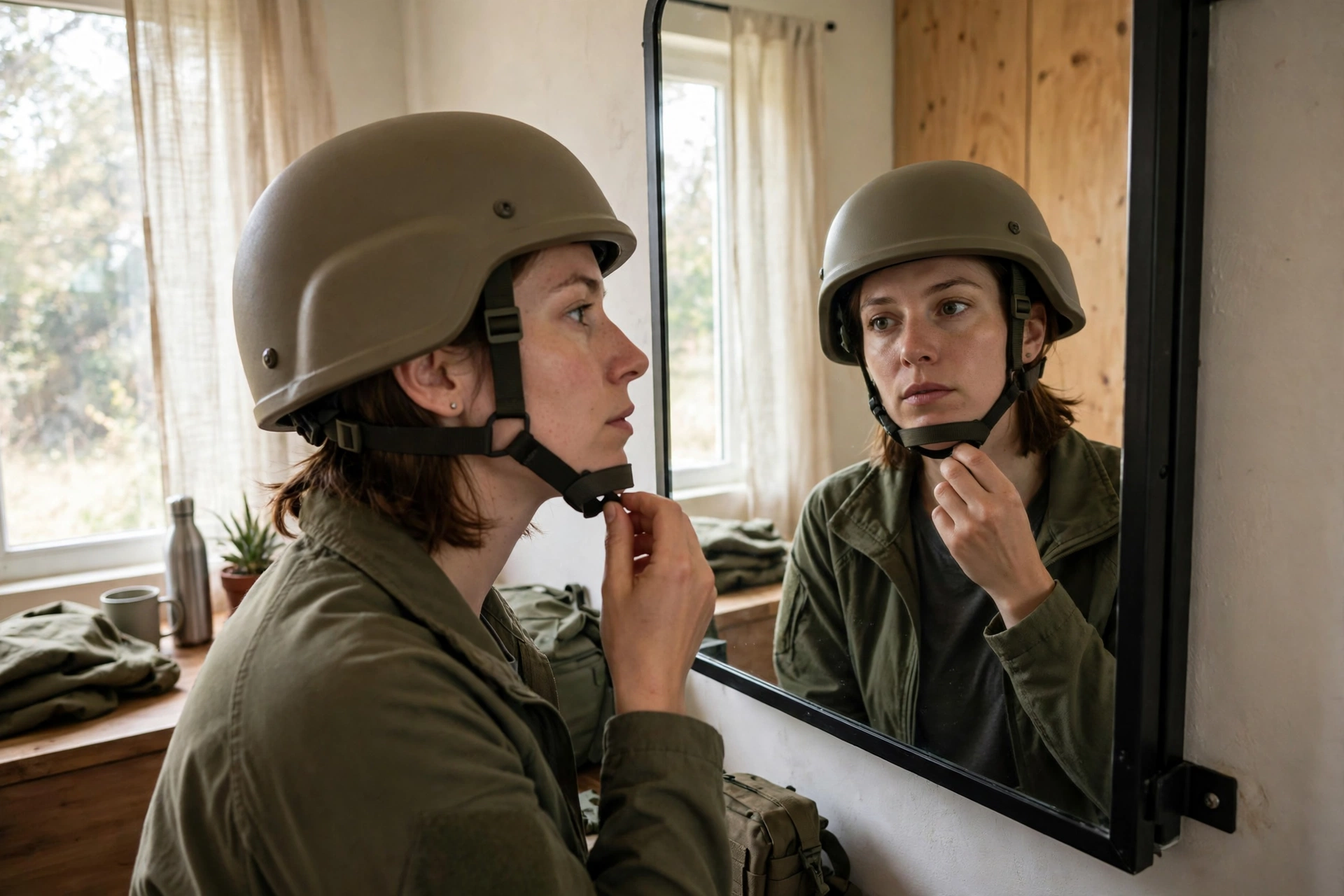
Fit is the first step. A helmet that sits level, with the retention system properly adjusted, distributes its weight evenly and stays in place without constant correction. A helmet that slides forward or sits tilted forces the neck to compensate, and that compensation is tiring. Take time to adjust the pads and straps, and re-check the fit when accessories are added or removed.
Balance is the second step. Keep accessories as light as practical, and if a front-mounted device makes the helmet nose-heavy, consider a rear counterweight to even it out. The aim is a helmet that feels neutral on the head — neither pulling forward nor backward. Some users also benefit from a helmet with a better weight distribution built in, such as a design that sits lower on the head, but the principle is the same: balance first, then total weight.
The third step is the wearer. Neck strength and endurance build with regular use and with general conditioning, and taking the helmet off during breaks gives the neck a rest. Stretching and movement during downtime help too. In general terms, neck strain is rarely caused by one factor alone — it is the combination of weight, balance, fit, and duration — so addressing several factors together works better than fixing just one.
Can a Lighter Helmet Solve the Problem?
Partly. Lighter materials have reduced ballistic helmet weights over the years, and a lighter helmet is easier on the neck. But weight cannot be reduced without limit: protection depends on material, and a helmet that is too light for its rating would not provide that rating. Choosing the lightest helmet that meets the required protection level is sensible, but choosing a lighter helmet that does not meet the requirement is not a trade worth making.
There is also a useful comparison with other helmet types. Some modern helmets include a low-friction layer intended to reduce rotational forces in angled impacts; reading about what MIPS is for helmets can help you understand that feature, which is about how forces are managed rather than about weight. The broader lesson is the same: a helmet is a system, and weight, balance, fit, and protection all interact. Optimising one at the expense of the others rarely helps.
When Should Neck Pain Be Taken Seriously?
Ordinary muscle fatigue after a long day in a helmet is common and usually settles with rest. But persistent pain, pain that radiates into the arms, numbness or tingling, or pain that follows a specific incident should not be ignored — these can indicate something more than simple fatigue. In general terms, if neck symptoms persist, worsen, or follow an injury, it is worth getting checked by a medical professional rather than pushing through.
It is also worth reporting ongoing strain to whoever manages the equipment. A recurring problem across a team may point to a fit issue, a balance issue, or a helmet choice that does not suit the work — problems that can often be fixed by adjusting the setup rather than expecting individuals to endure it. Good equipment management includes listening to the people who wear the kit every day.
Frequently Asked Questions
Q: Is neck strain from a ballistic helmet normal?
A: Some fatigue after long wear is common, especially with accessories fitted, but persistent or worsening pain is not something to ignore — check fit and balance first, and seek medical advice if symptoms persist.
Q: Do counterweights make the helmet heavier overall?
A: Yes, they add total weight, but they can reduce strain by restoring balance, so the neck no longer fights a constant forward or backward pull. The net effect is often less fatigue despite the extra weight.
Q: Does a better fit really reduce neck strain?
A: Yes. A level, stable helmet distributes weight evenly and stays put without constant correction, which reduces the extra work the neck muscles have to do over a long shift.

Olivia
Writer at Helmet Today, covering helmet reviews, fit and riding safety.