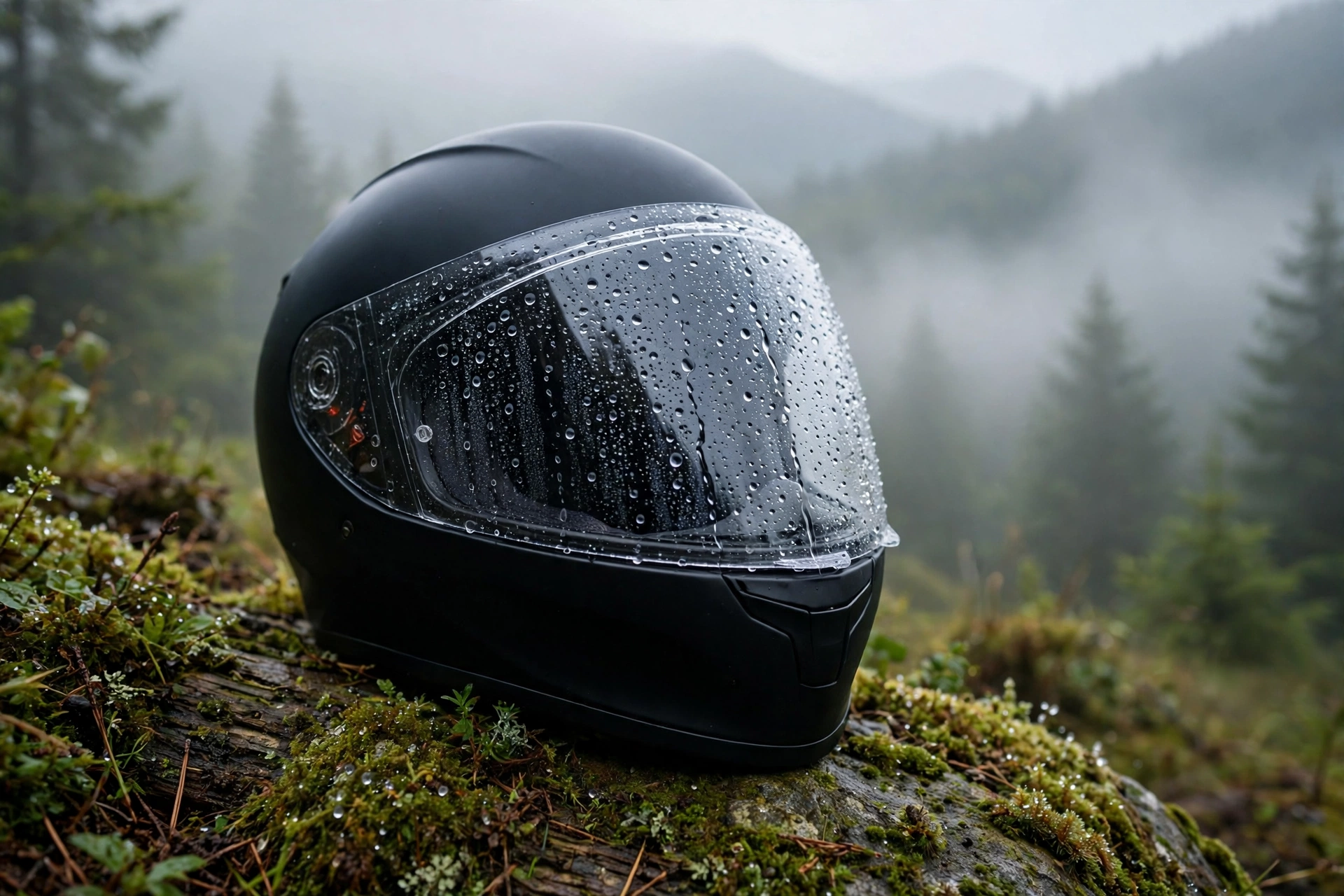
In general terms, a helmet anti-fog coating is a thin treatment on the inside of a visor or shield that stops moisture from forming into droplets, so your vision stays clear instead of clouding over in cold, humid, or rainy conditions. It does not remove moisture from the air — it changes how that moisture behaves on the surface.
Fogging is one of the most common frustrations for helmet wearers. You set off with a clear visor, then at the first traffic light, in the rain, or on a cold morning, a white haze creeps across your view. Lifting the visor fixes it for a moment, but that lets in wind, rain, and noise. An anti-fog coating is meant to solve the problem without that compromise.
What Is an Anti-Fog Coating?
An anti-fog coating is a thin layer applied to the inner surface of a visor, goggle lens, or shield. Some helmets come with it factory-applied, some visors carry it as a built-in layer, and some products let you apply it yourself as a spray or wipe. The coating itself is usually invisible, and a treated visor looks the same as an untreated one until moisture arrives.
There are two broad kinds. Hydrophilic coatings attract water and spread it into a thin, even film instead of letting it bead into droplets. That film is transparent, so you see through it almost as if the visor were dry. Hydrophobic coatings do the opposite: they repel water so droplets roll off, which works well in rain but is less effective against the fine condensation that causes fogging from your own breath.
Many helmets also use a separate anti-fog insert — a thin inner lens held slightly away from the visor, creating a double-glazed effect. The air gap insulates the inner lens from the cold outer visor, so condensation is less likely to form. Inserts and coatings solve the same problem in different ways, and some riders use both.
How Do Anti-Fog Coatings Work?
Fog forms when warm, moist air meets a colder surface. Your breath is warm and humid; your visor, chilled by wind and outside air, is cold. When that breath hits the visor, the moisture condenses into thousands of tiny droplets, and each droplet scatters light. Together they create the white haze we call fog.
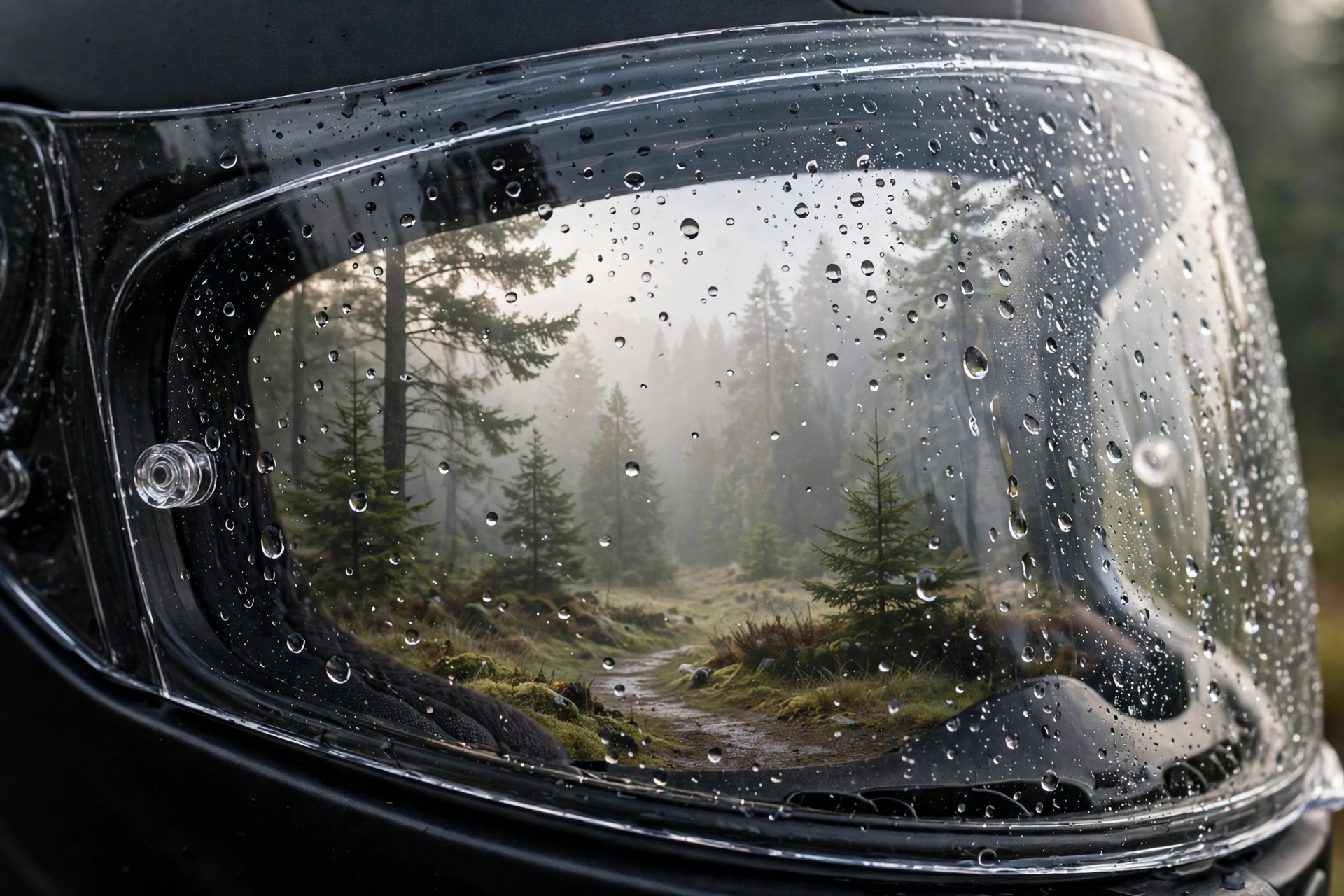
A hydrophilic anti-fog coating changes the surface energy of the visor so water cannot form separate droplets. Instead, moisture spreads out into a flat sheet that light passes through cleanly. The visor may still be wet, but it stays transparent. That is why a treated visor can feel damp yet remain perfectly clear.
Ventilation works alongside the coating, not instead of it. Airflow across the inside of the visor carries moist air away before it can condense, which is why cracking the visor open slightly often clears fog. The best results come from combining the two: a coated visor plus open vents gives moisture fewer chances to settle and fewer surfaces to settle on.
How Long Does an Anti-Fog Coating Last?
Factory coatings typically last months to a few years depending on use, cleaning, and storage, while spray-on or wipe-on treatments usually last weeks to a few months and need reapplying. There is no permanent anti-fog coating in general consumer use: every coating wears down with cleaning, touching, and exposure to heat and sunlight.
Cleaning is the biggest factor in coating life. Wiping a dry visor with a rough cloth, using harsh cleaners, or scrubbing the inside surface all wear the coating away faster. Rinsing with clean water and patting dry with a soft cloth is gentler, and avoiding the inside of the visor altogether unless it is dirty will extend the coating’s life.
Signs that a coating is failing are easy to spot. Fog starts returning in conditions where it used to stay clear, or appears in patches rather than evenly. Patchy fogging usually means the coating has worn thin in the areas you touch or clean most often, such as the centre of the visor or near the edges where you grip it.
How Do You Care for an Anti-Fog Visor?
Clean the inside of the visor as rarely as you can get away with, and always gently. Rinse with lukewarm water to remove dust first — wiping a dusty visor dry is what scratches it. Then wash with a mild soap or a cleaner recommended for visors, rinse again, and let it air dry or pat it with a soft microfibre cloth.
Never use glass cleaner, solvents, or paper towels on the inside of a treated visor, since these can strip the coating or scratch the surface. Avoid touching the inside of the visor with bare fingers as well: skin oils contaminate the coating and create spots where fog forms first. If you must handle the visor, hold it by the edges.
Store the helmet with the visor closed or protected, away from direct heat and sunlight. Heat from a radiator, a hot car, or a sunny windowsill can degrade coatings and warp visors over time. A helmet bag or a shelf indoors is a better home than a garage hook in summer.
Can You Add Anti-Fog Coating to Any Helmet?
In general terms, yes — spray and wipe treatments work on most visors, goggles, and shields, including helmets that did not come with a factory coating. They are widely available and inexpensive, and they are a sensible first step if fogging bothers you but you are not ready to buy a new visor or helmet.
Results vary, though. Aftermarket treatments rarely match a factory coating for durability, and they need regular reapplication. They also work best on clean, unscratched visors: a visor already covered in fine scratches will fog unevenly no matter what you apply, because the scratches themselves scatter light and trap moisture.
For persistent fogging, an anti-fog insert is often the more reliable upgrade. Inserts are replaceable, they do not depend on a fragile coating layer, and they keep working even when the outer visor is wet or cold. Many riders find that an insert plus good ventilation solves fogging completely, where sprays only improved it.
Whatever solution you choose, remember that clear vision is a safety feature, not a comfort extra. A fogged visor tempts you to ride with it open, which reduces eye protection and increases wind fatigue. Keeping your visor clear is part of the same routine as checking fit, straps, and condition — and part of choosing a helmet whose whole protection system works together, including liners that manage angled impacts, as explained in this guide to what MIPS means for helmets.
Frequently Asked Questions
Q: Does an anti-fog coating work in heavy rain?
A: In general terms, it helps with condensation from your breath, but heavy rain on the outside of the visor is a different problem. A hydrophobic outer treatment or a visor with a rain-repelling surface handles rain better, while the anti-fog coating handles the inside.
Q: Can I use anti-fog spray on a pinlock-style insert?
A: It is usually unnecessary, since the insert already prevents fogging, and some sprays can damage the insert’s surface. Check the insert maker’s guidance before applying anything to it.
Q: Why does my anti-fog visor still fog when I stop?
A: When you stop, airflow drops and warm breath builds up inside the helmet, which is the hardest condition for any coating. Cracking the visor slightly or opening a vent usually clears it until you are moving again.

Olivia
Writer at Helmet Today, covering helmet reviews, fit and riding safety.