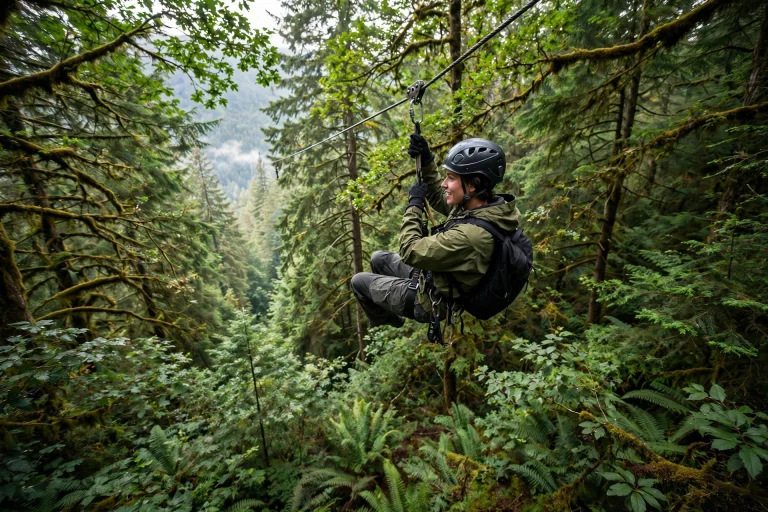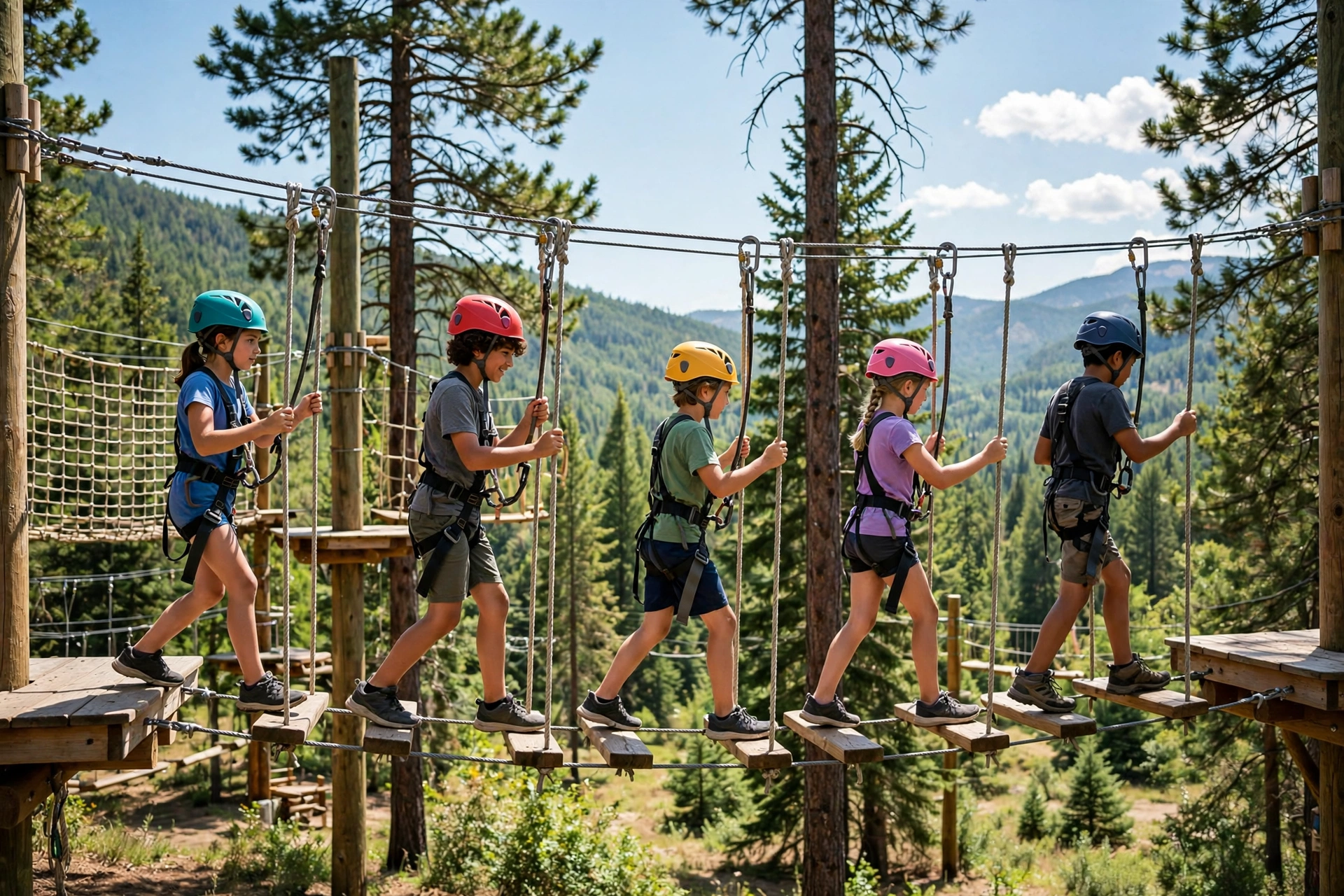
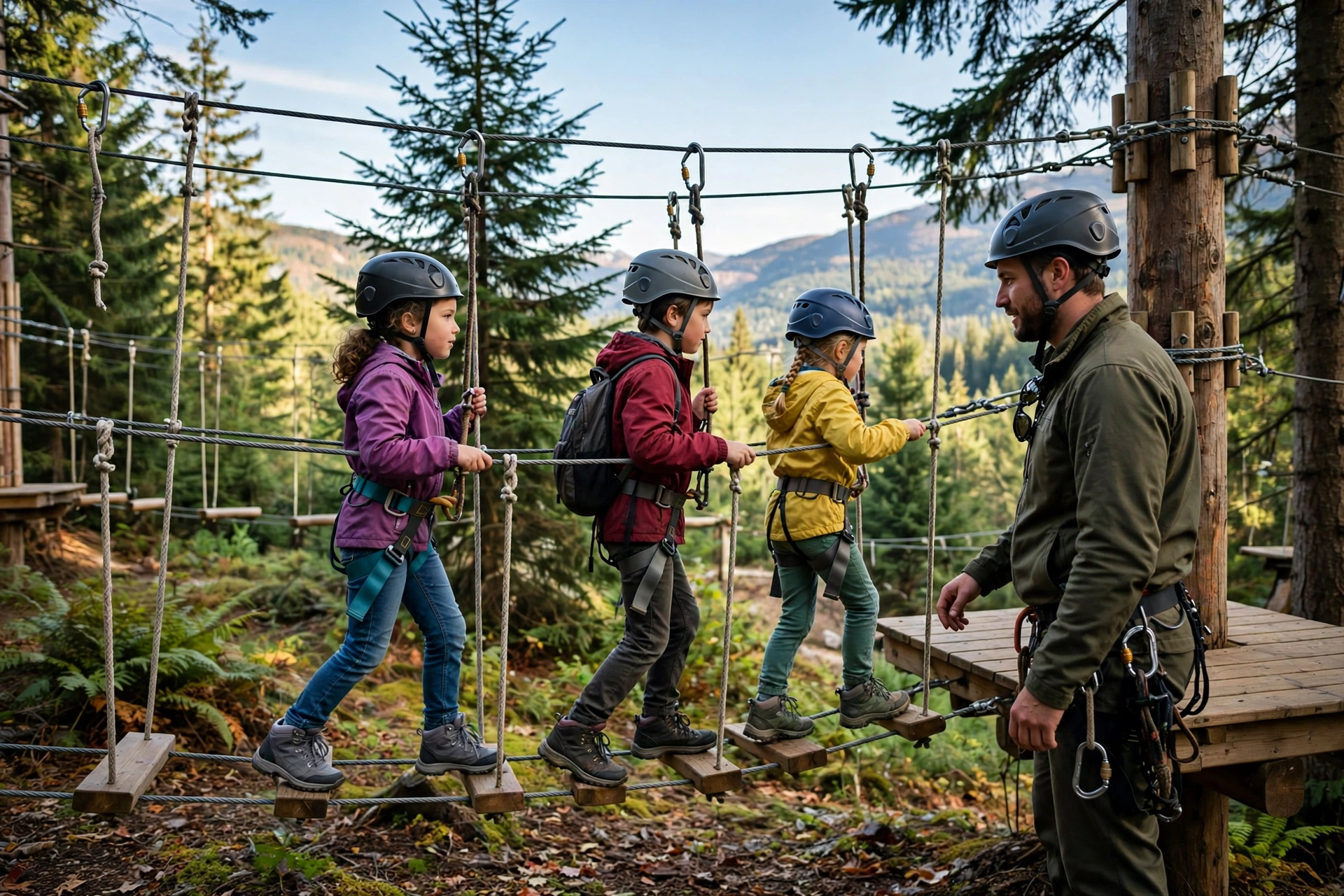
In general terms, adventure parks require helmets for children on ropes courses, zip lines, climbing elements, and other high activities, and the park’s staff will check fit and enforce the rule for the whole activity. If your child is heading to an adventure park, expect a helmet to be part of the kit, not an optional extra.
This guide explains what parks usually require, why the rules exist, and how to prepare your child so the helmet is a help rather than a hassle.
Why Do Adventure Parks Require Helmets for Kids?
Adventure park activities put children at height, on moving elements, and close to hard structures. A child on a ropes course can bump a platform, a zip line rider can swing into a support, and a climbing element can mean a knock against a beam. Helmets reduce the harm from those everyday knocks, which is why parks treat them as standard safety kit.
Children are also less predictable than adults on these courses. They move suddenly, lose balance more easily, and are less likely to brace for a bump. A helmet covers for that unpredictability in a way that supervision alone cannot.
Parks also set rules for the whole group, not just for individual children. A single helmet rule, applied to everyone, is easier to enforce consistently than a rule that depends on age, height, or activity, and consistent enforcement is what keeps a busy park safe.
What Helmet Rules Do Adventure Parks Usually Have?
In general terms, parks require a helmet on all high elements: ropes courses, zip lines, climbing walls, and aerial trails. The helmet must be worn for the entire activity, not just for the high parts, and it must stay fastened. Staff will usually check the fit before a child starts and may re-check it during the activity.
Parks usually provide helmets as part of the ticket or hire, sized for children and adjusted by staff. If a park allows your child’s own helmet, it will usually need to be a suitable sports helmet in good condition, and staff may still inspect it before allowing it on the course.
Some parks set additional rules by height or age, such as a minimum height for certain courses, or a requirement that younger children are accompanied by an adult. These rules vary by park, so check the park’s own information before you visit rather than assuming one park’s rules match another’s.
How Is a Child’s Helmet Fitted at an Adventure Park?
Staff will usually fit the helmet themselves: level on the head, covering the forehead, snug enough not to rock, with the chin strap fastened and adjusted. The helmet should not tip forward over the eyes or slide back off the forehead, and it should stay put when the child shakes their head.
Parents can help by making sure long hair is tied back and that the child is not wearing a bulky hat or hood underneath that would change the fit. If the helmet feels uncomfortable, say so before the activity starts — staff would much rather adjust a helmet on the ground than mid-course.
Children should be told, in simple terms, to keep the helmet on and fastened for the whole activity, even if it feels hot or itchy. A helmet that comes off halfway through a ropes course is no protection at all, and parks treat removing a helmet during an activity seriously.
Can Children Wear Their Own Helmet at an Adventure Park?
Sometimes, but it depends on the park. In general terms, parks prefer their own helmets because they know the helmets’ condition, sizing, and suitability for their courses. A park helmet is inspected regularly, replaced when worn, and fitted by trained staff.
If a park does allow a child’s own helmet, it usually needs to be a helmet suited to the activity — a climbing or multi-sport helmet rather than, say, a cycling helmet with large vents — and it needs to be undamaged, correctly sized, and able to be fitted with a secure chin strap. Staff will inspect it and may refuse it if it does not meet their standard.
When in doubt, use the park’s helmet. It removes any question about suitability, it is fitted by staff who do this all day, and it means one less thing to carry and worry about.
What Should Parents Check Before Visiting an Adventure Park?
Check the park’s helmet and safety rules on its website or booking information before you go, including whether helmets are provided, whether own helmets are allowed, and any height or age limits for the courses your child wants to try. This avoids disappointment at the gate.
Talk to your child beforehand about keeping the helmet on, listening to instructors, and telling staff if the helmet feels loose or uncomfortable. Children who understand why the helmet matters are far more likely to keep it on without fuss.
Also check the helmet your child will be wearing for general condition if you are bringing your own: no cracks, no damaged straps, a working buckle, and a fit that is snug without being tight. And remember that helmet protection is about more than a hard shell — modern designs such as rotational-impact liners like MIPS are designed to reduce twisting forces in angled impacts, which is the kind of knock a ropes course can deliver.
Finally, plan the visit itself with the helmet in mind: arrive with time for the safety briefing and fitting, tie back long hair before you get there, and leave bulky hats at home. Children who arrive prepared get fitted quickly, start sooner, and spend the visit on the course rather than waiting while a helmet is sorted out.
Frequently Asked Questions
Q: Do all adventure parks require helmets for kids?
A: In general terms, yes for high activities like ropes courses, zip lines, and climbing elements. Rules vary by park and activity, so check the specific park’s information before visiting.
Q: Does my child have to wear the helmet for the whole course?
A: Yes, in general terms parks require the helmet to stay on and fastened for the entire activity, not just the high sections. Staff may remove a child from the course if the helmet is taken off.
Q: What if the park helmet does not fit my child?
A: Tell staff before the activity starts. Parks stock a range of sizes and staff are trained to fit helmets, and they would rather swap or adjust a helmet on the ground than deal with a poor fit mid-course.

Olivia
Writer at Helmet Today, covering helmet reviews, fit and riding safety.