A caving helmet with a chin strap is the safer choice in general terms, because the strap keeps the helmet in place when you crawl, climb, duck, and squeeze through passages where a loose helmet would slip or fall off. A helmet without a chin strap can stay put on a gentle walk, but caving is rarely gentle.
This guide compares the two options honestly, explains when a strap matters most, and covers how to fit and use one properly.
Why Does a Chin Strap Matter in Caving?
Caving moves your head in every direction. You duck under low roofs, crawl on your belly, climb pitches, and squeeze through gaps that push against the helmet from the side. Without a chin strap, each of those movements can shift the helmet, and a shifted helmet protects a different part of your head than the part that is about to hit rock.
A chin strap also matters when you fall. In a slip or a tumble, an unstrapped helmet can come off entirely, leaving your head unprotected for the rest of the fall. A strapped helmet stays where it belongs through the whole incident, which is exactly when you need it most.
Vertical caving makes the case even stronger. On a pitch, you look up, down, and around constantly, and your helmet is jostled by rope, gear, and rock. A chin strap is cheap insurance against a helmet that slides over your eyes at the worst moment or drops down a pitch.
Are There Any Downsides to a Chin Strap?
The main downside is comfort if the strap is poorly fitted. A strap that is too tight chokes or chafes, especially on a long trip, and a strap that rubs the jaw or ears becomes a constant irritation. These are fitting problems, not reasons to skip the strap — a correctly adjusted strap should feel snug but not tight, and should sit comfortably under the chin.
A second concern is snagging. In a very tight squeeze, a strap or buckle can catch on rock, which is uncomfortable and can slow you down. In practice, this is rare with a well-routed strap, and the protection the strap provides outweighs the occasional snag. Keep straps tidy, tuck away excess length, and the risk stays small.
Some cavers worry about a strap in water, where a helmet could theoretically snag. In general terms, a properly fitted strap with a quick-release buckle addresses this: it holds firmly during normal use and can be released quickly with one hand if needed.
When Might a Helmet Without a Chin Strap Be Acceptable?
A helmet without a chin strap can be acceptable for gentle, horizontal caving on easy, walking-size passages where you stay upright, move slowly, and never climb or crawl. In those conditions, a well-fitting helmet may stay put on its own, and some cavers prefer the simplicity.
Even then, the margin is thin. A single stumble, a low duck, or a sudden movement can shift an unstrapped helmet, and you cannot predict when that will happen. For that reason, many caving clubs and guides require chin straps as a matter of policy, even on easy trips.
For children and beginners, the case for a strap is stronger still. Less experienced cavers move less predictably, fall more often, and are less likely to notice a helmet slipping before it becomes a problem. A strap removes that worry entirely.
How Should a Caving Helmet Chin Strap Fit?
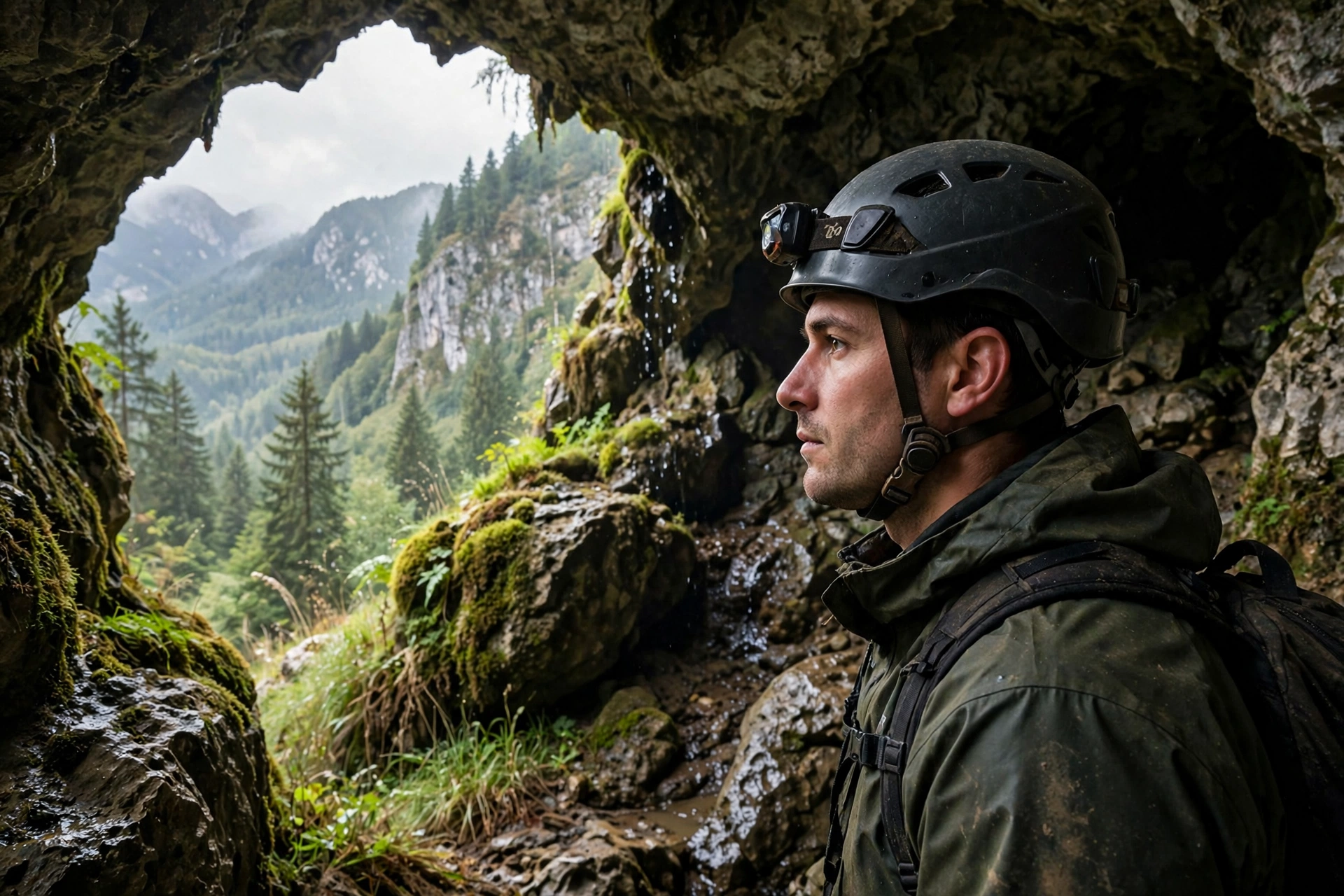
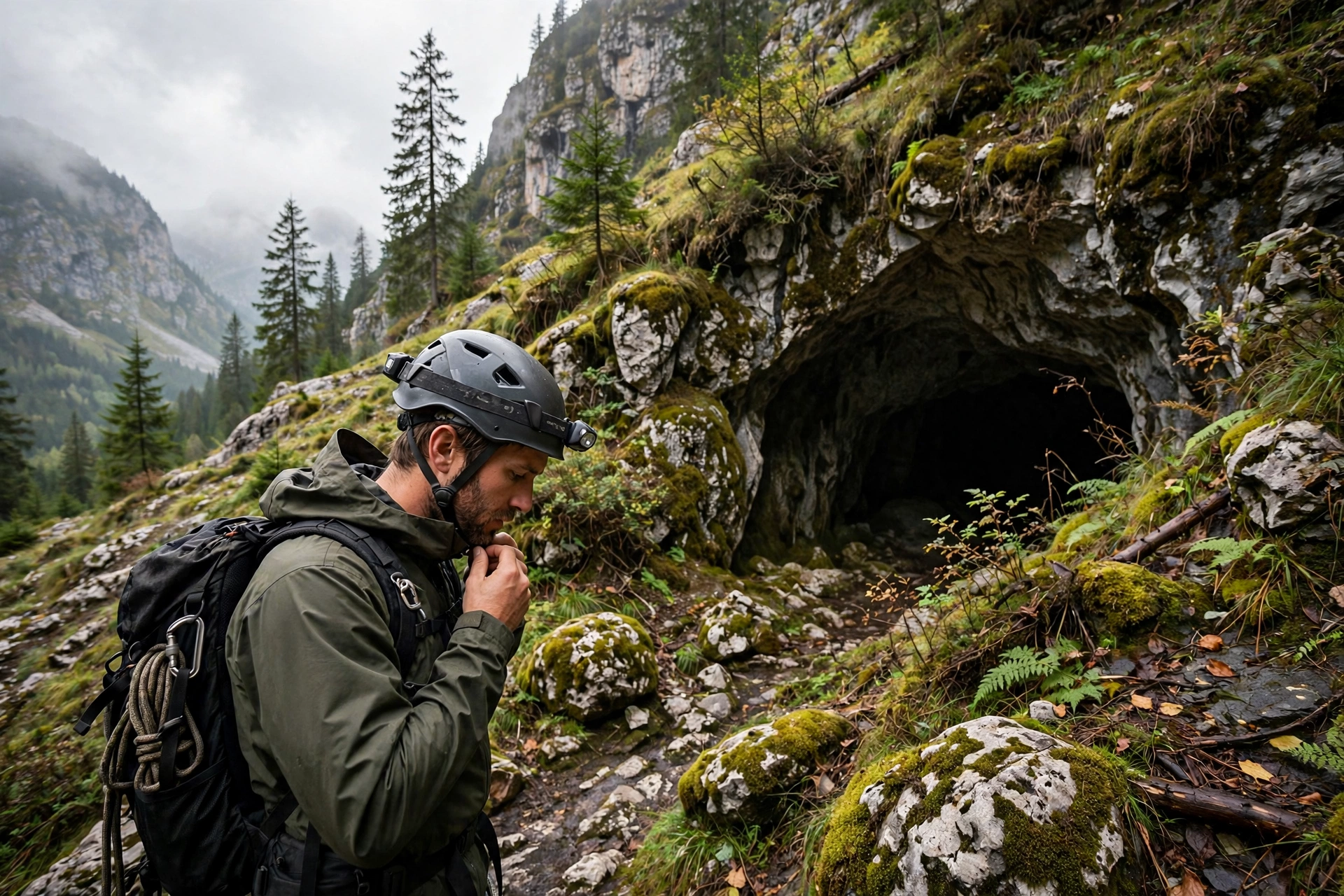
The strap should sit snugly under the chin, with room for about two fingers between strap and chin — tight enough that the helmet does not rock or lift when you shake your head, loose enough to talk, breathe, and swallow comfortably. Adjust it with the helmet in its final position, not before you put the helmet on.
Check the fit with the lamp attached and with any hood or balaclava you will wear underground, since both change how the helmet sits. A strap fitted over bare hair may be too tight over a hood, and one fitted over a hood may be too loose without it.
Test the buckle with gloves on. Underground, you will be wearing gloves, your hands will be cold and muddy, and a buckle that needs bare fingers and good light to operate is a buckle that will frustrate you. A good buckle clicks positively and releases with one hand.
What Should You Look For When Buying?
Look for a helmet that comes with a chin strap as standard, with a sturdy buckle and easily adjustable straps. Check that the strap attachment points feel solid — a strap is only as good as the points where it joins the shell — and that the strap length adjusts smoothly rather than slipping under load.
Consider a strap with a quick-release buckle if you do wet or vertical caving, where a fast release could matter. And look at the helmet as a whole system: a good chin strap on a helmet with poor impact protection is still a poor helmet, so weigh the whole design, including modern approaches such as rotational-impact liners like MIPS that are designed to reduce twisting forces in angled impacts.
If you already own a helmet without a strap, check whether the maker sells a strap kit for it. Many do, and fitting one is usually a simple job that transforms the helmet’s security for very little cost.
One last habit is worth building: check the strap at the cave entrance, every trip, before you go in. Straps loosen in transit, buckles pick up grit, and a helmet that was perfectly adjusted last trip may not be this trip. A ten-second check — shake test, strap tug, buckle click — catches all of that while you are still standing in daylight, where it is easy to fix.
Frequently Asked Questions
Q: Is a chin strap required for caving?
A: In general terms, many caving clubs, guides, and organised trips require a chin strap, and it is strongly recommended even where it is not formally required. A strapped helmet stays in place through crawls, climbs, and falls.
Q: Will a chin strap be uncomfortable on a long caving trip?
A: Not if it is fitted correctly. A strap adjusted to about two fingers of slack under the chin should feel snug without choking or chafing, even over many hours underground.
Q: Can I add a chin strap to a helmet that does not have one?
A: Often, yes. Many helmet makers sell strap kits for their models, and fitting one is usually straightforward. Check with the maker before drilling or modifying the shell yourself.

Olivia
Writer at Helmet Today, covering helmet reviews, fit and riding safety.