Taekwondo headgear is required in most taekwondo sparring and competition, and the rules cover when it must be worn, what it must protect, and what type is allowed. In general terms, the headgear must cover the head and ears, stay securely in place, and in many competitions include electronic sensors that register head kicks for scoring.
Taekwondo is a kicking art, and kicks to the head are a central part of the sport. That makes headgear more important here than in many other martial arts: the head is a scoring target, and it gets hit often. This guide explains the rules as they generally apply, how they differ between training, sparring, and competition, and what to check before you step onto the mat.
Is Headgear Required in Taekwondo Competition?
In most taekwondo competition, yes. The major international rules require competitors to wear approved headgear during sparring matches, and many national and local organisations follow the same approach. The requirement usually applies across age groups and belt levels, from junior divisions through to senior competition, because head kicks are legal at most levels of the sport.
There are exceptions. Some demonstration events, forms competitions, and breaking events do not involve sparring, so headgear is not needed. A few organisations allow senior black belt divisions to compete without headgear under their own rules, but this is the exception rather than the norm.
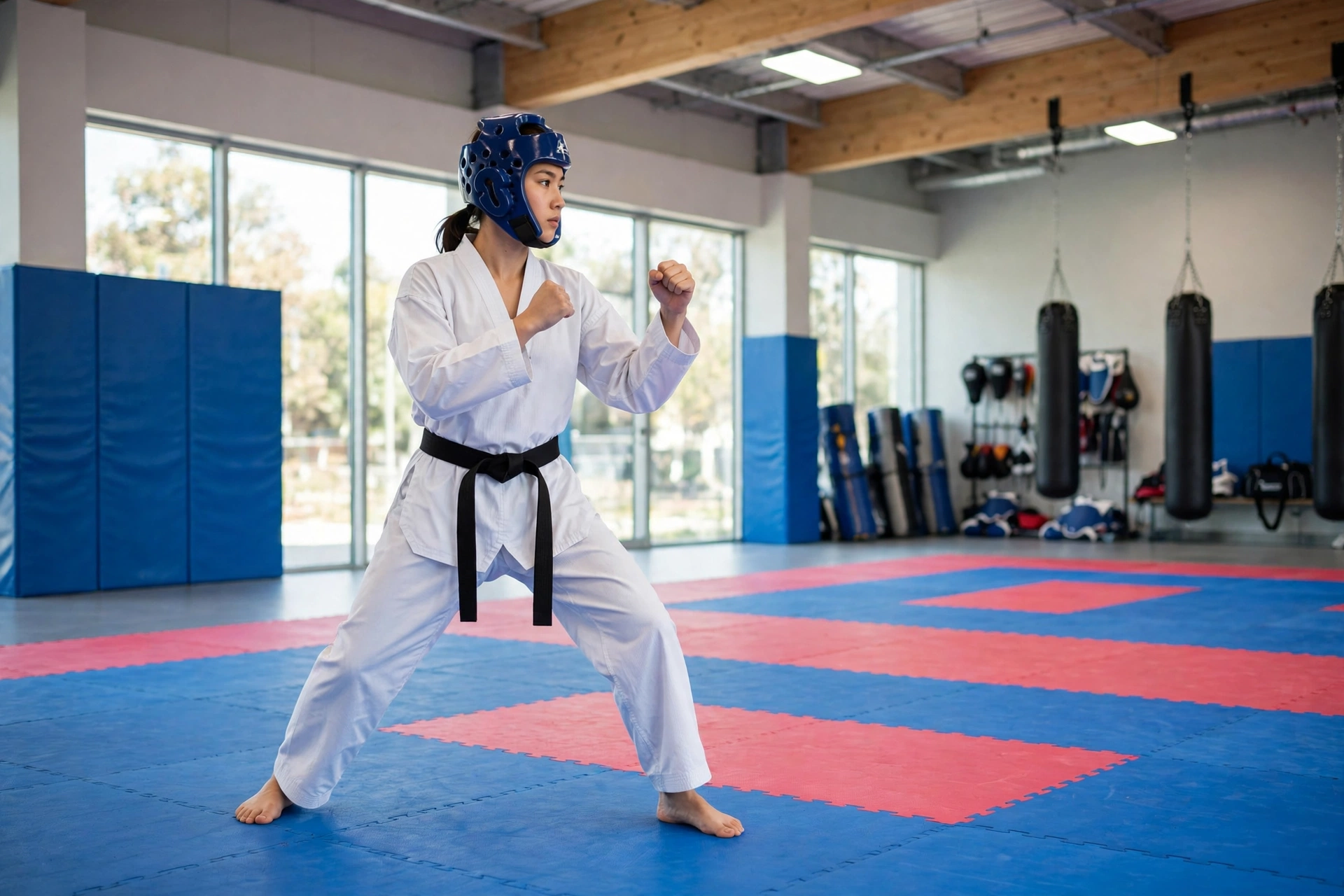
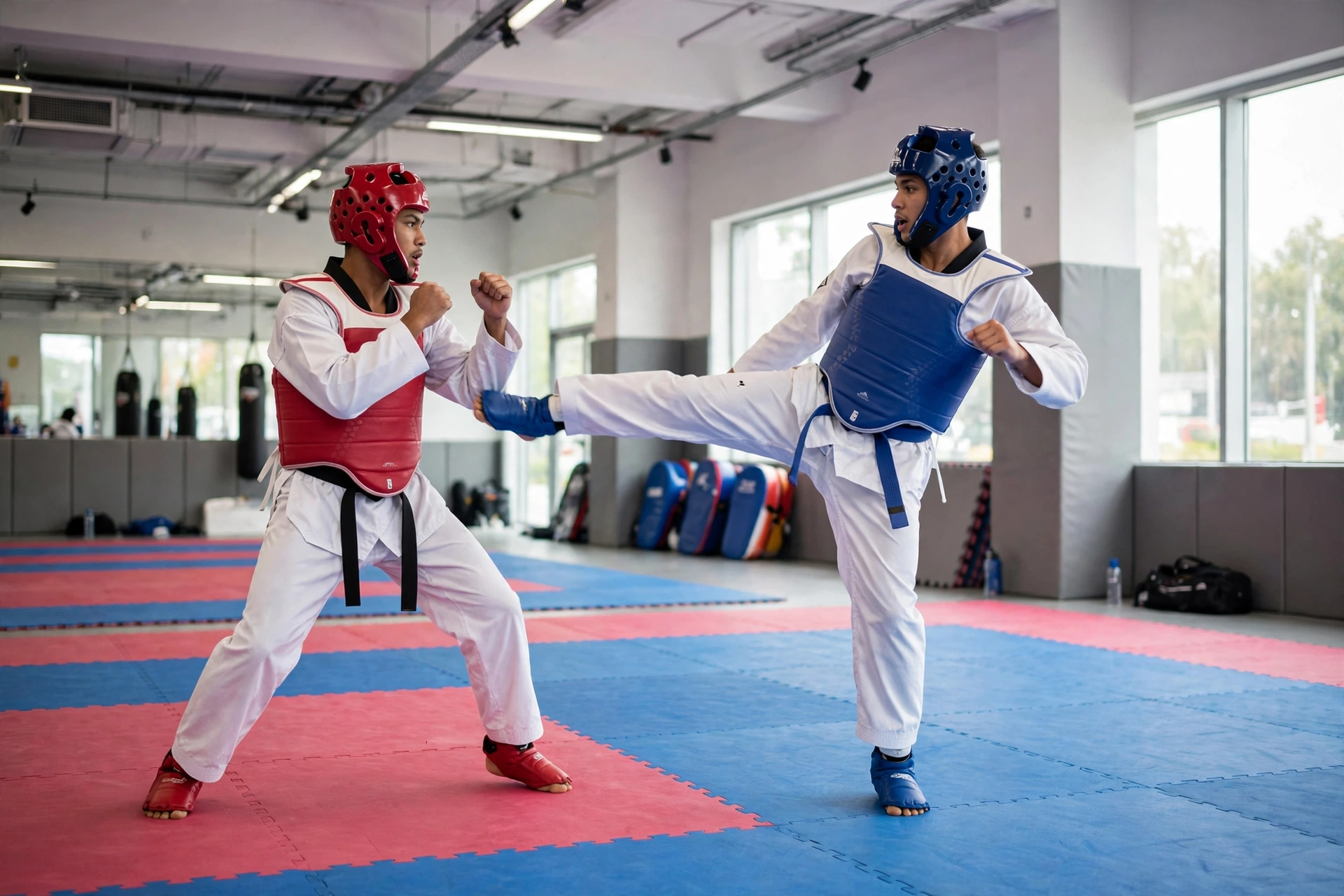
If you are preparing for a competition, check the rules early. Find out whether headgear is required, whether you must bring your own or whether it is provided, and whether there are rules about colour: in many competitions, one fighter wears red headgear and the other wears blue, matching the chest protector, so that referees and judges can tell the fighters apart. Turning up with the wrong colour or an unapproved type can cause delays or disqualification.
What Must Taekwondo Headgear Cover?
Taekwondo headgear must cover the top, sides, and back of the head, including the ears. The padding should run across the forehead down to the brow line, over the temples, and around the back of the head. The ear cups should sit directly over the ears and protect them from kicks and glancing blows. Most designs leave the face open, with the eyes, nose, and mouth uncovered, so the wearer can breathe freely and see clearly.
Some taekwondo headgear includes a clear face shield or extra padding around the cheeks, and this is more common in junior divisions, where the rules are often stricter about protection.
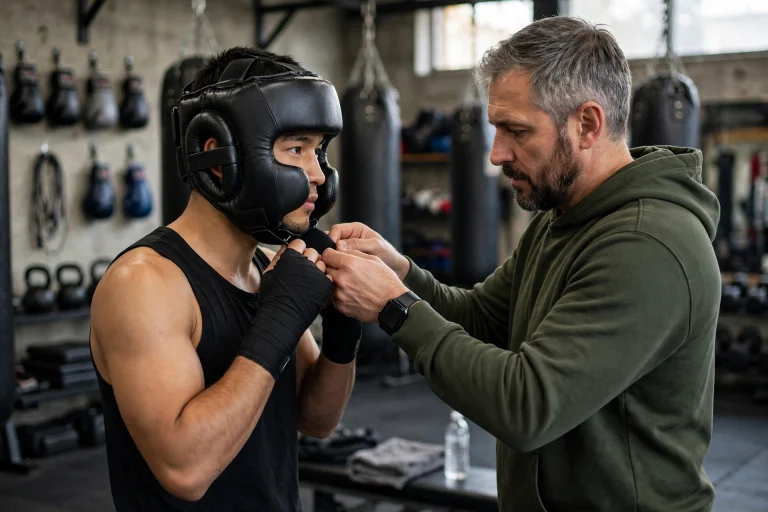
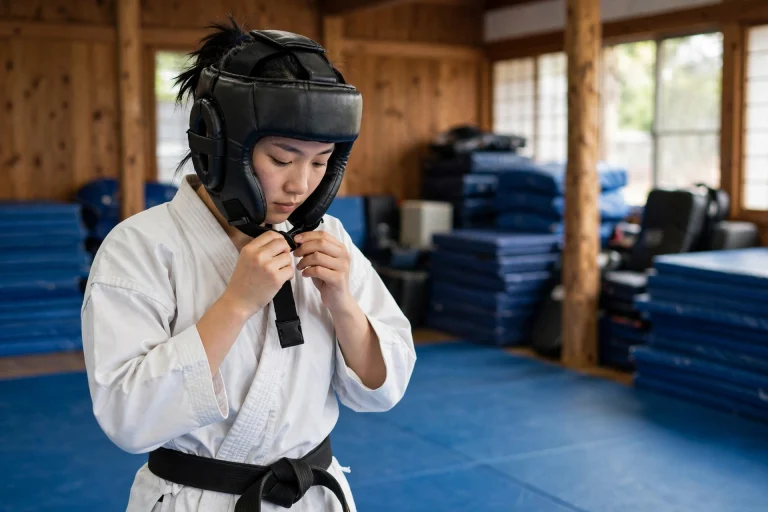
The headgear must also stay in place. It is held by a chin strap and usually by straps or laces at the back, and it should fit snugly enough that a kick does not knock it sideways or off. Referees may check the fit before a match, and a headguard that comes loose during a bout can lead to a pause while it is adjusted, which disrupts the flow of the match and can cost you momentum.
How Do Rules Differ Between Sparring and Competition?
Training sparring and formal competition follow different rules in most clubs. In training, your instructor decides the headgear policy, and many clubs ask everyone to wear headgear for all sparring, regardless of level. The aim is safety over time: you spar far more often in training than in competition, so the total number of head impacts is higher, and consistent protection matters.
In competition, the rules are set by the governing body running the event, and they are stricter and more specific. They cover not only whether headgear is worn but what type is allowed, whether electronic sensors are required, what colours are permitted, and how the headgear is checked before a match. Competition rules also cover what happens if headgear comes off during a bout, which is usually a pause while the referee checks it and the fighter refits it.
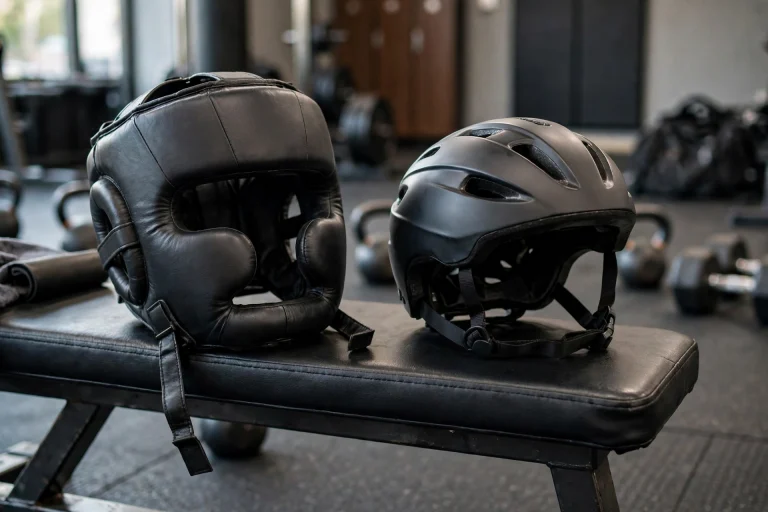
Electronic scoring is a key difference. Many modern competitions use electronic headgear with built-in sensors that register a scoring kick to the head automatically. This headgear is usually provided by the event or must meet a specific approved standard, and it is different from the plain padded headgear used in training. If you compete in an event that uses electronic scoring, find out in advance whether you need to buy approved electronic headgear or whether it will be provided on the day. If you are comparing headgear protection features across sports, reading about what MIPS is for helmets can help you understand how impact protection is described, even though MIPS is a feature of hard-shell helmets rather than soft taekwondo headgear.
What About Electronic Scoring Headgear?
Electronic scoring headgear contains sensors that detect when a kick lands on the head with enough force to score. The sensors connect to the electronic scoring system, and when a valid kick is registered, the point appears on the scoreboard. This system was introduced to make scoring more consistent, since judging head kicks by eye can be difficult at full speed.
Electronic headgear looks and fits much like regular taekwondo headgear, but it is heavier because of the sensors and electronics inside, and it must be charged before use. It is also more expensive, which is why many events provide it rather than expecting every competitor to own a set.
There is an important limit to understand: electronic headgear scores kicks, it does not add extra protection. The padding is similar to regular headgear, and it does not prevent concussion. A kick that snaps your head back will still move your brain, sensors or not. Electronic headgear is a scoring tool, not a safety upgrade, and it should never be treated as one.
What Headgear Rules Apply in Training?
In training, the rules are your club’s rules. Most clubs require headgear for sparring, and many require it for any drill that involves head contact. Some clubs also require a mouthguard and a chest protector alongside headgear. Your instructor will tell you what is expected, and it is worth asking about this when you join a club, before you buy equipment.
Fit matters just as much in training as in competition. The headgear should sit level, cover your forehead, temples, and ears, and stay put when you move, turn, and duck. Try it on with your mouthguard in, and practise a few kicks and defensive movements before your first sparring session. If it slides or blocks your vision, adjust the straps or try a different size.
Look after your headgear between sessions. Wipe it down after training, let it air-dry, and check the straps and padding regularly for wear. Foam compresses over time, and a headguard that fitted well when new can become loose after months of regular use. Replace it when the padding has gone flat or the straps no longer hold their adjustment.
Frequently Asked Questions
Q: Do you have to wear headgear for taekwondo?
A: In most sparring and competition, yes. Headgear is required by the major taekwondo rules for sparring matches, and most clubs require it for training sparring too. Forms, breaking, and demonstration events do not involve sparring, so headgear is not needed there.
Q: Does taekwondo headgear prevent concussion?
A: No. Taekwondo headgear reduces cuts, bruising, and ear damage, but it does not stop the head movement that causes concussion. Controlled sparring, good defence, and proper technique are the main protections against serious head injury.
Q: What is electronic taekwondo headgear?
A: It is headgear with built-in sensors that register scoring head kicks for the electronic scoring system used in many competitions. It is a scoring tool, not extra protection, and it must usually meet an approved standard for the event you enter.

Olivia
Writer at Helmet Today, covering helmet reviews, fit and riding safety.