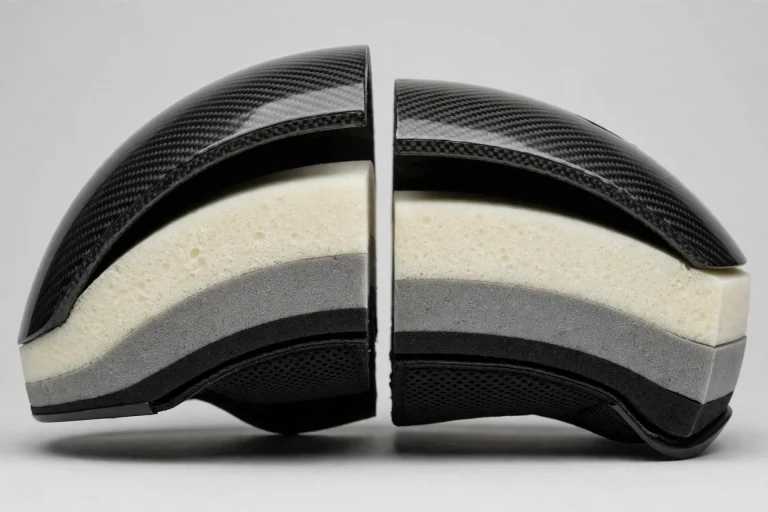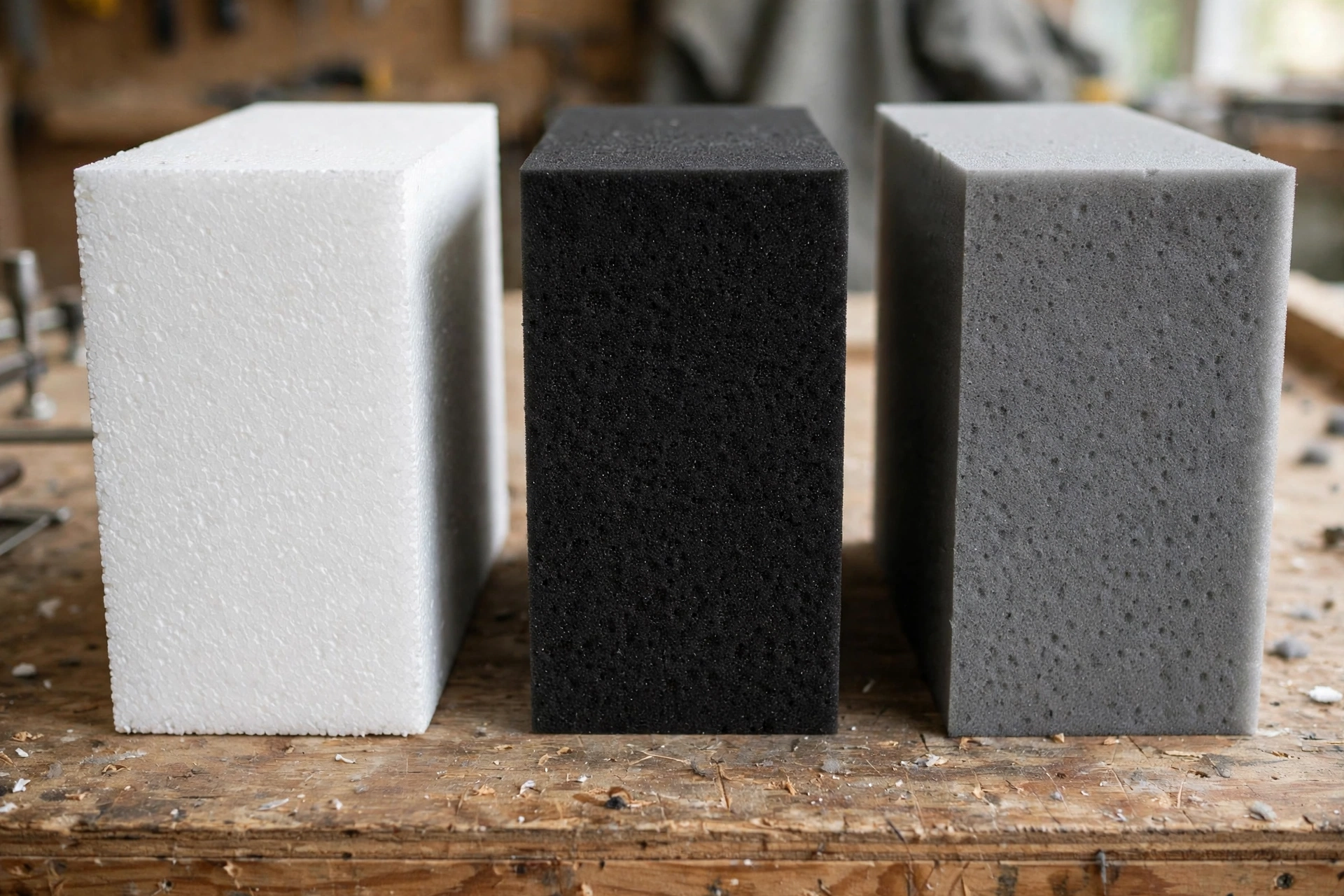
EPS, EPP and EPO are the three main foam materials used in helmet liners, and they differ in how they handle impacts: EPS crushes once and absorbs a hard hit well, EPP springs back after light knocks, and EPO sits between the two with a balance of cushioning and recovery. All three are bead foams, made by fusing tiny plastic beads into a light, rigid shape. The difference is in the plastic each one is made from and how it behaves when it is compressed.
Knowing which foam is in your helmet helps you understand how it protects you and when it needs replacing. This guide compares the three, explains where each is used, and shows what to look for when you choose a helmet.
What Is EPS Foam?
EPS stands for expanded polystyrene. It is the most common liner foam in helmets, used in the vast majority of cycling, motorcycle, ski and climbing helmets. It is made by expanding polystyrene beads with steam until they fuse into a light, rigid foam that is mostly air.
EPS protects by crushing. When the helmet takes an impact, the foam compresses and the beads break apart, turning the energy of the impact into deformation. This one-way crushing is very effective at slowing your head gently in a hard impact, which is why EPS has been the standard for decades.
The trade-off is that crushed EPS does not spring back. Once the foam has been compressed in a significant impact, it cannot protect as well again, which is why a helmet with an EPS liner must be replaced after a crash, even if it looks fine from the outside.
What Is EPP Foam?
EPP stands for expanded polypropylene. Like EPS, it is a bead foam, but its beads are springier and can bounce back after being compressed. This gives EPP a property called multi-impact recovery: it can cushion a light knock, recover, and cushion another one.
EPP is used in some skate, BMX, ski and multi-sport helmets, where small, repeated knocks are common. It is tougher and more flexible than EPS, and it resists water and many chemicals well. It is also more expensive, which is one reason it is less common.
The limit of EPP is that, in general terms, it is less effective than EPS at absorbing the energy of a single very hard impact. That is why many helmets use EPP only in certain zones, or in helmets designed for sports where repeated light impacts are the main risk.
What Is EPO Foam?
EPO stands for expanded polyolefin, a foam made from a blend of plastics that sits between EPS and EPP in behaviour. It is a newer material in helmets, used by some makers as a liner foam or as part of a mixed liner.
EPO is designed to combine some of the cushioning of EPS with some of the recovery of EPP. It crushes to absorb energy, but it can recover more than EPS after a light impact. Makers who use it say it offers a balance: good energy absorption with better durability under repeated light knocks.
Because EPO is newer, there is less long-term data on it than on EPS or EPP, and it appears in fewer helmets. It is worth knowing about if you see it listed on a helmet, but it is not yet a standard choice across the industry.
How Do the Three Foams Compare?
For a single hard impact, EPS is the proven choice, with decades of use and testing behind it. It absorbs energy very well, it is light, and it is affordable. Its weakness is that it is single-use: once crushed, it stays crushed.
For repeated light impacts, EPP is the stronger choice. It recovers after light knocks and keeps working, which suits sports where the helmet gets bumped often. Its weakness is that it is less effective in a single very hard impact, and it costs more.
EPO aims to sit between the two, offering some recovery with good cushioning. It is a reasonable middle ground, but it is less proven and less widely available. In practice, many helmets use a single foam, and some use a mix, placing different foams in different zones to match the likely impacts.
Durability is another difference. EPP and EPO hold up better under repeated light impacts, because they recover after being compressed, while EPS is designed to crush once and stay crushed. That makes EPP and EPO better suited to helmets that get bumped often, such as skate helmets that are dropped on concrete. EPS, on the other hand, is easy to inspect: if the foam looks crushed or cracked, you know the helmet has taken a hit and should be replaced.
Cost also differs. EPS is the cheapest of the three to produce, which is one reason it is so widely used, while EPP and EPO cost more and appear in fewer helmets. For most buyers, the foam type is a minor factor next to fit, weight and the safety standard.
Which Foam Should You Choose?
For most riders, the foam type is a secondary consideration. The safety standard the helmet meets, the fit, and the condition of the liner matter far more than whether the foam is EPS, EPP or EPO. A well-fitting EPS helmet that meets a recognised standard is a solid choice for almost any use.
Consider EPP if you skate or ride BMX, where repeated light knocks are part of the session. Consider a helmet with EPO if you see it listed and the helmet otherwise suits you, but do not choose a helmet for EPO alone. Whatever foam your helmet uses, replace it after a significant impact and check it regularly for damage.
If you are learning about helmet technology, reading about what MIPS is for helmets can help you understand another feature that may sit alongside the foam inside your helmet.
Frequently Asked Questions
Q: Is EPS foam still safe if it is the oldest material?
A: Yes. EPS is the most widely used and most tested liner foam, and it remains very effective at absorbing a single hard impact. Age of the material is not a sign of weakness.
Q: Does EPP mean I never need to replace my helmet?
A: No. EPP recovers from light knocks, but a hard crash can still damage the liner. Replace any helmet after a significant impact, whatever foam it uses.
Q: Can I tell which foam my helmet has by looking at it?
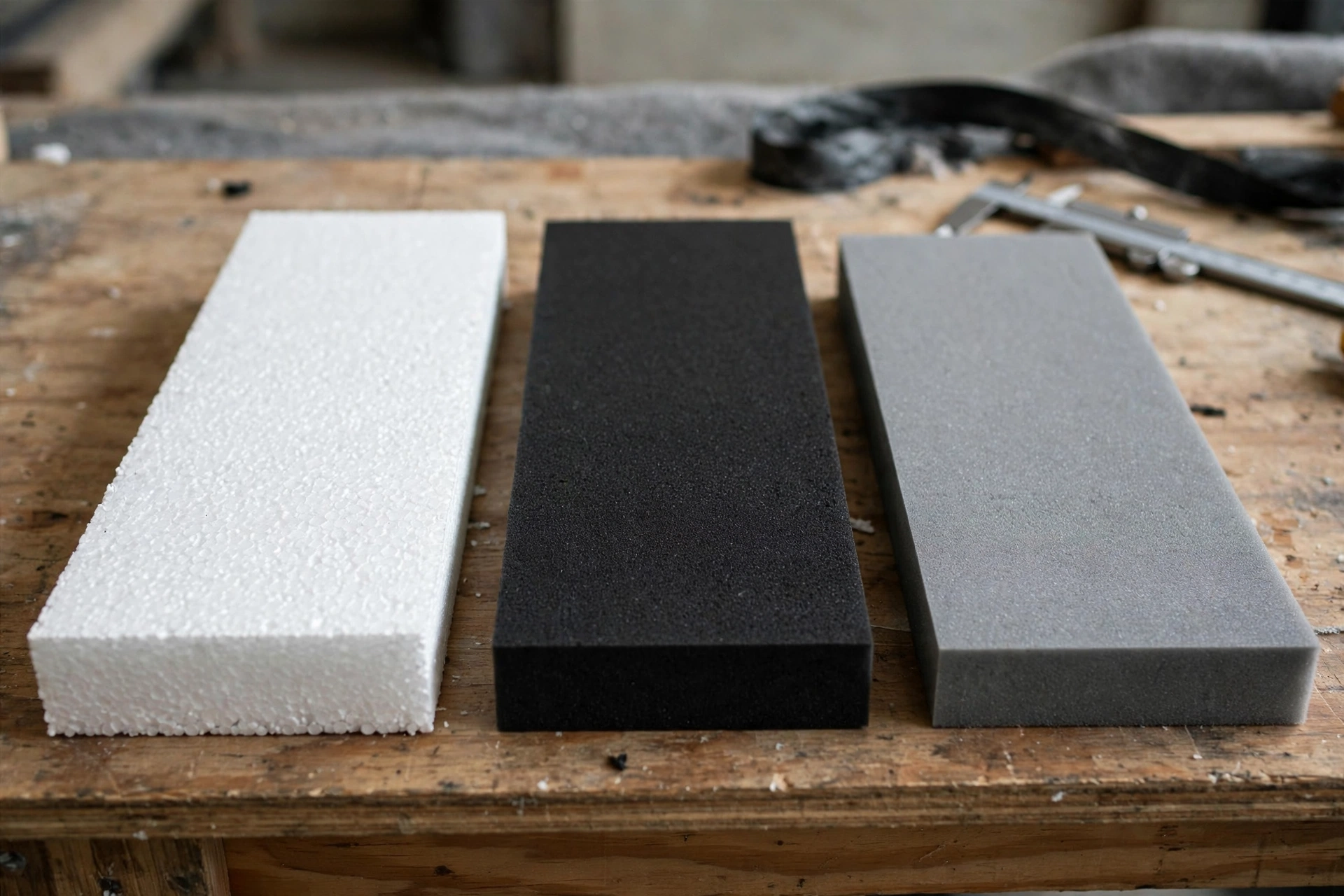
A: Not reliably. EPS is usually white, EPP is often black, and EPO varies, but colour is not a reliable guide. Check the maker’s description for the foam type.

Olivia
Writer at Helmet Today, covering helmet reviews, fit and riding safety.