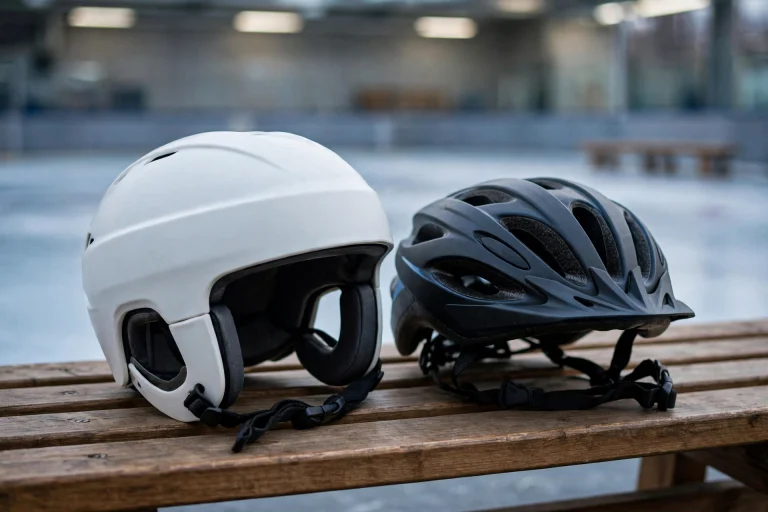
Ice hockey referees wear helmets too — most officials wear a helmet on the ice, usually a hockey helmet similar to the players’ helmets but often without a face shield, so they can see and be seen clearly. Referees skate at speed, dodge players and pucks, and fall just like anyone else on the ice. A helmet is part of their standard kit, and in many leagues it is required.
This guide explains what referees wear, why their helmets differ slightly from players’ helmets, and what the rules say about officials’ head protection.
Why Do Referees Need a Helmet?
Referees are on the ice for the whole game, skating hard to keep up with play. They move into the corners, cross the ice to follow the puck, and position themselves near the boards where collisions happen. A referee can be knocked over by a player who does not see them, hit by a puck, or caught in a scrum along the boards.
They also fall. Referees skate backwards, change direction quickly, and skate on ice that has been cut up by the game. A fall onto hard ice is the same risk for a referee as for a player, and the head is just as vulnerable. In general terms, anyone on the ice during a hockey game benefits from a helmet, and referees are no exception.
What Kind of Helmet Do Referees Wear?
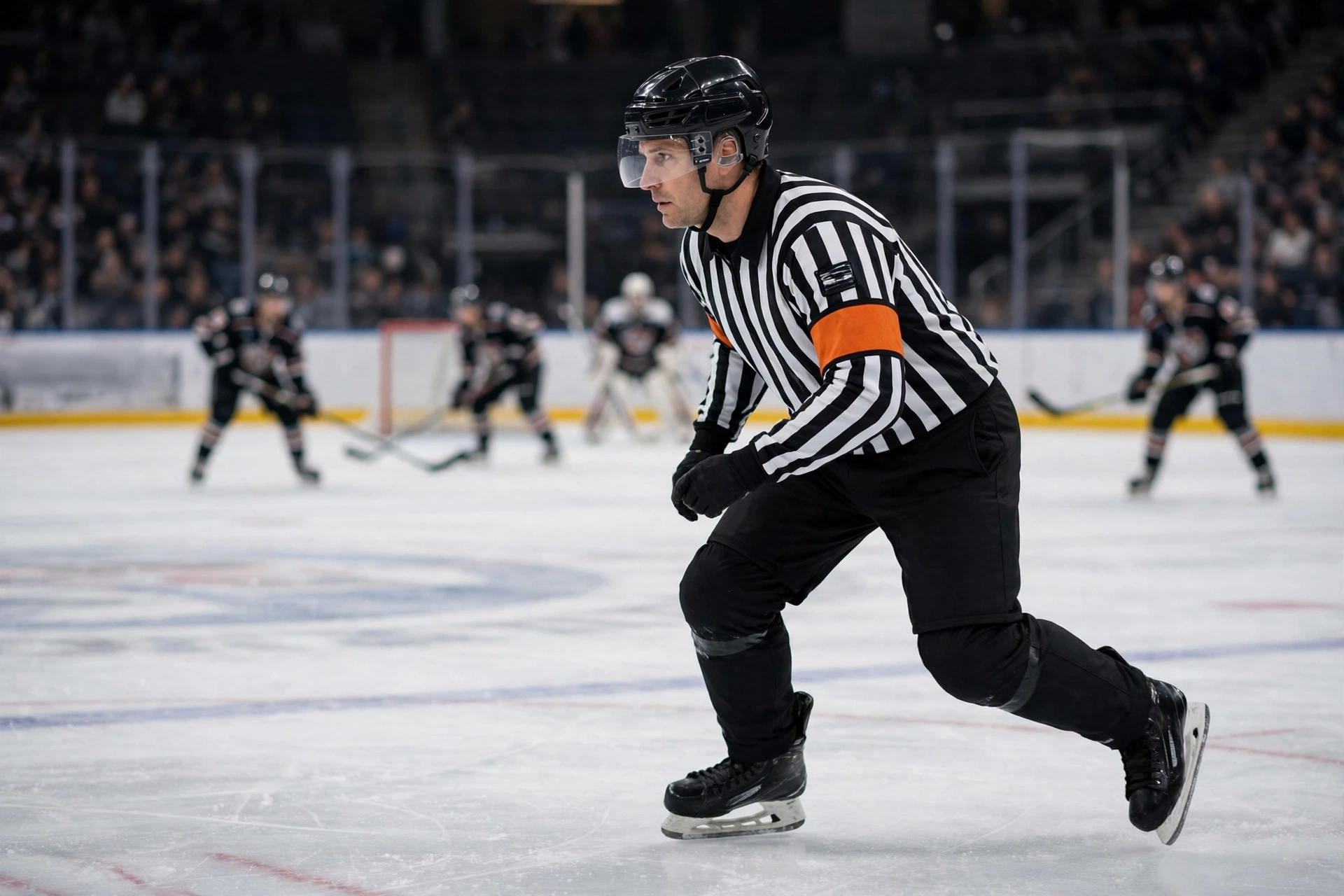
Most referees wear a standard ice hockey helmet: a hard-shell helmet with ear loops and a snug fit, the same basic design players wear. The main difference is the face protection. Players often wear a visor or a full cage, while referees usually wear no face shield at all, or a small half visor at most.
There are two reasons for this. First, referees need a wide, clear field of view and the ability to make eye contact with players and coaches. A cage or a large visor would get in the way of that. Second, referees need to be recognisable: players and coaches need to see the official’s face, and a clear face helps communication on the ice.
Some referees wear a helmet with a small visor for protection from pucks while keeping most of the face open. The choice is personal and often depends on the level of the game and the official’s own preference.
Do Referees Wear the Same Helmet as Players?
Often, yes — many referees simply wear a standard hockey helmet from the same brands players use. The fit and the protection are the same; the difference is mainly in the face protection and the colour. Referees’ helmets are usually black, to match the official’s uniform, while players’ helmets match their team colours.
The fit rules are the same too. The helmet should sit level, cover the forehead, and feel snug without pressing. The strap should fasten securely. A referee who wears their helmet loose, or tilted back, is taking the same risk as a player who does the same.
Are Helmets Required for Referees?
In many leagues, yes. The rules for officials vary by competition, but most organised leagues require referees and linesmen to wear helmets, just as they require players to. Some leagues make it a condition of officiating: no helmet, no game. At lower levels and in casual games, the rules may be looser, but most officials wear a helmet regardless, because the risk is obvious to anyone who has been on the ice.
Junior leagues are usually strictest: officials working youth games are almost always required to wear helmets, partly for their own safety and partly to set an example for young players who must wear one. If you are starting out as a referee, assume a helmet is required and check with your league for the exact rules.
If you are learning about helmet technology in general, reading about what MIPS is for helmets can help you understand one of the features found in modern helmets.
What Should a Referee Look for in a Helmet?
Comfort over a long game matters most. A referee skates for the full game, often without a break, so a helmet that presses or feels heavy becomes a real problem by the third period. Look for a helmet with good ventilation, comfortable padding, and a fit you can forget about once the game starts.
Fit is the next priority. Try the helmet on with whatever you wear underneath, and check it stays put when you skate backwards and turn quickly. The ear loops should sit comfortably, and the strap should not chafe your chin during a long game.
Finally, check the standard. Your league may require a helmet that meets a particular safety standard, so check before you buy. A helmet that meets the standard, fits well, and is comfortable for a full game is the right choice for officiating.
Referees also face a practical problem that players do not: they must keep their helmet on for the whole game, often without the breaks players get on the bench. That means ventilation and weight matter more than they do for a player who sits out shifts. A helmet that feels fine for twenty minutes can become a burden over a full game, especially in a warm rink. Officials who work several games in a day will notice this most of all, so it is worth spending a little more on a helmet that is light and well ventilated, with padding that can be removed and washed between games. A referee’s helmet is working kit, used hard and often, and it deserves the same care a player gives theirs.
Frequently Asked Questions
Q: Do linesmen wear helmets too?
A: Yes, in general terms linesmen wear helmets for the same reasons as referees — they are on the ice, skating hard, and at risk of falls and collisions.
Q: Why don’t referees wear a full face cage like players?
A: Referees need a clear view and visible face for communication, and they are not usually the target of body checks. Most wear no face shield or a small visor instead of a cage.
Q: Can a referee wear any hockey helmet?
A: In general terms, yes, as long as it fits well and meets the standard your league requires. Most referees choose a standard hockey helmet in black to match their uniform.

Olivia
Writer at Helmet Today, covering helmet reviews, fit and riding safety.