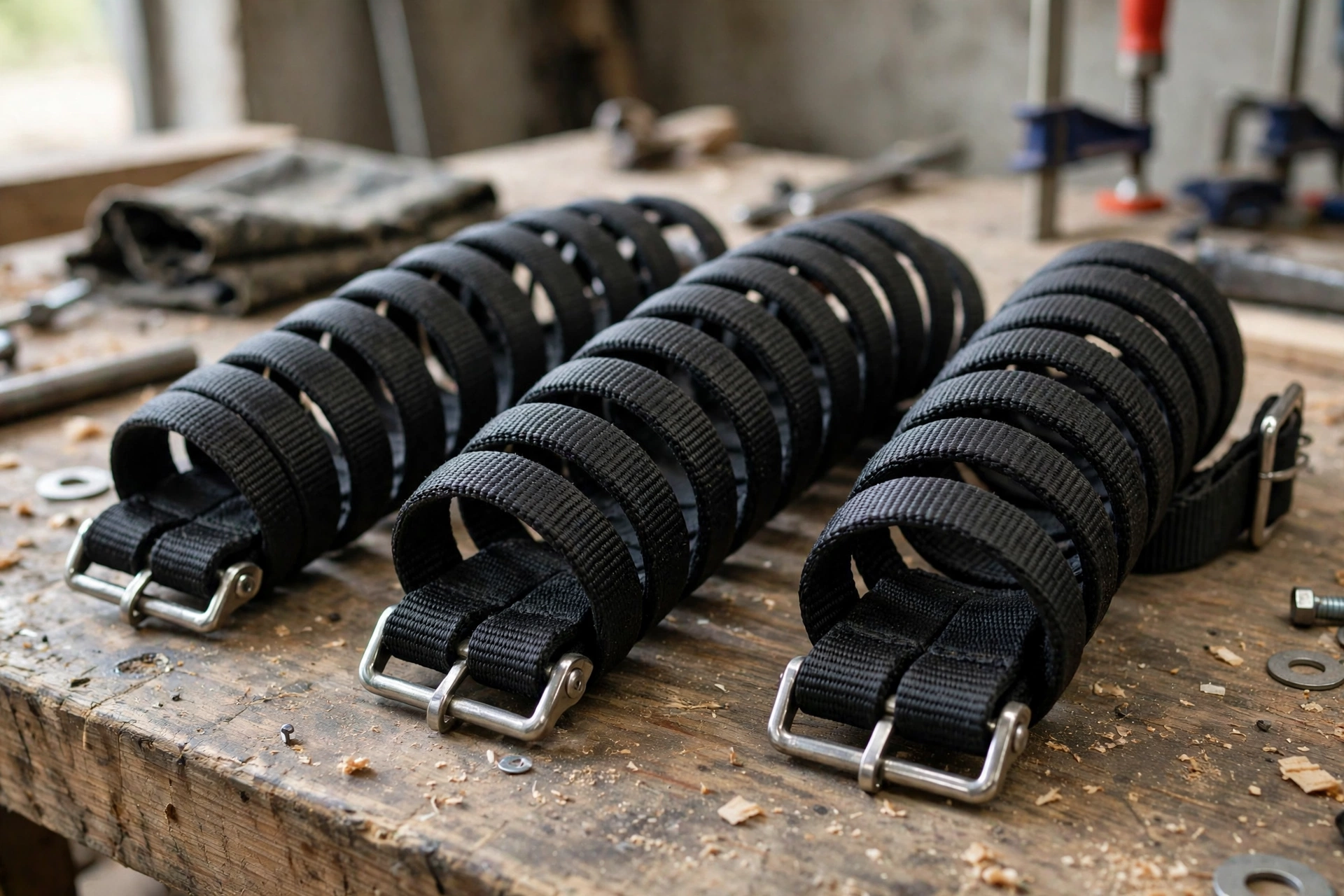
Helmet straps are usually made from nylon webbing, but other materials such as polyester, polypropylene and, in some work helmets, cotton blends are also used, each with its own balance of strength, comfort and resistance to wear. The strap’s job is simple and vital: it holds the helmet on your head. If the strap fails or slips, the helmet cannot protect you, so the material matters more than it might seem.
Nylon is the most common choice, but it is not the only one. This guide explains what each strap material offers, how they compare, and how to look after the straps on your helmet.
Why Is Nylon the Most Common Strap Material?
Nylon webbing is strong for its weight, flexible, and resistant to abrasion, which makes it well suited to a strap that is pulled tight, adjusted often and exposed to sweat and weather. It holds its strength well when it is wet, and it does not stretch much under load, so the helmet stays in place once the strap is done up.
Nylon is also easy to dye and finish, so makers can match the strap colour to the helmet and add a soft edge that feels comfortable against the skin. It works well with the buckles and adjusters used on most helmets, sliding smoothly through them without fraying quickly.
The main drawback of nylon is that it can absorb moisture and take a while to dry, and it can fade with long sun exposure. In practice, these are minor issues for a helmet strap, and nylon remains the standard choice for most cycling, motorcycle and ski helmets.
What Other Webbing Materials Are Used?
Polyester webbing is the main alternative to nylon. It is strong, resists UV light better than nylon, and absorbs less water, so it dries faster and holds its colour longer in the sun. Some makers choose polyester for helmets used outdoors in strong sun, or for straps that are likely to get wet often.
Polypropylene webbing is lighter and cheaper, and it floats and resists water well, but it is less strong than nylon or polyester and can be harder to dye. It appears in some budget helmets and in straps where weight and cost matter more than maximum strength.
Cotton and cotton blends appear mainly in work helmets and some traditional designs. Cotton feels soft against the skin and is comfortable in hot weather, but it absorbs sweat, dries slowly and can weaken when it stays damp. It is rarely used in modern sports helmets.
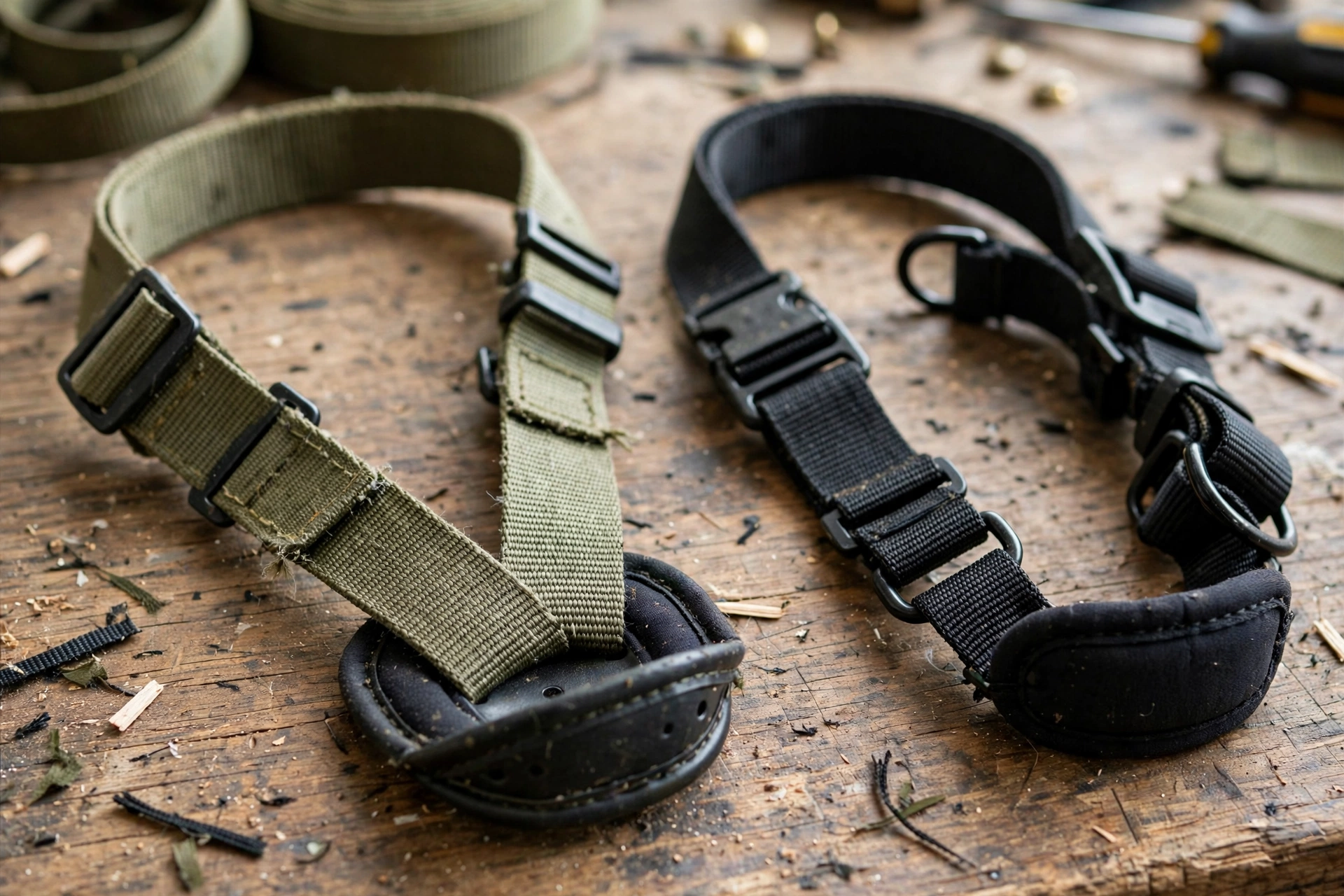
How Do Strap Materials Compare?
For strength, nylon and polyester are the leaders, with nylon slightly ahead in most tests and polyester close behind. Polypropylene is weaker, and cotton is the weakest of the group when it is wet. For a strap that must hold a helmet on in a crash, that difference matters.
For comfort, all of the common webbings are similar once they are finished with soft edges. Nylon and polyester can feel slightly stiff when new, but they soften with use. Cotton is the softest from the start, but its tendency to stay damp can make it less comfortable over a long, sweaty session.
For durability, polyester has an edge in sunlight and wet conditions, while nylon has an edge in abrasion resistance. Polypropylene and cotton wear out faster. In general terms, a nylon or polyester strap that is looked after will last the working life of the helmet.
Stitching matters as much as the webbing itself. The thread that holds the strap together and anchors it to the shell must be strong and resistant to UV and moisture, or the strap can fail even if the webbing is sound. Makers use heavy-duty polyester thread for this reason, and they bar-tack the ends, which means stitching a dense pattern across the webbing to spread the load. When you check your straps, look at the stitching as well as the webbing.
Adjusters also play a part. The small sliders and clips that set the strap length must grip the webbing firmly without damaging it. A slider that slips lets the strap loosen on its own, which is why it is worth checking that the strap stays where you set it. If an adjuster slips, it may need cleaning or replacing.
How Should You Look After Helmet Straps?
Straps need little care, but a few habits help them last. Clean them with mild soap and water if they get dirty or sweaty, and let them air-dry away from direct heat. Do not use bleach or strong detergents, which can weaken the fibres.
Check the straps regularly for fraying, thinning or cuts, especially where they pass through the buckle and the adjusters. A strap that is frayed at the edge may still hold, but a strap with a cut or a thin spot should be treated as a warning sign. If the webbing is damaged, check whether the maker offers a replacement strap, or replace the helmet.
Do not hang the helmet by its strap for long periods, and do not leave the strap dangling where it can catch on things. Keep the buckle clean and make sure it clicks shut firmly every time you do it up.
When Should a Strap Be Replaced?
Replace a strap if it is frayed through, cut, or has a thin spot that you can feel. Replace it too if the buckle no longer clicks shut firmly, or if the adjuster slips and the strap loosens on its own. A strap that cannot be trusted to stay tight cannot be trusted to hold the helmet on.
Some helmets have replaceable straps, and the maker may sell spares. Others have straps that are stitched into the shell, in which case a damaged strap usually means replacing the helmet. Check the maker’s guidance before you try to fit a replacement yourself.
If you are learning about helmet technology, reading about what MIPS is for helmets can help you understand another feature that may be listed on the box of your next helmet.
Frequently Asked Questions
Q: Is a nylon strap better than a polyester strap?
A: Both are good choices. Nylon is slightly stronger and more abrasion-resistant, while polyester resists sunlight and water better. Either one will serve well in a helmet strap.
Q: Can I wash my helmet straps?
A: Yes. Wash them with mild soap and water, rinse well, and air-dry them away from direct heat. Avoid bleach and strong detergents.
Q: Why does my strap feel stiff when the helmet is new?
A: New webbing can feel stiff until it softens with use. It should become more comfortable after a few rides. If it stays painful, check the fit and the position of the buckle.

Olivia
Writer at Helmet Today, covering helmet reviews, fit and riding safety.