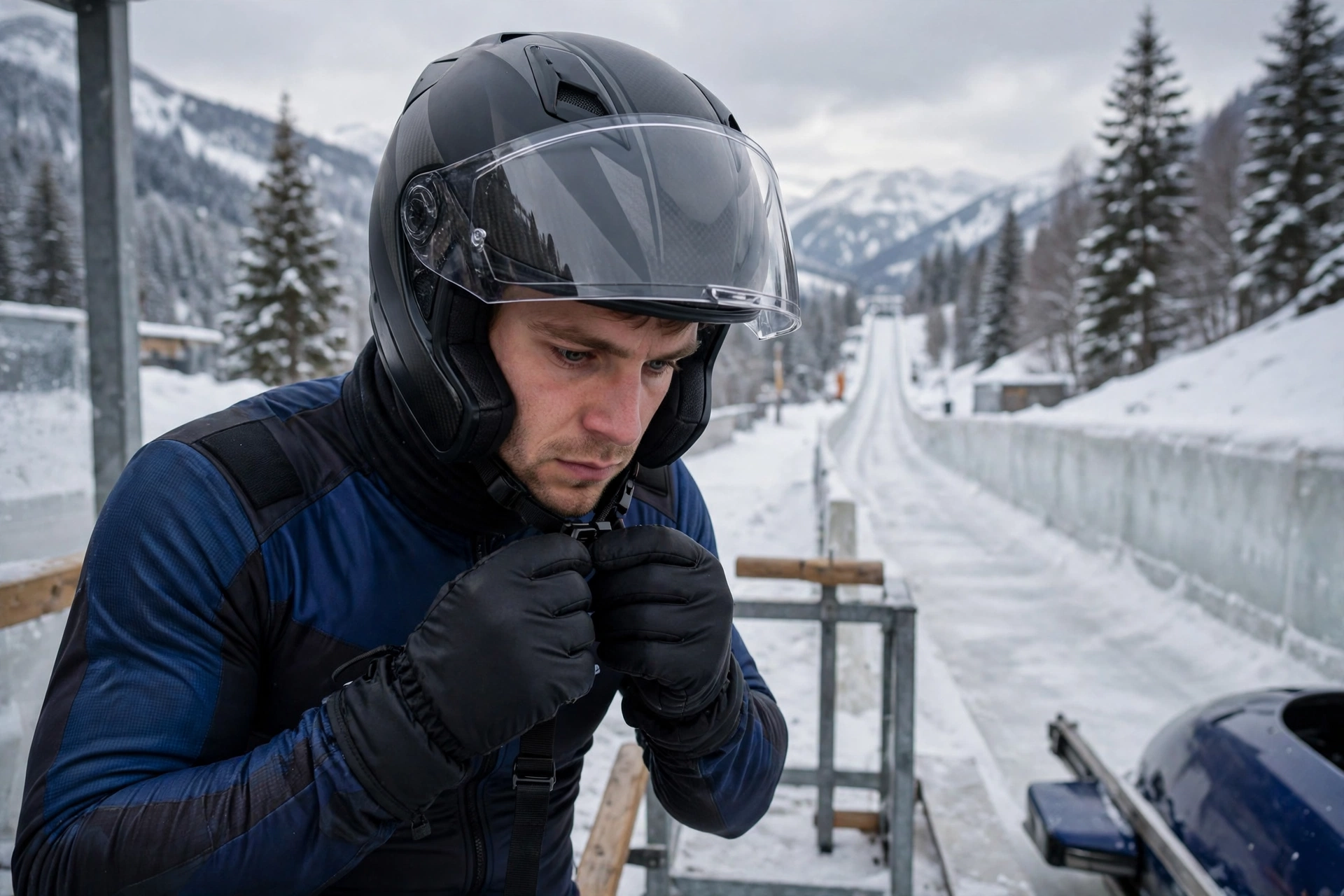
A bobsled helmet’s chin strap and fit need checking before every run: the strap should be snug under the chin, the helmet should sit level and not shift when you shake your head, and the visor should be clean and clear. These checks take less than a minute, but they are the difference between a helmet that protects you and one that does not. At bobsled speeds, a loose helmet is a serious problem.
This guide walks through the checks step by step, so you can run through them at the start line without missing anything.
Why Do Fit Checks Matter So Much in Bobsled?
Bobsled is fast, rough, and unforgiving. The sled vibrates over the ice, the track throws the crew around in the curves, and a crash at speed is violent. A helmet that fits properly stays where it should through all of that. A helmet that is loose can shift, covering your eyes or exposing your forehead at the worst moment — or it can come off entirely.
The chin strap is what keeps the helmet on. If the strap is loose, the helmet can lift off the head in a crash or a hard bump. If it is too tight, it chafes and distracts the rider. Getting the strap right is not a detail; it is the main thing holding the helmet in place.
How Do You Check the Chin Strap?
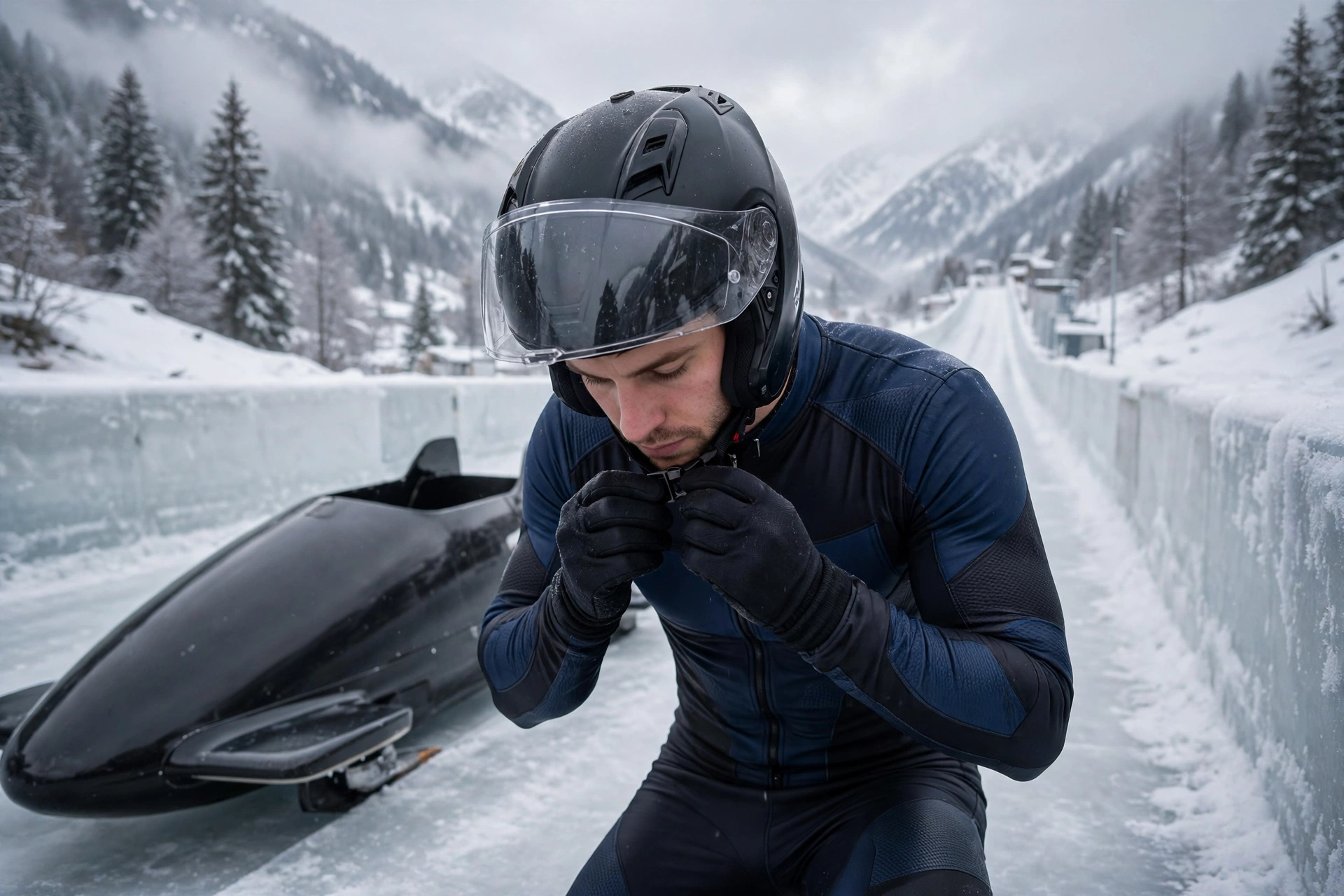
Fasten the strap under your chin and pull it snug. You should be able to fit one or two fingers between the strap and your chin, but no more. If you can fit three fingers, the strap is too loose. If you cannot fit one finger, it is too tight.
Next, test the strap by trying to pull the helmet off. With the strap fastened, try to roll the helmet forward off your head by pushing up from the back. It should resist firmly. If it rolls off easily, the strap is too loose or the helmet is too big. Also check the strap itself: look for fraying, worn stitching, or a buckle that does not click shut properly. A damaged strap should be replaced before you slide.
Check the strap every time you put the helmet on, not just once a season. Straps loosen with use, and a strap that was fine last week may have stretched. A quick tug before each run catches that.
How Do You Check the Overall Fit?
Start by putting the helmet on and checking it sits level. It should cover your forehead, sitting about one or two fingers above your eyebrows, and it should feel snug all round. Push the helmet gently from side to side and front to back: your skin should move with it, and it should not slide freely.
Shake your head gently from side to side and up and down. The helmet should stay put. If it wobbles or slides, it is too big, or the padding needs adjusting. Many bobsled helmets have removable pads in different thicknesses — try a thicker cheek pad if the helmet feels loose at the sides, or a thinner crown pad if it presses on top.
Check the fit in the position you will ride in. A bobsled driver sits upright at the front of the sled, while the push athletes sit behind. Sit in your position, check the view through the visor, and make sure the helmet does not press on your forehead or push your head forward.
What About the Visor and the Rest of the Helmet?
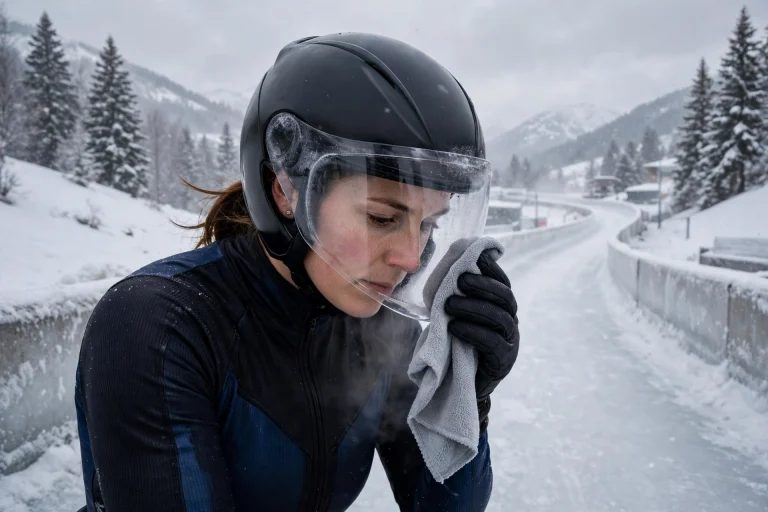
The visor should be clean, clear, and scratch-free. Wipe it before every run, and check the seal where it meets the shell. A visor that is fogged, scratched, or loose will distract you or block your view, and at bobsled speeds you need a clear view of the track ahead.
Check the shell for cracks or damage, and check the padding inside for wear. Padding that has compressed or come loose will not hold the helmet as snugly, and it should be replaced. Also check that the helmet meets the standard required by your track or competition — the rules are the final word on what you can wear.
If you are learning about helmet technology in general, reading about what MIPS is for helmets can help you understand one of the features found in modern helmets.
When Should You Recheck the Fit During the Season?
Recheck the fit at the start of the season, after any change to the padding, and whenever the helmet starts to feel different. Padding compresses with use, especially in a sport where the helmet is worn for short, intense runs and then stored. If the helmet feels looser than it did at the start of the season, the padding may need replacing.
Also recheck after any crash or hard impact, even if the helmet looks fine. A helmet that has taken a hit should be inspected carefully, and in general terms it should be replaced. The checks take a minute, and they are worth doing every time you slide.
It is also useful to build the checks into a routine that the whole crew follows. In bobsled, the crew check each other’s helmets as well as their own: a teammate can see from behind whether your helmet sits level, whether the strap is twisted, and whether the visor is clean. Making it a team habit means nothing gets missed, and it takes the pressure off any one person to remember everything at the start line. Coaches often run through the checks with new crews until they become automatic, so that even under the pressure of a competition start, the crew do not skip them. A minute spent checking at the top of the track is never wasted, and it is a habit that serves the crew well for the whole season.
Frequently Asked Questions
Q: How tight should a bobsled helmet chin strap be?
A: Snug enough that you can fit one or two fingers between the strap and your chin, but no more. It should hold the helmet firmly without chafing.
Q: Can I adjust the fit with different padding?
A: Yes, in general terms. Many bobsled helmets have removable cheek and crown pads in different thicknesses, so you can tune the fit without buying a new helmet.
Q: What if my helmet feels fine standing up but loose when I sit in the sled?
A: Check the fit in your riding position and adjust the padding. A helmet that fits standing up can feel different seated, so always do the final check in the position you will actually ride in.

Olivia
Writer at Helmet Today, covering helmet reviews, fit and riding safety.