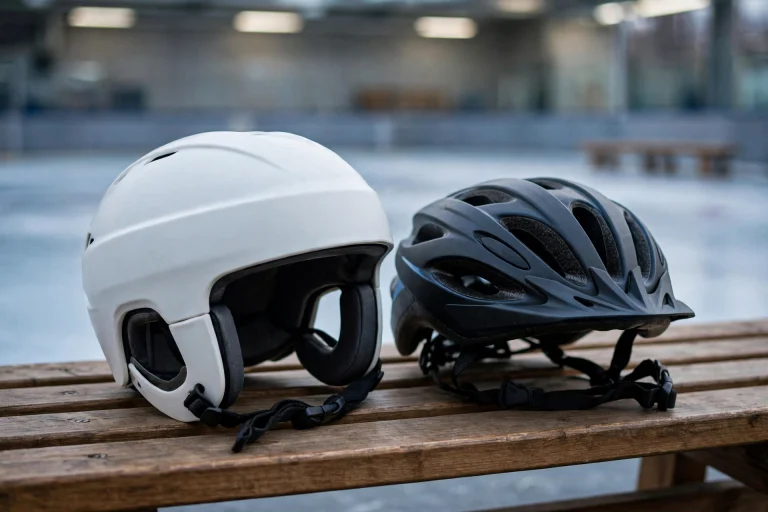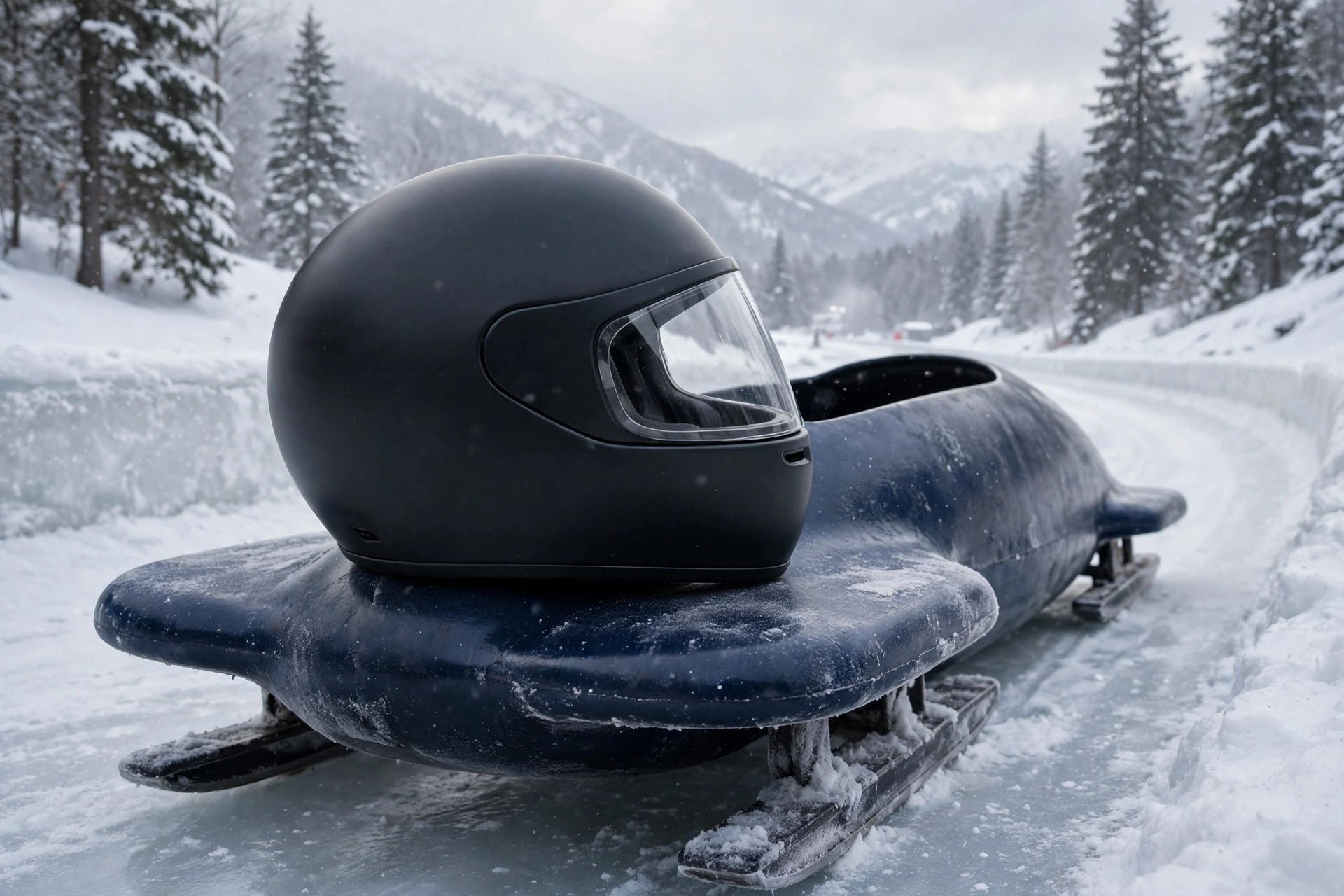
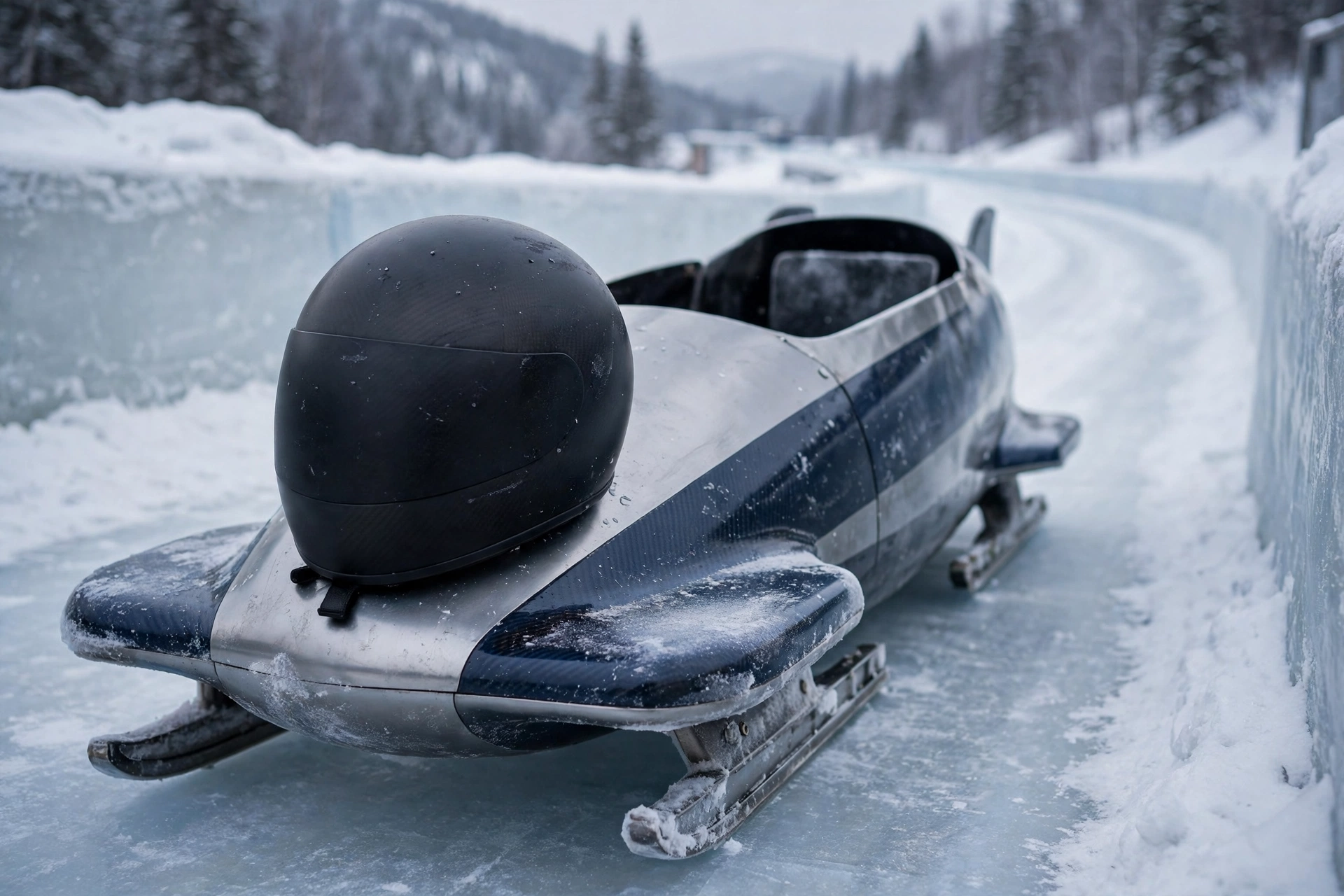
Winter sliding helmets have very little ventilation compared with bike or ski helmets, and that is deliberate: in icy conditions, vents would let in freezing air, snow, and ice spray, and they would weaken the smooth shell that needs to slide on ice. Instead of large vents, sliding helmets manage moisture and heat in other ways, and riders manage the cold with the layers they wear underneath.
This guide explains how ventilation works — or does not work — in bobsled, skeleton, and luge helmets, and how riders stay comfortable in the cold without it.
Why Don’t Sliding Helmets Have Big Vents?
The first reason is the cold. A sliding helmet is used in temperatures well below freezing, often in an outdoor track where the wind chill at speed is severe. Large vents would channel freezing air straight onto the rider’s head, which would be painful and distracting. A bike helmet’s vents are designed for warm-weather riding; a sliding helmet is designed for the opposite conditions.
The second reason is ice spray. At speed, the sled kicks up ice crystals and spray, and any opening in the shell would let that spray in. A vent would become a hole that fills the helmet with cold, wet material. The smooth, closed shell keeps all of that out.
The third reason is the shell itself. A sliding helmet’s shell needs to be smooth so it slides on ice rather than catching. Vents would break up that smooth surface and create edges that could catch. In general terms, a sliding helmet trades ventilation for a smooth, sealed shell, and that trade is the right one for the sport.
How Do Riders Stay Comfortable Without Ventilation?
Riders stay comfortable because sliding runs are short. A bobsled, skeleton, or luge run lasts around a minute, and the athlete is not working hard in the way a cyclist does. There is no long climb, no sustained effort, and no build-up of heat that needs venting. The push start is the hardest work, and it lasts only a few seconds.
Between runs, the rider takes the helmet off. That is when the helmet airs out and the rider cools down or warms up as needed. Because the helmet is not worn continuously for hours, the lack of ventilation is far less of a problem than it would be in a sport like cycling, where the helmet stays on for a whole ride.
The layers underneath matter too. Riders wear a thin balaclava or skull cap under the helmet, which wicks away moisture and adds warmth. The balaclava also makes the helmet more comfortable against the skin and helps the fit.
Do Sliding Helmets Have Any Ventilation at All?
Most sliding helmets have very small vents, or none at all. Some have tiny openings at the back or sides that allow a small amount of air movement without letting in spray, but these are nothing like the large vents on a bike helmet. The priority is always a sealed, smooth shell.
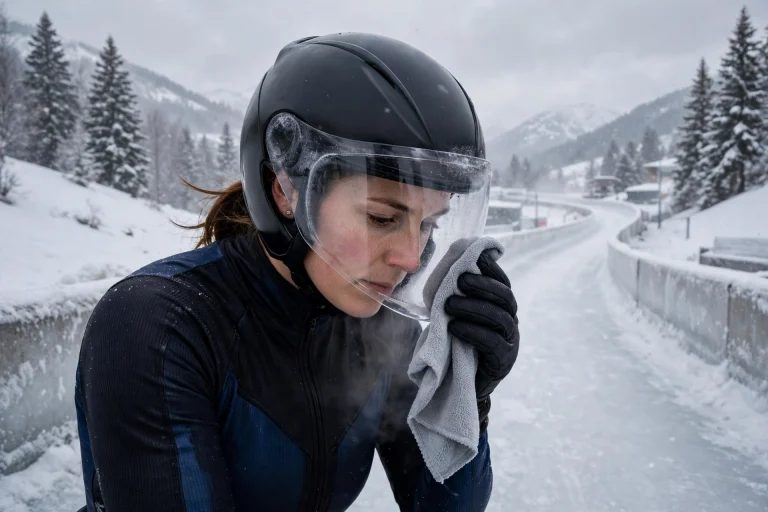
The visor area is where most of the air management happens. The seal between the visor and the shell keeps wind and spray out, but it also traps moisture from the rider’s breath, which can fog the visor. Riders deal with this using anti-fog treatments and by keeping the visor clean, rather than by opening vents.
What About Fogging?
Fogging is the main moisture problem in a sliding helmet, and it happens because the rider’s warm breath meets the cold visor. A fogged visor is a serious problem: the rider cannot see the track clearly, and at sliding speeds that is dangerous.
Riders prevent fogging by treating the inside of the visor with an anti-fog product, by keeping the helmet dry between runs, and by making sure the visor seals well. Some helmets have a small gap or channel that lets a little air move across the inside of the visor without letting spray in. If you are learning about helmet technology in general, reading about what MIPS is for helmets can help you understand one of the features found in modern helmets.
What Should You Look for When Choosing a Sliding Helmet?
Do not judge a sliding helmet by its vents. Instead, check the fit, the visor, and the shell. The helmet should sit level and snug, the visor should be clear and seal well, and the shell should be smooth and free of damage. Ask whether the padding can be removed and washed, because a helmet used in cold, damp conditions needs regular care.
If you slide in very cold conditions, consider the balaclava you will wear underneath and fit the helmet with it on. A helmet that fits well over a balaclava will be comfortable for the whole session, while a helmet fitted without one may be too tight once you add the layer.
The contrast with other winter sports is instructive. A ski helmet has generous vents because a skier works hard for hours and generates a lot of heat, and the vents can be opened or closed as conditions change. A bike helmet is even more open, because cycling in warm weather demands constant airflow. Sliding helmets sit at the opposite end of the scale: short, intense runs in bitter cold, where the priority is keeping the cold out rather than letting heat escape. Understanding that trade-off helps explain why you should not judge a sliding helmet by the standards of another sport. Each helmet is a compromise tuned to its own conditions, and the sliding helmet’s compromise — a sealed shell, a clear visor, and a snug fit — is exactly right for the ice track, even if it would be wrong on a summer bike ride.
Frequently Asked Questions
Q: Will I overheat in a sliding helmet?
A: In general terms, no. Runs are short, the air is cold, and the helmet comes off between runs. Overheating is rarely a problem in sliding sports.
Q: Can I drill extra vents into a sliding helmet?
A: No. Drilling holes in a helmet can weaken the shell and will usually mean it no longer meets the required standard. Never modify a helmet.
Q: How do I dry a sliding helmet between runs?
A: Take it off between runs, wipe the visor, and let the padding air out. Store it somewhere dry and not too cold, so condensation does not form on the visor.

Olivia
Writer at Helmet Today, covering helmet reviews, fit and riding safety.