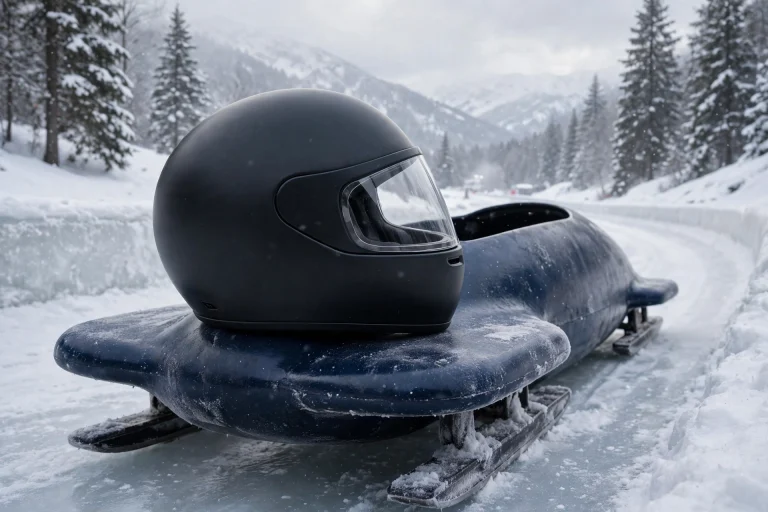
Yes, skeleton sliders wear helmets with face protection — a full face helmet with a chin bar and a visor is the standard helmet for skeleton, and it is worn for every run. The face protection is not an optional extra: it is part of the helmet’s design, and it protects the jaw, chin, and eyes in a sport where the rider’s face is inches from the ice at high speed.
This guide explains what face protection a skeleton helmet gives, how it works in the head-down position, and what to check when choosing one.
What Face Protection Does a Skeleton Helmet Give?
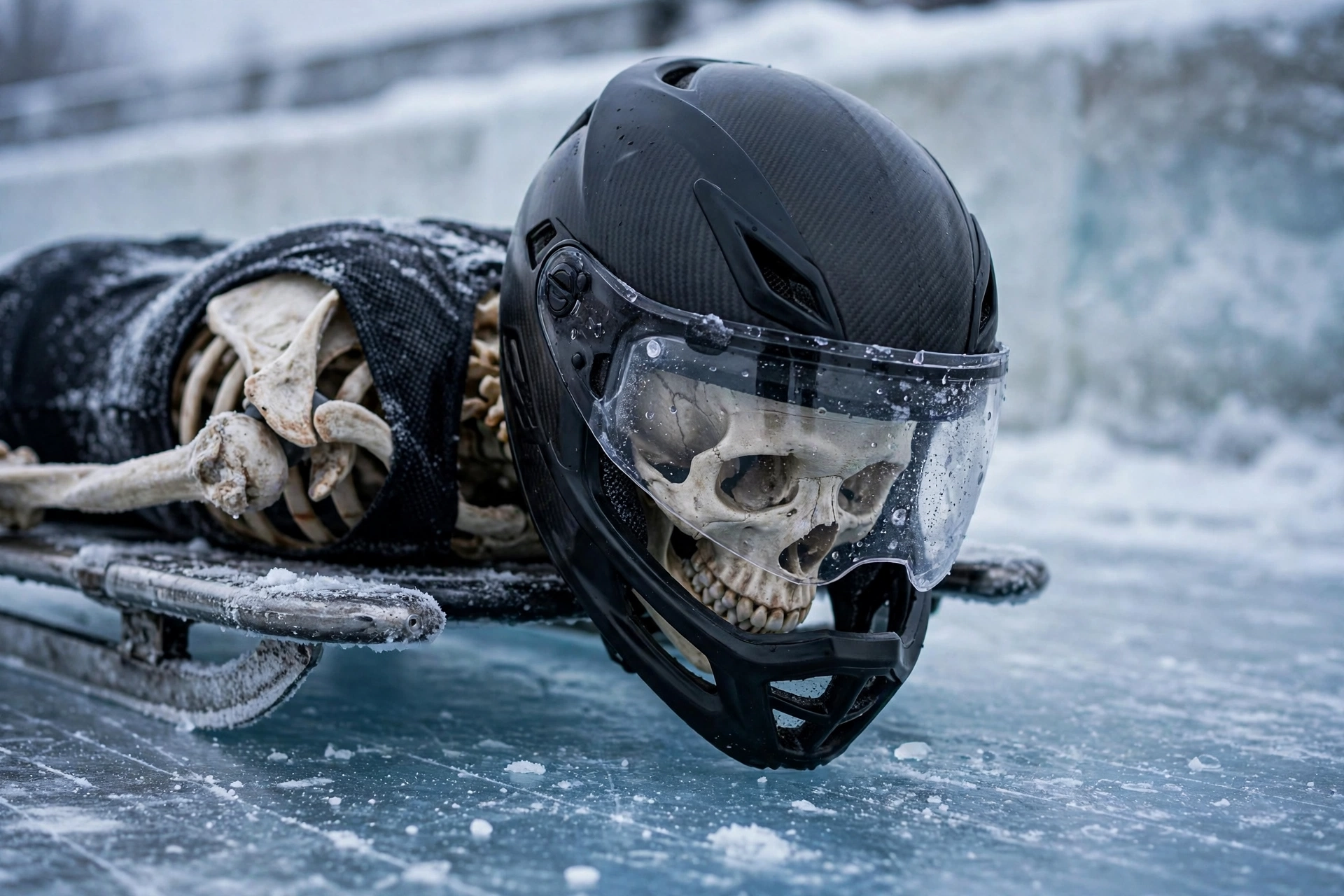
A skeleton helmet gives full face protection in two parts. The chin bar is the lower front of the helmet: a rigid extension of the shell that covers the jaw, chin, and teeth. The visor is the clear shield in front of the eyes, which protects against wind, ice spray, and cold air. Together, they cover the whole face.
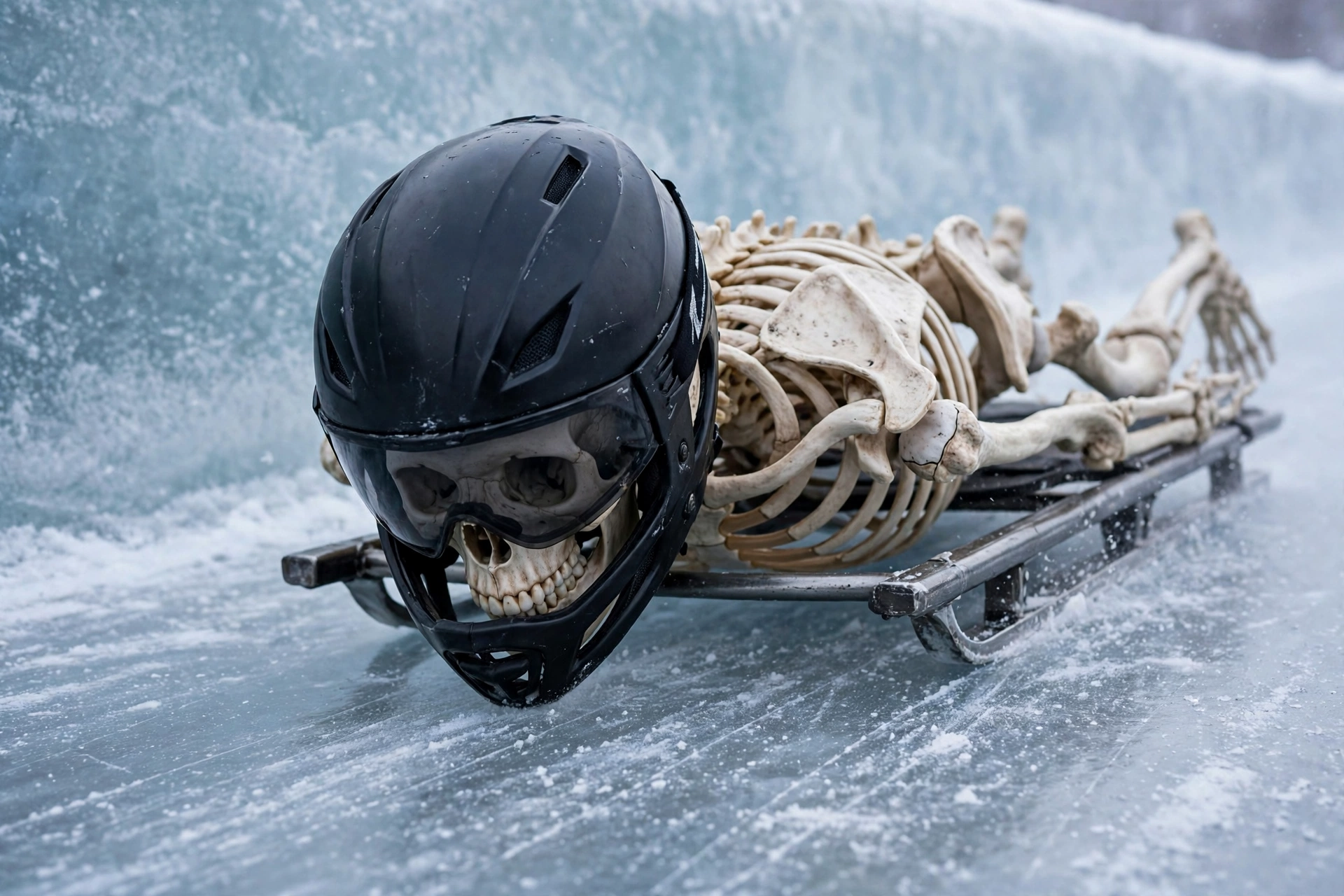
The chin bar is the more important of the two in a fall. A skeleton rider lies face down with their chin just above the ice, so the chin is the part of the face closest to the surface. If the rider’s head dips, the chin bar touches the ice before the face does, and its smooth shape helps it slide rather than catch. Without a chin bar, a dip like that would mean the rider’s chin or jaw hitting the ice directly.
How Does the Chin Bar Work in the Head-Down Position?
In the head-down position, the chin bar sits between the rider’s chin and the ice. It is shaped to follow the line of the jaw, sitting close without pressing, so the rider can hold their head low without the chin bar digging in. The padding inside the chin bar holds it steady, so it does not shift when the sled vibrates or the track throws the rider around.
The chin bar also affects how the rider sees. Because the rider looks ahead and slightly down, the chin bar must not block the view through the visor. A well-designed skeleton helmet balances these two jobs: the chin bar is low enough to stay out of the line of sight, but high enough to protect the jaw. Riders check this balance when they try a helmet on in the sliding position.
The shape of the chin bar also matters for aerodynamics. A smooth, rounded chin bar lets the air flow over the front of the helmet cleanly, while a chin bar that sticks out would create drag. At skeleton speeds, that drag adds up over a run.
What About the Visor?
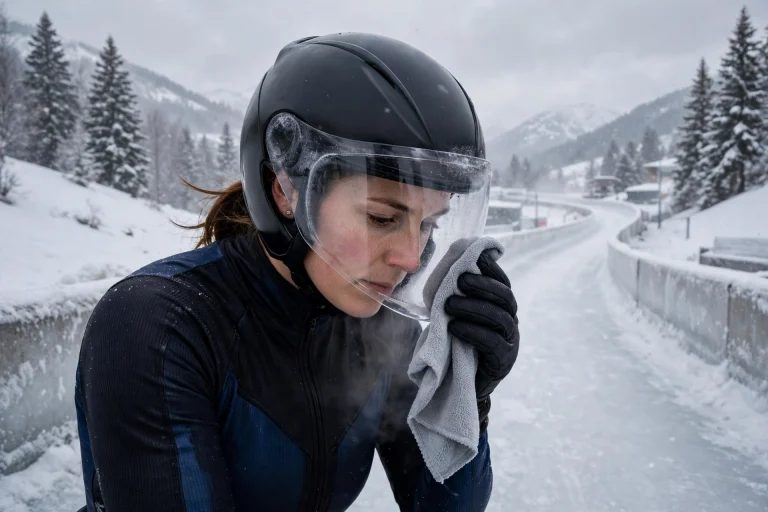
The visor protects the eyes, which need it more in skeleton than in most sports. At high speed, the wind alone would make the eyes water, and ice crystals kicked up by the sled would be painful and distracting. The visor seals against the shell and keeps all of that out, while giving a clear view of the track ahead.
Visors come in clear and tinted versions. A clear visor suits dull days and indoor tracks, while a tinted visor cuts glare on bright days when the ice reflects the sun. Riders choose the tint that gives the clearest view, and many carry a spare. The visor must be kept clean and free of scratches, because a mark in the line of sight can distract the rider at the worst moment.
Is a Full Face Helmet Required, or Just Recommended?
A full face helmet is required for skeleton. The rules of the sport set out the helmet requirements, and an open-face helmet would not be accepted. The full face design is part of what makes the sport as safe as it can be at the speeds involved.
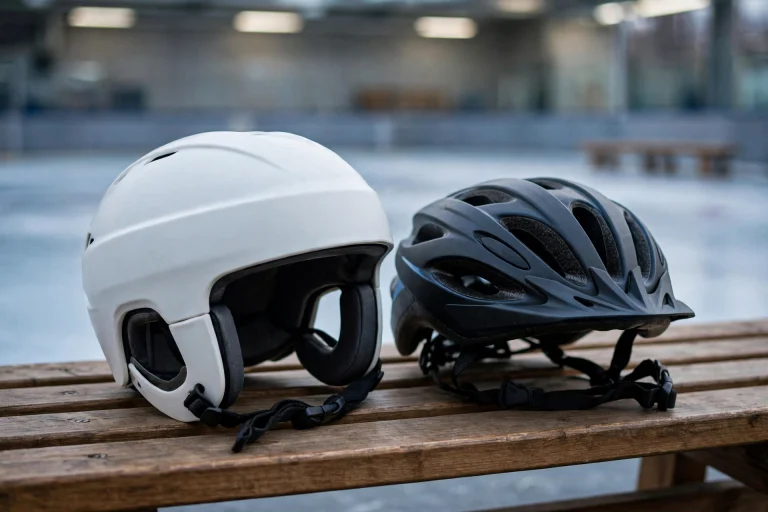
This is worth knowing if you are coming to skeleton from another sport. A ski helmet, a bike helmet, or a luge helmet will not do: the skeleton helmet is designed for the face-down position and the specific risks of the sport. If you are learning about helmet technology in general, reading about what MIPS is for helmets can help you understand one of the features found in modern helmets.
What Should You Check When Choosing a Skeleton Helmet?
Try the helmet on lying face down, in the sliding position. Check the chin bar: it should sit close to your chin without pressing, and it should not block your view through the visor. Check the visor: it should be clear, and the seal against the shell should be tight.
Check the fit overall. The helmet should feel snug all round, without pressure points, and it should stay put when you shake your head. Fasten the strap snugly under your chin. Finally, confirm the helmet meets the standard required by your track or competition. A helmet that fits well in the sliding position, gives a clear view, and meets the standard is the right choice.
One more thing to consider is how the face protection affects your sense of the sled and the track. A full face helmet changes the sound of the run slightly, because your ears are covered, and it narrows your peripheral vision a little. Experienced sliders learn to work with this: they rely on the view straight ahead, on the feel of the sled through their body, and on the sound of the runners on the ice. A beginner should expect the helmet to feel strange at first and should spend time lying on the sled with it on, getting used to the restricted view and the sound, before their first run at speed. That familiarity makes the first real run far less disorienting and lets the rider focus on steering rather than on the helmet.
Frequently Asked Questions
Q: Do skeleton sliders wear goggles as well as a visor?
A: No. The visor is the eye protection, and it seals against the helmet. Goggles would not seal the same way and are not used in skeleton.
Q: Can the chin bar be removed from a skeleton helmet?
A: No. The chin bar is part of the shell, not a detachable accessory. A skeleton helmet without a chin bar would not meet the sport’s requirements.
Q: Does the chin bar make it hard to breathe?
A: In general terms, no — a well-fitting helmet leaves enough space in front of the mouth for normal breathing. If the chin bar presses on your chin or feels cramped, the size or shape may be wrong.

Olivia
Writer at Helmet Today, covering helmet reviews, fit and riding safety.