Boxing headguards can affect vision, and in general terms, the effect is real but usually small when the guard fits well. Cheek pads, forehead bars, and thick padding around the eyes can narrow your side vision and block punches coming from an angle. A well-designed guard with an open eye area, however, leaves most of your useful vision clear, and most boxers adjust to it quickly.
Vision matters more in boxing than in almost any other sport that uses headgear. You need to see punches coming, judge distance, and spot openings, all in a fraction of a second. If a headguard takes away too much of that vision, it can make you slower to react and easier to hit. This guide explains how headguards affect vision, which designs are worst for it, and how to keep the effect as small as possible.
How Does a Headguard Limit Your Vision?
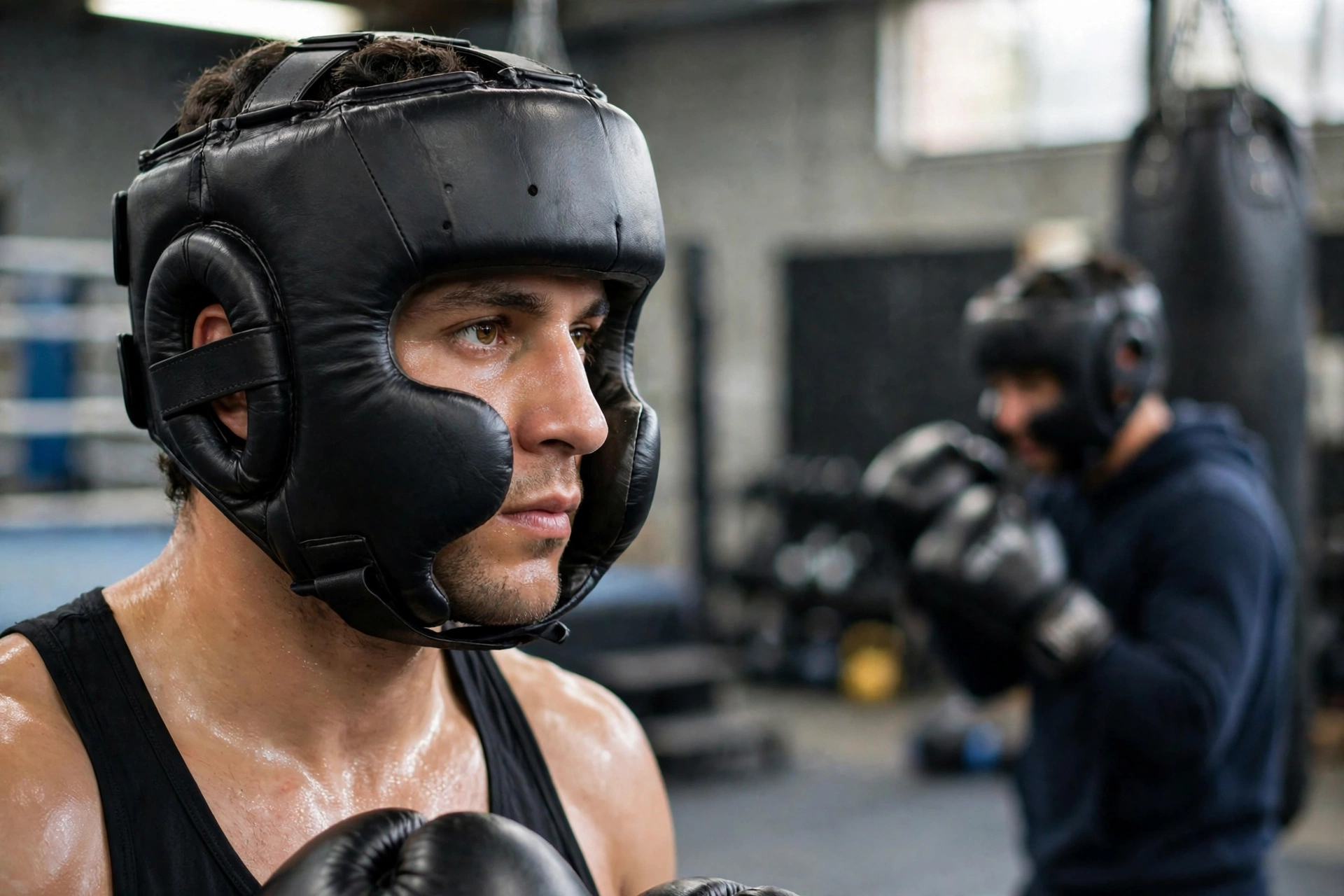
A headguard limits vision mainly by putting padding in the edges of your field of view. The most common culprit is the cheek pad. Thick cheek padding sits close to the sides of your eyes, and when you look to the side, the pad is there instead of empty space. That can make it harder to notice a hook or a wide punch arriving from an angle, because the first sign of it is hidden behind the pad.
The forehead area can cause a similar problem. A guard with a thick brow bar or a low forehead pad can cut into your upper vision, especially when you look up or when your opponent is taller than you. Some guards also have a bar across the nose or a full face bar, which can block the centre of your vision and make it harder to judge distance accurately.
Which Headguard Designs Affect Vision the Most?
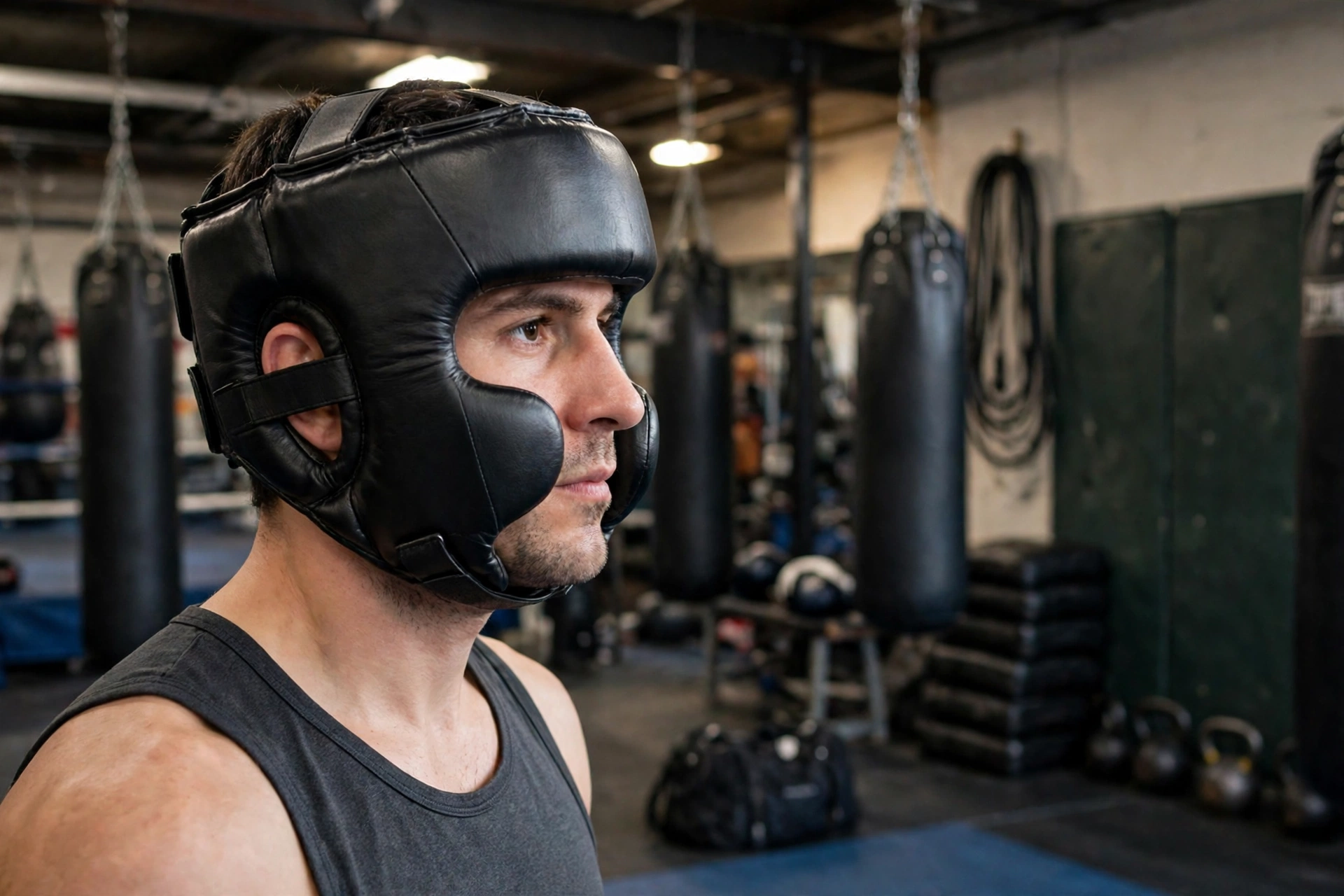
Not all headguards affect vision equally, and the design makes a big difference. Guards with a full face bar, which runs across the nose and cheeks, tend to restrict vision the most. They offer a lot of protection for the nose and face, which is why they are popular for beginners and for hard sparring, but the bar sits directly in your line of sight and can make it harder to see straight ahead as well as to the sides.
Guards with thick, high cheek pads are the next most restrictive. The padding protects the cheekbones well, but it eats into your side vision. If the pads are very thick or sit too far forward, they can block a noticeable slice of what you would otherwise see. Some boxers find they have to turn their head further to check for punches, which slows their reactions.
Open-face guards, by contrast, affect vision the least. These guards protect the forehead, temples, ears, and the back of the head, but leave the face largely open. You get a much wider field of view, closer to what you would have without a guard, at the cost of less protection for the cheeks and nose. Many competition guards use this open design, because clear vision matters so much in a bout.
Does a Poor Fit Make Vision Worse?
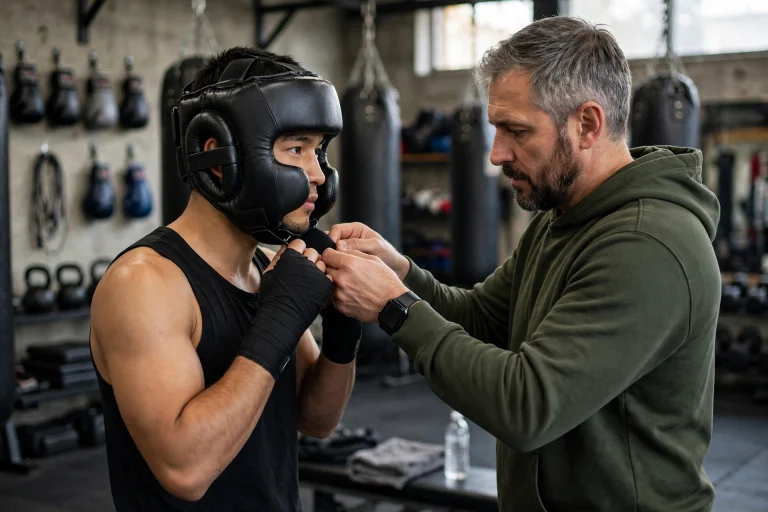
Yes — fit is one of the biggest factors in how much a headguard affects your vision. A guard that is too large will slide forward and down, pushing the forehead pad into your eyeline and the cheek pads further into your side vision. A guard that is too small may sit too high, leaving your forehead exposed, or squeeze your head so tightly that the padding presses against the sides of your eyes.
A guard that slips during movement is especially bad for vision. If it shifts every time you move your head or take a punch, your field of view keeps changing, and you cannot trust what you see. That is distracting and tiring, and it can make you slower to react. A stable guard that stays where you put it is far better, even if it has slightly thicker padding.
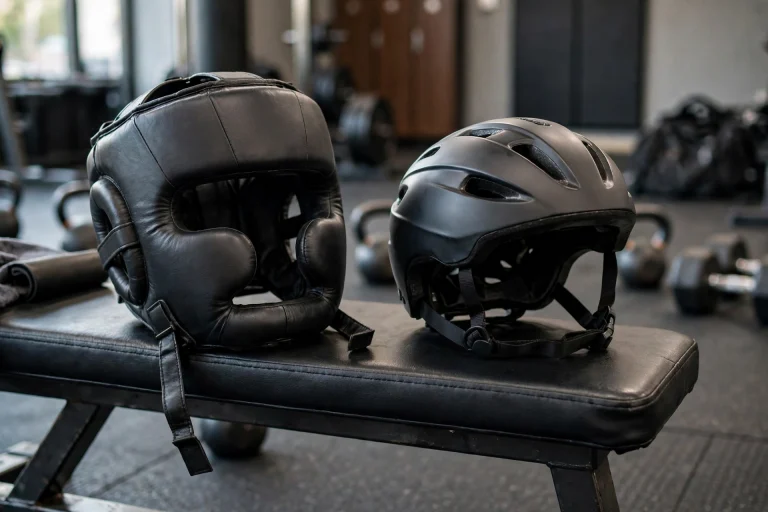
Head shape matters as well. Two guards in the same size can feel very different on different heads, because makers shape their padding differently. A guard that suits a rounder head may not suit a longer one. That is why trying a guard on before you buy, or checking the return policy if you buy online, is worth the effort. If you want to understand how protective headgear manages impact in general, reading about what MIPS is for helmets can give you useful background, even though boxing headguards use different technology from cycling helmets.
How Can You Reduce the Effect on Your Vision?
The simplest step is to choose a guard with an open design around the eyes. Look for a guard where the eye opening is wide, the cheek pads sit back from the front of your face, and there is no thick bar crossing your line of sight unless you genuinely need that level of face protection. For most sparring, an open-face or slim cheek-bar guard gives a good balance of protection and vision.
Next, get the fit right. Measure your head as the maker instructs, try the guard on, and spend a few minutes moving in it before you commit. Look left and right, look up and down, and check that you can see your training partner’s hands at the edges of your vision. Ask your coach to stand to the side and move a glove into your peripheral vision, so you can judge how much you can actually see.
Should You Train Without a Headguard to Protect Your Vision?
Some boxers are tempted to skip the headguard altogether because of the vision issue, but that is rarely the right answer. In general terms, the protection a headguard gives — especially for the forehead, temples, and ears — is worth the small loss of peripheral vision for most training. Sparring without a guard increases the risk of cuts, bruises, and ear injuries, and those injuries can keep you out of training for longer than any vision adjustment would.
If vision is a serious problem for you, talk to your coach before dropping the guard. They may suggest a different design, a better fit, or a change in how you spar. They may also work on your head movement and footwork so you are less reliant on peripheral vision alone. In boxing, good defence is about positioning and movement as much as it is about seeing every punch, and a coach can help you build those skills with a guard on.
Frequently Asked Questions
Q: Do all boxing headguards affect vision?
A: In general terms, yes — most guards narrow side vision a little. Open-face guards affect it least, while full face-bar guards affect it most. A good fit keeps the effect small.
Q: Will I get used to a headguard blocking my vision?
A: Most boxers do adjust after a few sessions, as they learn to move their head more and work with the narrower view. A badly fitted or badly designed guard, however, will keep causing problems.
Q: Is a headguard with a face bar worth the vision loss?
A: It can be, for beginners or hard sparring, because it protects the nose and face well. If clear vision matters more to you, an open-face or slim cheek-bar guard may be a better choice.

Olivia
Writer at Helmet Today, covering helmet reviews, fit and riding safety.