Replace a bobsled or skeleton helmet after any hard impact, if the shell is cracked or the strap is damaged, or when the padding has worn to the point that the fit has loosened — and in general terms, plan on replacing a helmet that has been used hard for several seasons even without a crash. A sliding helmet is safety equipment, not clothing, and its protective ability fades in ways you cannot always see. Knowing when to retire one is part of the sport.
This guide explains the signs that mean replacement, the reasons behind them, and how to look after a helmet so it lasts as long as it safely can.
What Happens to a Helmet in a Crash?
When a helmet takes a hard impact, the liner inside is designed to absorb energy by deforming — compressing or cracking in a way that slows the impact before it reaches your head. That is the helmet doing its job, but it also means the liner is damaged afterwards. A liner that has already deformed cannot absorb a second impact the same way.
The damage is often invisible. The outer shell may look fine, with no crack or dent, while the liner inside is compressed or cracked. That is why the rule is simple: a helmet that has taken a hard impact should be replaced, even if it looks undamaged. You cannot judge the liner from the outside.
What Are the Visible Signs a Helmet Needs Replacing?
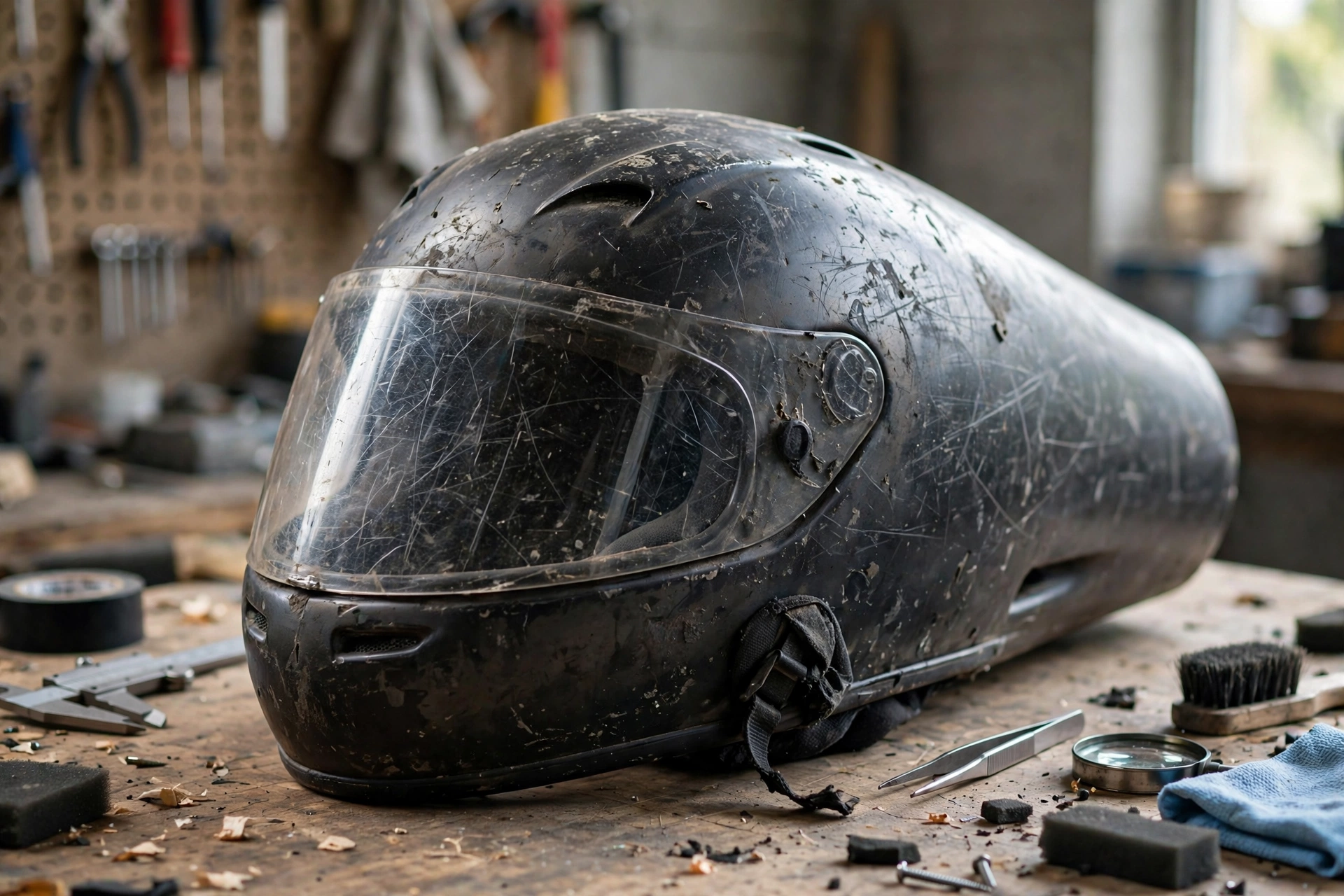
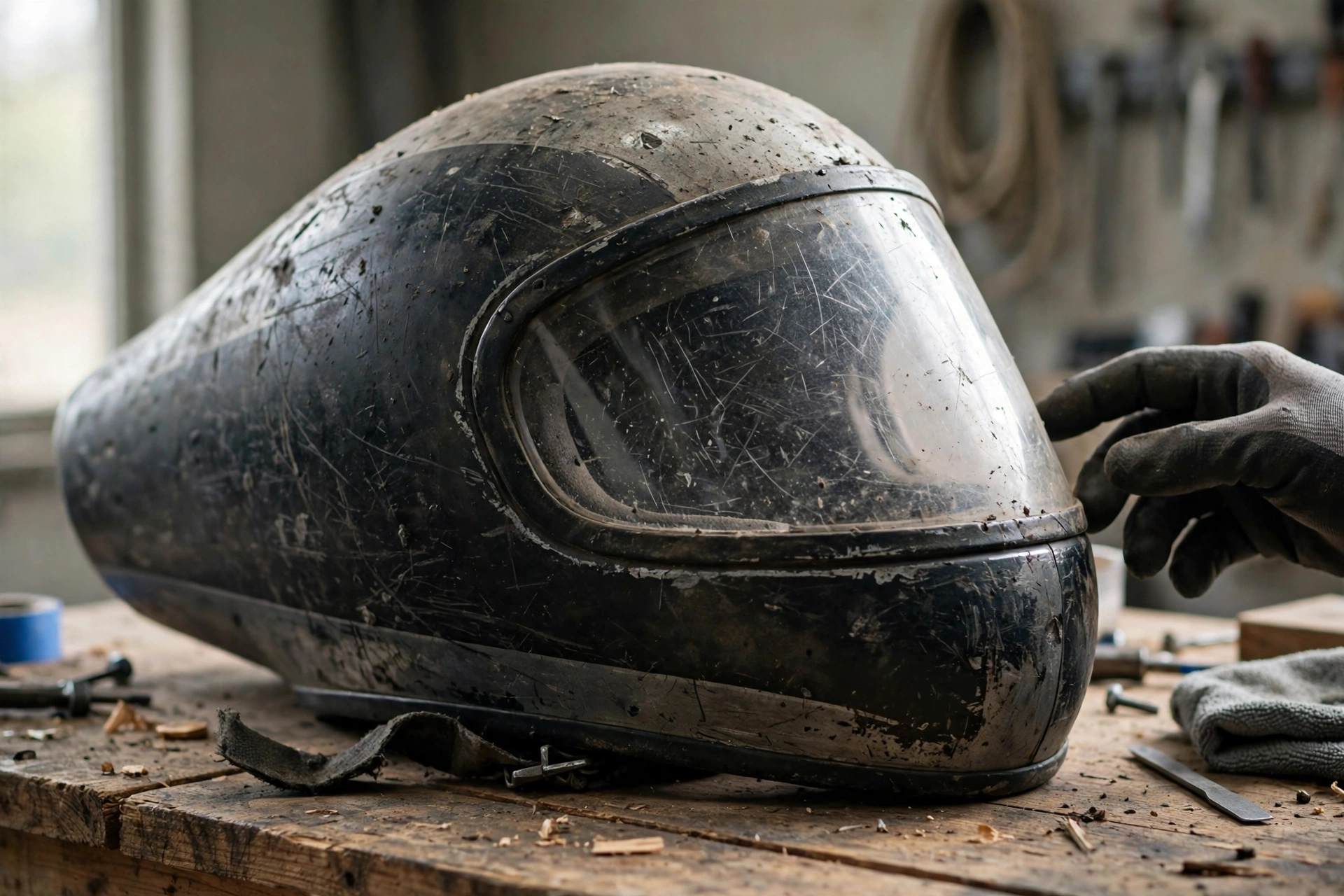
Some signs are obvious. A cracked shell, a dented shell, or a shell that has a soft spot is finished — replace it. A strap that is frayed, a buckle that does not click shut properly, or stitching that has come loose means the helmet cannot be trusted to stay on, and that is also a reason to replace it.
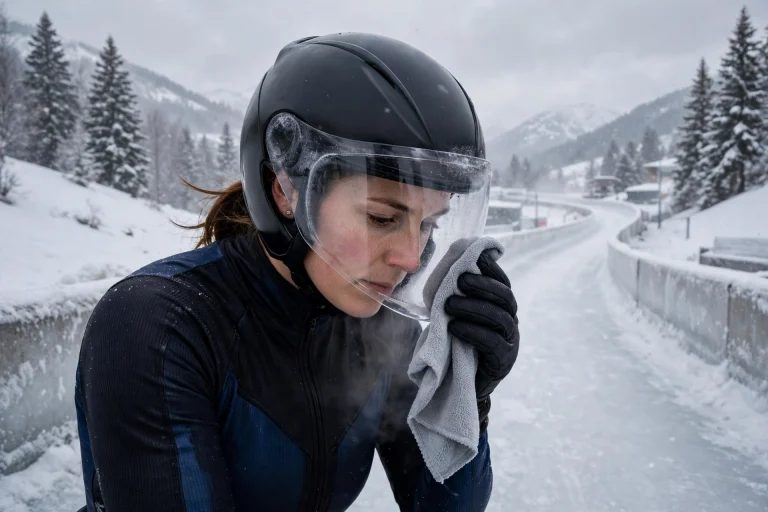
The visor matters too. A visor that is deeply scratched, cracked, or no longer seals against the shell should be replaced, and if a spare visor is not available, the helmet itself may need replacing. Check the padding as well: padding that has flattened, torn, or come unstuck will not hold the helmet snugly, and loose padding can often be replaced — but if the shell is also worn, the whole helmet should go.
Smell is a less obvious sign. A helmet that smells strongly even after cleaning may have padding that has broken down, and padding that has broken down does not fit or protect as well as it should.
Does a Helmet Expire Even Without a Crash?
In general terms, yes — a helmet wears out over time even if it never crashes. The materials in the shell and liner age, the padding compresses with use, and repeated exposure to cold, damp, and knocks takes a toll. A helmet used for several hard seasons will not protect as well as a new one, even if it looks fine.
How long a helmet lasts depends on how much it is used. A helmet used for a few runs a year will last longer than one used every week through a long season. As a rough guide, many riders and coaches treat a helmet that has seen several seasons of regular use as due for replacement, and they check the fit and condition at the start of each season.
Storage matters too. A helmet stored in a damp shed, or left in a hot car, will age faster than one stored dry and cool. Keep your helmet in a dry place, out of direct sunlight, and it will last longer.
What About Small Knocks and Drops?
Not every knock means replacement. A helmet knocked off a bench onto a soft surface, or tapped against a wall, has not necessarily taken a damaging impact. The question is how hard the impact was and where it landed. A hard drop onto concrete is different from a gentle knock.
When in doubt, inspect the helmet carefully: check the shell for cracks or dents, check the liner by feeling inside for soft spots or cracks, and check the fit. If anything feels different, or if you are unsure, ask a coach or a helmet specialist to look at it. It is better to replace a helmet unnecessarily than to slide in one that will not protect you.
If you are learning about helmet technology in general, reading about what MIPS is for helmets can help you understand one of the features found in modern helmets.
How Do You Look After a Helmet to Make It Last?
Clean the shell with mild soap and water, and let it air-dry. Remove the padding if it comes out, wash it gently, and let it dry fully before putting it back. Keep the visor clean and store it where it will not get scratched — a soft bag or a visor cover helps.
Do not use harsh chemicals, solvents, or high heat on a helmet. Do not hang it by the strap, which can stretch the strap over time. And do not store heavy kit on top of it. Small habits like these add up over a season, and a well-cared-for helmet stays in good condition longer.
It helps to keep a simple record of your helmet: when you bought it, how many seasons it has been used, and whether it has ever taken a hit. A note on your phone or a label on the helmet bag is enough. Without a record, it is easy to lose track of a helmet’s age, especially if you own more than one or share kit with a club. A helmet that is five seasons old and has been used hard every week is a different proposition from one that is two seasons old and used occasionally, and the record helps you make the replacement decision honestly rather than guessing. Coaches and clubs that keep records for their whole fleet of helmets find it much easier to spot the ones due for replacement before the season starts.
Frequently Asked Questions
Q: Can I keep using a helmet after a small crash with no visible damage?
A: In general terms, no — a helmet that has taken a hard impact should be replaced, even if the outside looks fine, because the liner inside may be damaged in ways you cannot see.
Q: How do I dispose of an old bobsled or skeleton helmet?
A: Check with your track or club, as some run collection schemes. Otherwise, remove the strap so no one can reuse it, and dispose of it with general waste or through a local recycling point if one accepts it.
Q: Is a second-hand sliding helmet a good idea?
A: In general terms, no. You cannot know whether a second-hand helmet has been crashed, and a helmet with hidden liner damage will not protect you. Buy new, and keep the receipt.

Olivia
Writer at Helmet Today, covering helmet reviews, fit and riding safety.