No, you should not swap an ice skating helmet and a bike helmet as if they were the same thing — each is built for a different kind of fall, a different surface, and different conditions, and using the wrong one leaves gaps in protection. They may look similar, and in an emergency either is better than no helmet at all, but they are not interchangeable for regular use.
This guide explains how the two helmets differ, when one can stand in for the other, and what to look for in a helmet for each activity.
What Is an Ice Skating Helmet Built For?
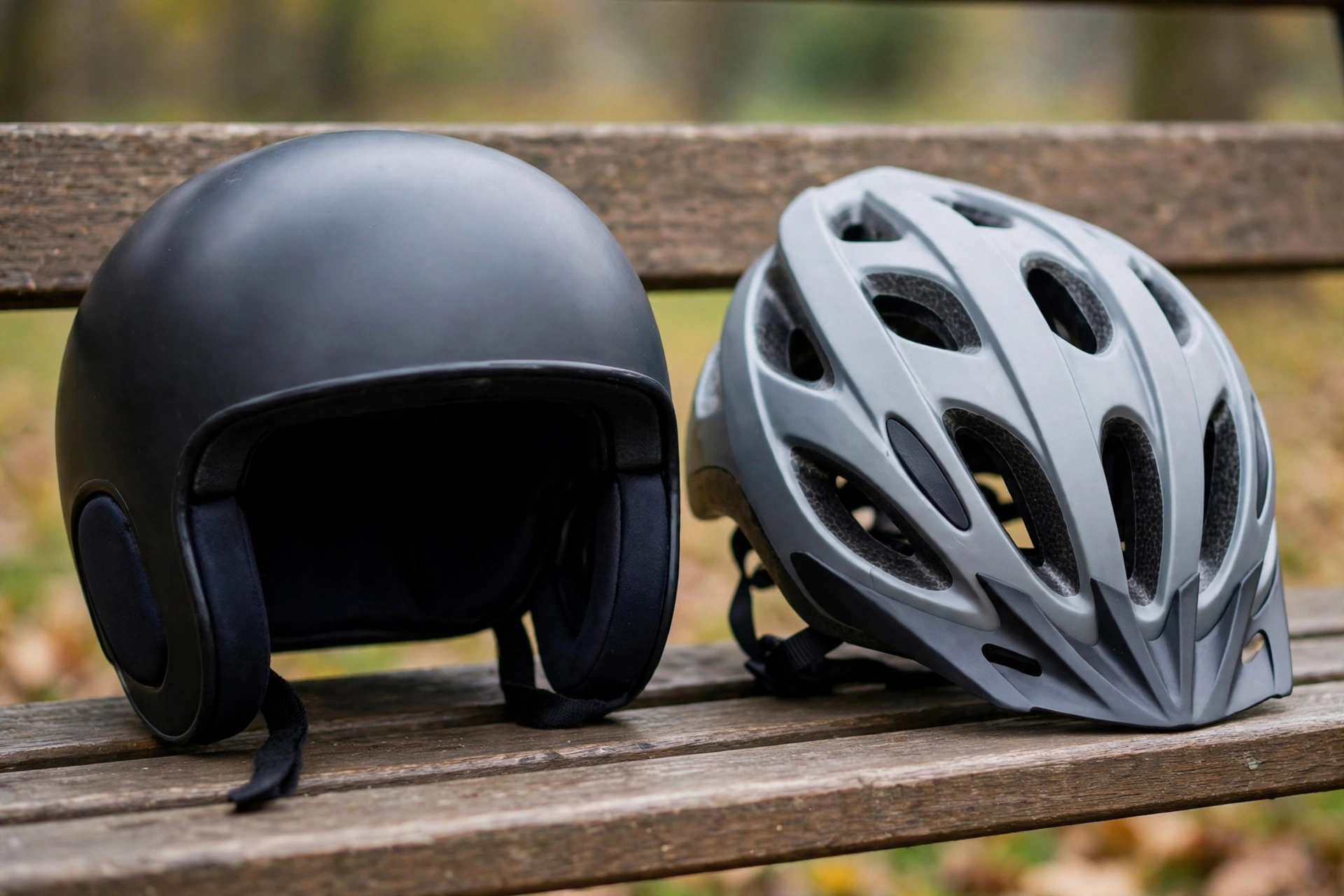
An ice skating helmet is built for falls onto hard, slippery ice, often backwards, at the relatively low speeds of a rink. It covers the top, sides, and back of the head, and it is designed to slide on ice rather than catch. Many skating helmets are ski helmets or multi-sport helmets, which are warm, cover the ears, and are made for cold conditions.
The key risks in skating are a backwards fall onto the back of the head, and a collision with another skater or the boards. A skating helmet is designed around those risks: good coverage at the back of the head, a smooth shell, and a snug fit that stays put when you fall.
What Is a Bike Helmet Built For?
A bike helmet is built for a fall from a bicycle onto a road or trail, at cycling speeds, often forwards over the handlebars. It has large vents for airflow during sustained effort, a lightweight design, and a shape that protects the front and top of the head where a cyclist is most likely to hit the ground.
Bike helmets are designed to be worn for hours at a time in warm weather, so ventilation and low weight are priorities. They are also designed for a single hard impact: the foam liner absorbs the energy of a crash, and the helmet is then replaced. That is the same principle as a skating helmet, but the impact conditions are different.
What Are the Main Differences?
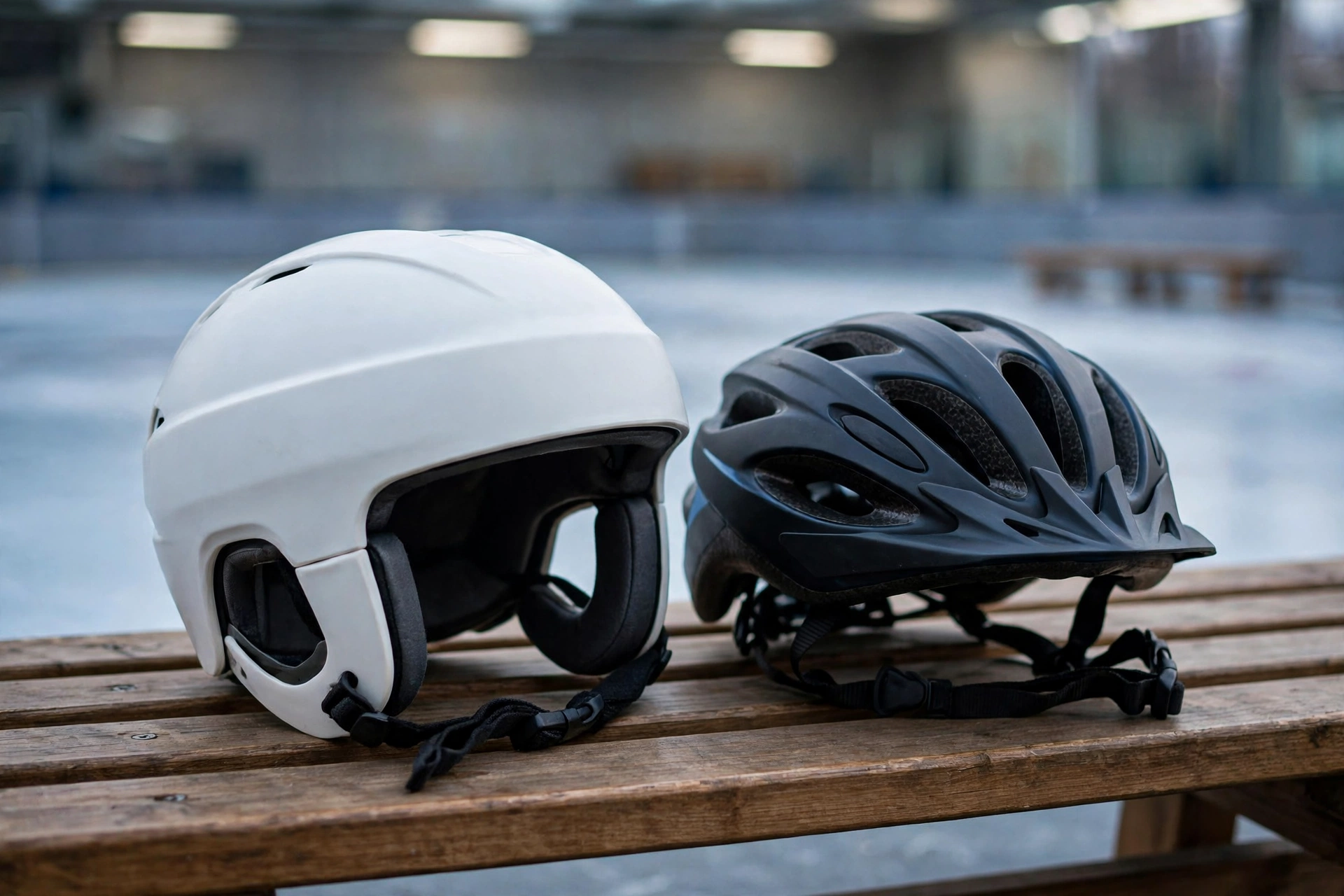
The first difference is coverage. A skating helmet, especially a ski-style helmet, usually covers more of the back and sides of the head and the ears, while a bike helmet is lighter and more open, with large vents. On a cold rink, a bike helmet leaves your head cold and your ears exposed, which is uncomfortable and can be a distraction.
The second difference is the shell. A skating helmet’s shell is smooth and hard, designed to slide on ice. A bike helmet’s shell is also smooth, but its shape and vent layout are designed for airflow on the road, not for sliding on ice. The vents on a bike helmet can also catch on the ice or let in cold air in a way a skating helmet’s closed shell does not.
The third difference is the conditions. A bike helmet is made for warm-weather exercise; a skating helmet is made for cold. Wearing a bike helmet on the ice is not dangerous in itself, but it is less comfortable and may not cover the parts of the head most at risk in a skating fall.
Can You Use a Bike Helmet for Ice Skating in a Pinch?
In general terms, yes — if you have no other helmet, a bike helmet is better than no helmet for a casual skate. It will protect the top and front of your head in a fall, and it is far safer than skating bare-headed. But it is a stopgap, not a plan: if you skate regularly, get a helmet made for the ice.
The reverse is also true. A ski helmet used for cycling will be hot, heavy, and poorly ventilated, and it may not meet the standard required for cycling in your area. Each helmet is built for its own sport, and the standards reflect that. If you are learning about helmet technology in general, reading about what MIPS is for helmets can help you understand one of the features found in modern helmets.
What Should You Buy If You Do Both?
If you cycle and skate, you need two helmets — or one multi-sport helmet that is certified for both activities. Some multi-sport helmets meet the standards for cycling and for winter sports, and these can be a practical choice if you do both occasionally. Check the label inside the helmet: it should list the standards it meets, and those standards should cover both activities.
When choosing, fit each helmet for its own activity. A helmet that fits well for cycling may feel different on the ice, especially with a hat underneath. Buy from a shop where you can try helmets on, and ask the staff which models are certified for both sports if that is what you need.
There is also the question of standards, which is where the difference between the two helmets becomes formal rather than just practical. Each helmet is tested against the standard for its own sport, and the label inside the helmet states which standards it meets. A helmet that meets the cycling standard has been tested for cycling impacts, and a helmet that meets the winter sports standard has been tested for those conditions. If a helmet’s label lists both standards, it has been tested for both, and it can be used for both activities with confidence. If it lists only one, using it for the other activity means relying on protection that was never tested for that use. Checking the label takes seconds, and it is the most reliable way to know whether a helmet is right for what you are about to do.
Frequently Asked Questions
Q: Is it unsafe to wear a bike helmet on the ice?
A: In general terms, no — it is much safer than no helmet. But a skating helmet gives better coverage for the back of the head and keeps you warmer, so it is the better choice for regular skating.
Q: Can children use the same helmet for cycling and skating?
A: A multi-sport helmet certified for both can work for children, and it is a practical choice for families. Check the label for the standards it meets, and check the fit for each activity.
Q: Do I need to replace a helmet if I use it for both sports?
A: The replacement rules are the same: replace after a hard impact, or if the shell, strap, or padding is damaged. Using a helmet for two sports does not change that, but it may wear out faster.

Olivia
Writer at Helmet Today, covering helmet reviews, fit and riding safety.