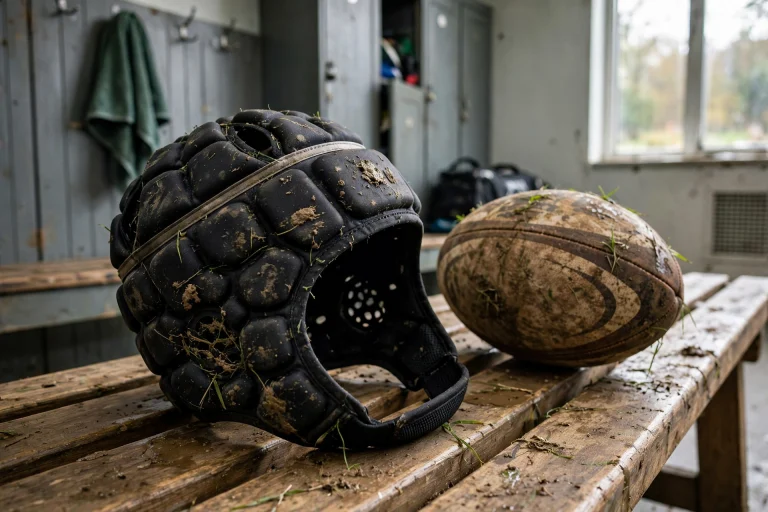
A rugby scrum cap is a soft padded headgear worn in rugby to help protect the ears and scalp from scrapes, knocks, and friction in tackles, rucks, and scrums. It is not a hard helmet, and it is not designed to prevent concussion. It is a thin layer of foam and fabric that fits closely over the head, and its main job is to reduce the cuts, grazes, and ear injuries that come from repeated contact in a rugby match.
Scrum caps are one of the most recognisable pieces of rugby kit, worn by forwards packing down in the scrum and by backs who want a little extra protection in contact. Yet there is a lot of confusion about what they actually do, who should wear one, and what their limits are. This guide explains what a scrum cap protects, what it does not protect, how it is made, and how to decide whether one is right for you.
What Is a Rugby Scrum Cap Made Of?
A scrum cap is usually made from a layer of closed-cell foam padding, covered in a stretchy fabric such as lycra or a synthetic blend, and shaped to fit closely over the head and ears. The padding is thickest over the crown and the ears, where contact is most likely, and thinner around the face and neck so the cap stays light and flexible. Most caps have ear holes or padded ear cups, a chin strap to hold them in place, and sometimes laces at the back for a closer fit.
Because the materials are soft, a scrum cap can be folded, washed, and packed into a kit bag without damage, which is part of its appeal. It weighs very little, it does not restrict head movement, and it lets a player hear and see almost normally. That flexibility is also its limit: soft foam can cushion a scrape or a minor knock, but it cannot spread force the way a rigid shell can, so it should never be treated as the equivalent of a hard helmet.
What Does a Scrum Cap Actually Protect?
In general terms, a scrum cap helps protect the ears and the scalp. The ears are the most vulnerable part of the head in rugby: repeated friction in the scrum can cause the painful swelling known as cauliflower ear, and a knock or a grab in a tackle can cut or bruise the ear. The padding over the ears cushions that friction and spreads it over a wider area, which can reduce the damage from repeated contact over a season.
The scalp benefits in a similar way. The thin foam layer can reduce grazing when a player’s head drags across the ground or rubs against another player’s kit in a ruck. It can also take the edge off a minor bump, such as a knee or an elbow brushing the head in a crowded breakdown. These are real benefits, and they are the reason many players who have had ear or scalp problems choose to wear a scrum cap.
What a scrum cap does not do is just as important. It does not prevent concussion, and no maker should claim that it does. Concussion is caused by the brain moving inside the skull when the head is shaken or struck, and a thin layer of soft foam cannot stop that movement. A scrum cap can reduce the surface injury from a knock, but it cannot make the brain safe from a hard impact. Players who understand this are more likely to use a scrum cap sensibly, as one part of playing safely rather than as a guarantee.

Who Wears a Scrum Cap, and Why?
Scrum caps are most often worn by forwards, especially front-row players who pack down in the scrum. In the scrum, heads are pressed together and ears are squeezed and rubbed with every engagement, so ear protection is a practical concern rather than a fashion choice. Back-row forwards and locks also wear them, particularly if they have had ear problems in the past or play in a league where scrums are a big part of the game.
How Is a Scrum Cap Different From a Hard Helmet?
The difference is in the construction and the job each one is designed to do. A hard helmet, such as a cycling or motorcycle helmet, has a rigid outer shell and an impact-absorbing liner, and it is tested to a safety standard for the sport it serves. A scrum cap has no rigid shell and no such impact liner. It is soft padding, and it is not tested or certified as a hard helmet.
That means the two should never be confused. A scrum cap will not protect your head in a cycling crash, and a hard helmet has no place on a rugby field, where its rigid shell could injure other players. Rugby’s laws and customs are built around soft headgear for a reason: the game involves close contact with other players, and hard headgear would change the nature of that contact. If you are learning about helmet technology in general, reading about what MIPS is for helmets can help you understand one of the features used in hard helmets, even though it does not apply to a soft scrum cap.
Should You Wear a Scrum Cap?
Whether you should wear a scrum cap depends on your position, your injury history, and your comfort. If you play in the front row, or if you have had ear or scalp injuries, a scrum cap is a sensible piece of kit to try. If you play a position with less head contact, or if you find a scrum cap hot, distracting, or uncomfortable, you may prefer to play without one. There is no single right answer, and coaches and teammates can offer advice, but the final choice is yours.
If you do decide to wear one, take the fit seriously. Measure your head, try the cap on, check that the ear holes line up, and fasten the chin strap so it stays put. Wear it in training before you wear it in a match, so you can get used to the feel and check that it does not slip, muffle your hearing, or narrow your vision. A scrum cap that fits well will soon feel like part of your kit; one that fits badly will distract you every time you go into contact.
Frequently Asked Questions
Q: Does a rugby scrum cap prevent concussion?
A: No. In general terms, a scrum cap is soft padded headgear designed to help protect the ears and scalp from scrapes and knocks. It is not a hard helmet and should not be relied on to prevent concussion.
Q: Is a scrum cap the same as rugby headgear?
A: Yes, the two terms describe the same thing. Scrum cap is the common name for the soft padded headgear worn in rugby, and it is often used for any rugby headgear, not only for players in the scrum.
Q: Do I have to wear a scrum cap to play rugby?
A: In general terms, no — wearing a scrum cap is a personal choice in most rugby settings. Check with your club or coach, because some junior or school teams may have their own guidance, but most players choose for themselves.

Olivia
Writer at Helmet Today, covering helmet reviews, fit and riding safety.