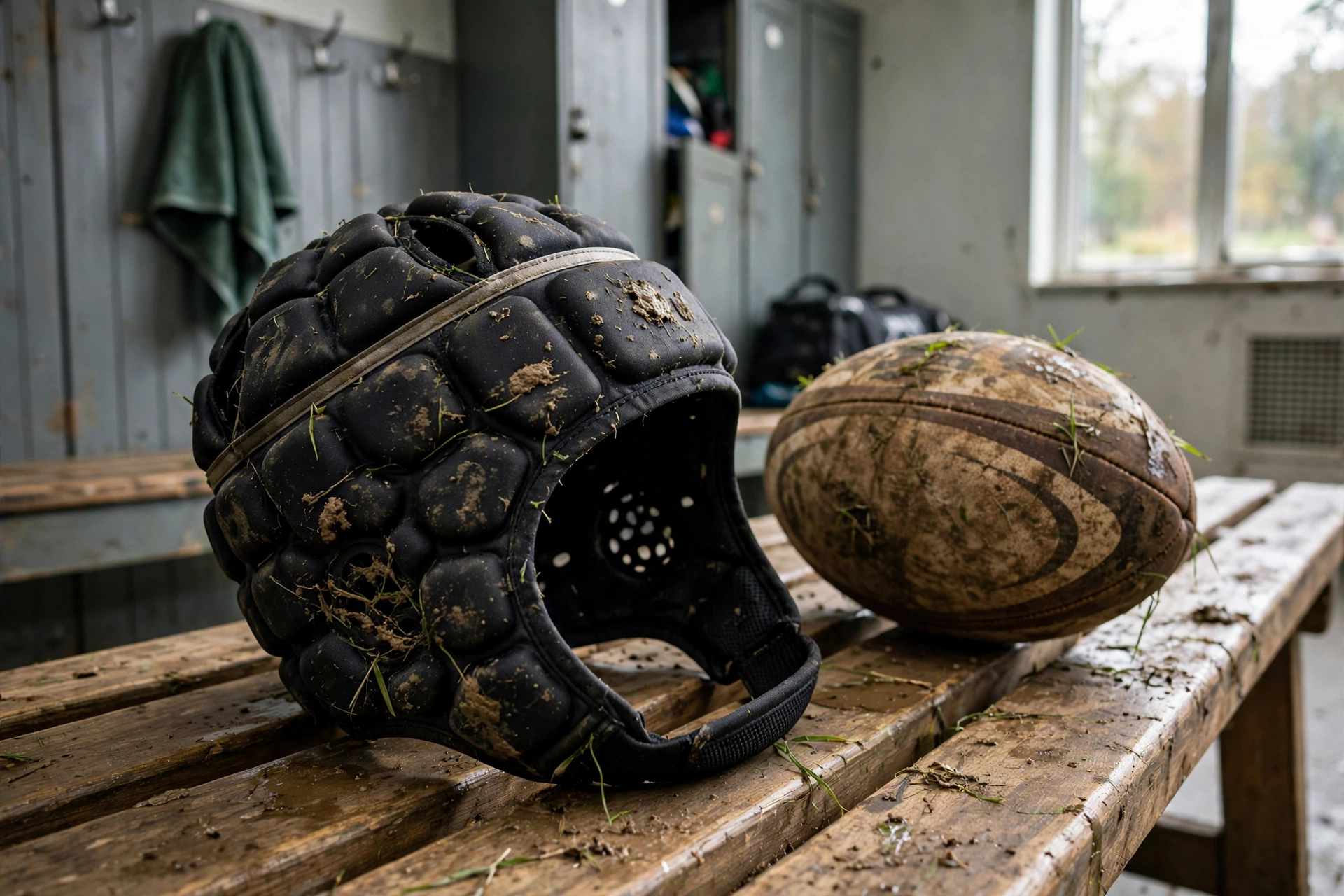
To clean rugby headgear after a match, rinse off the mud and sweat as soon as you can, hand-wash it gently with mild soap, and let it air-dry completely before your next game. In general terms, the whole job takes only a few minutes, and doing it after every match keeps the headgear hygienic, comfortable, and in good shape for longer. Leaving sweaty headgear stuffed in a kit bag is the fastest way to end up with a smelly, bacteria-filled piece of kit that nobody wants to wear.
Rugby headgear is soft, padded protection made from foam and fabric, and it soaks up sweat, rain, and mud during a match. This guide covers what to do right after the final whistle, how to wash it properly, how to dry it without damaging the foam, and how to tell when it is time for a replacement.
Why Should You Clean Rugby Headgear After Every Match?
Rugby is a contact sport played in all weather, and headgear takes a lot of punishment. During a single match it can absorb a large amount of sweat, pick up mud from the ground, and collect grass and dirt from tackles and rucks. All of that moisture and grime sits inside the padding, and warm, damp fabric is exactly the environment where bacteria and odours thrive.
Cleaning after every match is not just about smell, although that matters too. Sweat contains salts and oils that can slowly break down the fabric and the foam inside the headgear. Mud left to dry in the seams can make the padding stiff and uncomfortable. Regular cleaning keeps the material soft and flexible, so the headgear fits the way it should. If you want to learn more about helmet technology, reading about what MIPS is for helmets is a useful starting point.
There is also a skin health angle. Headgear sits directly against your forehead, ears, and scalp, and dirty padding pressed against skin for a whole match can cause irritation and spots. Clean headgear is simply kinder to your skin.
What Should You Do Right After the Final Whistle?
The first step is to get the headgear out of your kit bag as soon as you can. Give it a good shake to knock off loose mud and grass, then rinse it under cold or lukewarm running water. This quick rinse removes most of the surface mud and sweat before it has a chance to dry in and set.
Do not just throw it in the bottom of your bag and forget about it. A closed kit bag is warm and damp, and headgear left in there overnight will smell far worse by morning than it did at full time. If you cannot wash it straight away, at least hang it somewhere with airflow so it can start drying. A hook in a garage or a washing line works well, and keeping it out of the bag also stops the smell from spreading to the rest of your kit.
If your headgear has removable padding or a removable chin strap, take those parts off so each piece can be cleaned and dried separately. Check the straps and fastenings for mud or grass caught in the buckles, and give them a quick rinse too.

How Do You Wash Rugby Headgear Properly?
Hand washing is the safest method for most rugby headgear. Fill a basin or sink with lukewarm water and a small amount of mild detergent or sports-wash liquid, then soak the headgear for ten to fifteen minutes. Gently squeeze the padding to work the soapy water through the foam, especially where it sat against your forehead and ears.
Avoid harsh chemicals such as bleach, and avoid strong stain removers, because they can damage the foam and the fabric. A soft brush or an old toothbrush is useful for stubborn mud in the seams and around the ear holes, but be gentle — scrubbing hard can fray the stitching. Rinse thoroughly with clean water until no soap remains, because soap residue can irritate your skin and stiffen the fabric as it dries.
Some headgear can be machine washed, but only if the maker says so on the care label, and even then a gentle cold cycle in a laundry bag is the way to do it. In general terms, hand washing is the safer default: it is gentler on the foam and avoids the risk of the headgear losing its shape in the machine.
How Should You Dry Rugby Headgear?
Air drying is the only safe way to dry rugby headgear. Hang it somewhere with good airflow, out of direct sunlight, and let it dry naturally. This can take a full day or more, especially if the foam is thick, so it is worth cleaning it the same evening as the match rather than the morning of the next one.
Do not put headgear on a radiator, in a tumble dryer, or near a direct heat source. High heat can warp the foam, shrink the fabric, and weaken the glue or stitching that holds the padding together. It can also leave the headgear misshapen, so it will not fit properly next time.
A couple of tricks can speed drying without any heat. Gently press the headgear in a clean towel to remove excess water before hanging it up, and stuff the ear cups and crown lightly with a dry towel to help it hold its shape while it dries. Never wear it again until it is fully dry inside and out.
How Do You Know When Rugby Headgear Needs Replacing?
Even well-cared-for headgear does not last forever. The foam inside compresses over time, especially after repeated impacts, and once it has lost its springiness it will not protect the way it did when new. If the padding feels flat, thin, or uneven, or if the headgear feels looser than it used to even with the straps tightened, it is probably time for a replacement.
Check the straps, buckles, and stitching every few weeks. Frayed straps, cracked buckles, or seams coming apart are all signs that the headgear is wearing out. Also look for tears in the outer fabric or foam that is crumbling or coming away from the lining. Damage like this is not worth patching — headgear is protective kit, and a repair that fails during a match is worse than no repair at all.
As a rough guide, players who train and play regularly often replace their headgear once a season or so, depending on how much use it gets. If you are unsure whether yours is still in good shape, compare it with a new one in a shop and see how the foam and fit compare.
Frequently Asked Questions
Q: Can I machine wash my rugby headgear?
A: Only if the care label says you can. Hand washing is safer for the foam and the shape of the headgear. If the label does allow machine washing, use a gentle cold cycle and a laundry bag.
Q: How do I get the smell out of rugby headgear?
A: Regular washing after every match is the best prevention. For stubborn smells, soak it in lukewarm water with a sports-wash liquid, rinse well, and air-dry it completely. Never store it damp in a closed kit bag.
Q: How often should I clean my rugby headgear?
A: After every match and every training session where it gets sweaty or muddy. A quick rinse right after the game plus a proper hand wash when you get home is enough to keep it fresh and in good condition.

Olivia
Writer at Helmet Today, covering helmet reviews, fit and riding safety.