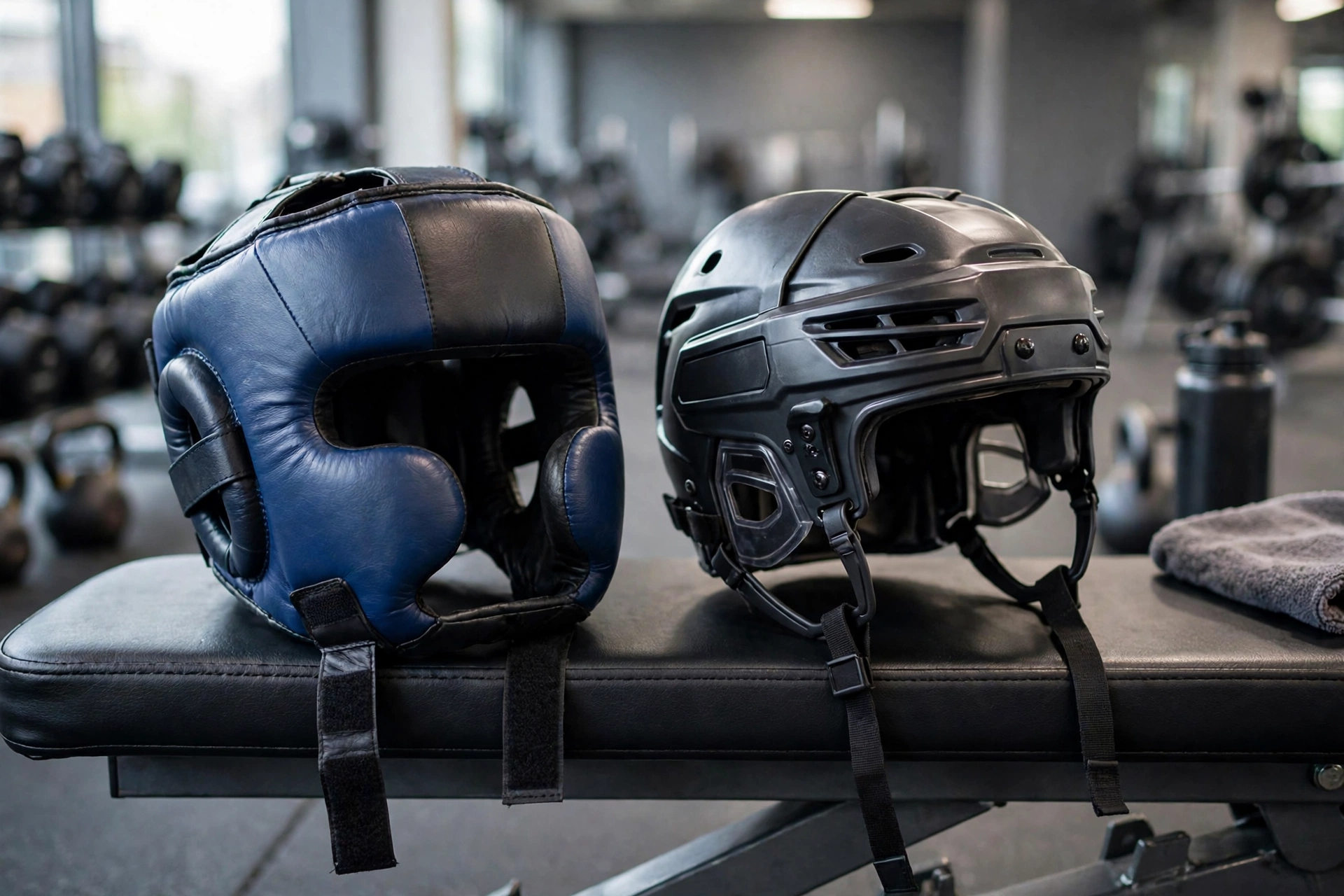
A boxing headguard and a helmet are not the same thing: a headguard is padded protection worn for boxing training and some amateur competition, while a helmet is a hard-shell design built for other sports like cycling or motorcycling. The words get mixed up, but the two items are built for very different kinds of impact, and using the wrong one in boxing would be a mistake.
This guide explains what a boxing headguard is, how it differs from a helmet, and when each is used — so you can choose the right protection for the right activity.
What Is a Boxing Headguard?
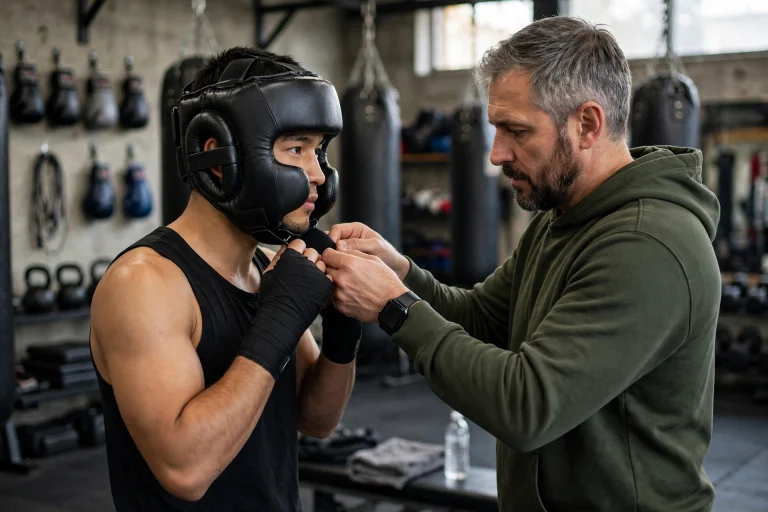
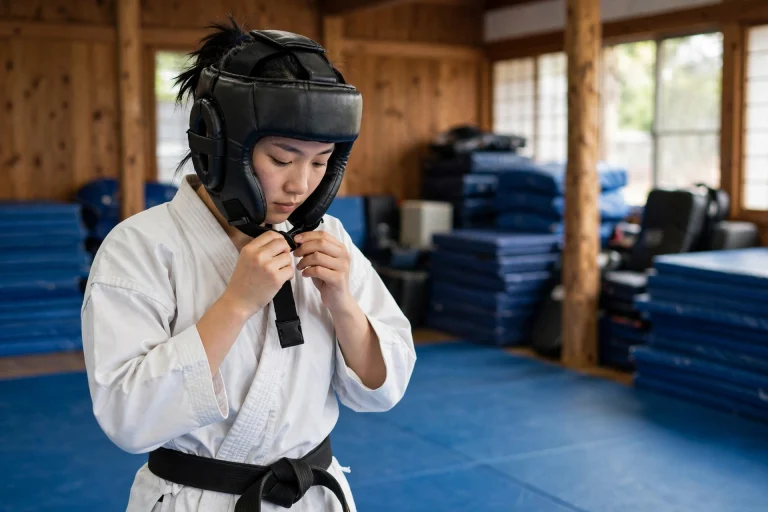
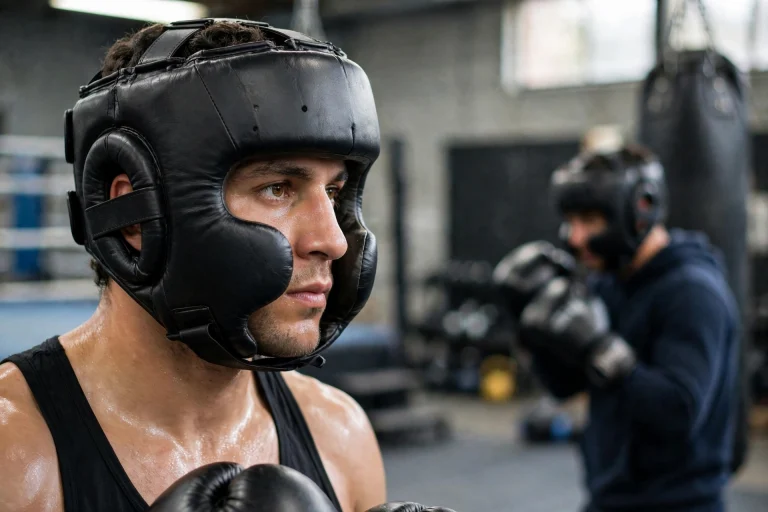
A boxing headguard is a padded covering for the head, made from leather or synthetic material over foam padding. It wraps around the top, sides, and back of the head, with openings for the eyes, nose, and mouth. Some headguards cover the cheeks and chin as well; others leave the face more open. The padding is designed to spread the force of a punch and reduce cuts and bruises.
Headguards are used in boxing training, especially sparring, and in some amateur competitions. They are not worn in professional boxing, where the rules do not allow them. In training, they let boxers practise with less risk of cuts and swelling, which means they can spar more often and recover faster.
What Is a Helmet, by Comparison?
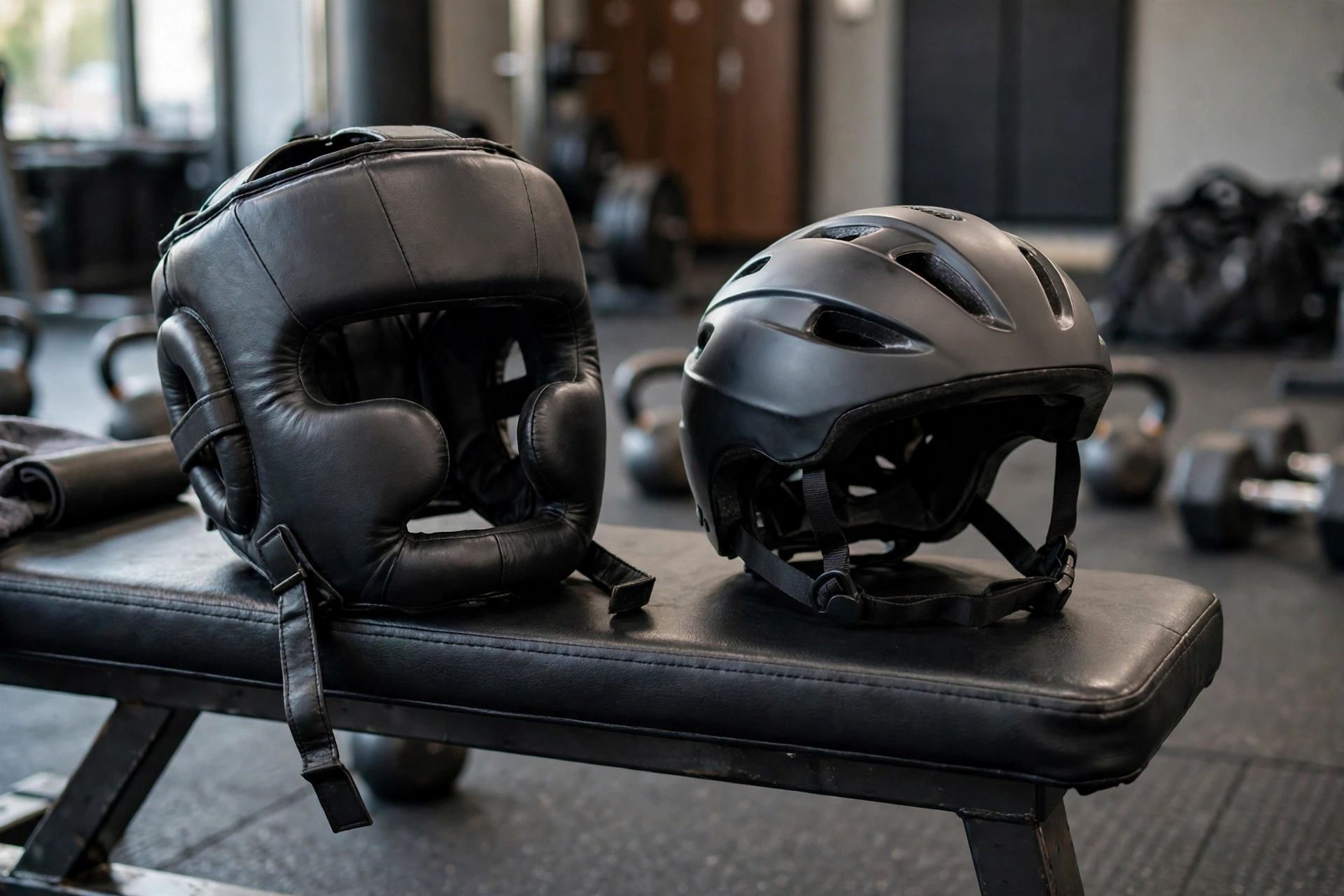
A helmet, in the sense most people mean it, is a hard-shell design: a rigid outer shell over a foam liner, built to absorb a single hard impact against a road, a rock, or the ground. Bike helmets, ski helmets, and motorcycle helmets all follow this pattern. The shell is hard because it has to protect against a hard surface.
A boxing headguard is soft, not hard. It has no rigid shell, because a hard shell in boxing would be dangerous: it would turn a punch into a much harder impact for the other boxer, and it would make the wearer’s head heavier and harder to move. The two designs exist for opposite reasons, and that is why they are not interchangeable.
In general terms, a helmet protects against the ground; a headguard protects against gloves. That single difference explains almost everything about how each is built.
Does a Headguard Prevent Concussion?
This is an important question, and the honest answer is that a headguard reduces cuts and bruises but does not prevent concussion. Concussion happens when the brain moves inside the skull after a sudden movement of the head, and padding on the outside of the head cannot stop that movement. A punch that snaps the head back can cause concussion whether or not a headguard is worn.
That is why headguards are used alongside other safety measures in boxing: controlled sparring, good coaching, and rules about how hard sparring should be. A headguard is not a guarantee of safety, and no boxer should spar harder because they are wearing one. If you are learning about helmet technology in general, reading about what MIPS is for helmets can help you understand one of the features found in modern helmets.
When Is Each One Used?
A headguard is used for boxing and some other combat sports, in training and in amateur competition where the rules allow it. It is not used for cycling, skiing, or motorcycling, and it would offer no useful protection in a fall onto a road or a rock.
A helmet is used for cycling, skiing, climbing, motorcycling, and other sports where the risk is a fall or a collision with a hard surface. It is not used in boxing, because a hard shell would be dangerous for both boxers. The two items belong to different worlds, and the rules of each sport reflect that.
What Should You Look for in a Boxing Headguard?
Fit comes first. A headguard should fit snugly without pressing, and it should stay in place during sparring. It should not slip over your eyes or slide around when you move your head. Try it on and move around in it before you buy, and check that you can see clearly through the eye openings.
Next, check the coverage. An open-face headguard gives better vision and is easier to breathe in, while a full-face headguard with cheek protection gives more coverage but can restrict vision. Beginners often start with more coverage and move to a more open design as they gain experience. Also check the padding: it should be even, firm, and free of lumps, and the straps should fasten securely.
The language around head protection can be confusing, because the word “helmet” is used loosely in everyday speech. In a gym, people may call a headguard a helmet, and in a bike shop, nobody would. The important thing is not the word but the design: a hard shell for impacts against a hard surface, and soft padding for repeated gloved impacts in boxing. If you are buying protection, describe the activity to the seller rather than relying on the name alone, and check what the product is actually designed for. A good shop or coach will steer you to the right item, and the label or product description should make the intended use clear. Getting the name right matters less than getting the protection right.
One more distinction worth noting is how each item is cared for. A boxing headguard needs regular wiping down and air-drying after training, because sweat and bacteria build up in the padding, and the straps and stitching should be checked for wear. A hard-shell helmet, by contrast, needs its shell checked for cracks, its liner inspected, and its strap tested — and it must be replaced after a hard impact, even if it looks undamaged. The care routines are different because the materials and the risks are different, but in both cases the habit of checking your protection before you use it is what keeps it working when you need it.
Frequently Asked Questions
Q: Can I wear a bike helmet instead of a boxing headguard?
A: No. A bike helmet has a hard shell that would be dangerous in boxing, and it is not designed for repeated punches. Use a proper boxing headguard for boxing.
Q: Do professional boxers wear headguards?
A: In general terms, no. Professional boxing does not allow headguards in competition, though professionals may wear them in training and sparring.
Q: Is a headguard the same as headgear in other martial arts?
A: In general terms, similar padded headgear is used in several martial arts, but the design varies by sport. A boxing headguard is specific to boxing, and other arts have their own versions.

Olivia
Writer at Helmet Today, covering helmet reviews, fit and riding safety.