To fit a hurling helmet with a faceguard, choose a size that sits level on your head, fasten the chin strap snugly, and check that the faceguard sits clear of your nose and chin without blocking your vision. A hurling helmet is a hard helmet with a metal faceguard, not soft headgear, so the fit must be checked in two parts: the shell on your head, and the faceguard in front of your face. If either part is wrong, the helmet will not protect you properly or comfortably.
Hurling is a fast, high-ball game, and the faceguard is there to protect the face from the hurley and the sliotar. A helmet that is too loose can shift in a challenge, a faceguard that sits too close can press on the face, and a helmet that blocks vision can be a disadvantage in a game where the ball moves quickly. This guide walks through sizing, fitting the shell, adjusting the faceguard, and testing the helmet before you play.
What Is a Hurling Helmet, and How Does the Faceguard Work?
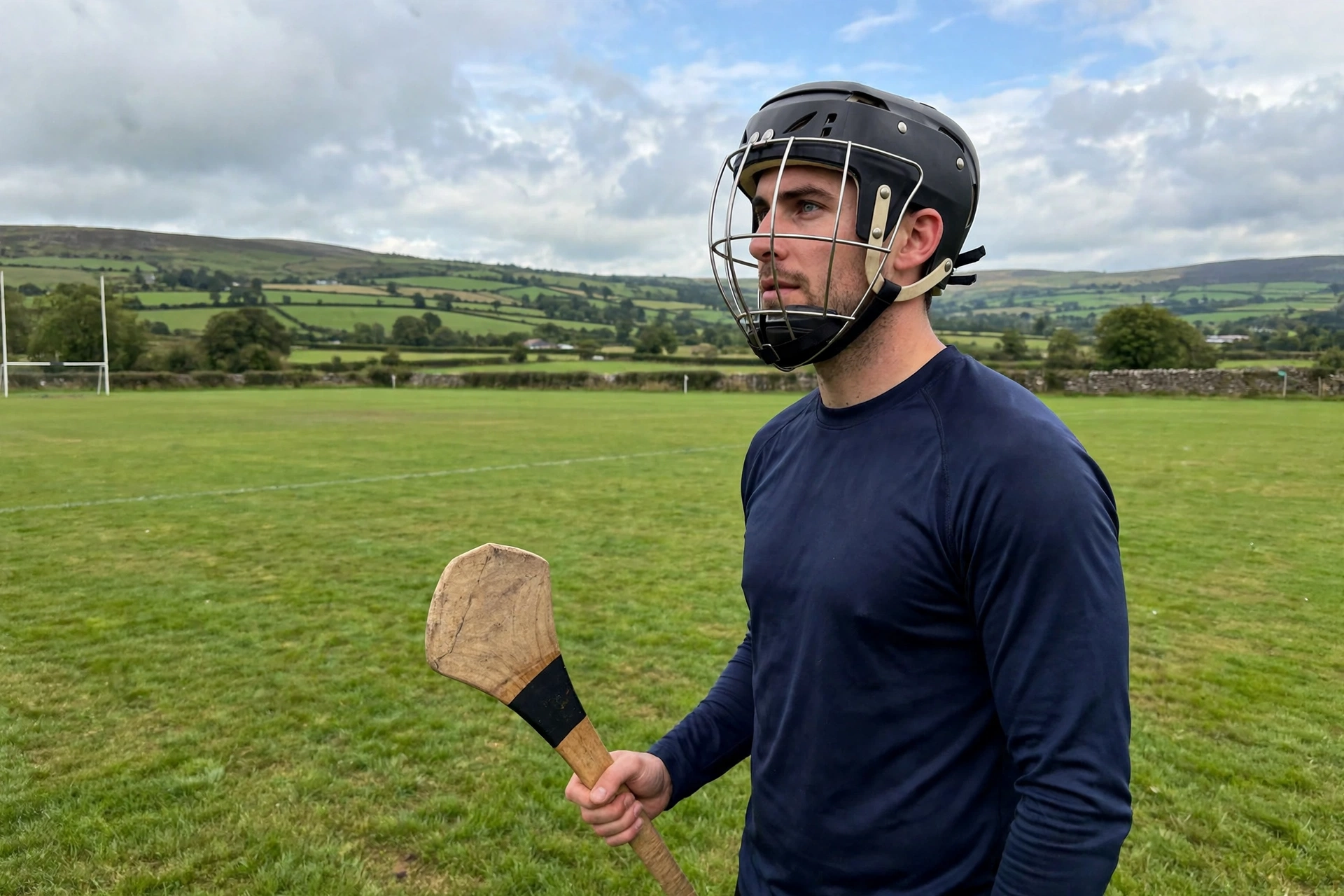
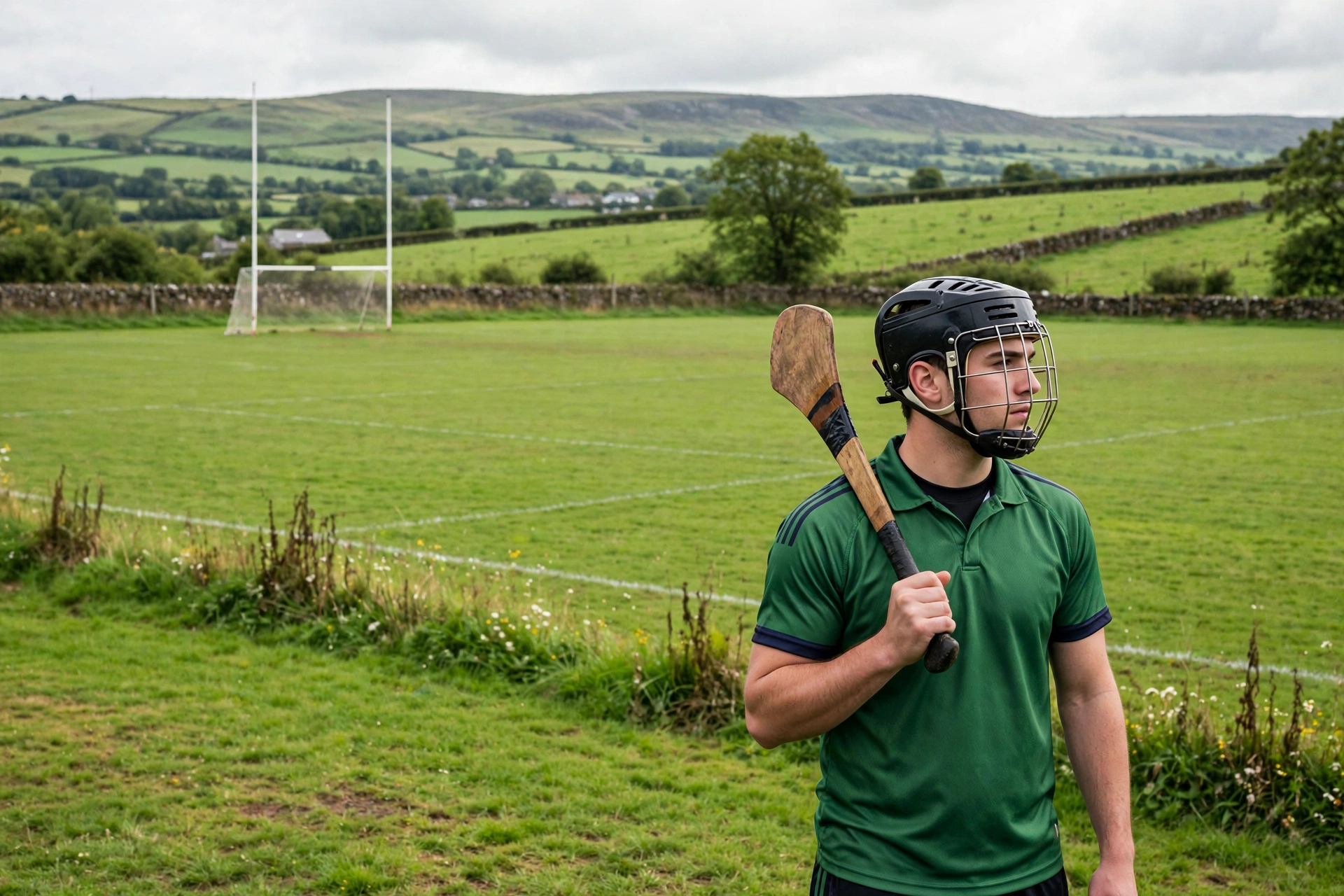
A hurling helmet is a hard helmet with a rigid outer shell, an inner liner, and a metal faceguard fixed to the front. The shell covers the top, sides, and back of the head, while the faceguard — a grille of metal bars — covers the face, leaving gaps to see and breathe through. The two parts work together: the shell protects the skull, and the faceguard protects the eyes, nose, teeth, and jaw from the hurley and the ball.
Because a hurling helmet is a hard helmet, it is a different kind of kit from rugby headgear. It has a rigid shell that spreads the force of an impact, and it should be treated like other hard helmets: checked for damage, replaced after a serious impact, and never modified in a way that weakens the shell or the faceguard. If you are learning about helmet technology in general, reading about what MIPS is for helmets can help you understand one of the features you may see listed on hard helmet boxes.
How Do You Measure and Choose the Right Size?
Start by measuring around your head with a soft tape measure, placed just above your eyebrows and ears, around the widest part of your head. Take the measurement twice and compare it with the maker’s size chart, because sizes vary between brands. A size that is right for one maker may be too small or too large for another, so the chart is the starting point, not the final answer.
When you try the helmet on, it should sit level on your head, low enough to cover your forehead, without tilting back or forward. It should feel snug all around, with the liner in even contact with your head and no pressure point that throbs after a few minutes. Shake your head from side to side: the helmet should move with your head, not slide on its own. If it rocks or slides, try a smaller size or a different model, because padding alone cannot fix a shell that is the wrong size.
How Should the Faceguard Sit on Your Face?
The faceguard should sit in front of your face with a clear gap between the bars and your skin. The top bar should sit above your eyebrows, the side bars should sit clear of your cheeks, and the bottom bar should sit below your chin without pressing against it. You should be able to open your mouth, talk, and breathe comfortably without the bars touching your face.
Check the gap by looking in a mirror and by feeling with a finger: there should be space between the faceguard and your nose, lips, and chin all the way around. If any bar touches your face when the helmet is sitting level, the faceguard may be bent, the wrong size, or fitted to the wrong helmet. Do not bend a faceguard yourself to make it fit — a bent grille may be weaker than it should be, and it may not protect you properly. If the faceguard does not sit correctly, ask a coach or a retailer for help, or try a different helmet.
How Do You Adjust the Chin Strap and Check Your Vision?
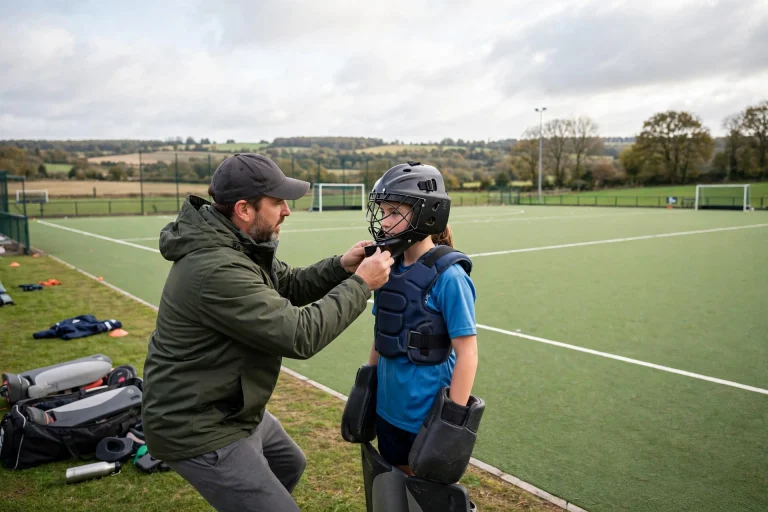
Fasten the chin strap so it sits snugly under your chin, with room for about one finger between the strap and your skin. The strap should hold the helmet in place without cutting into your chin or making it hard to talk. A loose strap lets the helmet shift, which can move the faceguard across your face, while a strap that is too tight can be uncomfortable and distracting over a full game.
Once the strap is set, check your vision. Look straight ahead, then look up, down, and to both sides, as you would when tracking the sliotar. The bars of the faceguard will be visible in your peripheral vision, but they should not block your view of the ball or of other players. You should be able to see the ball clearly at your feet and in the air, and to judge its distance without the grille getting in the way.
What Are the Most Common Hurling Helmet Fitting Mistakes?
The most common mistake is wearing a helmet that is too big. A loose helmet slides forward over the eyes or back off the forehead, and it lets the faceguard move across the face. Players often choose a larger size for comfort, but a helmet that moves is a helmet that cannot be relied on. If you can easily twist the helmet on your head with the strap done up, it is too loose.
The second mistake is wearing the helmet too far back, like a cap pushed up on the forehead. The shell should sit low enough to cover the forehead, with the front edge just above the eyebrows. Worn too far back, it leaves the forehead exposed and lets the faceguard sit too low on the face. The third mistake is leaving the chin strap loose or undone, which is common in training — but a strap that is not fastened properly means the helmet can come off or shift in the first challenge.
Frequently Asked Questions
Q: Can I wear a hurling helmet without a faceguard?
A: In general terms, no — the faceguard is part of the helmet’s protection for the face, and most hurling settings expect a helmet with a faceguard. Check with your club or coach for the guidance that applies to your games.
Q: How do I clean a hurling helmet with a faceguard?
A: Wipe the shell and the faceguard with a damp cloth after games, wash removable padding following the maker’s instructions, and air-dry everything before you store it. Do not use harsh chemicals on the shell or the grille.
Q: Should I replace my hurling helmet after a heavy knock?
A: In general terms, yes, you should have it checked after a serious impact and replace it if there is any damage to the shell, the liner, or the faceguard. A hard helmet may be weakened by an impact even if the damage is not obvious.

Olivia
Writer at Helmet Today, covering helmet reviews, fit and riding safety.