No single person invented the modern helmet liner — it grew step by step, from leather cradles and cork padding to the foam liners used today, through the work of many makers, researchers, and safety bodies over several decades. If one name comes up most often, it is usually in connection with expanded polystyrene foam, which became the standard liner material in the second half of the 20th century. But the liner as a whole has no single inventor, and its story is one of small improvements adding up.
This guide explains what a helmet liner is, how it developed, and who contributed the key steps along the way.
What Is a Helmet Liner, and What Does It Do?
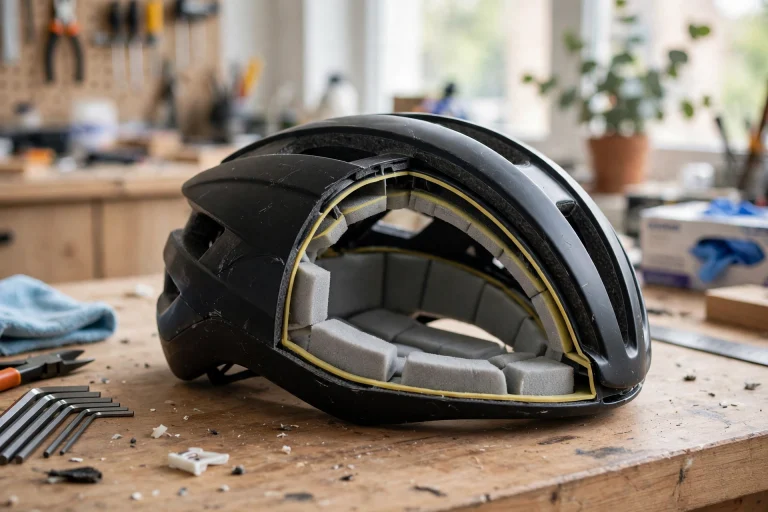
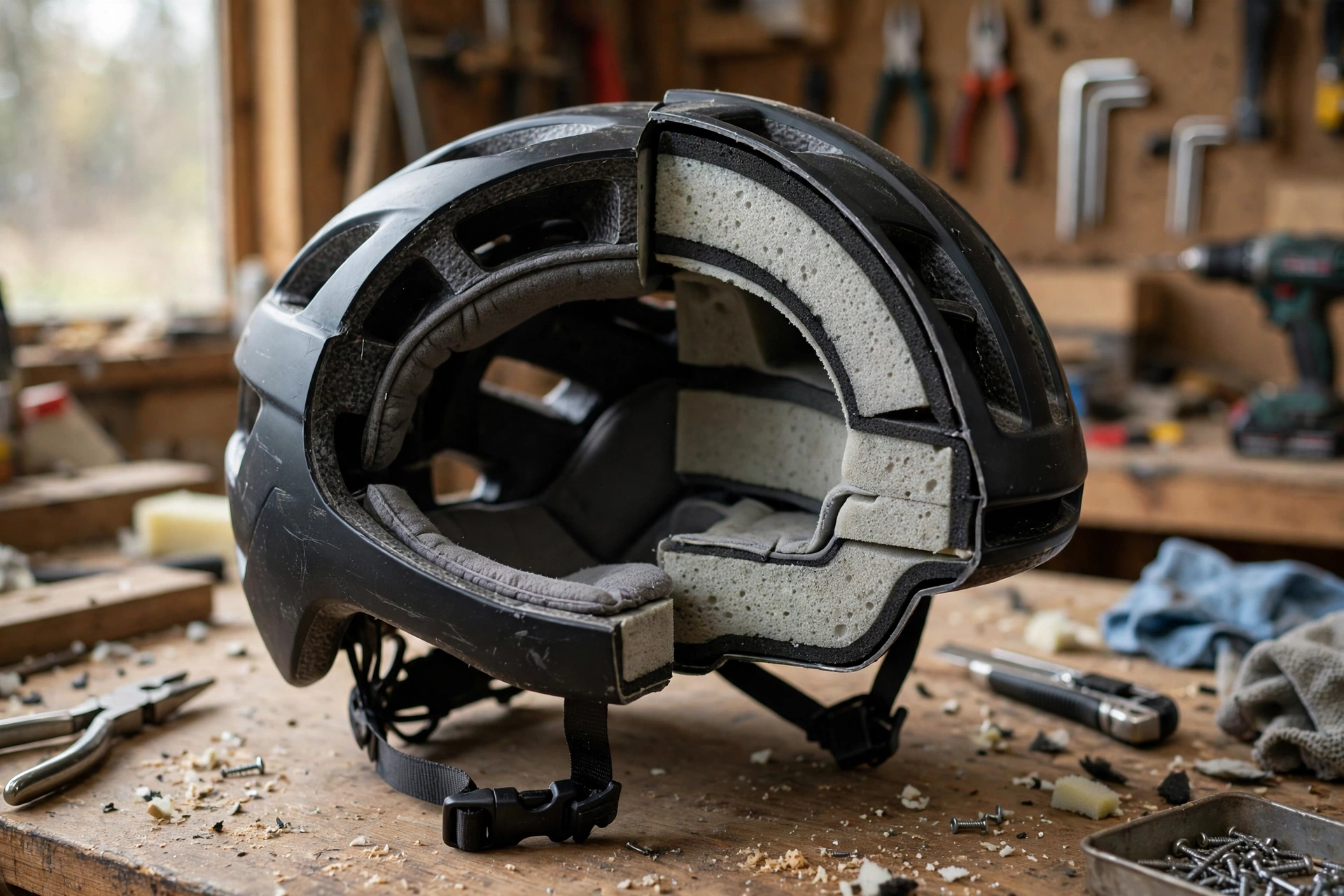
A helmet liner is the layer inside the hard outer shell that absorbs the energy of an impact. When a helmet hits something hard, the liner crushes, deforms, or compresses, and that action spreads the force over a longer time and a wider area. Without a liner, the shell alone would pass the force straight to the skull.
Early helmets had no liner in the modern sense. A leather cap or a steel helmet sat directly on the head, with perhaps a cloth pad or a leather cradle to make it comfortable. The protection came from the shell alone, and the shell’s job was to stop penetration — a rock, a bullet fragment, a falling tool — rather than to absorb energy.
The modern idea is different. The liner’s job is not to be hard but to give way in a controlled way, turning a sharp, violent impact into a slower, spread-out one. That change in thinking — from resisting force to managing it — is the real invention behind the modern helmet liner.
What Came Before Foam?
Before foam, helmet liners were made from whatever soft material was available. Cork was used in some early helmets, because it compresses and recovers. Leather cradles, borrowed from military helmets, held the shell away from the head and let it move slightly on impact. Felt, wool, and horsehair padding all appeared in early helmets, mainly for comfort rather than protection.
The suspension cradle deserves a mention. In industrial hard hats, the cradle — a set of straps holding the shell a few centimetres above the head — was the liner. It worked by giving the impact somewhere to go: the shell could deform and the straps could stretch before the force reached the head. The cradle is still used in hard hats today.
None of these materials was ideal. Cork crumbles, leather stretches, felt compresses permanently, and none of them absorbs energy as efficiently as modern foam. But they established the idea that the space between the shell and the head is where protection happens — an idea that foam later perfected.
How Did Foam Become the Standard Liner?
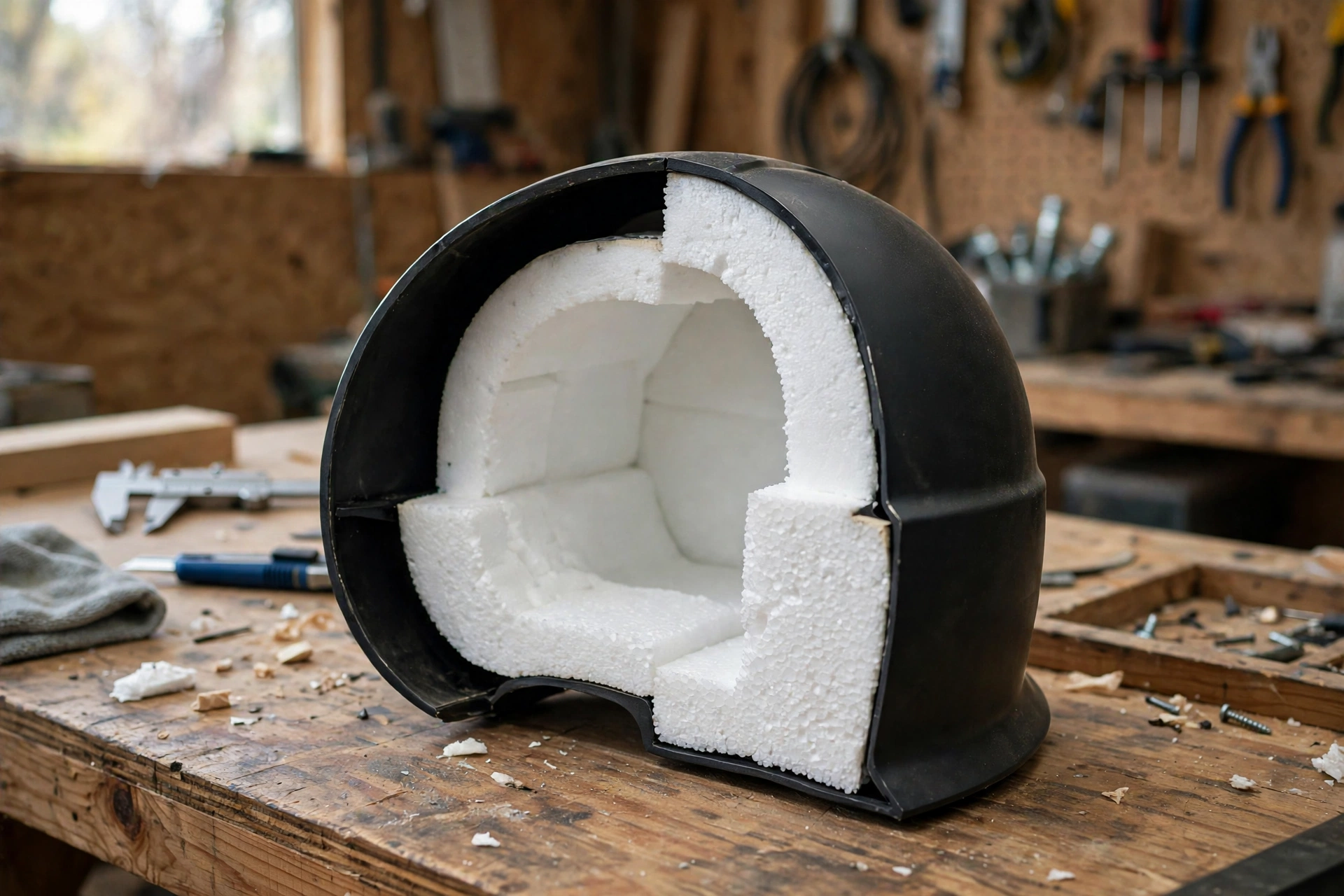
Expanded polystyrene — EPS — became the standard liner material in the 1950s and 1960s, first in motorcycle helmets and then in cycling and other sports helmets. EPS is made of tiny beads fused together, with air trapped between them. On impact, the beads crush and the air is forced out, which absorbs a large amount of energy for very little weight.
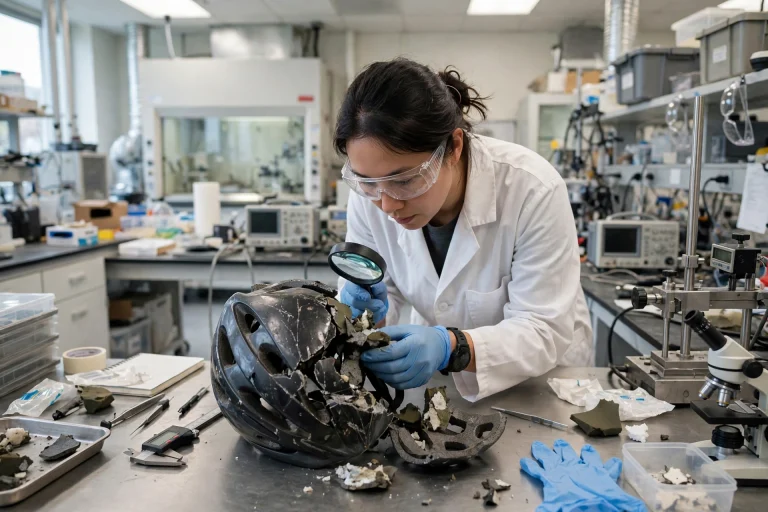
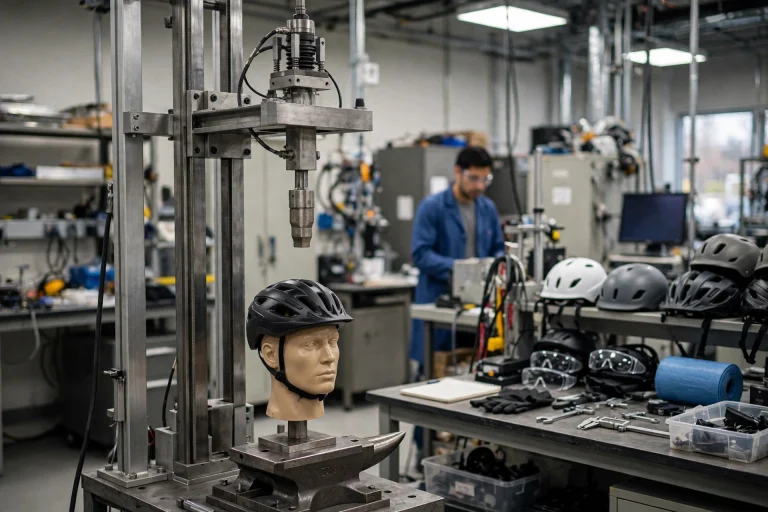
The change was driven by researchers and makers working on motorcycle safety, where the speeds and forces were high enough that a leather cradle or a cork pad was plainly not enough. Helmet makers began testing their products by dropping them onto hard surfaces and measuring the forces inside, and foam consistently performed better than anything that had come before.
One name often linked to this period is that of the researchers at the Snell Memorial Foundation, set up after the death of racing driver Pete Snell in the 1950s. The foundation created the first rigorous helmet testing standards, and those standards pushed makers towards foam liners. But the foundation set the test, not the material — the foam itself came from the plastics industry, and its use in helmets was the work of many makers at once.
How Have Liners Improved Since Foam?
Since EPS became standard, liner design has improved in several directions. Multi-density foam uses softer foam in some areas and firmer foam in others, so the helmet can manage both small and large impacts. Some liners use a different foam — EPP, which recovers after an impact — in areas where repeated small knocks are likely, such as the inside of a skate helmet.
More recently, liners have been designed to manage rotational forces, not just straight-line ones. When the head twists in a fall, the brain can be injured by the rotation as well as the impact, and modern liners — including slip-plane systems that let the shell move slightly relative to the head — are designed to reduce that twisting. If you want to understand that idea, reading about what MIPS is for helmets explains how one such system works.
Comfort liners have improved too. The soft padding that sits against the head — separate from the impact-absorbing foam — is now made from moisture-wicking fabrics, with removable and washable pads. That matters, because a helmet that is comfortable is a helmet that gets worn.
Why Does It Matter That There Is No Single Inventor?
It matters because the modern helmet liner is a good example of how safety equipment actually improves. There was no single breakthrough moment, but a series of steps: a better material here, a better test there, a new understanding of how heads are injured, and a new design in response. Each step was made by different people, in different countries, for different sports.
That pattern is still going on. Researchers are testing new foam structures, new materials, and new ways of managing rotation, and each improvement finds its way into helmets a few years later. The liner of the future will probably not look like the liner of today, just as today’s foam liner looks nothing like a leather cradle.
For a rider buying a helmet, the lesson is practical: the liner is the most important part of the helmet, and it is worth knowing what it is made of. A helmet’s liner, not its colour or its brand, is what does the work in a fall — and it is the result of decades of work by people whose names most riders will never know.
Frequently Asked Questions
Q: Who invented the foam helmet liner?
A: No single person did. Expanded polystyrene foam was adopted by helmet makers in the 1950s and 1960s, driven by motorcycle safety research and by testing standards such as those from the Snell Memorial Foundation.
Q: What was used before foam liners?
A: Cork, leather cradles, felt, and wool padding were all used. They offered some comfort and a little protection, but none absorbed impact energy as efficiently as foam.
Q: Are all modern helmet liners made of EPS foam?
A: Most are, but not all. Some helmets use EPP foam, which recovers after impact, or multi-density foam that combines softer and firmer layers. The liner material is usually listed in the helmet’s specifications.

Olivia
Writer at Helmet Today, covering helmet reviews, fit and riding safety.