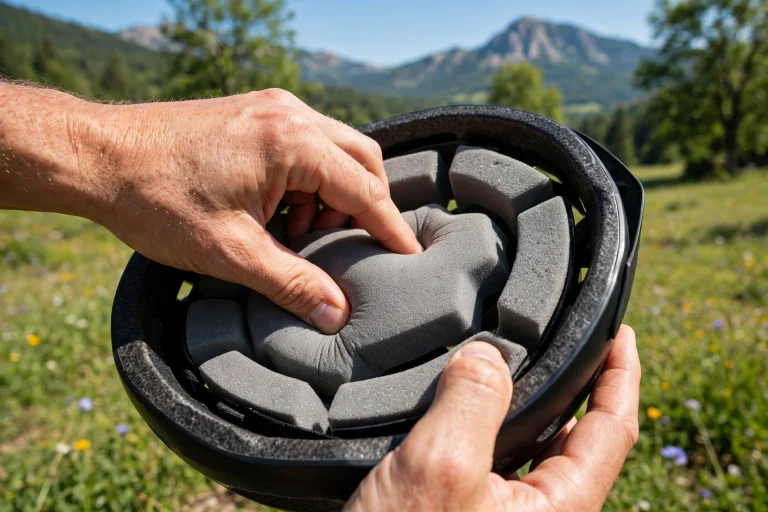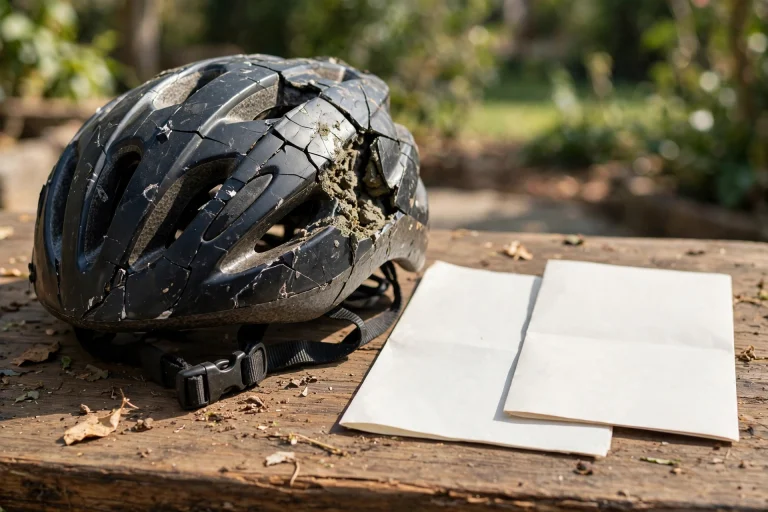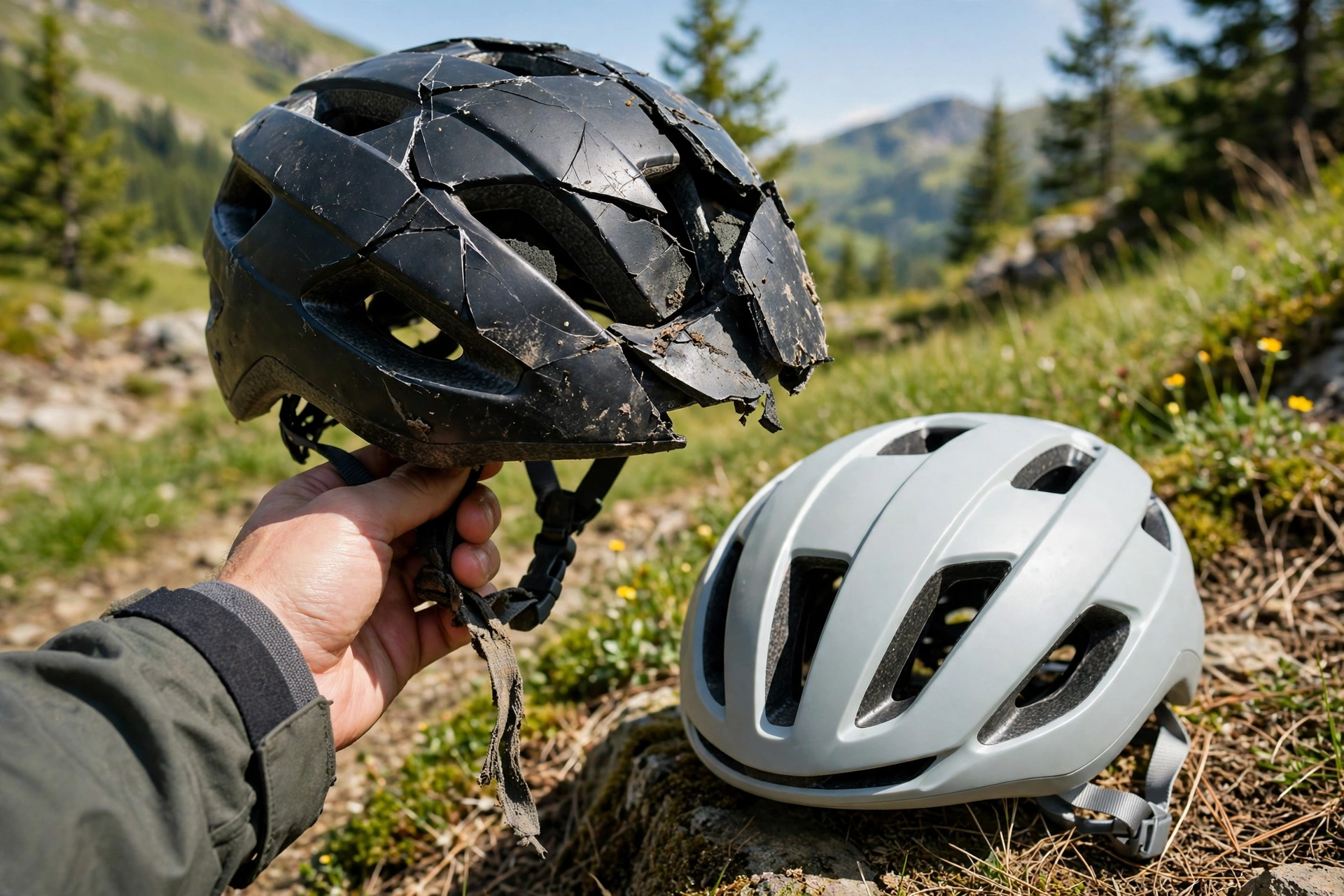
After a crash, most helmet makers generally advise replacing the helmet, even if it looks undamaged — because the foam liner may have crushed inside without leaving a visible mark. That advice is consistent across the industry, and it is the safest rule to follow. A helmet’s job is to absorb an impact once, and once it has done that, it cannot be trusted to do it again.
This guide explains what makers generally advise after different kinds of crash, what to do with the damaged helmet, and how crash replacement schemes work. The advice is general — always check the guidance for your specific helmet — but the core message is the same from maker to maker.
What Do Makers Generally Advise After a Crash?
The standard advice is simple: replace the helmet after any crash in which your head hits the ground or an object, even at low speed. The foam liner is designed to crush on impact, and that crushing is invisible from the outside. A helmet that looks fine after a crash may have a liner that is already spent.
Some makers distinguish between a crash and a drop. A helmet that falls off a table onto a soft surface may not need replacing, but a helmet dropped hard onto concrete from waist height often does. The difference is the force of the impact, and if you are unsure how hard the impact was, the cautious choice is to replace the helmet.
Makers also advise checking the helmet after any impact, however small. Look for cracks in the shell, dents in the foam, and damage to the straps and buckle. But they are clear that an inspection cannot prove a helmet is safe — it can only reveal damage that is already visible. A helmet that passes inspection after a crash is still a helmet that has been in a crash.
Does the Type of Crash Change the Advice?
In general terms, no — but the severity does. A high-speed crash, a fall onto a hard surface, or any impact that leaves you dazed or hurt is a clear case for replacement. A slow fall onto grass at walking pace, where the helmet barely touches the ground, is less clear-cut, and some riders continue to use the helmet after checking it carefully.
The honest answer is that there is no reliable way to draw a line between a “small” impact and a “big” one from the outside. The foam does not come with a gauge, and the damage it absorbs is hidden. That is why most makers keep their advice simple: if the helmet took an impact, replace it.
It is also worth remembering that a helmet can be damaged by repeated small impacts over time, not just by one big crash. A helmet that has been knocked around in a bag, dropped several times, or used hard for years may have accumulated damage that no single event explains. Age and wear are their own kind of crash, spread out over time.
What Should You Do with the Crashed Helmet?
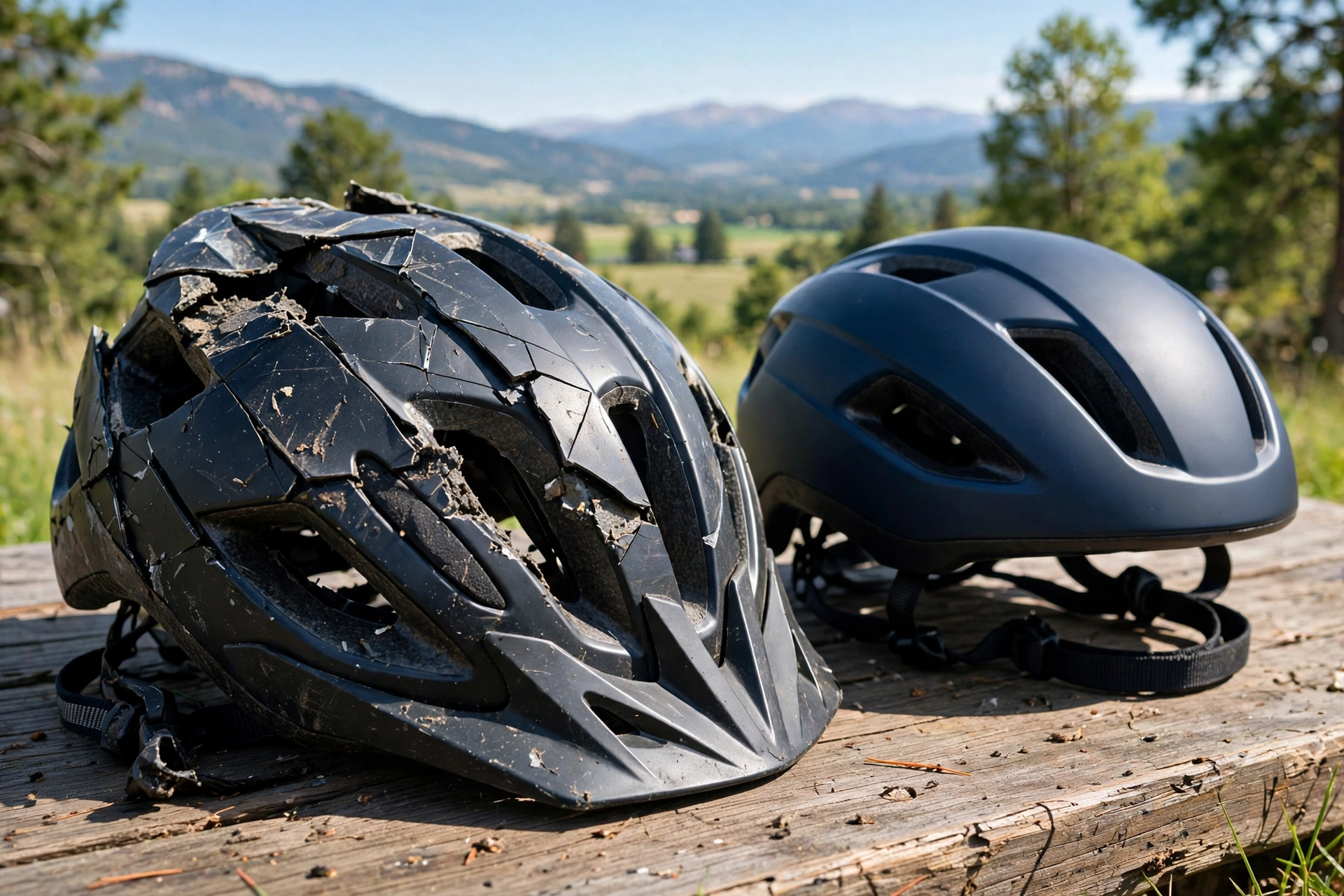
Retire it properly. Cut the straps off and damage the foam liner so nobody can pick the helmet up and wear it by mistake. Then dispose of it through a maker take-back scheme, a retailer collection, or your local waste service. A crashed helmet should never be sold or given away, even if it looks undamaged.
Before you throw it away, check whether the maker offers a crash replacement scheme. Many makers sell a replacement helmet at a reduced price if you return the crashed one, or if you can show proof of purchase and photos of the damage. The discount varies, but it can make the replacement significantly cheaper.
Keep any documentation from the crash if you need it for a warranty or insurance claim. Photos of the helmet, the receipt, and a note of when and how the crash happened are all useful. If you are making a warranty claim, do not destroy the helmet until the maker has told you what they need.
How Do Crash Replacement Schemes Work?
A crash replacement scheme is a maker’s offer to sell you a new helmet at a discount after you crash in one of theirs. The details vary: some schemes apply for a limited time after purchase, some require you to return the damaged helmet, and some ask for photos and a description of the crash. The discount is usually a meaningful share of the price, but not a free replacement.
To use a scheme, contact the maker or the shop where you bought the helmet. Have the model name, the date of purchase, and photos of the damage ready. The maker will tell you what they need and how to proceed. The process usually takes a few days, so it is worth starting it as soon as you can.
Not all makers offer such a scheme, and not all helmets are covered. If your maker does not offer one, you will need to buy a replacement at full price. That is frustrating, but it is still cheaper than the alternative — and a helmet is the one piece of kit where saving money by reusing a damaged one is never worth it. If you want to understand what the liner inside did during your crash, reading about what MIPS is for helmets can help you see why replacement is the right call.
Can You Keep Riding While You Wait for a Replacement?
In general terms, no — not in the crashed helmet, and not without a helmet at all. A crashed helmet should not be worn again, even for a short ride, because it may not protect you if you fall again. And riding without a helmet, even for a short trip, leaves you unprotected.
If you need to ride before the replacement arrives, borrow a helmet you trust — one with a known history, that fits you properly, and that has never been crashed. A borrowed helmet is a reasonable short-term solution, as long as you know its history and it fits.
Otherwise, wait. A few days without riding is a small price for a helmet you can trust. Use the time to choose the replacement carefully: check the fit, the certification, and the features that matter to you, so the new helmet is one you will wear for its full service life.
Frequently Asked Questions
Q: My helmet looks fine after a crash — do I really need to replace it?
A: In general terms, yes. Makers advise replacing a helmet after any crash where your head hits the ground, because the foam inside may have crushed invisibly. An inspection cannot prove the helmet is still safe.
Q: What if I only dropped my helmet, not crashed in it?
A: A hard drop onto concrete can damage the foam in the same way as a low-speed crash. Inspect it carefully, and if the drop was from height onto a hard surface, replace the helmet to be safe.
Q: How long do crash replacement schemes last?
A: It varies by maker. Some schemes apply for a year or two after purchase, others for the helmet’s whole service life. Check the maker’s terms for your model before you need them.

Olivia
Writer at Helmet Today, covering helmet reviews, fit and riding safety.