You can spot a damaged helmet by checking the outer shell for cracks, dents, deep scratches, and faded or peeling paint, and by checking the lining, straps, and buckle for wear, looseness, or broken parts. In general terms, any helmet that has taken a hard impact, shows a crack, or no longer fits snugly should be treated as damaged and replaced rather than used again. Damage is not always easy to see, and a helmet can look fine on the outside while its protective lining has been harmed inside. A careful check, done in good light, is the best way to catch problems before they matter.
Helmets are made to absorb the force of one serious impact, and after that impact the materials inside may be crushed or weakened even if the shell looks untouched. That is why a helmet that has been in a crash should be replaced, and why a helmet that has been dropped hard onto a floor should be looked at closely. Regular checks also catch the slow damage that comes from age, sun, sweat, and everyday knocks.
What should you look for on the outer shell?
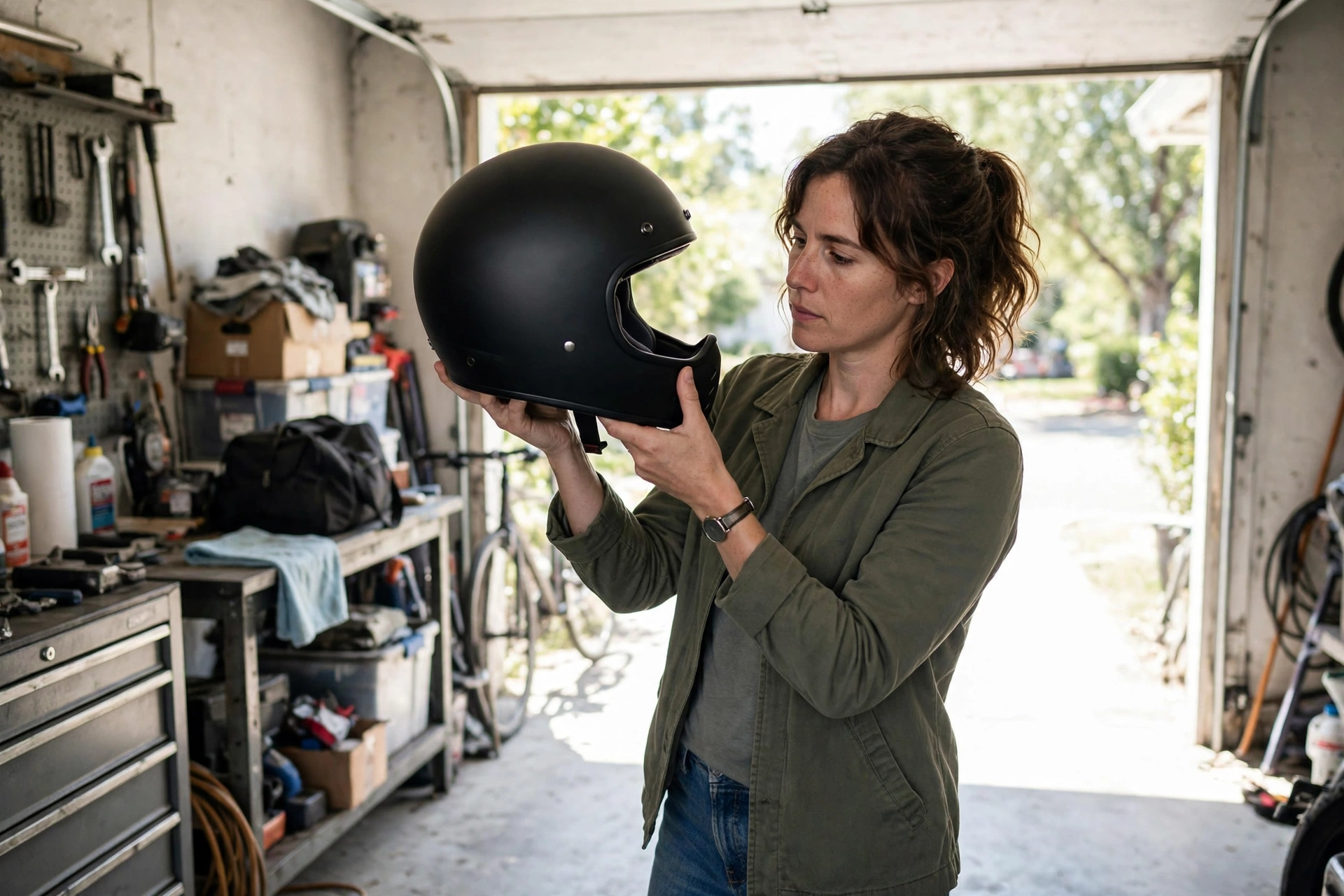
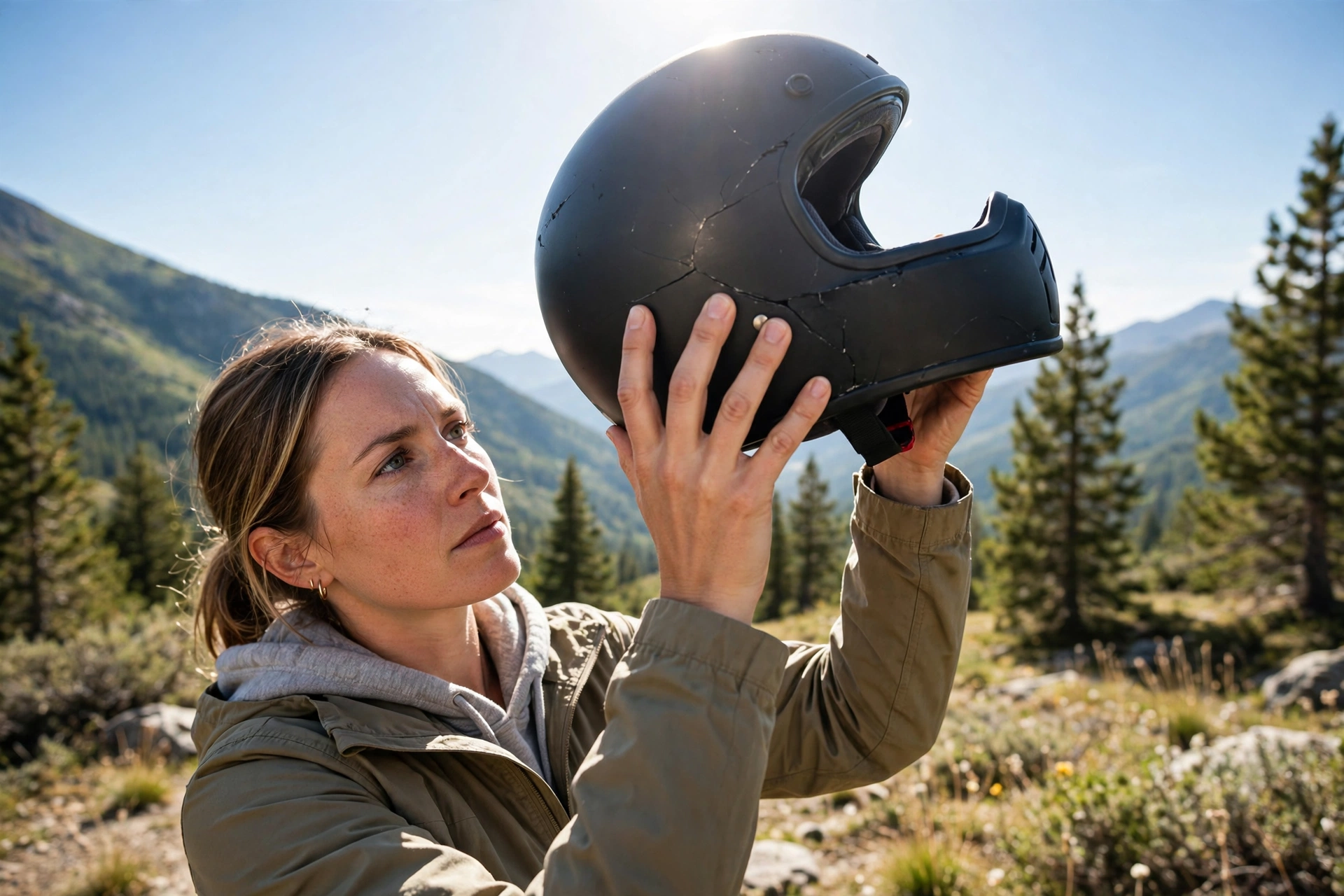
The outer shell is the first place to look, because it takes the force of an impact and shows the most visible damage. Hold the helmet in good light and turn it slowly, looking for cracks, splits, dents, and deep scratches. Pay close attention to the areas around the vents, the edges, and the base of the shell, because cracks often start in those places. A small hairline crack can be hard to see, so run your fingers over the shell as well as looking at it, and feel for any rough edge, split, or change in the surface.
Fading, peeling paint, and a chalky or brittle surface can also be signs of damage, because they show that the shell material has been weakened by sun or age. A helmet that has spent long hours in strong sunlight, or that has been stored in a hot car, may have a shell that is no longer as strong as it was. In general terms, a shell that looks worn out, feels brittle, or has lost its smooth finish should be treated with suspicion, even if there is no obvious crack.
How can you check the inside of a helmet for damage?
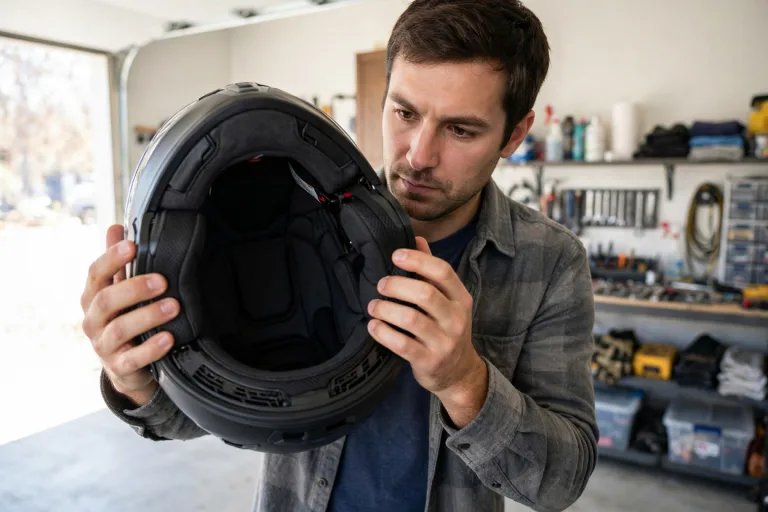
The inside of a helmet is where much of the protection lives, and it needs checking too. Take out any removable lining or padding and look at the foam layer underneath, which is usually a firm, light material that absorbs impact. Look for cracks, dents, loose pieces, or areas where the foam has gone soft or crumbly. Press the foam gently in several places: it should feel firm and even, and any spot that feels soft, sunken, or different from the rest may have been damaged.
Check the comfort padding as well, because padding that is flattened, torn, or coming away from the shell will not hold the helmet in place properly. A helmet with worn padding may feel loose even when it is the right size, and a loose helmet is less able to protect you. Smell can also be a clue: a strong smell of chemicals, mould, or decay inside a helmet can mean the materials have broken down or that moisture has been trapped inside for a long time.
What do worn straps and buckles tell you?
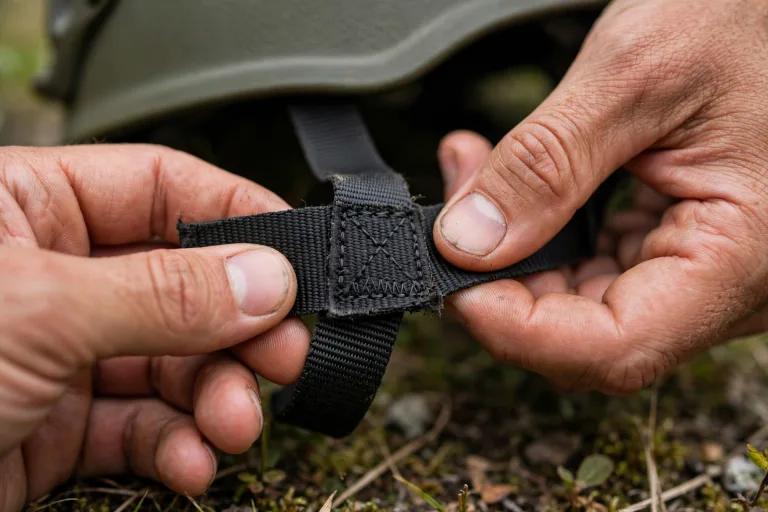
The straps and buckle hold the helmet on your head, so their condition matters as much as the shell. Look at the straps for fraying, cuts, stiffness, or thinning, and check the stitching where the straps join the helmet, because stitching can come loose over time. Pull each strap firmly to test it, and make sure it does not stretch more than it should or feel weak. A strap that has been soaked in sweat and sun for years can lose strength without looking badly damaged.
Test the buckle by fastening and unfastening it several times. It should click shut firmly and stay shut when you tug on it, and it should open smoothly when you release it. A buckle that slips, sticks, or opens too easily is not safe, and in general terms a helmet with a faulty buckle should not be worn. The same goes for the adjusters on a bike helmet: the dial or slider that tightens the fit should work smoothly and hold its setting.
When should a helmet be replaced even if it looks fine?
A helmet should be replaced after any serious impact, even if it looks fine, because the damage may be hidden inside the foam. A crash, a hard fall, or a heavy knock can crush the foam layer in a way that cannot be seen from the outside, and a helmet with crushed foam will not protect as well a second time. In general terms, if you cannot remember whether a helmet has been dropped or knocked, and you have any doubt, it is safer to replace it.
Age is another reason to replace a helmet that looks fine. Most makers suggest replacing a helmet after several years of regular use, because sweat, sun, and heat slowly wear down the materials, and the fit can loosen as the padding settles. A helmet that has been stored well and used rarely may last longer, but one that has been worn every day for years is likely to be past its best. Riders who want to understand how modern helmets handle impact forces may want to read about MIPS, a system found in some helmets that is designed to reduce rotational forces in a fall.
How should you store a helmet to avoid damage?
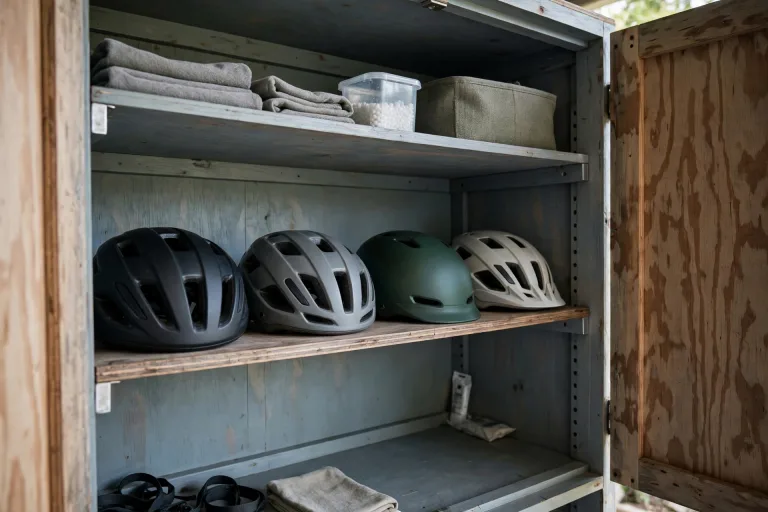
A helmet should be stored in a cool, dry place, away from direct sunlight and away from strong heat, because heat and sun weaken the shell and the foam over time. A helmet bag or a shelf in a cupboard is a good choice, and the helmet should be kept where it will not be knocked off a shelf, sat on, or used as a shelf for other things. Dropping a helmet onto a hard floor is one of the most common causes of hidden damage, so handling it with care matters.
Cleaning also matters. A helmet should be cleaned with mild soap and water, and the lining should be washed or wiped as the maker suggests. Strong cleaners, solvents, and petrol can harm the shell and the foam, and they should never be used on a helmet. After cleaning, the helmet should be left to dry naturally, away from radiators and direct heat, because heat can warp the foam and weaken the shell.
Can a small crack in a helmet be repaired?
No, in general terms a crack in a helmet shell cannot be safely repaired, because the shell is designed to work as one piece. A helmet with a cracked shell should be replaced.
Is a helmet still safe after being dropped once?
It depends on how hard the drop was and what the helmet landed on. A light knock onto a soft surface may be harmless, but a hard drop onto concrete should be checked carefully, and if in doubt, replace the helmet.
How often should I check my helmet for damage?
In general terms, you should give your helmet a quick look before every ride and a careful check every few weeks, looking at the shell, the foam, the straps, and the buckle.

Olivia
Writer at Helmet Today, covering helmet reviews, fit and riding safety.