Helmet safety standards began, in general terms, in the mid-20th century, when researchers, racing bodies, and governments started writing down what a helmet had to do before it could be sold — and testing helmets to prove it. Before that, a helmet was whatever its maker said it was. There was no shared test, no minimum performance, and no way for a buyer to know whether one helmet protected better than another.
The standards we have today grew out of three things: deaths on the road and the racetrack that made the problem impossible to ignore, laboratory research that showed how heads are actually injured, and the willingness of a few organisations to write the first rules. This guide explains how that happened.
Why Was There No Standard Before the 1950s?
Before the 1950s, helmets were a craft product, not an engineered one. A maker shaped leather, cork, or early plastic into a helmet, and the buyer judged it by how it looked and felt. There was no shared understanding of how a helmet should perform, because there was little research into how head injuries happen.
That began to change as motor vehicles spread. Road deaths rose sharply in the first half of the 20th century, and head injuries were a large share of them. Doctors and researchers started to ask why some crashes killed and others did not, and the answers pointed to the forces inside the head during an impact — forces a helmet could, in principle, reduce.
Racing also played a part. Motor racing in the 1950s was dangerous, and the deaths of well-known drivers made headlines. The racing world had the money, the motivation, and the organisation to do something about it, and it became one of the first places where helmet testing was taken seriously.
What Were the First Helmet Standards?
The first widely recognised helmet standard came from the Snell Memorial Foundation in the United States, set up after the death of racing driver Pete Snell in 1956. The foundation’s aim was to encourage research into helmet design and to test helmets against a written standard. Its first standard, published in 1959, set out how a helmet should be tested and what level of protection it had to provide.
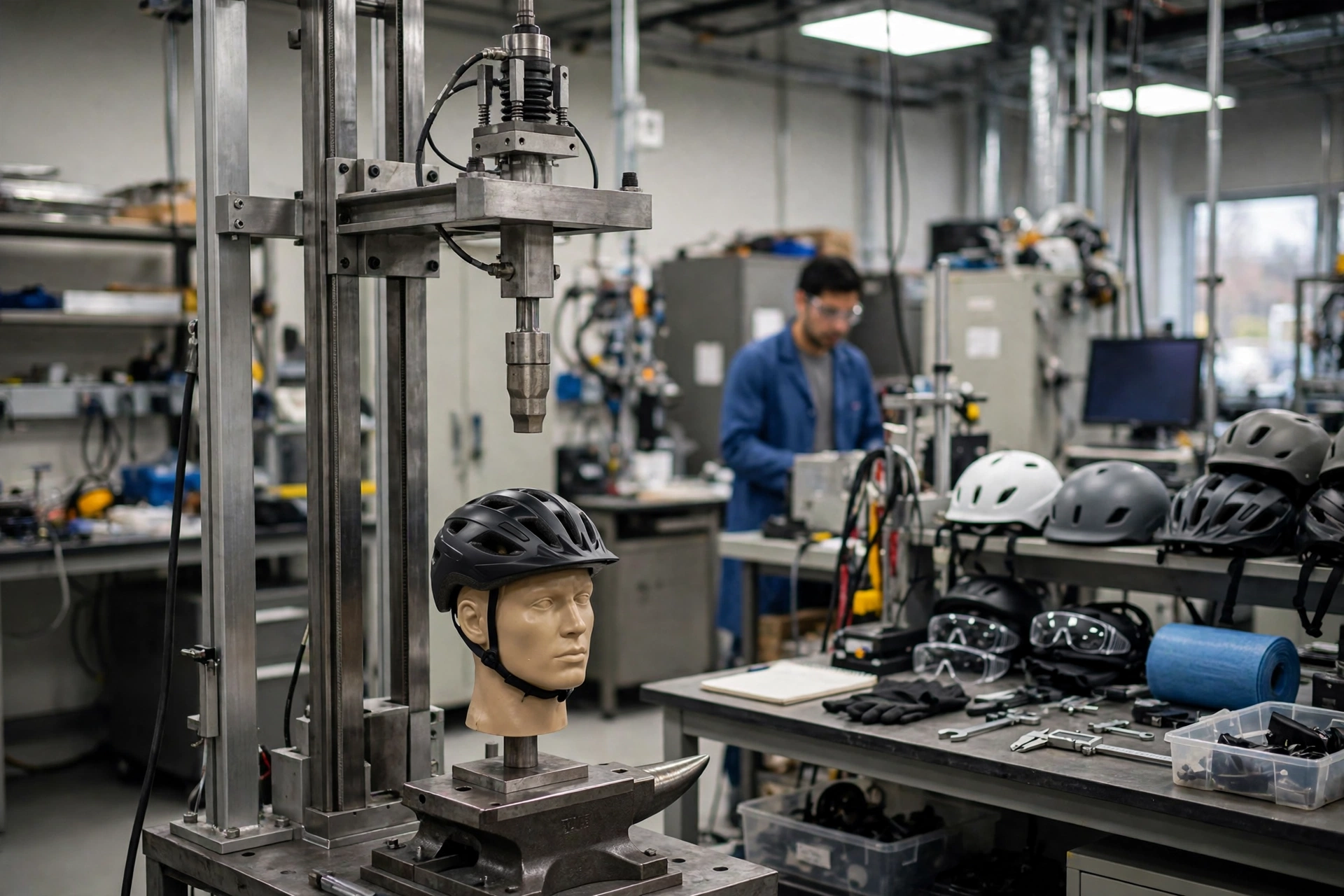
The Snell standard worked by dropping a helmeted head form onto a hard surface and measuring the forces inside. That test — the drop test — is still the basis of helmet standards today. It gave makers a clear target and buyers a clear mark to look for, and it pushed the whole industry towards foam liners and proper testing.
Other standards followed. In Europe, national standards were developed and later brought together into shared European norms. In the United States, the Department of Transportation set a standard for motorcycle helmets, and the Consumer Product Safety Commission set one for bicycle helmets. Each standard reflected the sport or activity it covered, but they shared the same idea: a helmet must pass a test before it can be sold.

How Did Standards Change Helmet Design?
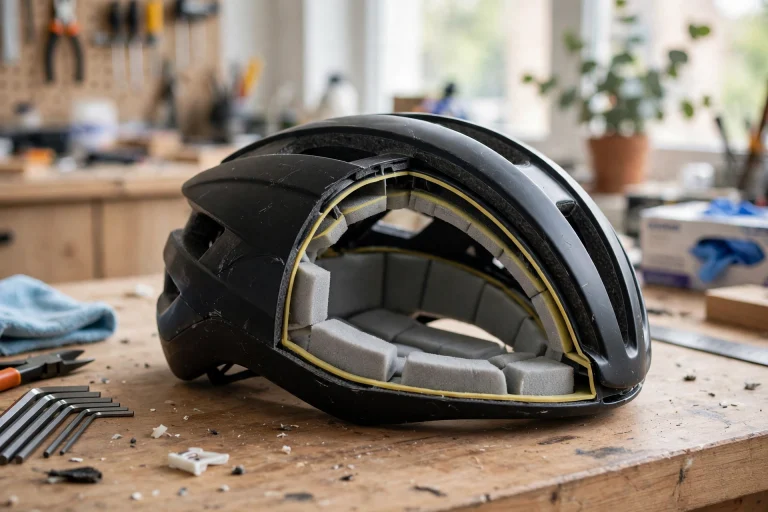
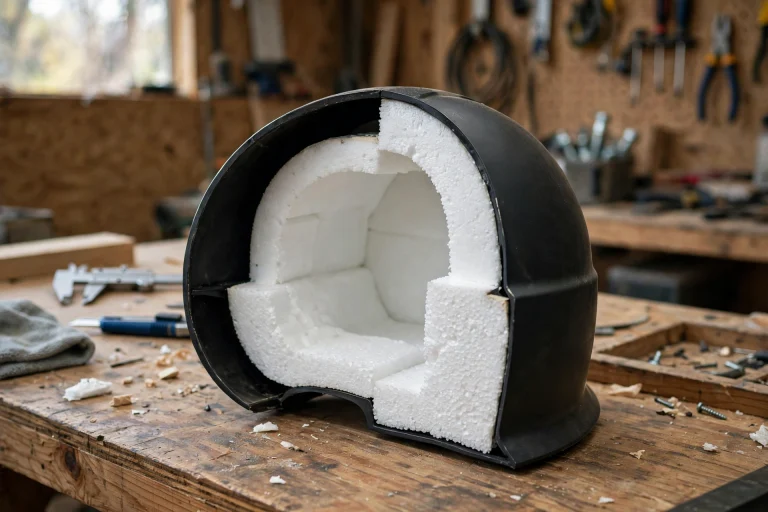
Standards changed helmet design by making protection measurable. Once a helmet had to pass a drop test, makers could no longer rely on a thick shell or a comfortable fit alone — they had to design a liner that absorbed energy to a specified level. That pushed the industry towards EPS foam, which performed well in the tests, and away from materials that did not.
Standards also created competition on safety. A maker whose helmet passed a tougher standard could advertise that fact, and buyers began to look for the certification label inside the helmet. Over time, the label became one of the first things a knowledgeable buyer checked, and helmets without a recognised certification became hard to sell.
But standards also had limits. Early standards tested only straight-line impacts — a helmet dropped straight down onto a flat surface — and said little about rotational forces, side impacts, or the fit of the helmet on a real head. Those gaps were only recognised later, as research into head injury improved, and the standards have been updated since to cover more of them.
How Do Helmet Standards Work Today?
Today, a helmet sold in most countries must meet a standard for its activity: a bicycle helmet meets a cycling standard, a motorcycle helmet meets a motorcycle standard, and so on. The helmet is tested in a laboratory, often by an independent body, and if it passes, it carries a label or mark showing which standard it meets. That label is usually found inside the helmet, on the liner or on a sewn-in tag.
The tests themselves have become more detailed. A modern standard may test impacts from several directions, at different speeds, and in different temperatures. Some standards now include tests for rotational forces, reflecting the understanding that a twisting motion can injure the brain as well as a straight impact. If you want to understand one system designed to manage that twisting, reading about what MIPS is for helmets explains how a slip-plane liner works.
Standards differ between countries and activities, and a helmet that meets one standard may not meet another. That is why the label matters: it tells you which standard the helmet was tested against, and for which activity it was designed. A cycling helmet and a motorcycle helmet are tested to different standards for good reason — the speeds and forces involved are very different.
Why Do Helmet Standards Still Change?
Standards change because the science changes. Each decade brings a better understanding of how head injuries happen, and the standards are updated to reflect it. The addition of rotational testing, the improvement of coverage requirements, and the tightening of test methods are all examples of standards catching up with research.
They also change because helmets change. New materials, new liner designs, and new fitting systems all need to be tested, and the standards must be written in a way that allows innovation without lowering protection. A standard that is too rigid can block a good new idea; a standard that is too loose can let a poor helmet through.
For a buyer, the practical lesson is simple: always check the label. A helmet that meets a recognised standard for your activity has passed an independent test, and that is the minimum a helmet should offer. The history of standards is the history of that idea becoming normal — and it is one of the most important reasons helmets today are so much better than the leather caps of a century ago.
Frequently Asked Questions
Q: What was the first helmet safety standard?
A: The Snell Memorial Foundation published the first widely recognised helmet standard in 1959, after the death of racing driver Pete Snell. It introduced the drop test that later standards built on.
Q: Do all helmets have to meet a safety standard?
A: In most countries, a helmet sold for a specific activity must meet the standard for that activity, and it carries a label showing which standard it meets. Always check the label inside the helmet.
Q: Why do helmet standards differ between countries?
A: Standards grew up separately in different countries and for different activities, with different test methods and pass levels. Work to align them continues, but the label inside the helmet is still the reliable guide.

Olivia
Writer at Helmet Today, covering helmet reviews, fit and riding safety.