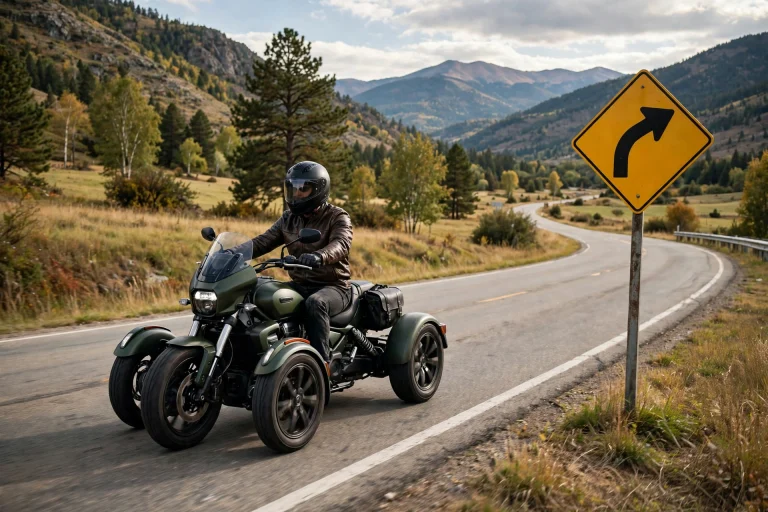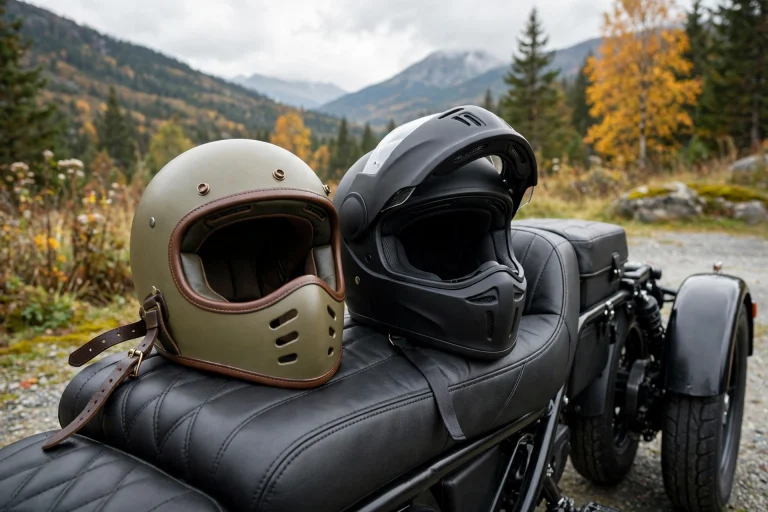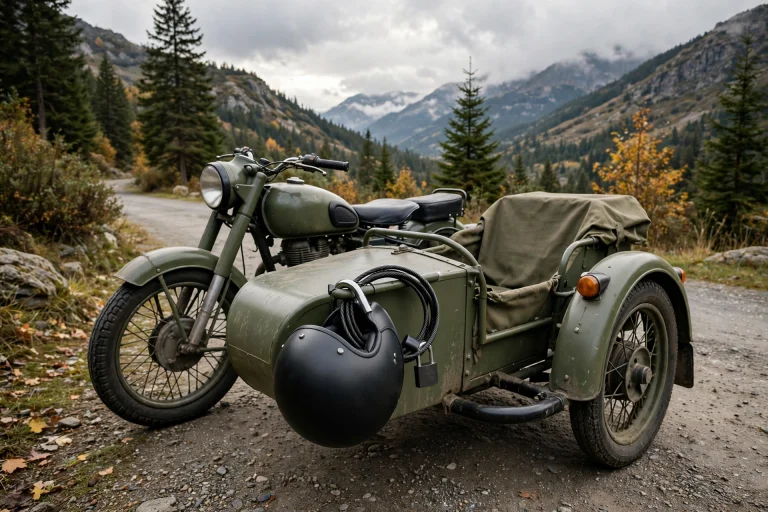
To fit a helmet for sidecar riding, measure the widest part of your head, choose a helmet size that matches, and check that it sits level, feels snug all around, and does not rock or slide when you shake your head. In general terms, a sidecar helmet needs the same careful fit as any motorcycle helmet, but it also has to work with the sidecar’s windscreen, the seating position, and the communication or hearing protection you may use.
Sidecar riding is different from solo motorcycle riding: the passenger sits lower, often behind a windscreen, and the rider may sit more upright than on a sports bike. Those differences change what feels comfortable and what works well. This guide explains how to measure, try on, and adjust a helmet so it fits properly for sidecar riding.
How Do You Measure Your Head for a Sidecar Helmet?
Start with a soft tape measure and wrap it around the widest part of your head, which is usually just above the eyebrows and ears. Keep the tape level all the way around and note the measurement in centimetres. Compare that number with the helmet maker’s size chart, because sizes vary between makers and a medium from one brand may fit like a large from another. If your measurement falls between two sizes, try both, because the shape of the helmet matters as much as the size.
Head shape is often overlooked. Some helmets are made for rounder heads, others for longer, narrower heads, and a helmet in the right size but the wrong shape will press on your forehead or the sides of your head. When you try a helmet on, wear it for at least five minutes in the shop and notice where it presses: a little even pressure all around is normal, but a sharp pressure point on the forehead or temples means the shape is wrong for you. The helmet should not leave a deep red mark in one spot while feeling loose elsewhere.
What Should You Check When Trying On a Sidecar Helmet?
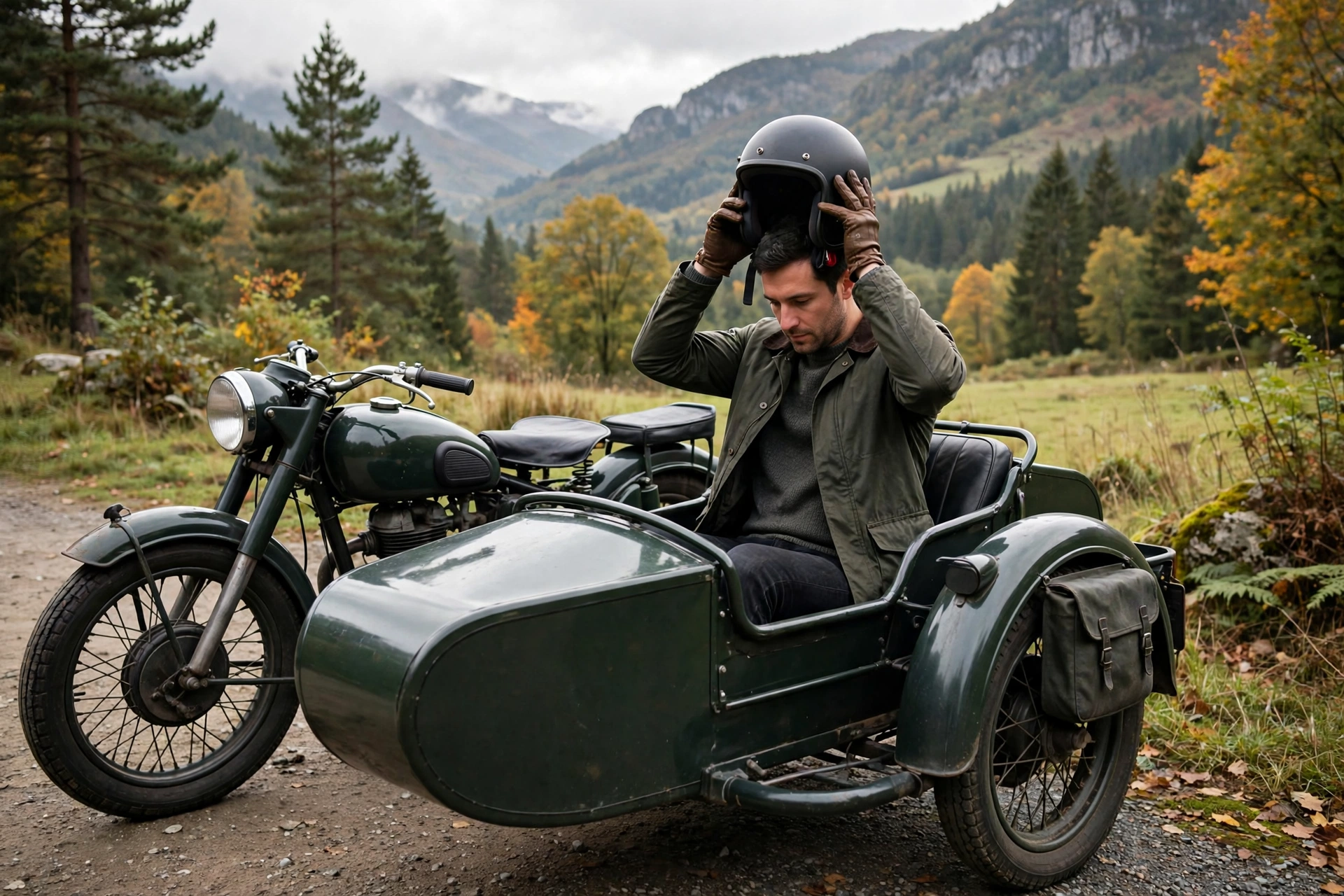
Put the helmet on and check that it sits level, low enough to cover your forehead, without tilting back. It should feel snug, with the cheek pads touching your cheeks and the lining in contact all the way around. Shake your head gently from side to side and up and down: the helmet should move with your head rather than sliding around on its own. If it rocks or slides, it is too large, even if it felt snug when you first put it on.
Do the strap up snugly under your chin, with no more than a couple of fingers’ width of slack, and check that you can open your mouth comfortably. For sidecar riding, check the helmet with anything else you will wear: glasses, earplugs, a communication headset, or a balaclava. A helmet that fits perfectly on its own can feel too tight once you add a headset speaker or thick glasses arms, so try the full combination together. Also check that the helmet works with the sidecar’s windscreen: sit in the sidecar if you can, and make sure the windscreen does not push the helmet back or force you to tilt your head.
Open Face or Full Face for Sidecar Riding?
An open-face helmet is comfortable and gives a wide view, which suits slow, scenic sidecar rides and passengers who want to see and hear everything. It also makes talking easier, which matters when the rider and passenger need to communicate. The trade-off is that it leaves the face exposed to wind, stones, rain, and insects, and it offers less protection in a crash.
A full-face helmet gives more protection and better weather cover, and it is usually the better choice for faster roads or longer rides. The visor keeps wind and rain out of your eyes, and the chin bar protects your jaw. Some riders choose a modular helmet, which lets you lift the chin bar when stopped and close it while riding, giving a useful middle ground. For sidecar riding, where the passenger sits in the full force of the wind, a full-face or modular helmet is often more comfortable over a long day, even though it is heavier.
How Do You Adjust a Sidecar Helmet for Comfort?
Most helmets have some adjustment built in: removable cheek pads in different thicknesses, a liner that can be swapped, and vents that can be opened or closed. If the helmet presses on your forehead but is loose at the cheeks, a thinner forehead pad or a different liner may help. If it presses on your ears, check whether the ear pockets can be adjusted or whether a thinner pad is available. Small changes like these can turn a helmet that is almost right into one that fits well.
Ventilation matters for sidecar riding, because the passenger sits lower and may get less airflow than the rider, which can lead to a fogged visor or a sweaty head. Open the vents before you set off and check that air flows through the helmet, and if the visor fogs, crack it open slightly or use an anti-fog insert. A helmet that fits well but fogs constantly is still a problem, so it is worth sorting out the ventilation before a long ride. Reading about what MIPS is for helmets can also help you understand the safety features inside the helmet, so you can choose a helmet that protects well and fits comfortably.
How Often Should You Recheck the Fit?
A helmet’s fit changes over time as the padding compresses with use, so a helmet that fitted perfectly when new may feel looser after a season of riding. Check the fit every few months by repeating the shake test: if the helmet now rocks or slides, the padding may have compressed, and new pads or a smaller size may be needed. If you change what you wear under the helmet, such as adding a thick winter balaclava, recheck the fit with that in place.
Children’s helmets need checking more often, because children grow quickly and a helmet that fitted last year may be too small now. Never pass a helmet down to a smaller rider without checking the fit carefully, and never use a helmet that has been in a crash, because the protective foam may be damaged even if the shell looks fine. A well-fitted helmet is only as good as its condition, so check the shell, the strap, and the lining for wear each time you ride.
Frequently Asked Questions
Q: Should a sidecar passenger’s helmet fit differently from the rider’s?
A: In general terms, no, the fit principles are the same: level, snug, and stable. The main difference is that the passenger should check the fit with the sidecar’s windscreen and seating position, which the rider does not need to do.
Q: Can I wear glasses with a sidecar helmet?
A: Yes, most helmets work with glasses, but you should try the combination together. Glasses arms can create pressure points or let in wind, so a helmet with glasses grooves or a wider eye port is worth looking for.
Q: How tight should the chin strap be?
A: Snug enough that you can fit no more than two fingers between the strap and your chin, and tight enough that the helmet cannot roll off the back of your head. A loose strap is one of the most common fitting mistakes.

Olivia
Writer at Helmet Today, covering helmet reviews, fit and riding safety.