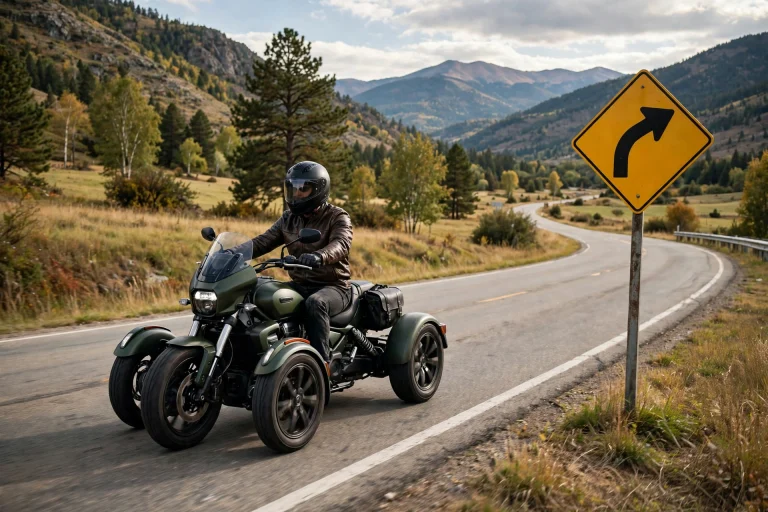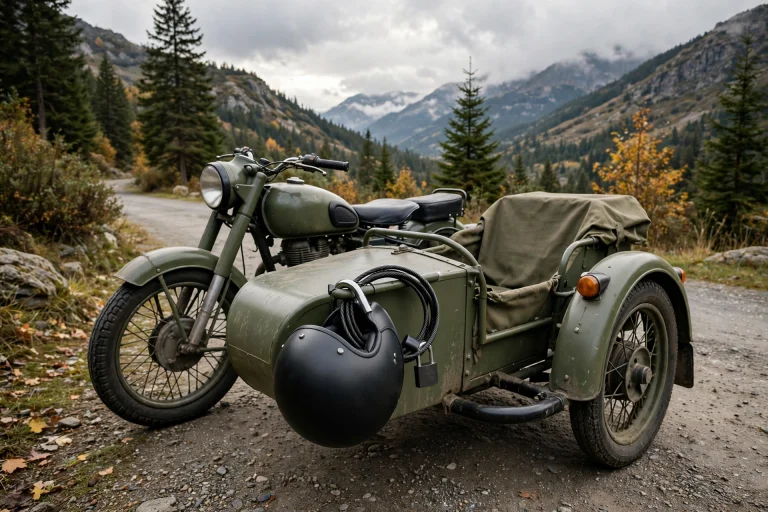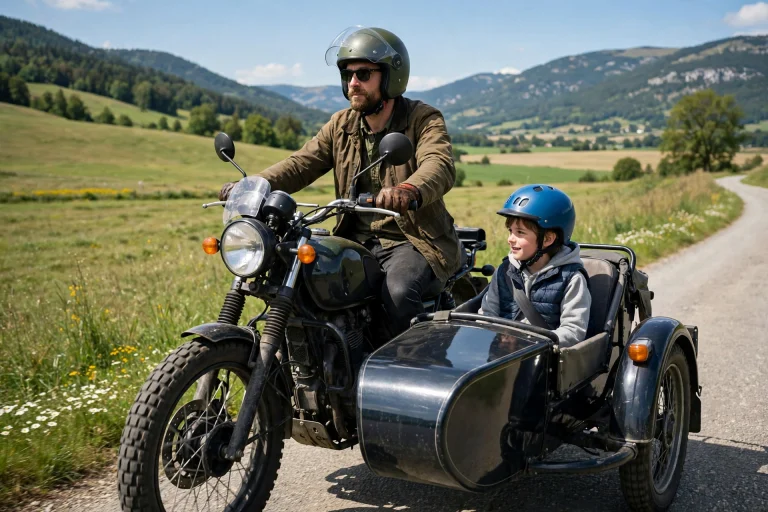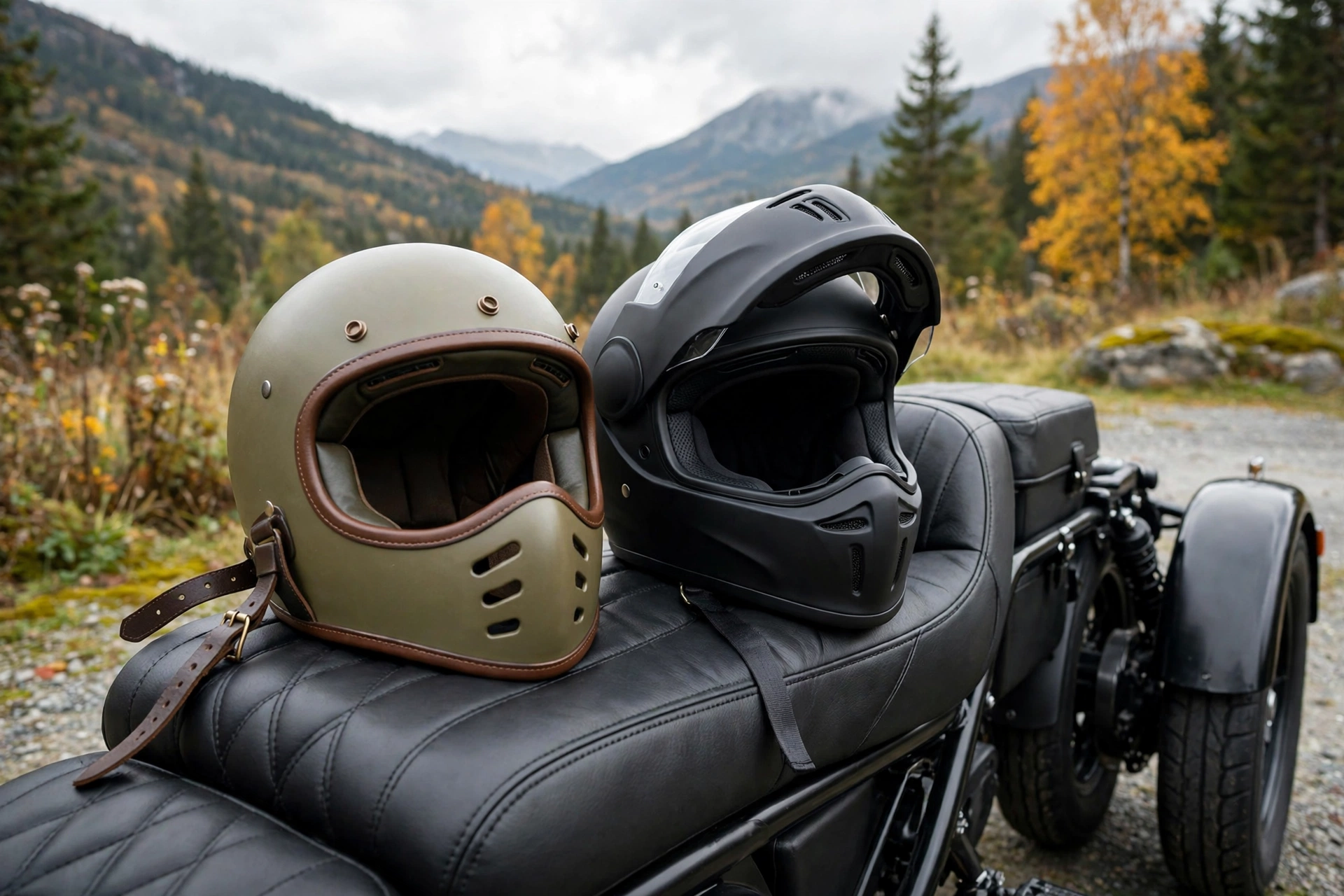
For trike riding, a full-face helmet gives the most protection and weather cover, while an open-face helmet gives a wider view and a cooler, more relaxed feel, so the best choice depends on your speed, the weather, and how far you ride. In general terms, full-face suits faster roads and longer rides, open-face suits slow, scenic rides in good weather, and many trike riders own both and choose according to the day.
Trike riders sit upright and exposed, often for long hours, so the helmet choice matters more than it might seem. An open-face helmet feels free and airy, but it leaves your face open to the wind. A full-face helmet protects your whole head, but it is heavier and warmer. This guide compares the two so you can choose with confidence.
What Protection Does Each Type Give?
A full-face helmet covers the whole head, including the chin, jaw, and face, with a solid chin bar and a visor. In a crash, the chin bar takes the impact that would otherwise hit your jaw, teeth, and chin, and the visor protects your eyes from debris. That is a significant difference: in general terms, a large share of motorcycle head impacts involve the face and chin area, so a full-face helmet protects a part of the head that an open-face helmet leaves exposed.
An open-face helmet covers the top, back, and sides of the head, but leaves the face open. It protects well against impacts to the crown and sides, but it offers no protection to the chin or jaw, and it leaves the eyes exposed to wind, stones, and insects unless you wear goggles or glasses. For slow riding in good weather, that may be acceptable, but for faster roads, the lack of face protection is a real trade-off. The safety standard is the same for both types, but the coverage is not.
How Do They Compare for Comfort?
An open-face helmet is lighter, cooler, and less claustrophobic than a full-face helmet. It lets air flow freely around your face, it is easy to talk in, and it gives a wide, open view that many trike riders love. On a hot day or a slow, scenic ride, it is the more comfortable choice, and it is easier to put on and take off, especially if you wear glasses.
A full-face helmet is heavier and warmer, and it can feel restrictive if you are not used to it. But it also has advantages for comfort: the visor keeps wind, rain, and insects out of your eyes, the chin curtain cuts down wind noise, and the enclosed design keeps you warmer in cold weather. On a long ride, the wind protection of a full-face helmet can be less tiring than the constant wind on your face from an open-face helmet. A modular helmet, with a chin bar that lifts, offers a middle ground: open at stops, closed while riding.
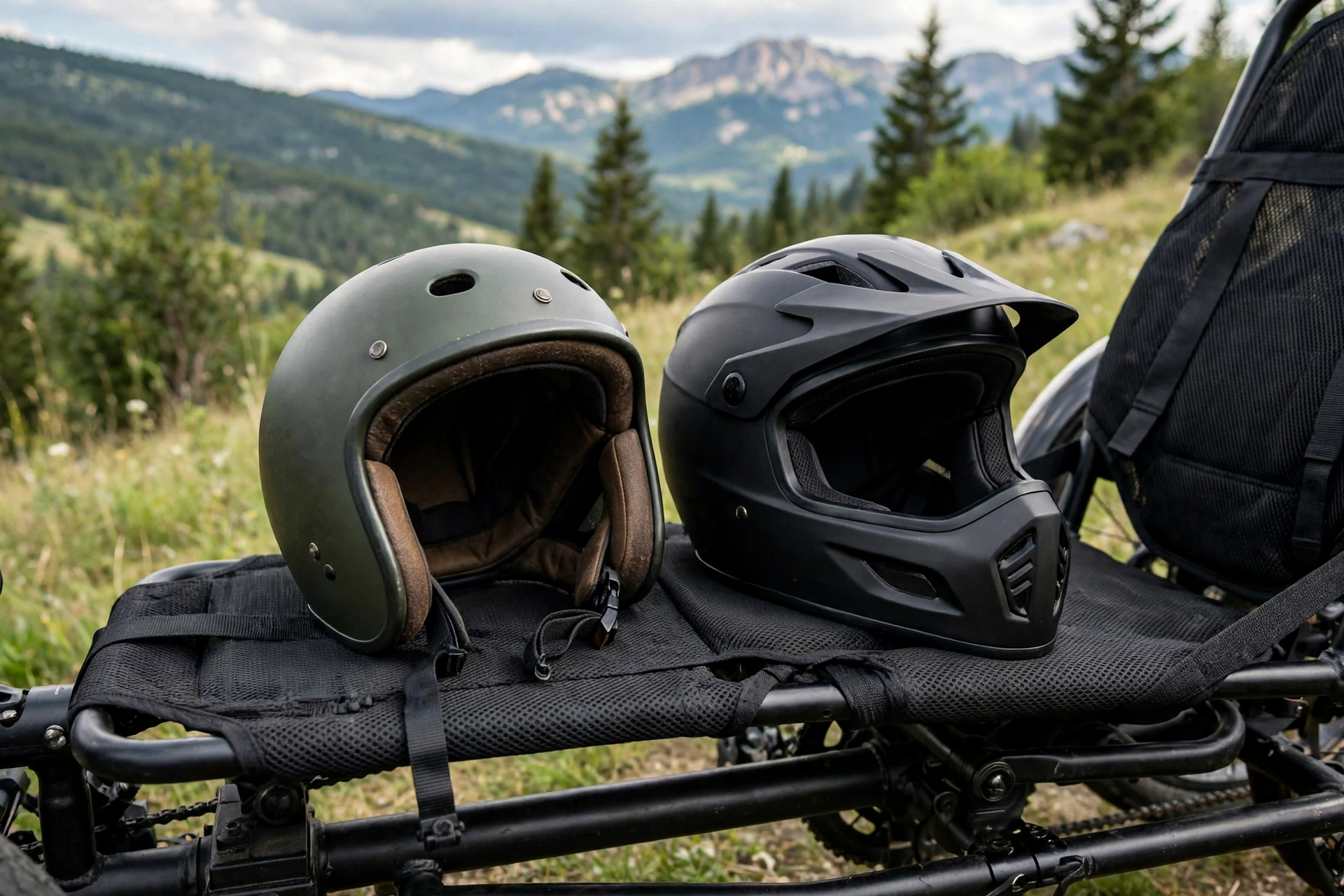
Which Is Better for Different Kinds of Trike Riding?
For town riding and short, slow trips in good weather, an open-face helmet is a good choice. The speeds are low, the weather is kind, and the wide view and the easy conversation suit the relaxed pace. For touring, motorways, or riding in poor weather, a full-face helmet is the better choice, because it protects your face from wind and rain, keeps you warmer, and gives more protection at higher speeds.
For a trike rider who does a bit of everything, a modular helmet is often the best compromise: you can lift the chin bar at a stop to talk or drink, then close it for riding. It is heavier than either an open-face or a full-face helmet, but the flexibility is worth it for many riders. If you ride with a passenger, think about their comfort too: a passenger in an open-face helmet will feel the full wind, while a full-face helmet will keep them warmer and quieter.
What About Noise, Visibility, and Weather?
A full-face helmet is usually quieter than an open-face helmet, because the visor and the chin curtain block wind noise. That matters on a long ride, where wind noise is tiring and can make it hard to hear an intercom or a passenger. An open-face helmet lets in more wind noise, though earplugs can help. Visibility is better in an open-face helmet, because there is no visor to fog or scratch, but a good full-face helmet with a clear visor and an anti-fog insert gives a clear view too.
Weather is where the full-face helmet wins clearly. Rain, cold wind, and insects are all kept out by the visor and the chin bar, while an open-face helmet leaves your face exposed to all of them. In hot weather, the open-face helmet is cooler, but a full-face helmet with good vents can still be comfortable. If you want to understand the safety features inside either type, reading about what MIPS is for helmets can help you compare helmets on more than just their shape.
How Do You Decide?
Start with how you ride. If most of your riding is slow, short, and in good weather, an open-face helmet will suit you well. If you ride faster, further, or in all weathers, a full-face helmet is the safer and more comfortable choice. If you do both, a modular helmet gives you the flexibility to adapt. Whatever you choose, make sure the helmet meets a recognised motorcycle helmet standard and fits well: level, snug, and stable when you shake your head.
Try both types on before you buy, and if you can, try them while sitting on the trike, because the upright riding position and the wind can change how a helmet feels. A helmet that is comfortable in the shop but noisy or hot on the road is not the right helmet. The best helmet for trike riding is the one that protects well, fits comfortably, and that you will wear every ride.
Frequently Asked Questions
Q: Is an open-face helmet legal for trike riding?
A: In most places, yes, as long as it meets a recognised motorcycle helmet standard. The law usually requires a helmet, not a particular type, though the exact rules vary by place, so it is worth checking locally.
Q: Can I wear goggles with an open-face helmet on a trike?
A: Yes, goggles are a good idea with an open-face helmet, because they protect your eyes from wind, stones, and insects. Choose goggles that fit well with the helmet and do not let in too much wind around the edges.
Q: Is a modular helmet as safe as a full-face helmet?
A: In general terms, a modular helmet with the chin bar closed gives similar protection to a full-face helmet, though the chin bar mechanism can be a weak point. Look for a modular helmet that is certified for use with the chin bar closed, and always ride with it closed.

Olivia
Writer at Helmet Today, covering helmet reviews, fit and riding safety.