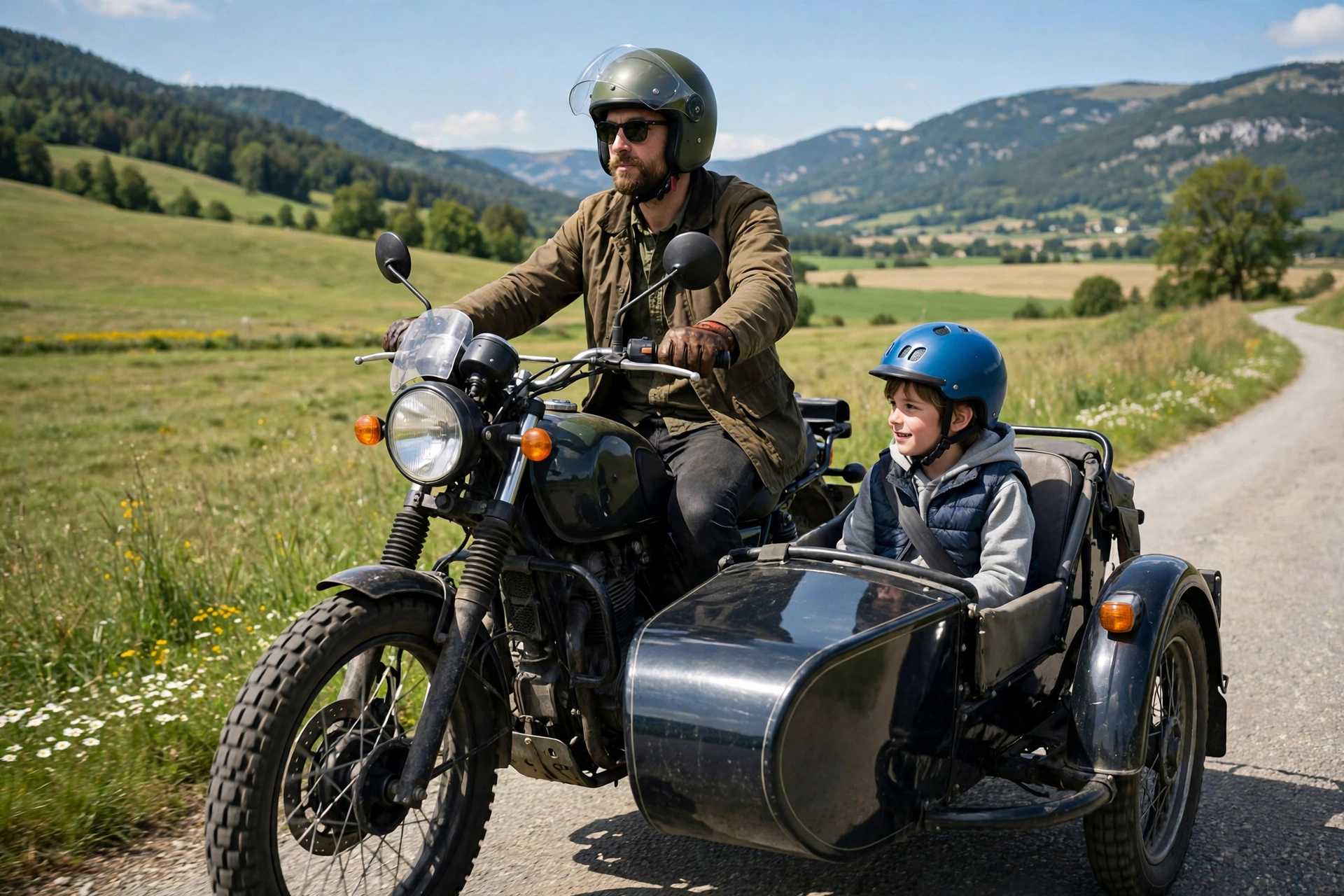
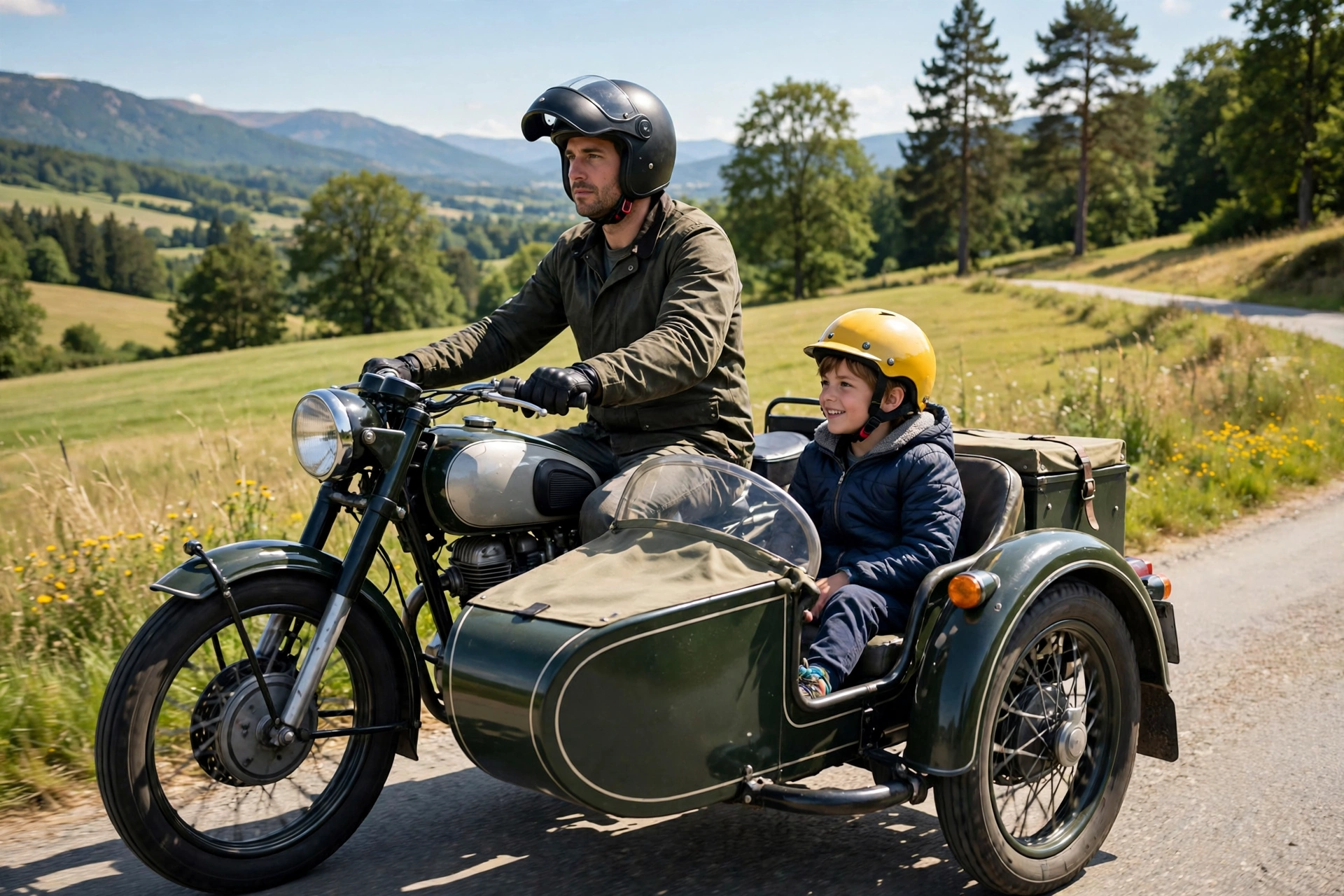
Child passenger helmets for sidecars are motorcycle helmets made in children’s sizes, and they must fit the child’s head snugly, meet a recognised motorcycle helmet standard, and be light enough for a child to wear comfortably. In general terms, a child in a sidecar needs the same standard of protection as an adult, but the helmet must be sized for a child’s smaller, lighter head, not just a small adult helmet.
Taking a child for a ride in a sidecar can be a wonderful experience, but it needs more care than carrying an adult passenger. Children are lighter, they cannot brace as well, and they may not tell you if the helmet hurts or the ride frightens them. This guide explains how to choose and fit a child’s sidecar helmet, and what else to check before the ride.
What Makes a Child’s Helmet Different?
A child’s helmet is not just a smaller adult helmet. Children’s heads are rounder and lighter, and their neck muscles are weaker, so a heavy helmet can tire a child quickly and can pull their head around in a way that is uncomfortable or even unsafe. A child’s helmet should be light, with a shell and liner sized for a child’s head, and it should meet a recognised motorcycle helmet standard, just like an adult helmet.
Never put an adult helmet on a child, even if it seems to fit. An adult helmet is heavier, its padding is shaped for an adult head, and it may sit too low or too high on a child’s head, which can block their vision or leave part of their head unprotected. A child’s helmet is made with a child’s proportions in mind, and it is the only safe choice. If you cannot find a child’s motorcycle helmet in the right size, it is better to wait than to use an adult helmet that does not fit properly.
How Do You Fit a Child’s Sidecar Helmet?
Measure the widest part of the child’s head with a soft tape, just above the eyebrows and ears, and compare the measurement with the maker’s size chart for children’s helmets. Try the helmet on and check that it sits level, low enough to cover the forehead, and feels snug all around without pressing hard in one spot. Shake the child’s head gently from side to side: the helmet should move with the head, not slide around on its own.
Do the strap up snugly under the chin, with no more than two fingers’ width of slack, and check that the child can open their mouth and breathe comfortably. Ask the child how it feels, and watch for signs of discomfort: fidgeting, pulling at the helmet, or complaining that it hurts. A child who is uncomfortable will not enjoy the ride, and they may try to take the helmet off, which is dangerous. If the helmet has a visor, make sure it is clean and that the child can see clearly over the sidecar’s nose.
What Else Should You Check Before a Child Rides in a Sidecar?
Before the ride, check that the child can sit safely in the sidecar: their feet should reach the floor, they should be able to hold the grab handles, and they should be able to sit still without leaning out. A small child may need a booster cushion to sit high enough to see and to hold on properly, and the cushion should not lift them so high that the helmet hits the windscreen or the sidecar’s edge. A harness or a seatbelt, if the sidecar has one, should be used as well as the helmet, not instead of it.
Brief the child before the ride: explain that they need to keep their hands on the handles, keep their weight still, and tell you if anything hurts or frightens them. Agree a simple signal, such as a tap on your arm, that means they want to stop. Keep the first ride short and slow, on quiet roads, so the child can get used to the noise, the wind, and the movement. If the child is frightened or uncomfortable, stop and try again another day, rather than pushing on.
How Do You Keep a Child Comfortable and Safe?
Comfort matters, because a comfortable child is a still child, and a still child is safer in a sidecar. Make sure the helmet is not too heavy, and take breaks on longer rides so the child can rest their neck and stretch. In cold weather, a neck warmer or a balaclava can help, though it should not interfere with the strap. In hot weather, make sure the child drinks water and does not overheat in the helmet.
Check the helmet regularly as the child grows, because children outgrow helmets quickly and a helmet that fitted last year may be too small now. Never use a helmet that has been in a crash, even if it looks fine, because the protective foam may be damaged. If you want to understand the safety features on the helmet, reading about what MIPS is for helmets can help you make sense of what is listed on the box, so you can choose a child’s helmet that protects well and fits comfortably.
What Are the Rules for Children in Sidecars?
Rules for child passengers vary by place, and some places have a minimum age for motorcycle passengers or require a child to be able to reach the footrests. In general terms, if the law requires a helmet for a passenger, it requires one for a child passenger too, and the helmet must meet the same standard. It is worth checking the specific rules for the place you are riding, and the age and size requirements, before you take a child out.
Even where the law is silent, common sense applies: a child should only ride in a sidecar if they can sit safely, hold on, and wear a properly fitting helmet, and the ride should be short, slow, and on quiet roads. A sidecar ride can be a lovely memory for a child, but only if it is done safely, with a helmet that fits and a rider who takes the time to prepare.
Frequently Asked Questions
Q: Can a child wear an adult’s small helmet in a sidecar?
A: No, an adult helmet is heavier and shaped for an adult head, so it may not protect a child properly. A child should wear a motorcycle helmet made in children’s sizes that meets a recognised standard.
Q: How do I know if a child’s helmet fits?
A: It should sit level, feel snug all around, and move with the child’s head when you shake it gently. The strap should be snug under the chin, and the child should be comfortable wearing it for at least a few minutes.
Q: Is there a minimum age for a child in a sidecar?
A: It varies by place, and some places set a minimum age or require the child to reach the footrests. Check the local rules before you ride, and only take a child who can sit safely and wear a properly fitting helmet.

Olivia
Writer at Helmet Today, covering helmet reviews, fit and riding safety.