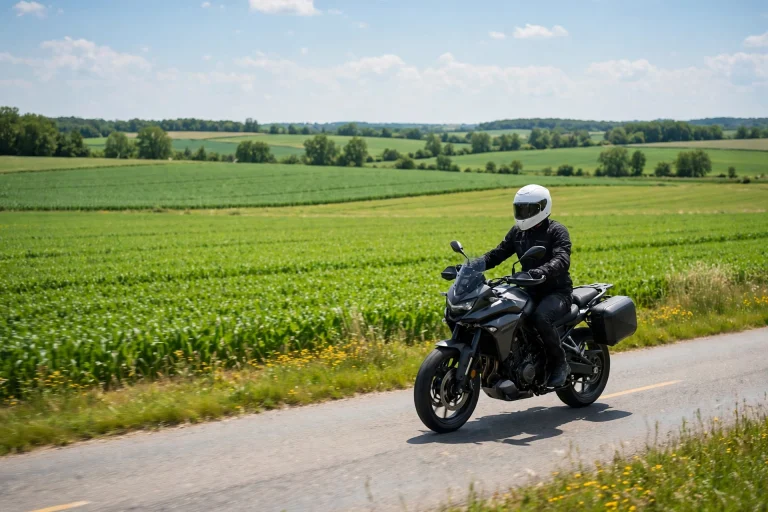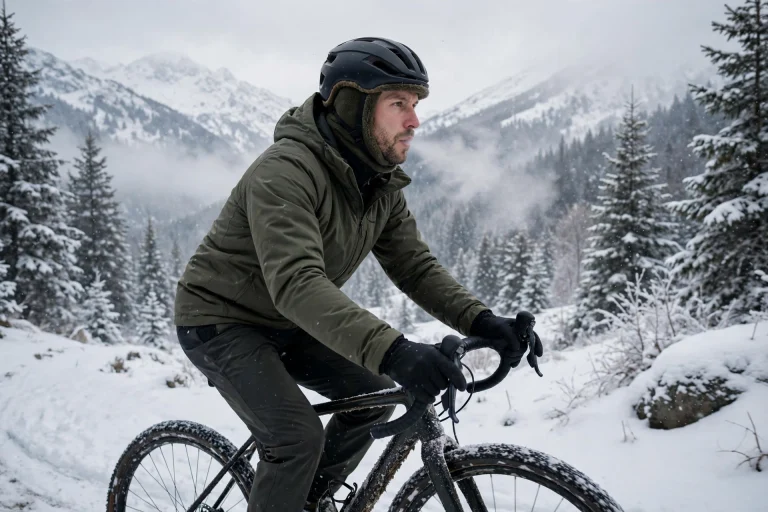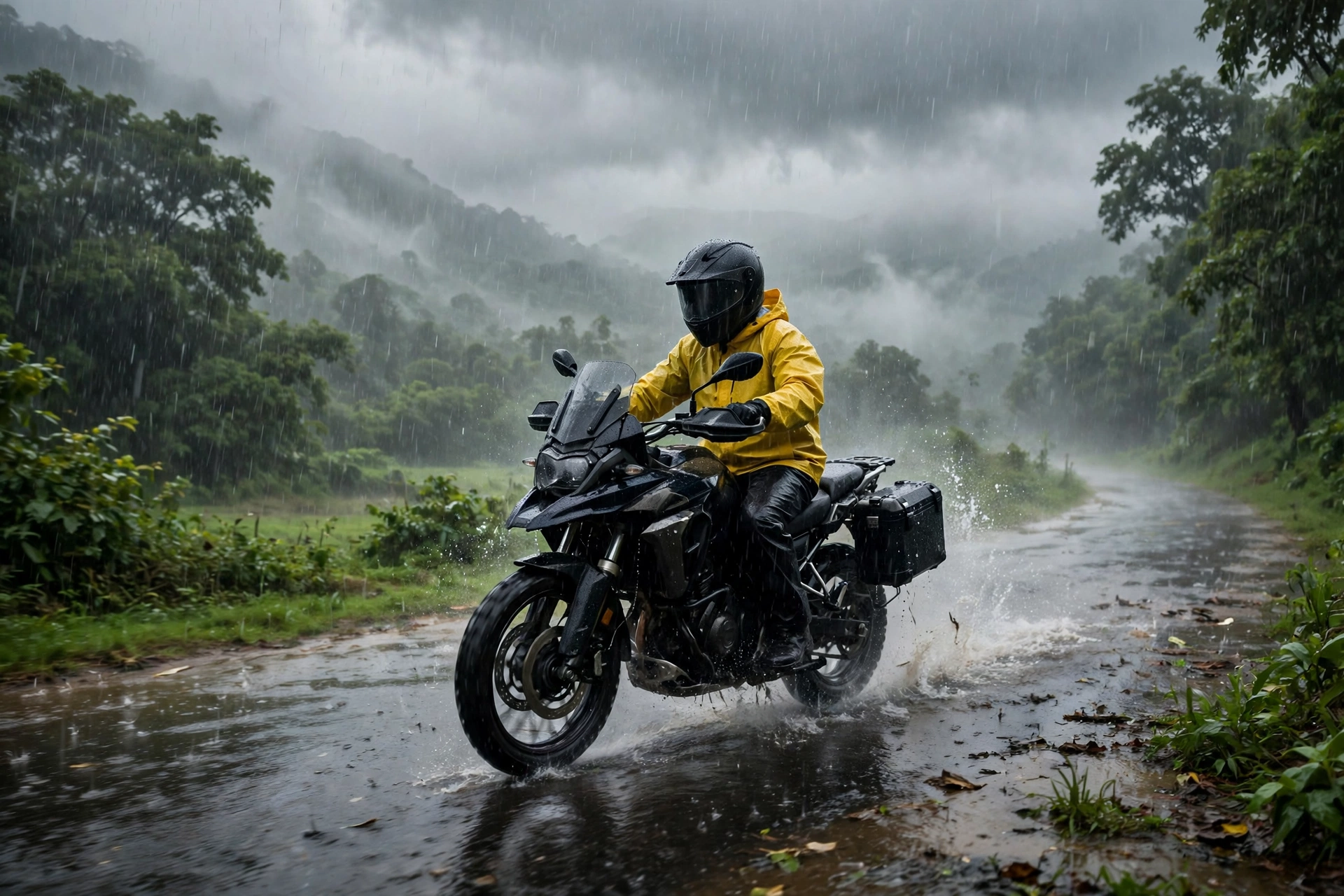
In general terms, riding with a helmet in monsoon rain is perfectly possible, and a helmet is just as important in the wet as in the dry. Monsoon rain brings heavy downpours, poor visibility, and slippery roads, all of which make a fall more likely. A helmet protects the head in those falls, and a few simple adjustments make riding in the rain far more comfortable.
Monsoon season is a part of life across South Asia, South-East Asia, and other tropical regions, and for many riders it does not mean putting the bike away for months. Commuters, delivery riders, and touring riders all ride through the monsoon, and they learn to adapt. This guide explains how to ride with a helmet in monsoon rain, what to check before a wet ride, and how to look after a helmet that gets soaked regularly.
How Does Monsoon Rain Affect Riding?
Monsoon rain affects riding in several ways at once. Heavy rain reduces visibility, both for the rider and for other road users, which makes it harder to see hazards and harder to be seen. Roads become slippery, particularly in the first minutes of rain, when oil and dust on the surface mix with water to form a slick film. Potholes fill with water and become invisible, painted road markings become slippery, and drains can overflow onto the road.
Rain also affects the rider. Wet clothing is heavy and cold, gloves become slippery, and water running down the face can distract a rider at a critical moment. A helmet helps with some of this, by keeping rain off the top of the head and, with a visor, out of the eyes. But a helmet can also mist up inside in heavy rain, which is a problem that needs managing. Riding in monsoon rain is about adapting to all of these changes at once, and doing so calmly rather than rushing.
What Kind of Helmet Suits Monsoon Riding?
For motorcyclists, a full face helmet with a good visor is the best choice for monsoon riding. A full face helmet keeps rain out of the face and eyes, and a visor that can be wiped or treated to resist misting makes a real difference in heavy rain. Look for a helmet with a visor that seals well against the shell, and with vents that can be closed to keep rain out of the helmet while still allowing some airflow.
For cyclists, a helmet with a small peak can help keep rain out of the eyes, and a helmet with adjustable vents lets the rider close them in heavy rain and open them when the rain eases. A rain cover for the helmet is also a useful addition, since it keeps the helmet and the head drier and can be removed quickly when the rain stops. Whatever the activity, the helmet should meet a recognised safety standard for your region, and the label inside will say which standard it meets.
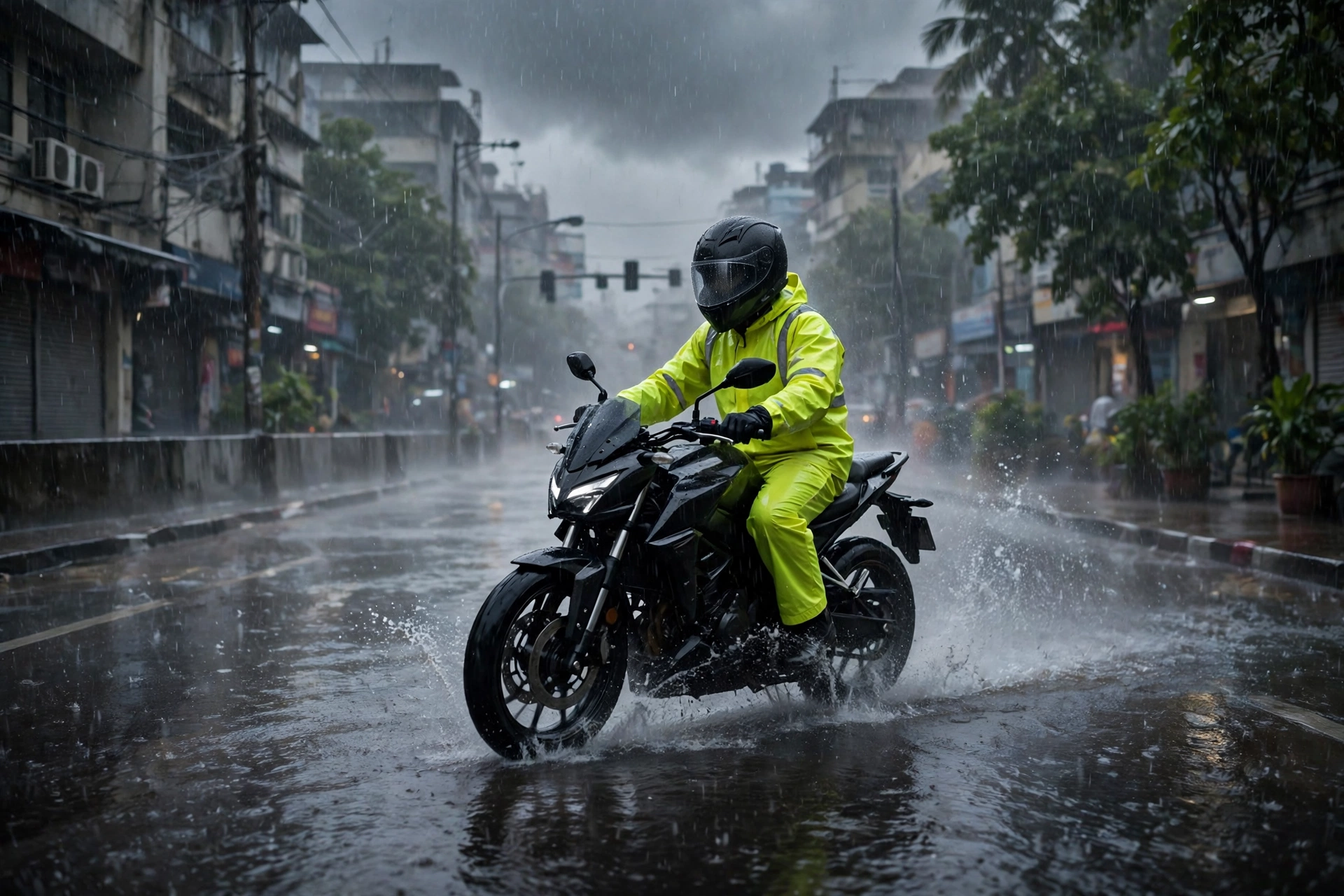
How Can You Stop a Helmet Visor Misting in the Rain?
A misted visor is one of the most common problems in monsoon riding, and it is also one of the most dangerous, since a rider who cannot see cannot ride safely. The mist forms because the inside of the visor is cooler than the warm, moist air inside the helmet, and the moisture in that air condenses on the visor. Opening the visor slightly can help, by letting fresh air in and reducing the temperature difference, though it also lets rain in.
Many helmets accept an anti-fog insert, which is a thin film that fits inside the visor and stops mist from forming. These inserts are widely available and are worth fitting before the monsoon season starts. A visor treatment or spray can also help, though it needs reapplying regularly. In heavy rain, the simplest solution is often to slow down, pull over somewhere safe, and wipe the visor clean before continuing. A rider who cannot see properly should not keep riding. If you are learning about helmet technology, reading about what MIPS is for helmets can help you understand one of the features you may see listed on the box.
What Should You Check Before a Monsoon Ride?
Before a monsoon ride, check the helmet for damage and make sure the visor is clean and the vents work. A dirty visor is harder to see through in rain, and a visor with scratches will scatter light and make visibility worse. Check the straps and buckle, since wet straps can loosen, and make sure the chin strap is snug. If your helmet has a rain cover, check it is in your bag and ready to use.
Check the rest of your kit too. Waterproof clothing, waterproof gloves, and waterproof footwear make a wet ride far more bearable, and lights are essential in monsoon rain, since visibility is poor for everyone on the road. Make sure your lights work and are charged or have fresh batteries. A rider who is dry, warm, and visible is a rider who can focus on the road rather than on discomfort.
How Should You Look After a Helmet That Gets Soaked?
A helmet that gets soaked in monsoon rain needs drying properly after every ride. Take the helmet out of its bag, remove the liner if it is washable, and let everything air-dry in a well-ventilated place, out of direct sun. A helmet that is left damp in a closed bag will smell quickly and can develop mould, which is unpleasant and can irritate the skin. Wash the liner regularly, and check the straps and foam for signs of wear, since repeated soaking accelerates wear.
Do not dry a helmet with direct heat, such as a hairdryer or a radiator, since high heat can damage the foam and the shell. Air-drying is slower but far safer for the helmet. If the helmet is soaked through, it may need a full day to dry properly, so it is worth having a second liner if your helmet allows it, or a second helmet if you ride in the monsoon every day.
Frequently Asked Questions
Q: Is it safe to ride a motorcycle in monsoon rain?
A: In general terms, riding in monsoon rain is possible with care, but it is riskier than riding in dry weather. Slow down, increase your following distance, and stop if visibility becomes too poor to ride safely. A helmet is essential in the wet, just as it is in the dry.
Q: Should I keep my helmet visor open or closed in the rain?
A: In general terms, keep it closed to keep rain out of your eyes, but open it slightly if it starts to mist up. An anti-fog insert is the best solution for misting, and it is worth fitting before the monsoon season starts.
Q: How do I dry a helmet after riding in the rain?
A: Air-dry it in a well-ventilated place, out of direct sun, with the liner removed if it is washable. Do not use direct heat, and let it dry fully before storing it or using it again.

Olivia
Writer at Helmet Today, covering helmet reviews, fit and riding safety.