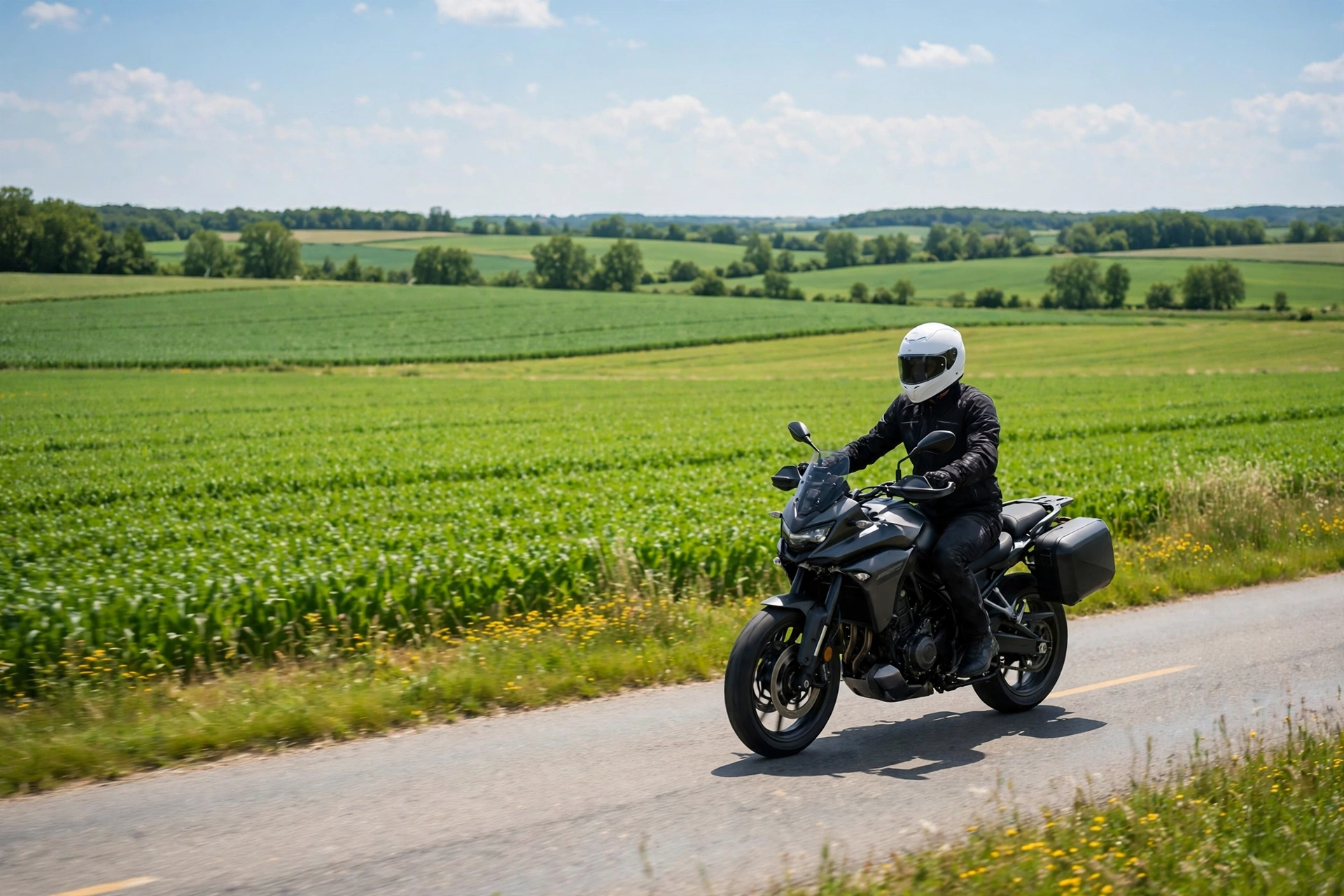
In general terms, full face helmet ventilation in summer works through a system of intake vents at the front and exhaust vents at the back, and it works best when the rider is moving. A full face helmet is warmer than an open-face helmet by nature, but a well-ventilated one can be comfortable even on a hot summer day, provided the vents are open and the air is flowing.
Summer is the hardest season for a full face helmet. The chin bar, the sealed visor, and the close fit that make a full face helmet so protective also trap heat around the head. Riders who wear a full face helmet in summer need to understand how the ventilation works and how to get the most from it. This guide explains how full face helmet ventilation works, what features help in summer, and how to stay cool on a hot ride.
How Does Full Face Helmet Ventilation Work?
Full face helmet ventilation works on a simple principle: air comes in through vents at the front of the helmet, flows across the head, and leaves through vents at the back. The intake vents are usually on the chin bar and the forehead, and the exhaust vents are at the rear of the helmet. When the rider is moving, the airflow pushes fresh air in through the intakes and pulls warm air out through the exhausts, creating a constant flow that cools the head.
The system depends on movement. At speed, the airflow is strong and the ventilation works well. At a standstill, or in slow traffic, the airflow drops and the helmet becomes hot quickly. This is why a full face helmet feels fine on the open road but stifling in a traffic jam. Some helmets have vents that can be opened and closed, which lets the rider adjust the airflow to the conditions, while others have fixed vents that are always open.
What Ventilation Features Help in Summer?
Large, well-placed vents are the most important feature for summer riding. Look for a helmet with intake vents on the chin bar and the forehead, and exhaust vents at the rear, with channels inside the shell that guide air across the head. A helmet with adjustable vents is useful, since it lets the rider open them fully on a hot day and close them if the wind picks up dust or rain.
A moisture-wicking liner is also worth looking for. A liner that draws sweat away from the skin helps keep the head drier, even when the air is hot and humid. Removable, washable padding is a practical plus, since a liner that can be washed regularly stays fresher and more comfortable through a long summer. A light-coloured helmet can help as well, since it reflects sunlight rather than absorbing it, which keeps the shell cooler in strong summer sun.
How Can You Stay Cool in a Full Face Helmet in Summer?
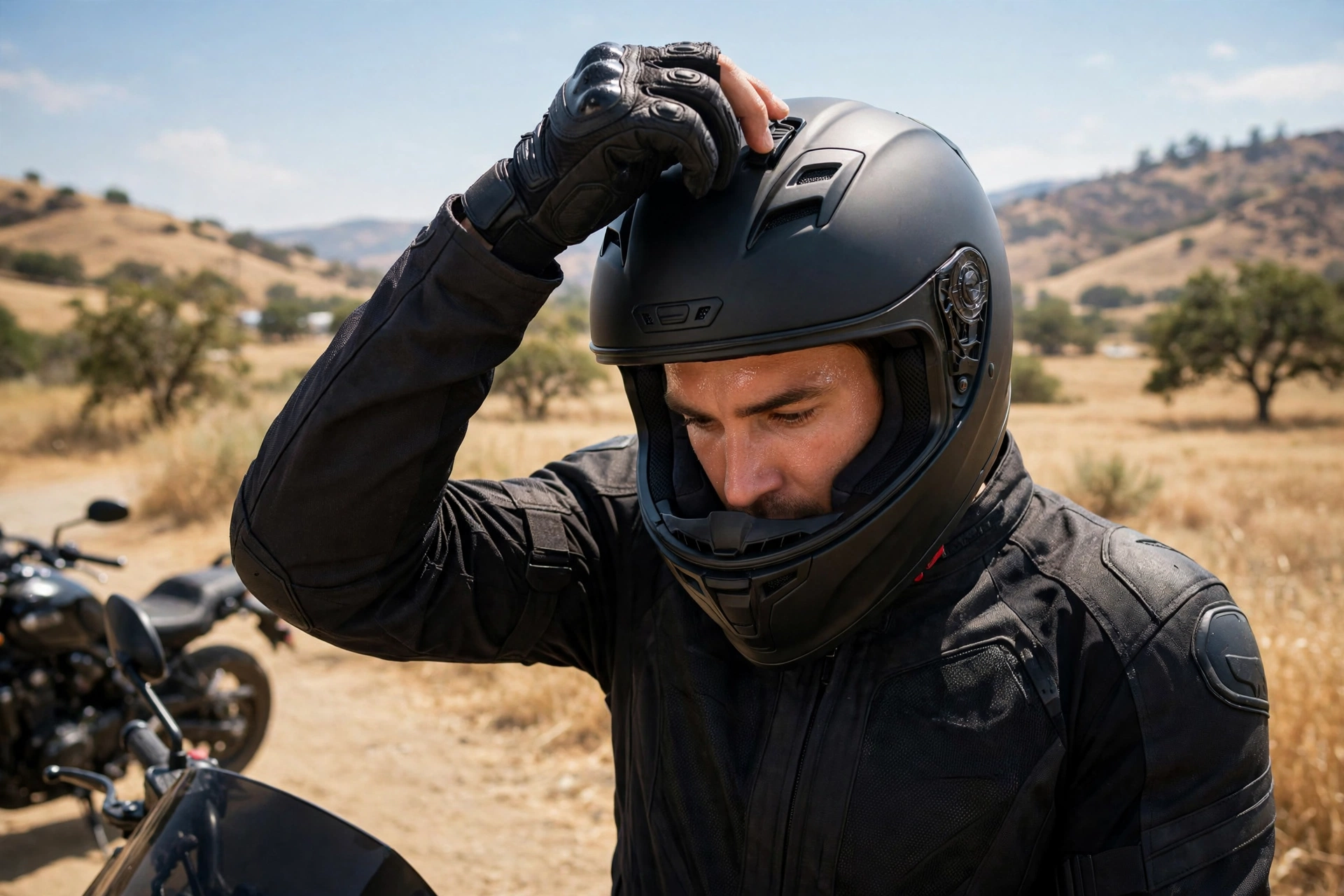
The simplest way to stay cool is to keep moving, since airflow is what cools the head. Plan routes that keep you moving where possible, and take breaks in the shade rather than in direct sun. When you stop, take the helmet off and let your head cool down, rather than sitting with the helmet on in the heat. A few minutes without the helmet can make a real difference on a long, hot ride.
Staying hydrated is just as important as ventilation. Drink water regularly, before you feel thirsty, and carry more water than you think you will need. A thin, moisture-wicking skull cap under the helmet can also help, by drawing sweat away from the skin, provided it is thin enough not to change how the helmet fits. If you are learning about helmet technology, reading about what MIPS is for helmets can help you understand one of the features you may see listed on the box.
What Should You Check Before a Summer Ride?
Before a summer ride, check that the helmet’s vents are clear. Dust, insects, and debris can block vents, and a blocked vent cannot cool the head. A quick check with a soft brush or a blast of air will clear most blockages. Also check the liner and padding for dampness or odour from the last ride, and wash them if they need it. A clean, dry liner is far more comfortable than a damp one.
Check the visor too, since a dirty or scratched visor is harder to see through in bright summer sun. A tinted visor or sunglasses can help with glare, though a visor that is too dark can be a problem if the ride continues into dusk. Make sure the visor opens and closes smoothly, since a rider who needs to open the visor slightly for extra airflow should be able to do so easily.
When Is a Full Face Helmet Too Hot for Summer?
There are days when a full face helmet is simply too hot, particularly in slow traffic or in extreme heat. On those days, a rider may be tempted to switch to an open-face helmet, which is cooler but offers less protection. The choice is a trade-off, and it deserves honest thought. A full face helmet protects the jaw and chin, which an open-face helmet cannot, and that protection matters whatever the temperature.
If the heat is a problem, look for a full face helmet with better ventilation rather than giving up the chin bar altogether. Some modern full face helmets are designed with summer riding in mind, with large vents, light colours, and moisture-wicking liners that make a real difference. A helmet that is comfortable in summer is a helmet a rider will wear, and a helmet that is worn is far better than one left at home.
Frequently Asked Questions
Q: Why does my full face helmet feel hotter in traffic than on the open road?
A: Because ventilation depends on airflow, which drops when you slow down or stop. In traffic, the air stops flowing through the vents and heat builds up inside the helmet. Taking the helmet off during a long stop can help.
Q: Should I keep my visor open or closed in summer?
A: In general terms, keep it closed to protect your eyes from wind, dust, and insects, but open it slightly if you need extra airflow. A visor that is cracked open a little lets fresh air in without exposing your eyes fully.
Q: Does a light-coloured full face helmet really stay cooler?
A: In general terms, yes. A light-coloured helmet reflects more sunlight than a dark one, which keeps the shell cooler. Colour alone will not fix poor ventilation, but it helps, particularly in strong summer sun.

Olivia
Writer at Helmet Today, covering helmet reviews, fit and riding safety.