
In general terms, a cold-weather helmet liner is a thin, insulating layer that fits inside a helmet to keep the head warm in winter, without changing how the helmet fits. Cold-weather liners are a simple solution to a common problem: a helmet that is comfortable in summer can feel cold and draughty in winter, and a liner fixes that without the need for a new helmet.
Winter riding, whether on a motorcycle, a bicycle, or skis, exposes the head to cold air for long periods, and the head loses heat quickly. A rider who is cold is distracted, uncomfortable, and less focused on the road or the trail. This guide explains what cold-weather helmet liners are, how to choose one, how to fit it, and how to look after it through the winter.
What Is a Cold-Weather Helmet Liner?
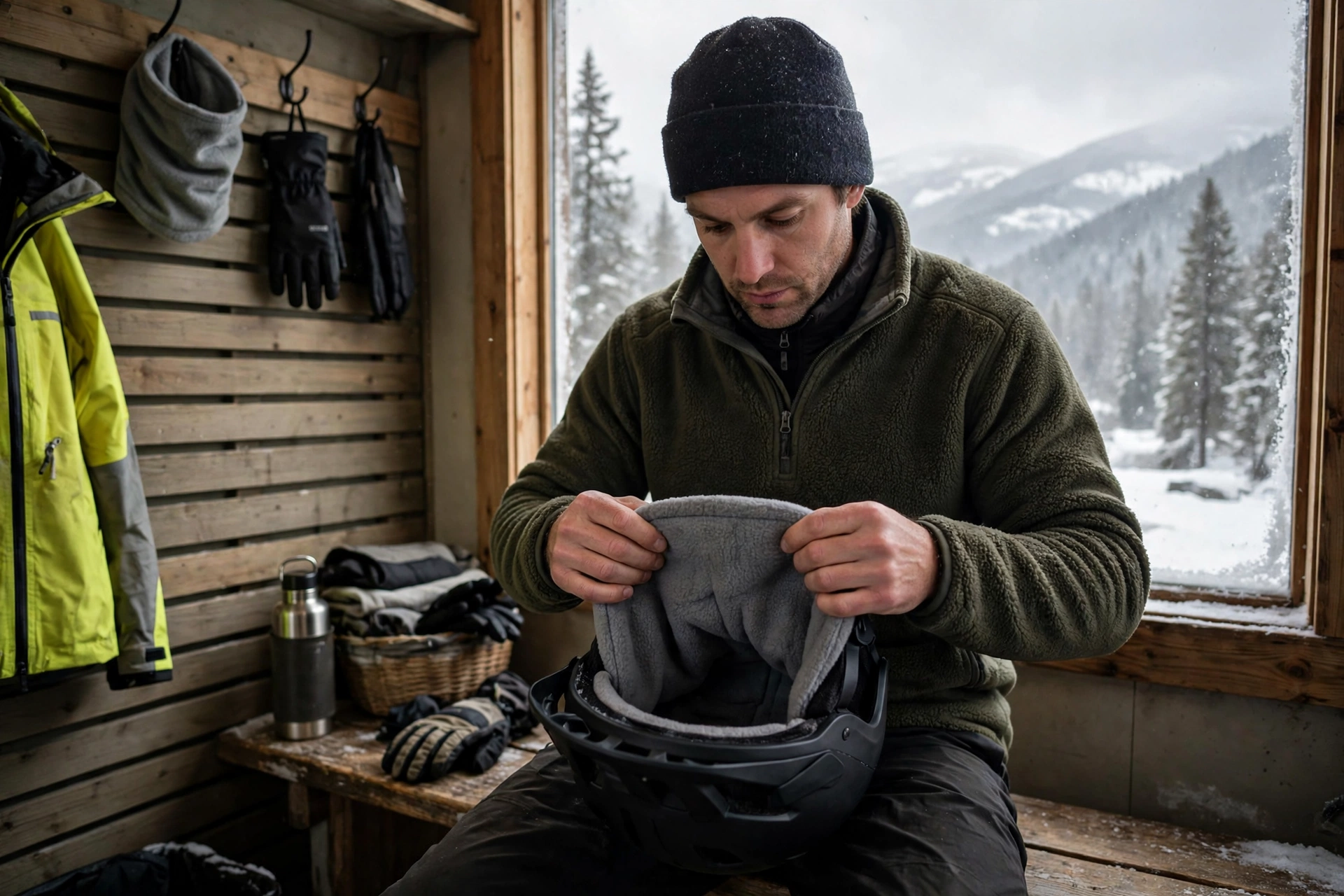
A cold-weather helmet liner is a layer of insulating material that sits between the head and the helmet’s own padding. It is usually made from a warm, soft fabric, such as fleece or a technical thermal material, and it is shaped to fit inside the helmet without bunching or creating pressure points. Some liners are made by the helmet manufacturer to fit a specific model, while others are universal and designed to fit a range of helmets.
Liners come in several forms. A full liner covers the whole inside of the helmet, a skull cap covers the top of the head, and a balaclava-style liner covers the head, neck, and sometimes the face as well. The right choice depends on the activity and the temperature. A cyclist in a mild winter may only need a thin skull cap, while a motorcyclist in a cold climate may need a full balaclava liner. Look for a liner made from a material that wicks moisture away from the skin, since a liner that traps sweat will feel cold and clammy.
How Do You Choose a Cold-Weather Helmet Liner?
Start with the fit. A liner should be thin enough that the helmet still sits level and snug on the head, with no change to the fit. If a liner makes the helmet feel tight, or pushes it up so it sits too high, it is too thick for that helmet. A liner that changes the fit is worse than no liner at all, since a helmet that does not fit properly cannot protect the head. Try the liner with the helmet before you buy it, if possible, and check the fit with the liner on.
Think about the material too. Fleece is warm and soft, but it can trap moisture. A technical thermal fabric that wicks sweat away from the skin is often a better choice for active riding, since it keeps the head warm without getting damp. A liner with a windproof layer can help in very cold or windy conditions, particularly for motorcyclists. If you are learning about helmet technology, reading about what MIPS is for helmets can help you understand one of the features you may see listed on the box.
How Do You Fit a Cold-Weather Liner?
Fitting a liner is simple, but it deserves care. Put the liner on first, making sure it sits smoothly on the head with no folds or bunches, particularly around the ears and the forehead. Then put the helmet on over the liner, checking that it sits level and low on the forehead, and that it feels snug all around without pressure points. Adjust the fitting system if the helmet has one, and check the chin strap is snug.
Check the fit with any other kit you will wear, such as goggles, glasses, or a neck warmer, since these can change how the helmet sits. If the liner has a face covering, make sure it does not block your view or your breathing. A liner that covers the nose and mouth can mist up goggles or a visor in cold weather, so it may need adjusting or folding down. Take a few minutes to get the fit right at home, rather than discovering a problem on a cold ride.
How Do You Look After a Cold-Weather Liner?
A cold-weather liner should be washed regularly, since it absorbs sweat and can smell after a few rides. Most liners can be machine washed on a gentle cycle, but check the maker’s instructions before washing. Air-dry the liner after washing, out of direct sun, and make sure it is fully dry before using it again. A damp liner will feel cold and uncomfortable, and can irritate the skin.
Check the liner for wear at the start of every winter. A liner that has gone thin, lost its shape, or developed holes should be replaced, since it will no longer insulate properly. Store the liner in a clean, dry place over the summer, rather than leaving it in the helmet, where it can trap moisture and develop a smell. A liner that is looked after will last several winters.
When Is a Liner Not Enough?
A liner is a good solution for cold weather, but it has its limits. In very cold conditions, a liner on its own may not be enough, and a rider may need a helmet designed for winter, with better insulation and less ventilation. A ski helmet, for example, is designed for cold weather in a way that a summer cycling helmet is not, and no liner can fully close that gap.
If a rider is still cold with a liner fitted, the answer is not a thicker liner, since that would change the helmet fit. Instead, consider a helmet with adjustable vents that can be closed in winter, a helmet with better ear coverage, or a different helmet altogether for winter riding. A helmet that fits properly and keeps the rider warm is far better than a helmet that is cold and uncomfortable, whatever the liner.
Frequently Asked Questions
Q: Can I wear a thick hat under my helmet instead of a liner?
A: In general terms, no. A thick hat changes the fit and can push the helmet too high on the head. A thin cold-weather liner designed to fit under a helmet is a better choice for winter warmth.
Q: Will a liner make my helmet too tight?
A: It should not, if the liner is thin enough. Try the liner with the helmet before you buy it, and check the helmet still sits level and snug. If the liner makes the helmet feel tight, choose a thinner liner or a different helmet.
Q: How often should a cold-weather liner be washed?
A: Wash it regularly, particularly after sweaty rides. In general terms, a liner that is washed often and air-dried properly will stay fresh and comfortable all winter. Check the maker’s instructions before washing.

Olivia
Writer at Helmet Today, covering helmet reviews, fit and riding safety.