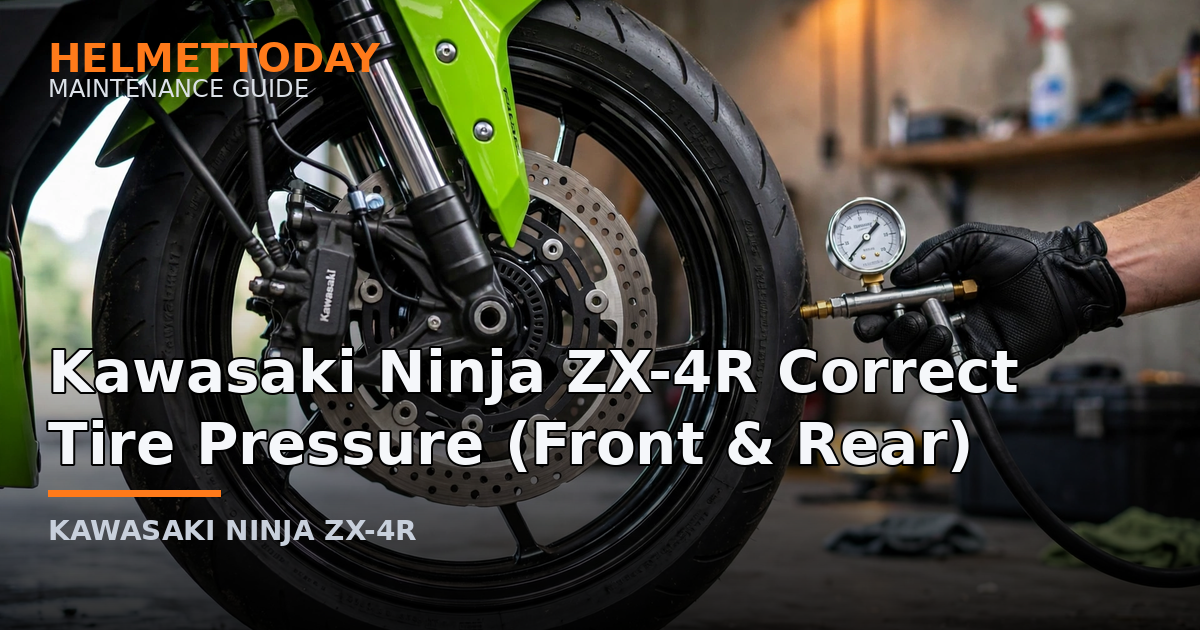
The correct tire pressure for the Kawasaki Ninja ZX-4R is 32 PSI front and 36 PSI rear when the tires are cold. Check pressures weekly and always before a long ride — correct pressure is the cheapest handling and safety upgrade there is.
Use a quality gauge, check tires cold (before riding or at least 3 hours after), and adjust to the sticker on the swingarm or in your owner’s manual if it differs.
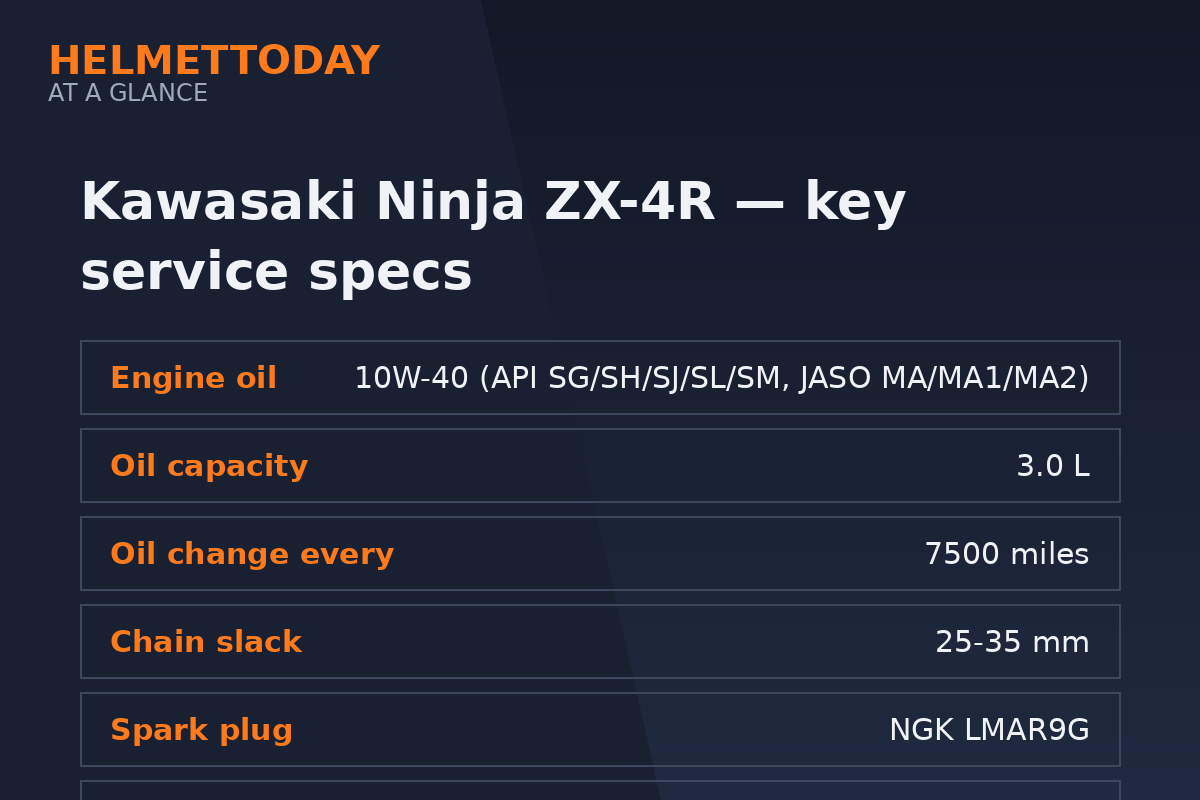
Kawasaki Ninja ZX-4R quick service specs
| Item | Specification |
|---|---|
| Engine oil | 10W-40 (API SG/SH/SJ/SL/SM, JASO MA/MA1/MA2) |
| Oil capacity | 3.0 liters |
| Oil change interval | 7500 miles |
| Chain slack | 25-35 mm |
| Spark plug | NGK LMAR9G |
| Tire pressure (F/R) | 32 PSI front / 36 PSI rear |
| Battery | 12V 8.6Ah (YTZ10S) |
How to check and set tire pressure, step by step
- Check tires when cold — before riding, or at least 3 hours after the last ride.
- Remove the valve cap and press your gauge firmly onto the valve stem.
- Read the pressure. Front should be 32 PSI, rear 36 PSI.
- Add air in short bursts if low, or press the valve core to release air if high.
- Re-check after each adjustment until both tires are on spec.
- Refit the valve caps and check for slow leaks if a tire keeps losing pressure.
Common mistakes to avoid
- Checking hot tires — pressure rises 3-5 PSI when hot, so a hot reading misleads you.
- Trusting gas-station gauges — they’re often off by several PSI. Carry your own gauge.
- Ignoring the rear — the rear tire carries more load and wears faster when under-inflated.
FAQ
What is the correct tire pressure for the Kawasaki Ninja ZX-4R?
32 PSI front and 36 PSI rear, measured cold.
Should I change pressure for two-up riding or luggage?
Yes — add 2-4 PSI to the rear when carrying a passenger or heavy luggage, per your owner’s manual.
How much does temperature affect tire pressure?
About 1 PSI per 10°F. Check more often in spring and autumn when temperatures swing.
Related guides

Dan Heiman
Writer at Helmet Today, covering helmet reviews, fit and riding safety.