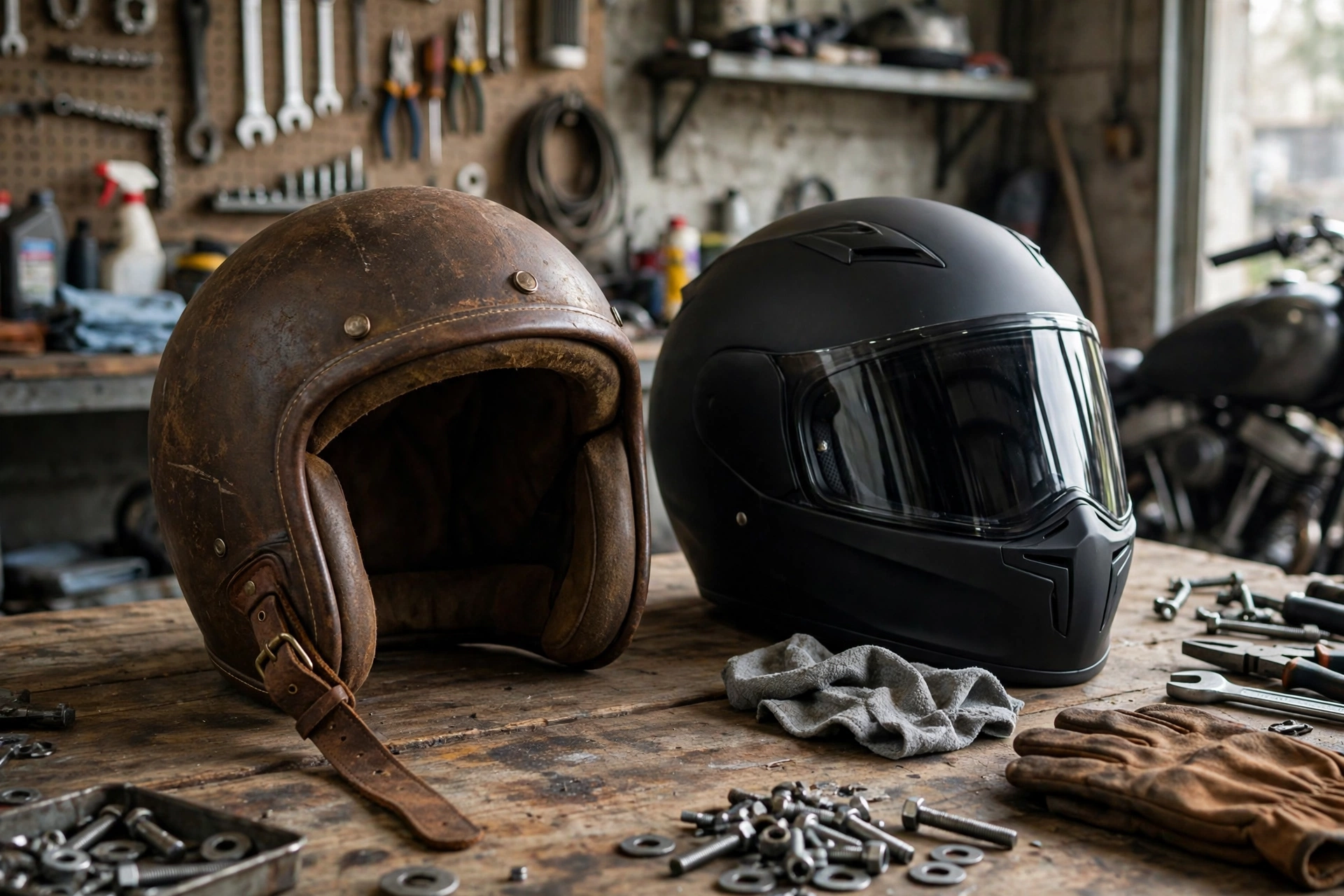
No, vintage-style helmets are not as safe as modern ones in general terms — a helmet that only looks old may be fine if it is newly made to a modern standard, but a genuinely old helmet, or a retro-styled helmet with no modern certification, usually offers far less protection than a current model. The distinction matters, because “vintage-style” can mean two very different things: a new helmet designed to look old, and an old helmet that actually is old.
Vintage-style helmets have a strong appeal. Their rounded shape, leather-look straps, and classic colours suit café racers, classic bikes, and retro cycling, and they look far more at home on a classic machine than a modern aerodynamic helmet does. This guide explains what makes a helmet vintage-style, how helmet safety has changed over time, and how to enjoy the retro look without giving up modern protection.
What Makes a Helmet Vintage Style?
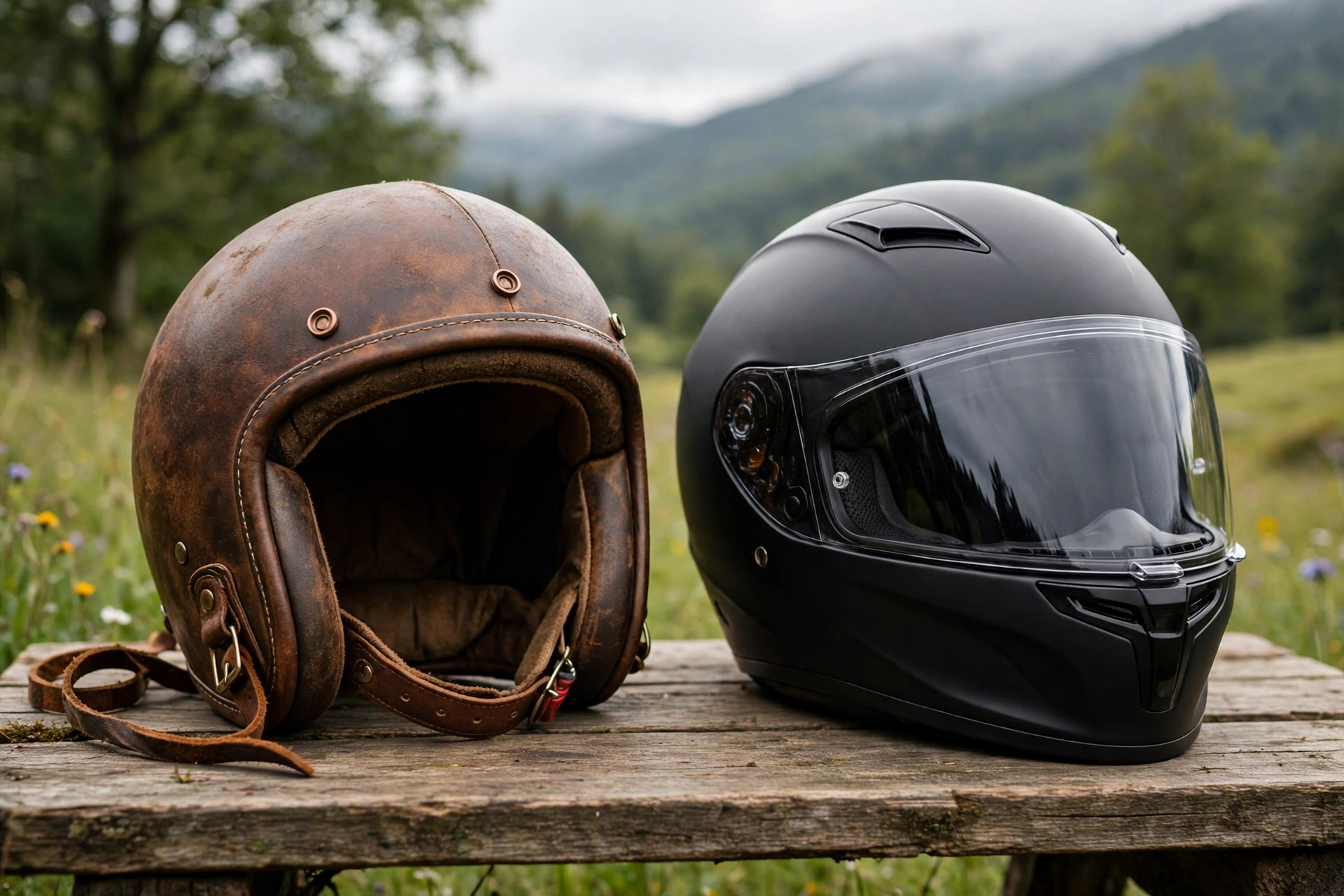
A vintage-style helmet is one designed to look like helmets from the past — usually the 1950s, 60s, or 70s. They tend to be open face, with a smooth rounded shell, a simple shape, and details such as leather trim, chrome fittings, or a small peak. Some have a snap-on visor or bubble shield, and many are sold in classic colours such as cream, black, or racing green.
Some vintage-style helmets are brand new, made by modern makers to look old while meeting a current safety standard. These are sometimes called retro or heritage helmets. Others are genuinely old helmets, made decades ago and kept as collectibles, or sold second-hand as usable helmets. The two kinds look similar, but they are very different products when it comes to safety.
How Have Helmet Designs Changed Over Time?
Helmet design has changed a great deal since the early days. Early helmets were often little more than a hard shell with thin padding, designed to protect against scrapes and minor knocks. They were better than nothing, but they offered far less impact absorption than a modern helmet, and they were rarely tested to the standards we expect today.
Modern helmets use a foam liner that crushes in a controlled way to absorb energy, a shell shaped to spread force and slide on the ground, and a strap system designed to keep the helmet in place in a crash. Standards have also become stricter and more detailed, testing for different kinds of impact, strap strength, and coverage. The result is a helmet that protects far better than its ancestors, even when it looks similar from the outside.
Materials have changed too. Modern shells use advanced composites and plastics that are both lighter and stronger than the materials used decades ago, and liners use foams designed for the job rather than simple padding. A helmet made today, even one in a retro style, benefits from all of this — as long as it is actually built to a modern standard.
Can a Vintage-Style Helmet Meet Modern Standards?
Yes, some vintage-style helmets do meet modern standards — but not all of them, and the difference is crucial. A new retro helmet from a reputable maker may be certified to the standard for its sport, which means it has passed the same impact and strap tests as a modern-looking helmet. If it carries the right certification label, it offers the protection that standard requires.
However, many retro-styled helmets are sold as fashion items or novelties, with no certification at all. These may look the part, but they have not been tested to any safety standard, and there is no way to know how they would perform in a crash. Some are sold with warnings that they are not for road use, which is a clear sign to avoid them for riding.
Open face designs also have a built-in limit: even a certified open face helmet does not protect the chin and jaw, because there is no chin bar. A vintage-style helmet is almost always open face, so even the best of them offers less coverage than a modern full face helmet. That is a trade-off to understand before you buy. If you are learning about how helmets handle different kinds of impact, reading about what MIPS is for helmets can help you understand one of the technologies used in modern helmet design.
What Should You Check Before Buying One?
The first thing to check is the certification label. Look inside the helmet for a label showing the standard it meets, and make sure that standard matches the sport you will use it for. If there is no label, or the label is vague, do not buy it for riding — however good it looks.
Next, check the age and condition. A genuinely old helmet, even one that was certified when it was new, should not be used for riding. Foam liners degrade over time, shells can weaken, and straps can wear out. A helmet that is decades old has passed the point where it can be trusted, even if it looks perfect on the outside. Keep old helmets as display pieces, not as riding gear.
Finally, check the fit and the coverage. A retro helmet should sit level, feel snug, and stay put, just like a modern one. Be honest with yourself about the open face design: if you ride a motorcycle at speed, a full face helmet protects more of your head. A vintage-style helmet can be a good choice for slow, gentle riding, but it is a compromise on protection.
How Can You Enjoy the Retro Look Safely?
The safest way to enjoy the retro look is to buy a new helmet, made by a reputable maker, certified to a modern standard, and designed in a vintage style. These helmets give you the look you want with the protection you need, and they are the best of both worlds. Look for makers who are open about their certification and testing.
Pair the helmet with other gear that matches the look but also protects you: gloves, a jacket, and eye protection that suit the style without cutting corners on safety. A bubble visor or good goggles can protect your eyes on an open face helmet, which matters more than many riders realise.
And keep genuinely old helmets where they belong — on a shelf, not on the road. A classic helmet can be a beautiful object and a piece of history, but history is not protection. Enjoy it as a display piece, and ride in a helmet that meets today’s standards.
Frequently Asked Questions
Q: Can I ride in a helmet from the 1970s?
A: In general terms, no. A helmet that old will have a degraded liner and shell, even if it looks fine, and it will not meet modern standards. Keep it as a display piece and ride in a new, certified helmet.
Q: Are new retro-style helmets safe?
A: A new retro-style helmet can be safe if it is certified to the right modern standard for your sport. Check the label inside the helmet, and avoid any retro helmet sold as a fashion item with no certification.
Q: Does an open face vintage helmet protect as well as a full face helmet?
A: No. Even a certified open face helmet leaves the chin and jaw unprotected, so it offers less coverage than a modern full face helmet. It can be a fair choice for slow riding, but it is a compromise on protection.

Olivia
Writer at Helmet Today, covering helmet reviews, fit and riding safety.