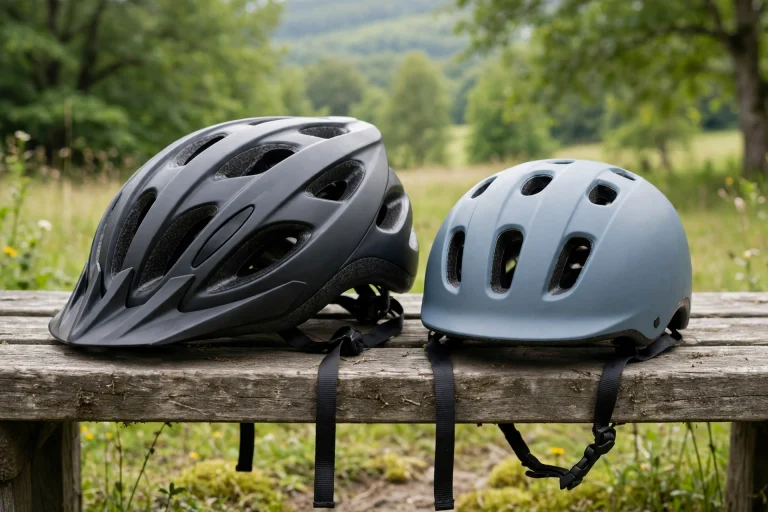
No — in general terms, helmet vents do not make a helmet weaker in any way that matters for the rider. Vents are planned into the design from the start, so the shell and the liner around them are shaped and strengthened to cope with the openings. A well-made vented helmet still passes the same safety tests as a helmet with fewer vents, and the vents themselves are part of why many riders can wear a helmet comfortably for hours.
The worry is easy to understand: a helmet looks like a solid shell, so holes in it seem like a weakness. In practice, makers do not drill holes into a finished helmet — the vents are part of the original shape, and the rest of the helmet is built around them. This guide explains how vents work and when ventilation is worth choosing.
How Are Helmet Vents Designed Into the Shell?
A helmet vent is an opening in the outer shell that lines up with a channel in the liner underneath. Air comes in through the front vents, travels through the channels, and leaves through vents at the back. The shell around each opening is shaped to spread any force around the hole rather than letting it concentrate at one weak point, in much the same way that the doorway of a building is framed to carry the load above it.
The liner matters just as much as the shell. In most modern helmets the liner is made from a foam that crushes slowly on impact, spreading the force over a wider area. The vent channels run through this foam, but the foam between the channels is still thick enough to do its job. Makers test the whole helmet, vents included, rather than testing the shell and the liner separately, so the vents are judged as part of the finished product.
Some helmets have very large vents and some have small ones, and the difference is mostly about airflow. A road cycling helmet may have wide openings to keep the rider cool, while a motorcycle helmet may have smaller, adjustable vents that can be closed in rain or cold.
Do Vents Change How a Helmet Handles an Impact?
In general terms, a vented helmet handles an impact in the same way as a helmet with fewer vents: the shell spreads the force and the liner absorbs it by crushing. The vents change where the shell is, but they do not remove the liner that does most of the energy-absorbing work. What matters is the total amount of protective material and how it is arranged, not whether there are openings in it.
It is worth remembering that helmets are tested against recognised standards, and those tests are carried out on the helmet as it is sold, vents and all. A helmet that passes its standard has shown it can cope with the impacts in the test, whatever its vent layout looks like. If vents made helmets fail those tests in any meaningful way, vented helmets would not be on sale in such numbers across cycling, motorcycling, skiing, and climbing.
That said, makers place vents carefully and reinforce the edges, so a large opening does not leave one spot unprotected. This is a design detail for the maker, not something the rider needs to worry about when choosing between two helmets that meet the same standard.

What Are the Benefits of Helmet Vents?
The main benefit of vents is comfort. Riding, climbing, or working hard in a helmet builds up heat, and sweat that cannot escape makes the rider hot, distracted, and less able to concentrate. Good airflow keeps the head cooler and drier, which helps the rider stay alert. A helmet that is comfortable is also a helmet the rider is more likely to keep wearing, which matters more for safety than any small difference in vent layout.
Vents also help with fogging. On motorcycle and ski helmets, air moving through the vents clears moisture from the inside of a visor or from goggles, keeping the rider’s view clear. Adjustable vents let the rider balance airflow against weather: open them wide on a hot climb, close them partly in rain, and shut them in bitter cold. This flexibility is one reason adjustable vent systems are common on helmets made for changing conditions.
There is a trade-off: more vents can mean more wind noise, and a very open helmet can let in rain, dust, or cold air. Some riders prefer a quieter, more closed helmet and accept a warmer head. That is a comfort choice, not a safety failing.
Should You Choose More Vents or Fewer Vents?
Choose the vent layout that suits how and where you ride. If you ride hard in warm weather, climb hills, or wear your helmet for long hours, generous vents will keep you cooler and more comfortable. If you ride mostly in cold or wet weather, or at high speed where wind noise bothers you, a helmet with fewer or adjustable vents may suit you better. Either way, fit and the safety standard the helmet meets matter far more than the number of vents.
Fit matters more than vent count. A helmet should sit level, feel snug all round without pressing hard in one place, and stay put when you shake your head gently. A vented helmet that fits well protects you better than a closed helmet that wobbles. Always try a helmet on before buying.
If you are learning how different helmet features work together, reading about what MIPS is for helmets can help you understand one of the technologies used inside modern helmets alongside ventilation. MIPS is a separate system from venting, but both are part of how a modern helmet is put together.
How Can You Look After Vented Helmets?
Vents need a little care. Dust, mud, and insects can collect in the openings and cut down airflow. After a dirty ride, shake the helmet out and wipe the vents with a soft cloth. Never poke sharp tools into the vents, as they can damage the liner inside.
Check the vents for cracks around the edges, especially after a knock or a drop. Small cracks around a vent can mean the helmet needs replacing, even if the rest looks fine. Also check that any vent covers still open and close smoothly.
Frequently Asked Questions
Q: Do helmet vents make a helmet weaker in a crash?
A: In general terms, no. Vents are designed into the helmet from the start, and vented helmets pass the same safety tests as helmets with fewer vents.
Q: Are helmets without vents safer than vented helmets?
A: Not in general terms. Both types must meet the same standards for the sport they are made for, so fit and the standard matter more than the number of vents.
Q: Can I block my helmet vents to make it warmer?
A: In general terms, it is better to use the helmet’s own adjustable vents if it has them. Stuffing the vents can trap moisture inside and may affect how the liner works, so check the maker’s guidance first.

Olivia
Writer at Helmet Today, covering helmet reviews, fit and riding safety.