No — in general terms, wearing a helmet does not cause hair loss. There is no good evidence that a normal, well-fitting helmet makes hair fall out or causes baldness. What helmets can do is trap heat and sweat, which may irritate the scalp or make existing hair look thinner for a short time, but that is very different from causing permanent hair loss.
This myth has been around for years, and it worries a lot of riders — especially people who wear a helmet every day for work, commuting, or sport. The concern usually comes from noticing hairs on the helmet pads, a sweaty scalp after a long ride, or a hairline that seems to have changed over time. This guide looks at what actually happens to hair under a helmet, what can genuinely irritate a scalp, and how to keep your hair and scalp healthy while wearing a helmet regularly.
What Does the Evidence Say About Helmets and Hair Loss?
Hair loss has many well-known causes, including family history, hormones, age, illness, stress, and certain medicines. Helmet wearing is not among them. The main type of hair loss that affects most adults, pattern hair loss, is driven by genetics and hormones, and it progresses whether or not a person wears a helmet. Blaming a helmet for a receding hairline is usually a case of noticing two things at the same time and assuming one caused the other.
There is a rare condition called traction hair loss, where hair is pulled repeatedly over a long time and the roots are damaged. This is seen with very tight hairstyles that pull the hair back hard for years. A normal helmet does not pull hair in that way. A helmet sits on the head and presses gently and evenly; it does not tug at the roots. A helmet that is painfully tight could cause discomfort and pressure marks, but that is a fit problem to fix, not a normal effect of wearing a helmet.
Some riders notice more hairs in their helmet or on their pillow after a ride. This is usually normal shedding. People shed hairs every day as part of the natural growth cycle, and a helmet can simply collect hairs that would have fallen out anyway. Seeing them gathered in one place can make the loss look larger than it is.
Can a Helmet Damage Hair or Irritate the Scalp?
While a helmet does not cause hair loss, it can affect the condition of your hair and scalp. Heat and sweat build up inside a helmet, especially in warm weather or during hard exercise. A damp, warm scalp is a good place for irritation and for the tiny organisms that live on skin to multiply, which can lead to itching, spots, or dandruff if the helmet is not cleaned regularly.
Friction is another factor. A helmet that rubs in the same place, or hair that is trapped and pulled each time the helmet goes on and off, can break hair shafts and make hair look frizzy or thin at the edges. This breakage is not hair loss from the root, but it can make hair look less healthy. A smooth lining, a good fit, and putting long hair in a low, loose style before putting the helmet on can all help.
Sweat itself does not damage hair roots, but leaving sweat to dry on the scalp again and again can leave the scalp feeling tight and itchy. Riders who wear a helmet daily should wash their hair regularly and let the scalp dry properly between rides. A clean helmet helps too: the pads inside collect sweat and skin oils, so they should be cleaned or aired out often.

How Can You Protect Your Hair While Wearing a Helmet?
Start with fit. A helmet should be snug but not tight, sitting level on your head without pressing hard on your forehead or temples. If your helmet leaves deep red marks or gives you a headache, it is too tight and should be adjusted or replaced with a better-fitting size. A comfortable helmet rubs less and traps less heat, which is good for both your head and your hair.
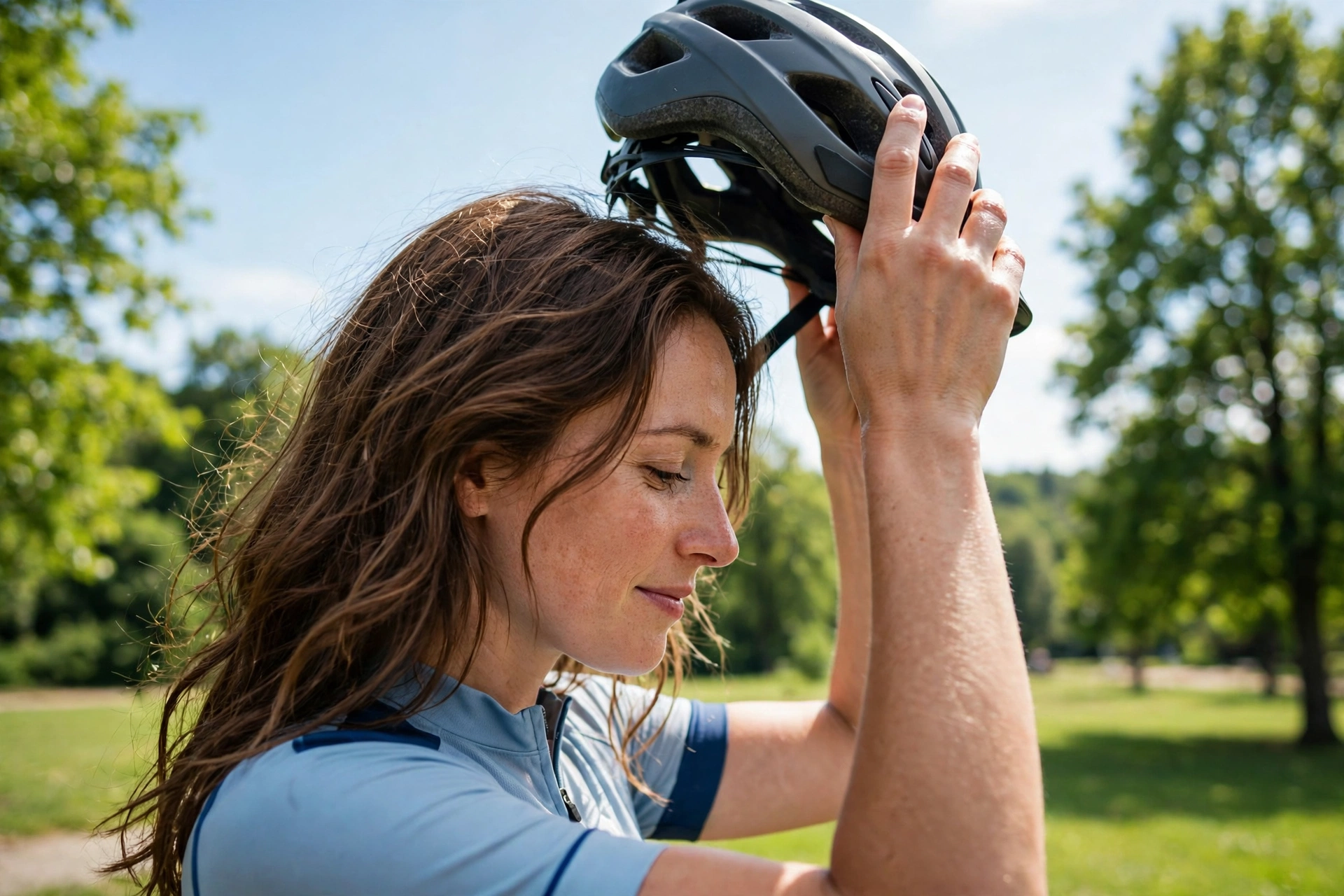
Wear a thin skull cap, bandana, or helmet liner underneath. This absorbs sweat, reduces friction between the helmet and your hair, and keeps the helmet pads cleaner. Choose a light, breathable fabric and wash the liner regularly. For long hair, tie it in a low ponytail or braid rather than a high bun, which can push the helmet up and change the fit. Avoid tight clips or bands under the helmet, which can press into the scalp.
Look after the helmet as well as your hair. Removable pads should be washed following the maker’s guidance, and a helmet that cannot be taken apart should be wiped out and left to air dry after use. Never store a damp helmet in a closed bag, as that encourages smells and irritation. A clean, dry helmet is kinder to your scalp and lasts longer too.
If you are curious about the technology inside a modern helmet, reading about what MIPS is for helmets explains one of the systems that helps a helmet manage angled impacts. It has nothing to do with hair loss, but it is useful to know when you are choosing a helmet you will wear every day.
When Should You See a Doctor About Hair Loss?
If you notice sudden or patchy hair loss, a sore or flaky scalp that does not settle, or hair coming out in clumps, it is worth talking to a doctor rather than blaming your helmet. These signs can point to a scalp condition, a nutritional issue, stress, or a medical problem that needs proper attention. A doctor can look at the pattern of the loss and suggest the right next steps.
It also helps to keep a simple note of when you first noticed the change. If the hair loss started at the same time as a new medicine, an illness, or a stressful period, that timing is useful information for a doctor. A helmet is rarely the cause, and stopping wearing one would remove your head protection without fixing the real problem.
In the meantime, keep wearing your helmet. The protection it gives your head in a fall is far more important than any worry about your hair. A well-fitting, clean helmet worn with a liner is the best balance: your head stays protected and your scalp stays as comfortable as possible.
Frequently Asked Questions
Q: Do helmets cause hair loss?
A: In general terms, no. There is no good evidence that normal helmet use causes hair loss, though a dirty or tight helmet can irritate the scalp.
Q: Why do I find hairs inside my helmet?
A: In general terms, that is normal daily shedding. A helmet collects hairs that would have fallen out anyway, which can make the loss look larger than it is.
Q: Can wearing a helmet every day damage my hair?
A: In general terms, a well-fitting, clean helmet should not damage your hair. A liner, a loose hairstyle, and regular cleaning help keep hair and scalp healthy.

Olivia
Writer at Helmet Today, covering helmet reviews, fit and riding safety.