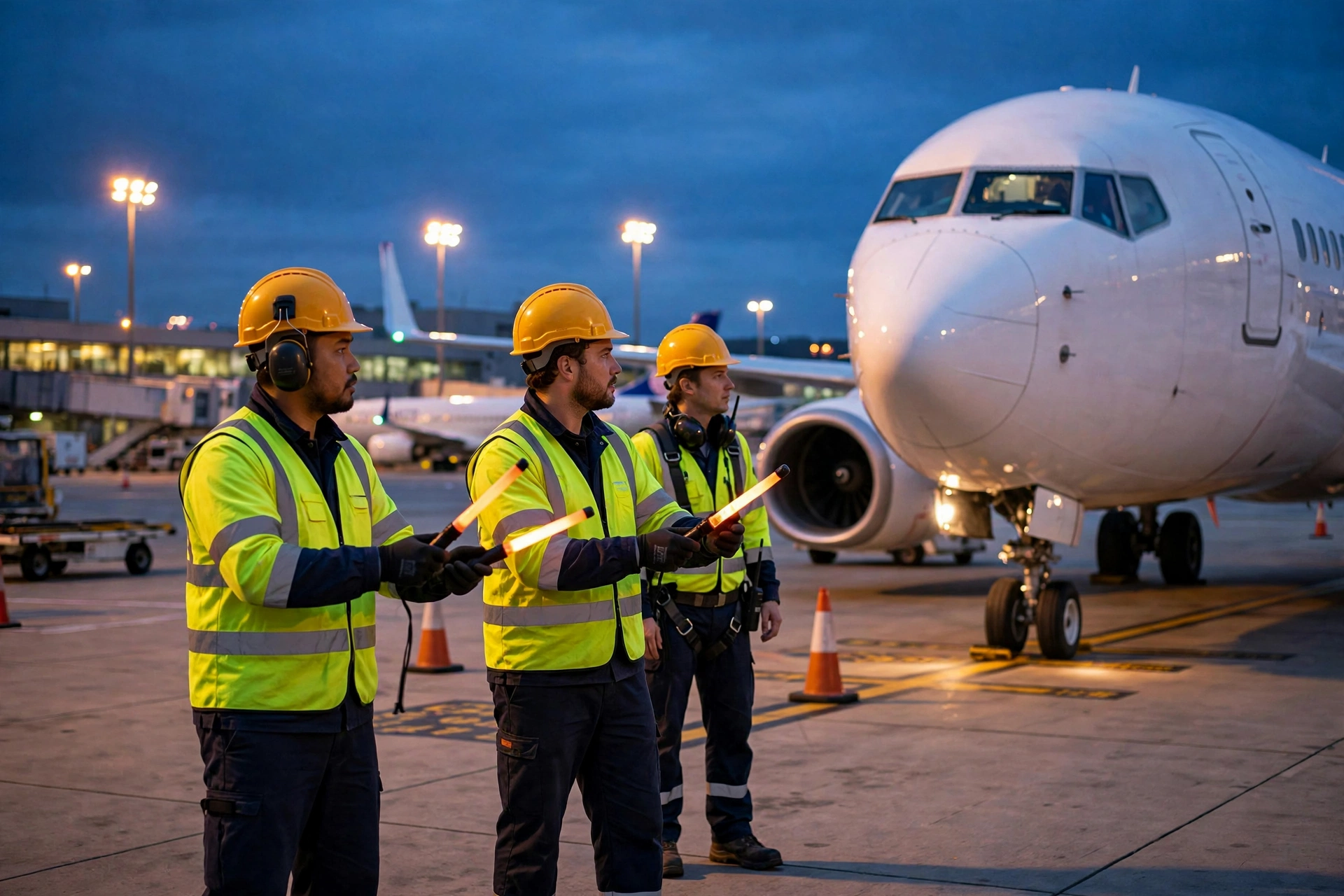
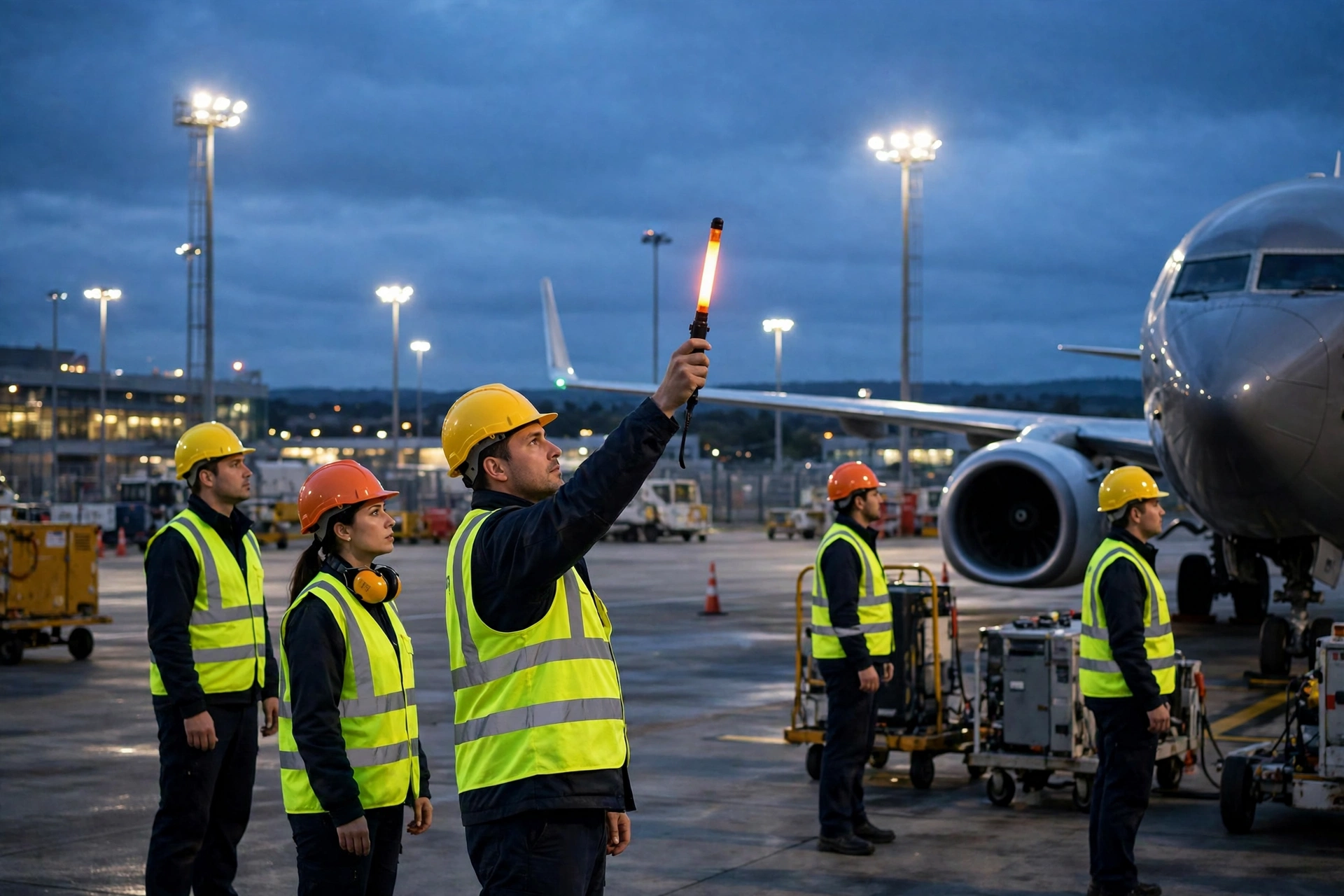
An airport ground crew helmet is, in general terms, a lightweight industrial hard hat worn by the people who work around aircraft on the apron, where the risks include moving vehicles, jet blast, falling cargo, and noise. It is part of the high-visibility kit that keeps ground staff safe and easy to spot among aircraft, baggage carts, and fuel trucks. Like every helmet on an airfield, it must stay on, fit well, and work with the rest of the crew’s gear.
Ground crew do a wide range of jobs: guiding aircraft in and out, loading and unloading baggage and cargo, refuelling, pushing back aircraft, and servicing equipment on the ramp. Much of this work happens outdoors, in all weathers, and often at night. This guide explains what an airport ground crew helmet is, what features it needs, and how it fits into the safety rules of a working airfield.
What Makes Working on the Apron Different?
The apron is one of the busiest workplaces there is. Aircraft, tugs, baggage carts, fuel bowsers, and catering trucks all move in a small area, often at the same time, and the noise from engines and auxiliary power units is constant. Workers move between vehicles and aircraft on foot, so they need to be seen, heard, and protected at all times.
Jet blast and propeller wash are hazards that do not exist in most workplaces. A sudden blast of air from an engine can knock a loose helmet off or throw dust and small objects across the apron. A helmet with a secure chin strap is therefore important, and loose kit of any kind is a risk. Foreign object debris, known as FOD, is taken very seriously on an airfield, because even a small object can damage an engine.
Weather adds another layer. Ground crew work in rain, wind, heat, and cold, and at night under floodlights. A helmet must cope with all of it: shading the eyes in bright sun, shedding rain, and staying comfortable through a long shift. It also needs to work with ear protection, because the noise on an apron can be loud enough to damage hearing over time.
What Features Does a Ground Crew Helmet Need?
The shell should be hard, smooth, and able to spread the force of a falling object or a knock against a vehicle or a cargo loader. A short peak at the front keeps sun and rain out of the eyes, which helps when looking up at an aircraft or guiding a vehicle. Bright colours, usually yellow, orange, or white, help drivers and pilots spot ground staff, and reflective strips help at night.
Inside, the suspension should adjust to fit snugly, and the padding should stay comfortable for a full shift. Ventilation helps in warm weather, though on a dusty apron some crews prefer fewer vents to keep grit out. A chin strap is essential: it keeps the helmet on in wind and jet blast, and it stops the helmet from becoming debris itself.
Attachments matter on the apron. Slots for ear defenders are almost always needed, because ear protection is worn for much of the shift. A lamp bracket can help during night work, and a face shield may be needed for some servicing jobs. Any attachment should be made for the helmet, so it fits properly and does not weaken the shell.
How Do Helmets Fit into Airfield Safety Rules?
Airfields run on strict safety rules, and in general terms a helmet is required in the work areas of the apron. The rules cover who must wear one, where it must be worn, and how it should be fitted. Briefings at the start of a shift cover the day’s aircraft movements, the areas to avoid, and the protective gear needed for each task.
High-visibility clothing, ear protection, and safety footwear are worn alongside the helmet, and the whole set works together. A helmet that does not fit with ear defenders, for example, is a problem, because the worker needs both. Supervisors check that kit is worn correctly, and workers are expected to speak up if their helmet is damaged, uncomfortable, or does not fit with the rest of their gear.
Visitors to the apron, such as engineers or inspectors, are given a helmet and a briefing before they are allowed airside. Nobody walks onto a live apron without the right kit and an escort who knows the rules. The helmet is a visible sign that the wearer belongs in the work area and understands the risks.
What Should Ground Crew Check Before a Shift?
Before each shift, check the helmet for cracks, dents, and faded or brittle patches on the shell. Check the suspension, the chin strap, and the buckle, and make sure any ear defender fittings are secure. If the helmet has taken a hard knock, take it out of service and report it, even if the damage is not easy to see.
Clean the helmet regularly with mild soap and water, and clean or replace the sweatband. Avoid strong solvents and never paint the shell unless the maker says it is safe. Store the helmet in a clean, dry place out of direct sun when it is not in use, rather than leaving it on a hot vehicle dashboard or in a locker full of loose tools.
If you are curious about the technology inside modern helmets, reading about what MIPS is for helmets is a useful starting point. It explains one of the systems makers use to help a helmet cope with angled impacts, which is relevant to any helmet worn in a busy, high-risk workplace.
How Long Does a Ground Crew Helmet Last?
A ground crew helmet does not last forever. Sun, heat, fuel vapour, and daily wear slowly weaken the shell and the suspension. Airfields usually set a service life for helmets in general terms, and crews are expected to replace their helmet when it reaches that age or sooner if it is damaged. The maker’s guidance and the airport’s rules together set the replacement schedule.
Keeping track of a helmet’s age helps. Some helmets carry a date mark inside the shell, and some airports keep a record of when each helmet was issued. Workers should also keep their own note of any impacts their helmet has taken. A helmet that has protected you in a real incident has done its job and should be replaced.
Finally, a helmet is only one part of staying safe on the apron. It works alongside training, clear communication, marked walkways, and the discipline of the whole crew. Wearing it correctly, checking it daily, and replacing it when needed are simple habits that help keep ground crew safe around aircraft.
Frequently Asked Questions
Q: Do all airport ground crew need a helmet?
A: In general terms, yes. A helmet is required in the work areas of the apron, under the airport’s safety rules for ground operations.
Q: Why do ground crew helmets need a chin strap?
A: In general terms, a chin strap keeps the helmet on in wind and jet blast, and stops the helmet itself from becoming loose debris on the apron.
Q: When should a ground crew helmet be replaced?
A: In general terms, after a hard impact, when it shows cracks or wear, or when it reaches the end of its expected service life under the airport’s rules.

Olivia
Writer at Helmet Today, covering helmet reviews, fit and riding safety.