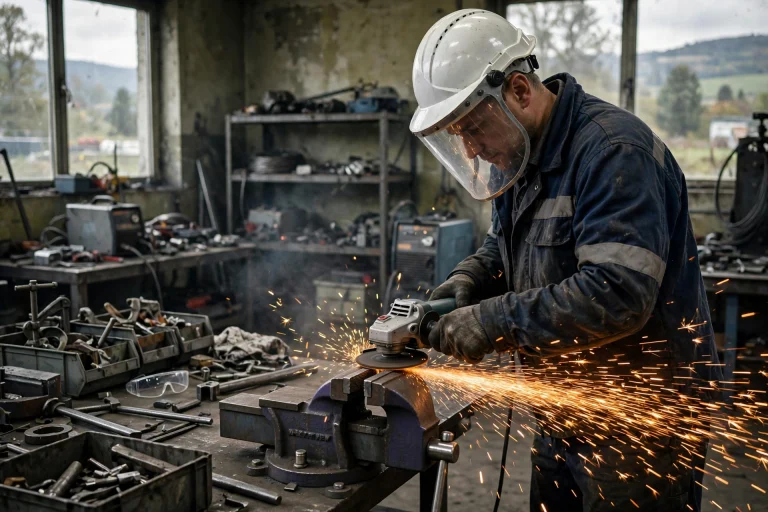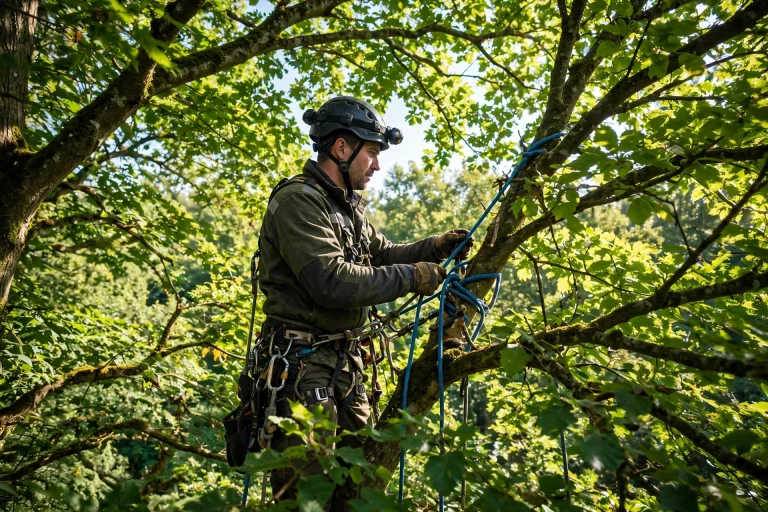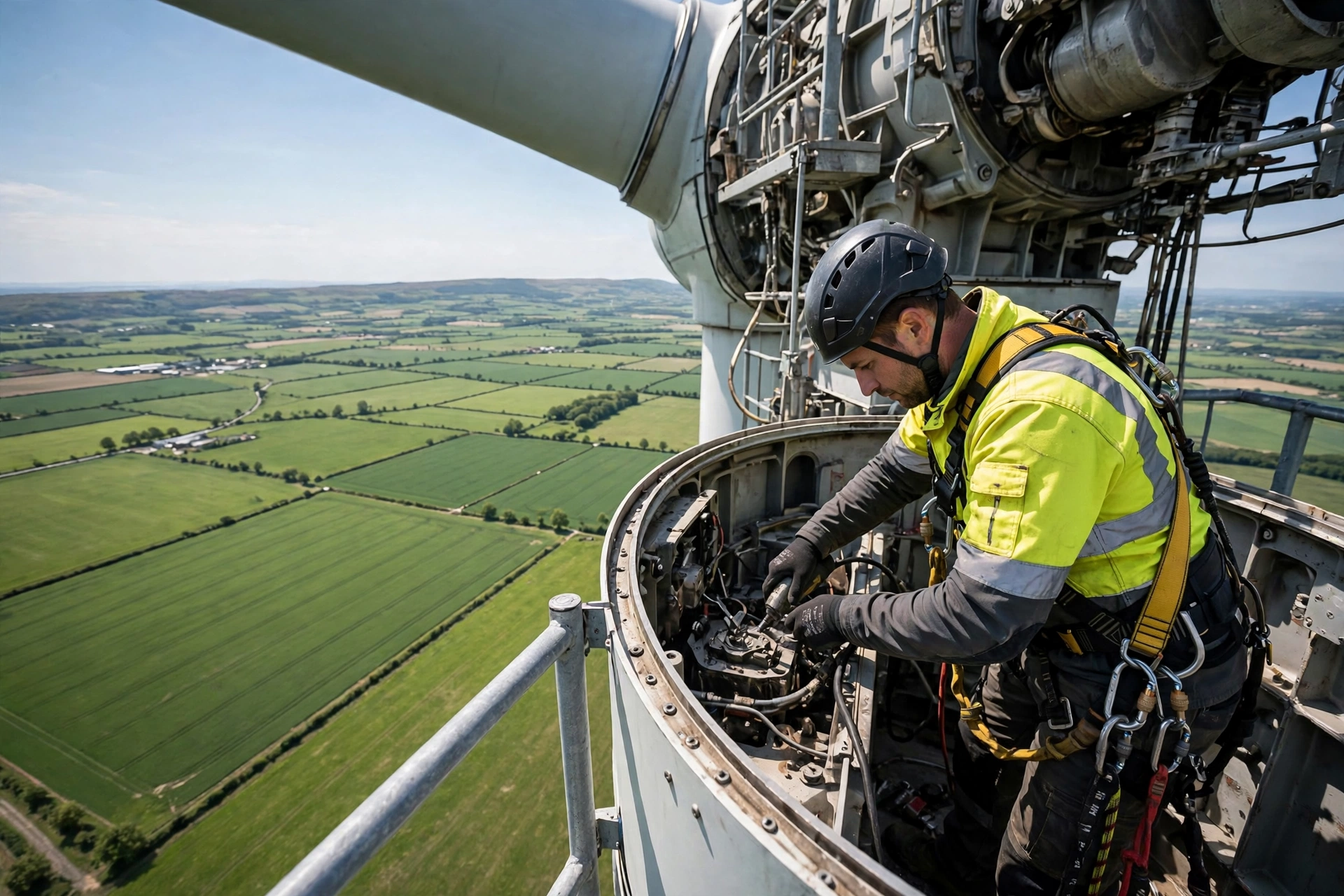
A wind turbine technician helmet is, in general terms, a climbing-style industrial helmet worn for work at height on wind turbines, where the risks include falling from the tower, falling tools, and working inside a cramped nacelle. It is lighter and closer-fitting than a traditional hard hat, with a chin strap that keeps it on in strong wind and a design that works with a harness, a headlamp, and ear protection.
Wind turbine technicians climb towers that can be many storeys tall, work on the blades and in the nacelle at the top, and spend long days outdoors in wind, rain, and cold. Some work is done onshore, some offshore, where the conditions are harder still. This guide explains what makes a wind turbine helmet different, what features it needs, and how it fits into the safety system for work at height.
Why Is Wind Turbine Work Different from Other Industrial Jobs?
The first difference is height. A technician climbs a ladder inside the tower, often for a long way, and then works at the top with the blades turning nearby. A dropped tool or a slip can have serious consequences, so everything the technician wears and carries is chosen with height in mind. The helmet must stay on during the climb and while working, which is why a chin strap is not optional.
The second difference is the weather. Turbines are built where the wind blows, so technicians work in strong wind, rain, and cold for much of the year. A helmet must stay put in a gust, keep rain out of the eyes, and work with warm clothing and gloves. Offshore, salt spray and sea wind add to the challenge, and the helmet must cope with salt and damp without corroding or weakening.
Space is the third difference. The nacelle at the top of a turbine is cramped, full of machinery, and often hot. A bulky helmet would catch on equipment and make the work harder. A close-fitting helmet with a low profile is easier to move in, and it is less likely to snag on bolts, cables, and pipes in a tight space.
What Features Does a Wind Turbine Technician Helmet Need?
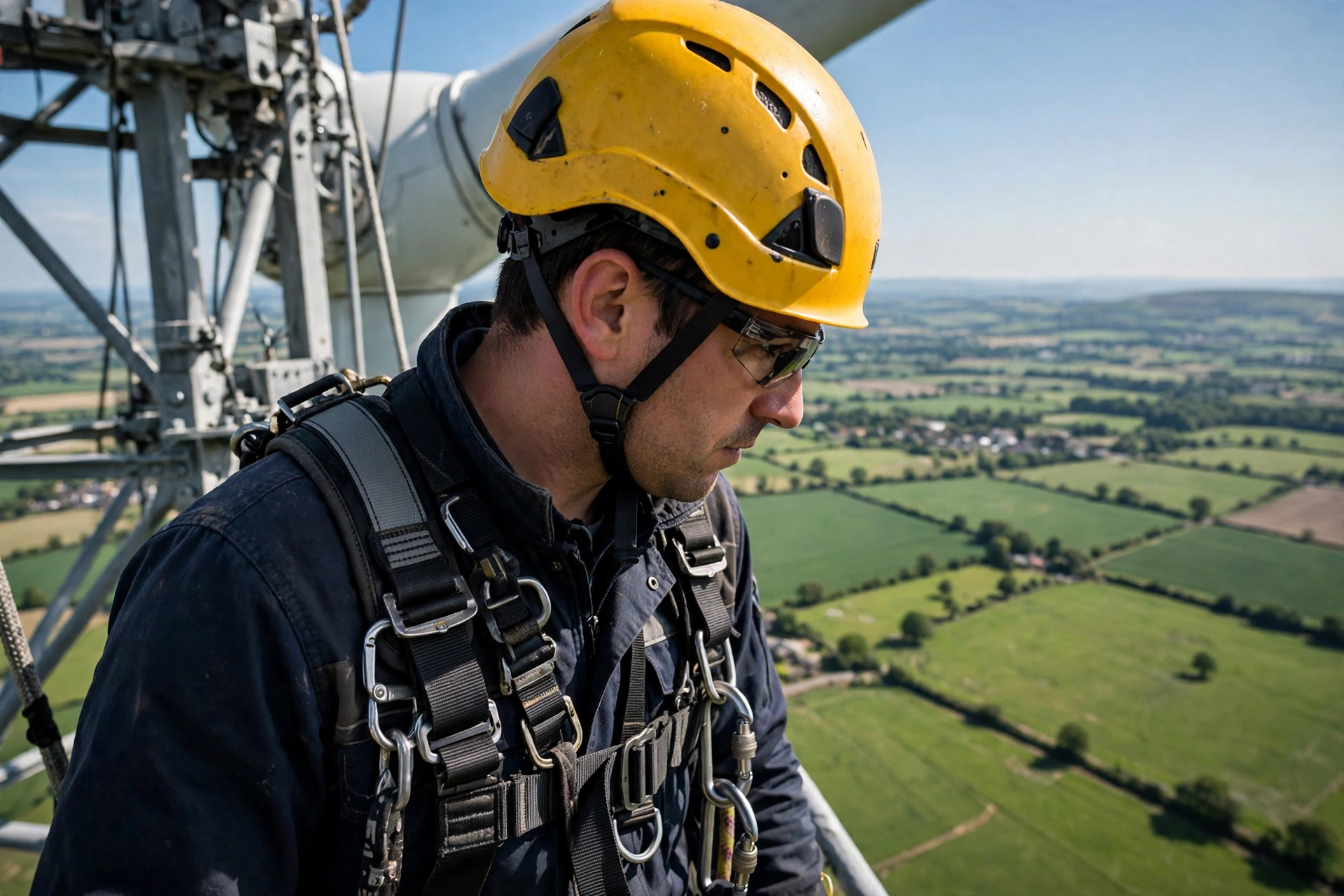
The shell should be strong and smooth, able to protect against a knock on steelwork or a falling tool. Climbing-style helmets are often made with a different kind of liner from a traditional hard hat, designed to protect against impacts from the side as well as from above, which matters when moving around in a cramped nacelle. The shell should also resist sun and weather damage.
A chin strap is essential, and on a wind turbine helmet it is usually a four-point strap that holds the helmet firmly from several directions. The strap should be easy to adjust with gloves on and should stay fastened through the whole climb and the work at the top. Some helmets also have a rear adjustment dial that can be turned with one hand.
Ventilation matters, because climbing a tower is hard physical work and a hot helmet becomes unbearable. Vents let air move through the helmet, though on offshore sites some technicians prefer vents that can be closed to keep out salt spray. A headlamp is almost always needed inside the tower and the nacelle, so the helmet should have clips or a bracket that holds a lamp securely. Slots for ear protection are also common.
How Does the Helmet Work with Other Safety Gear?
A wind turbine helmet is part of a system that includes a full-body harness, a lanyard, and often a fall-arrest device for the climb. The helmet must sit comfortably with the harness straps and must not catch on the lanyard or on the ladder safety system. Technicians check the whole system together before a climb, not piece by piece.
Ear protection is often needed near the gearbox and generator inside the nacelle, and the helmet should accept ear defenders without pushing the helmet out of position. Eye protection may also be needed for some jobs, such as grinding or working with hydraulic fluid. A helmet that works with goggles or a face shield is therefore useful.
Communication matters on a turbine, where the team may be spread between the ground, the tower, and the nacelle. Some helmets are set up to work with a radio headset or an intercom, so the technician can stay in touch without removing the helmet. Any such fitting should be made for the helmet, so it does not weaken the shell.
What Rules Apply to Helmets on Wind Turbines?
Wind turbine work is governed by strict rules for working at height, and in general terms a helmet with a chin strap is required whenever a technician is climbing or working on the turbine. The rules cover the type of helmet, how it should be fitted, and when it should be inspected and replaced. Training for turbine technicians covers helmet use as part of the wider height-safety course.
Rescue training is part of the job too. Technicians are trained to rescue a colleague from the tower or the nacelle, and the helmet is part of that picture: it must stay on during a rescue and must not get in the way of the rescue equipment. Regular drills keep these skills fresh.
If you are interested in how helmets manage impacts, reading about what MIPS is for helmets is a useful background read. It explains a technology used in many modern helmets and shows how helmet design has moved beyond a simple hard outer shell.
How Should a Wind Turbine Helmet Be Looked After?
Inspect the helmet before every climb. Look for cracks, dents, and worn areas on the shell, and check the chin strap, the buckle, and the headlamp clips. Salt, dust, and grease can hide damage, so clean the helmet before inspecting it. If anything is wrong, report it and use a different helmet.
Clean the shell with mild soap and water and clean or replace the pads and sweatband regularly. Avoid strong solvents and never paint the shell unless the maker says it is safe. Store the helmet in a clean, dry place out of direct sun, and keep it in a bag that protects it from knocks when it is carried to site.
Replace the helmet after a hard impact, when it shows signs of wear, or when it reaches the end of its expected service life. A helmet that has been dropped from height should be taken out of service, even if it looks fine. The climb is hard enough without wondering whether your helmet is still doing its job.
Frequently Asked Questions
Q: Why do wind turbine technicians wear a climbing-style helmet?
A: In general terms, it fits closely, protects against side impacts in a cramped nacelle, and has a chin strap that keeps it on during the climb and in strong wind.
Q: Is a chin strap required on a wind turbine helmet?
A: In general terms, yes. A chin strap is required for work at height on a turbine, so the helmet stays on during the climb and while working at the top.
Q: Can a normal hard hat be used on a wind turbine?
A: In general terms, a climbing-style helmet is preferred, because a normal hard hat may not stay on in wind, may not protect against side impacts, and may not work well with a harness and headlamp.

Olivia
Writer at Helmet Today, covering helmet reviews, fit and riding safety.