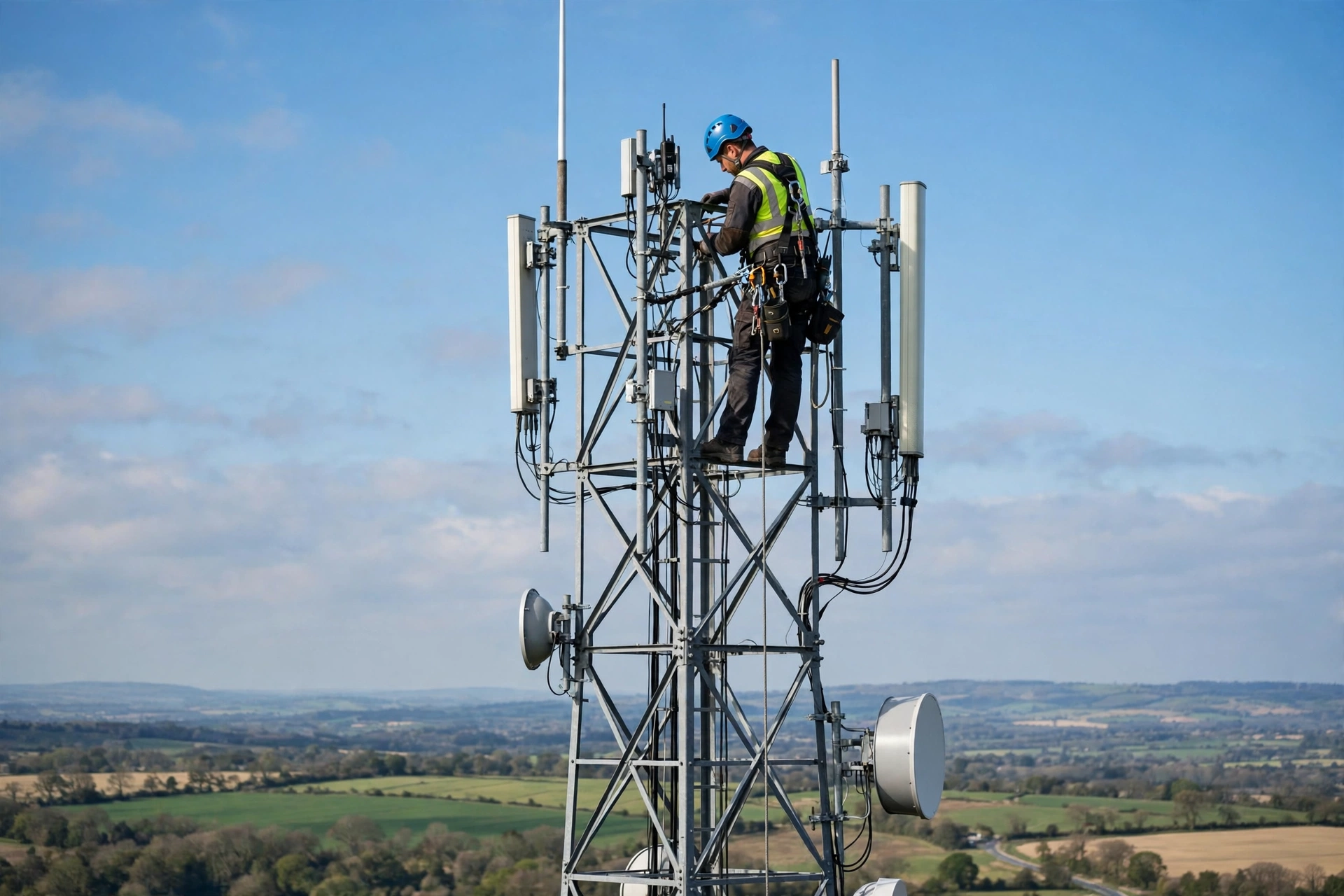
A telecom tower climbing helmet is, in general terms, a lightweight climbing-style helmet worn by the technicians who climb masts and towers to install and maintain antennas, dishes, and cables. It protects against falling tools, knocks on steelwork, and slips at height, and it stays on in wind thanks to a secure chin strap. It is built for climbing, not for ground-level site work, and that shapes every part of its design.
Telecom towers range from short rooftop masts to tall lattice towers and monopoles in open countryside. Technicians climb them in all weathers, carrying tools and equipment, and work at the top with antennas and feeders while the tower sways gently in the wind. This guide explains what a telecom tower climbing helmet is, what features it needs, and how it fits into the safety system for tower work.
What Makes Telecom Tower Work Different?
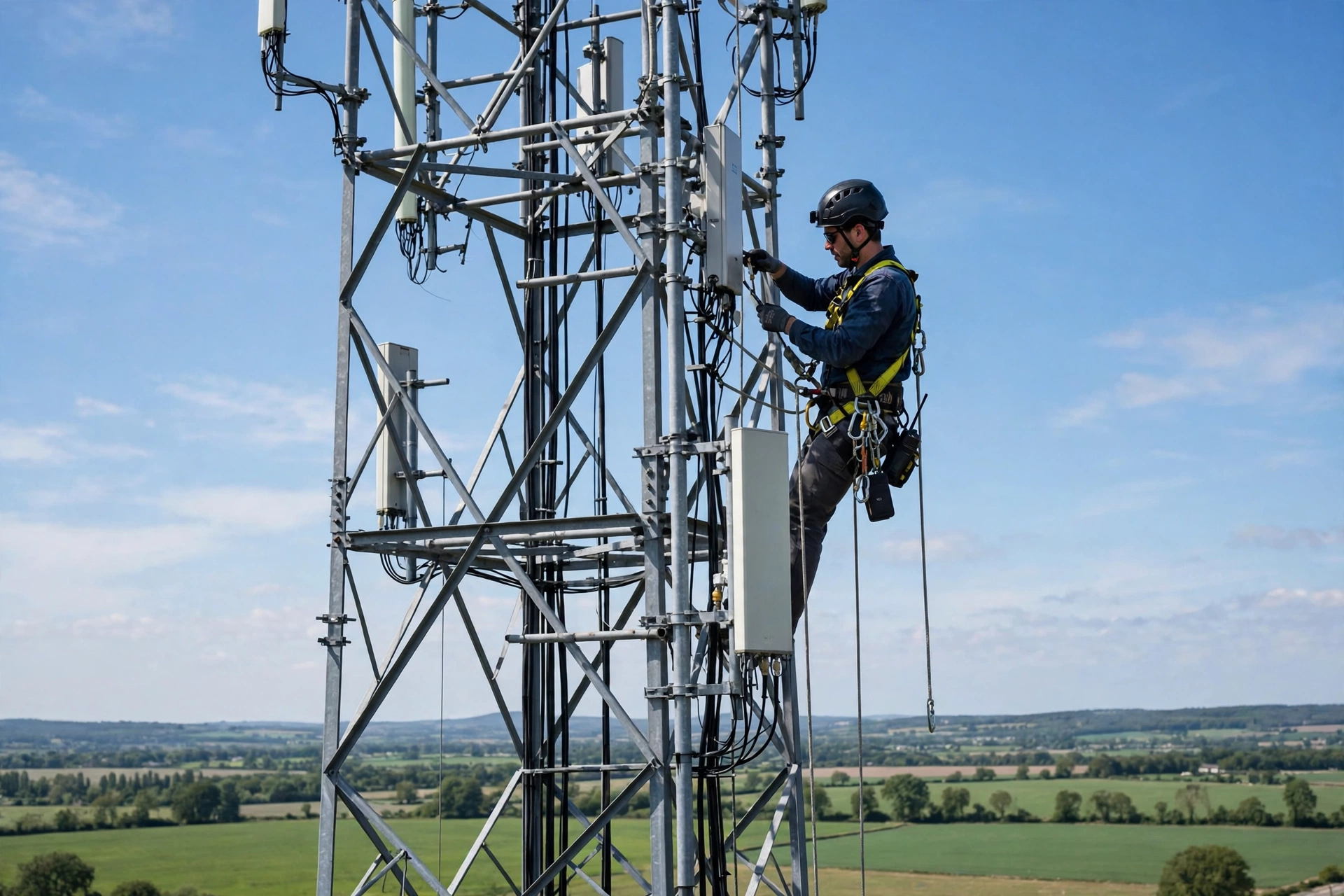
Height is the defining feature of tower work. A technician may climb for a long way on a fixed ladder, with only a fall-arrest system between them and the ground. Every movement is planned, every tool is tethered, and the helmet is part of a system that includes a harness, a lanyard, and a rescue plan. A helmet that falls off during a climb is not just lost — it becomes a falling object that can injure people below.
Wind is a constant factor on a tower. The higher the climb, the stronger the wind, and a gust can catch a loose helmet or make it hard to keep balance. A close-fitting helmet with a firm chin strap is essential, and the helmet should not have a wide brim that catches the wind. Technicians often stop work when the wind gets too strong, under rules set for the site and the task.
Electrical hazards are another feature of tower work. Antennas transmit radio signals, and some towers carry power lines or sit near them. A helmet used on a tower should be made from materials that do not conduct electricity and should have no exposed metal parts. Workers are trained on the safe distances for each type of antenna and must follow them at all times.
What Features Does a Telecom Tower Climbing Helmet Need?
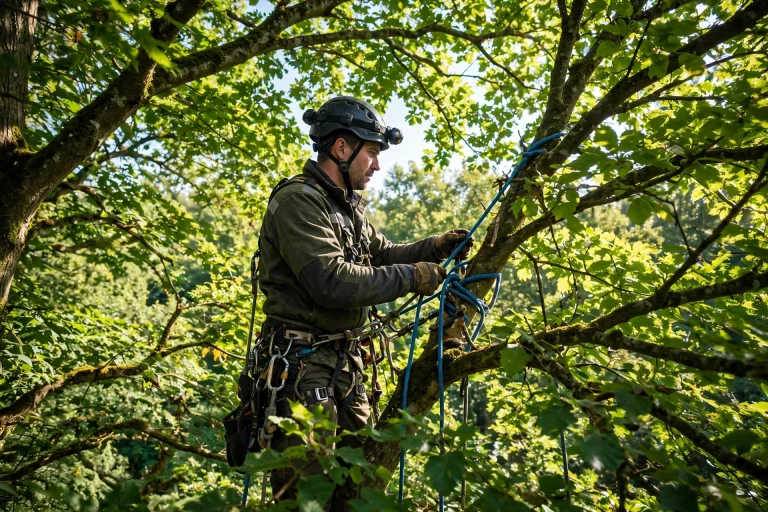
The shell should be light, strong, and close-fitting, with a low profile that does not snag on steelwork, cables, or antenna brackets. Climbing-style helmets are designed to protect against impacts from the side as well as from above, which matters when moving around a crowded tower top. The shell should also stand up to sun and weather, since tower work is almost always outdoors.
A four-point chin strap is standard on a tower climbing helmet. It holds the helmet firmly from several directions, so it stays put when the wearer looks up, bends down, or is caught by a gust. The strap should adjust easily with gloves on and should fasten securely every time. A rear adjustment dial helps fine-tune the fit before the climb starts.
Ventilation matters because climbing is hard work, and a hot, sweaty helmet is distracting at height. Vents let air through the helmet, though they should be designed so they do not let in rain or let small objects in. A headlamp is often needed for work inside equipment cabinets or for early starts, so the helmet should have clips that hold a lamp firmly. Slots for ear protection are useful too, though tower work is usually quieter than many industrial jobs.
How Does the Helmet Work with Climbing Safety Gear?
The helmet works together with a full-body harness, a fall-arrest lanyard, and a climbing system that runs up the tower. Before a climb, the technician checks the helmet, the harness, and the lanyard as a set, making sure nothing catches, rubs, or gets in the way. The helmet must sit comfortably with the harness straps and must not press on the neck when the wearer looks up.
Tool tethering is part of the same system. Every tool the climber carries is attached to the harness or the person, so nothing can fall. The helmet itself may have clips or a place to attach a lamp, but nothing should be taped or glued to the shell in a way that could weaken it or come loose and fall.
Rescue is planned before every climb. If a climber is injured or stuck, a colleague must be able to reach them and bring them down, and the helmet must stay on through the rescue. Rescue drills are a regular part of tower training, and the helmet is checked as part of the rescue kit.
What Rules Apply to Helmets on Telecom Towers?
Tower work is governed by strict rules for working at height, and in general terms a climbing helmet with a chin strap is required for anyone climbing a tower or working at height on it. The rules cover the type of helmet, how it should be fitted, and how often it should be inspected and replaced. Training for tower climbers covers helmet use as part of the wider height-safety and rescue course.
Each climb starts with a check of the weather, the tower, and the kit. If the wind is too strong, if the kit is damaged, or if the climber is unwell, the climb is postponed. This discipline is part of why tower work, though high risk, is carried out safely day after day. The helmet rules are not paperwork — they are followed on every climb.
If you want to understand more about how helmets protect the head, reading about what MIPS is for helmets is a useful background read. It explains one of the technologies used in modern helmets and helps to show how a climbing helmet is more than just a hard shell.
How Should a Telecom Tower Helmet Be Looked After?
Inspect the helmet before every climb. Look for cracks, dents, and worn areas, and check the chin strap, buckle, and headlamp clips. Clean off dust and dirt before inspecting, so damage is not hidden. If anything looks wrong, use a different helmet and report the problem.
Clean the shell with mild soap and water and clean or replace the pads regularly. Avoid strong solvents and never paint the shell unless the maker says it is safe, because chemicals can weaken the material. Store the helmet in a clean, dry place out of direct sun, in a bag that protects it from knocks during transport.
Replace the helmet after a hard impact, when it shows signs of wear, or when it reaches the end of its expected service life. A helmet dropped from a tower should be taken out of service, even if it looks undamaged. At height, there is no room for doubt about the kit you are wearing.
Frequently Asked Questions
Q: Why do telecom tower climbers wear a climbing helmet?
A: In general terms, it fits closely, protects against side impacts on steelwork, and has a chin strap that keeps it on during the climb and in strong wind.
Q: Is a normal hard hat enough for tower climbing?
A: In general terms, no. A normal hard hat may not stay on in wind, may not protect against side impacts, and may not work well with a harness, a headlamp, and a fall-arrest system.
Q: Do tower climbers need a headlamp on their helmet?
A: In general terms, a headlamp is often needed for work in cabinets or early starts, so most tower helmets have clips that hold a lamp securely.

Olivia
Writer at Helmet Today, covering helmet reviews, fit and riding safety.