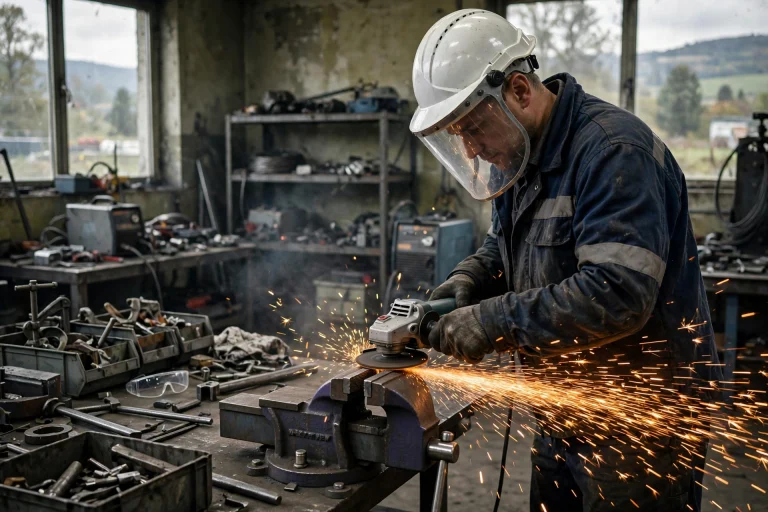
A port and dock worker helmet is, in general terms, an industrial hard hat worn by the people who load and unload ships, drive dock vehicles, and work among containers, cranes, and warehouses. It protects against falling cargo, knocks from moving equipment, and slips on a busy dockside. On a port, the helmet is part of the high-visibility kit that keeps workers seen and safe among machines many times their size.
Ports are among the busiest industrial workplaces. Container cranes lift loads high overhead, straddle carriers and forklifts move constantly, trucks come and go, and ships are loaded around the clock. Much of the work happens outdoors, in all weathers and often at night. This guide explains what a port and dock worker helmet is, what features it needs, and how it fits into the safety rules of a working port.
What Makes Port and Dock Work Different?
Scale is the first thing that strikes a visitor to a port. Containers are stacked several high, cranes tower over the quayside, and the vehicles are enormous. A worker on foot is small beside them, so being seen is as important as being protected. A brightly coloured helmet, high-visibility clothing, and clear walkways all help drivers spot people on foot.
Overhead lifting is a constant feature of dock work. Containers, pallets, and pieces of cargo are lifted and swung overhead all day, and a load that slips or a twistlock that fails can drop objects from height. The helmet is the last line of defence in that situation, which is why it is worn whenever workers are in the operational areas of the port.
Weather and surface conditions add to the risk. Docks are exposed to wind, rain, and sea spray, and the quayside can be slippery. A helmet must stay on in wind, keep rain out of the eyes, and work with the rest of the worker’s kit, including ear protection for the noise of cranes, vehicles, and ships’ engines.
What Features Does a Port and Dock Worker Helmet Need?
The shell should be hard and smooth, able to spread the force of a falling object or a knock against a container, a vehicle, or a crane structure. A short peak at the front shades the eyes and keeps rain and spray off the face. The shell should stand up to sun, salt air, and knocks from the daily work of the dock.
Inside, the suspension holds the shell away from the head and absorbs some of the force of an impact. It should adjust to fit snugly, and the padding should stay comfortable through a long shift. A chin strap is important on the dock, where wind off the water can be strong and where a worker bends and climbs around containers and vehicles. The strap should fasten easily, even with gloves on.
Attachments are often needed. Slots for ear defenders are common, because much of the dock is noisy. A lamp bracket can help during night shifts, and a face shield may be needed for cutting or grinding work. High-visibility colours, usually yellow, orange, or white, help drivers spot workers, and reflective strips on the helmet help at night. Some ports use helmet colours to show a worker’s role, though this varies from port to port.

How Do Helmets Fit into Port Safety Rules?
Ports run on strict safety rules, and in general terms a helmet is required in the operational areas of the port, including the quayside, the container yard, and the warehouses. The rules cover who must wear a helmet, where it must be worn, and how it should be fitted. Inductions for new workers and visitors explain the helmet rules along with the traffic routes, the safe walkways, and the alarm procedures.
Traffic management is a big part of port safety. Pedestrians and vehicles are kept apart wherever possible, with marked walkways and crossings. A helmet does not replace these controls, but it protects the worker if something goes wrong. Supervisors check that helmets are worn correctly, and workers are expected to look out for each other on a busy quayside.
Visitors to the port, such as ship’s crew, inspectors, or delivery drivers, are given a helmet and told where it must be worn before they are allowed into operational areas. Nobody walks around a working container terminal without the right kit and a briefing on where it is safe to go.
What Should Dock Workers Check Before a Shift?
Before each shift, check the helmet for cracks, dents, and faded or brittle patches on the shell. Check the suspension, the chin strap, and the buckle, and make sure any ear defender fittings are secure. Salt and dust can hide damage, so wipe the helmet clean before inspecting it. If anything looks wrong, report it and get a replacement.
Clean the helmet with mild soap and water and clean or replace the sweatband regularly. Avoid strong solvents and never paint the shell unless the maker says it is safe, because chemicals can weaken the material. Store the helmet in a clean, dry place out of direct sun when it is not in use, rather than leaving it in a vehicle cab or a locker full of loose tools.
If you are curious about helmet technology in general, reading about what MIPS is for helmets is a useful starting point. It explains one of the systems makers use to help a helmet cope with angled impacts, which is relevant to any helmet worn in a busy industrial workplace.
How Long Does a Port and Dock Worker Helmet Last?
A dock worker’s helmet does not last forever. Sun, salt air, heat, and daily wear slowly weaken the shell and the suspension. Ports usually set a service life for helmets in general terms, and workers are expected to replace their helmet when it reaches that age or sooner if it is damaged. The maker’s guidance and the port’s rules together set the replacement schedule.
Keeping track of a helmet’s age helps. Some helmets carry a date mark inside the shell, and some ports keep a record of when each helmet was issued. Workers should also keep their own note of any impacts their helmet has taken. A helmet that has protected you in a real incident has done its job and should be replaced.
Finally, a helmet is only one part of staying safe on the dock. It works alongside training, traffic rules, marked walkways, and other protective gear such as safety boots, gloves, and ear protection. Wearing it correctly, checking it daily, and replacing it when needed are simple habits that help keep everyone on the port safer.
Frequently Asked Questions
Q: Do all port and dock workers need a helmet?
A: In general terms, yes. A helmet is required in the operational areas of a port, including the quayside, the container yard, and the warehouses.
Q: Why is a brightly coloured helmet important on a dock?
A: In general terms, a bright helmet with reflective strips helps crane and vehicle drivers spot workers on foot among containers and machinery, especially at night.
Q: When should a dock worker helmet be replaced?
A: In general terms, after a hard impact, when it shows cracks or wear, or when it reaches the end of its expected service life under the port’s rules.

Olivia
Writer at Helmet Today, covering helmet reviews, fit and riding safety.