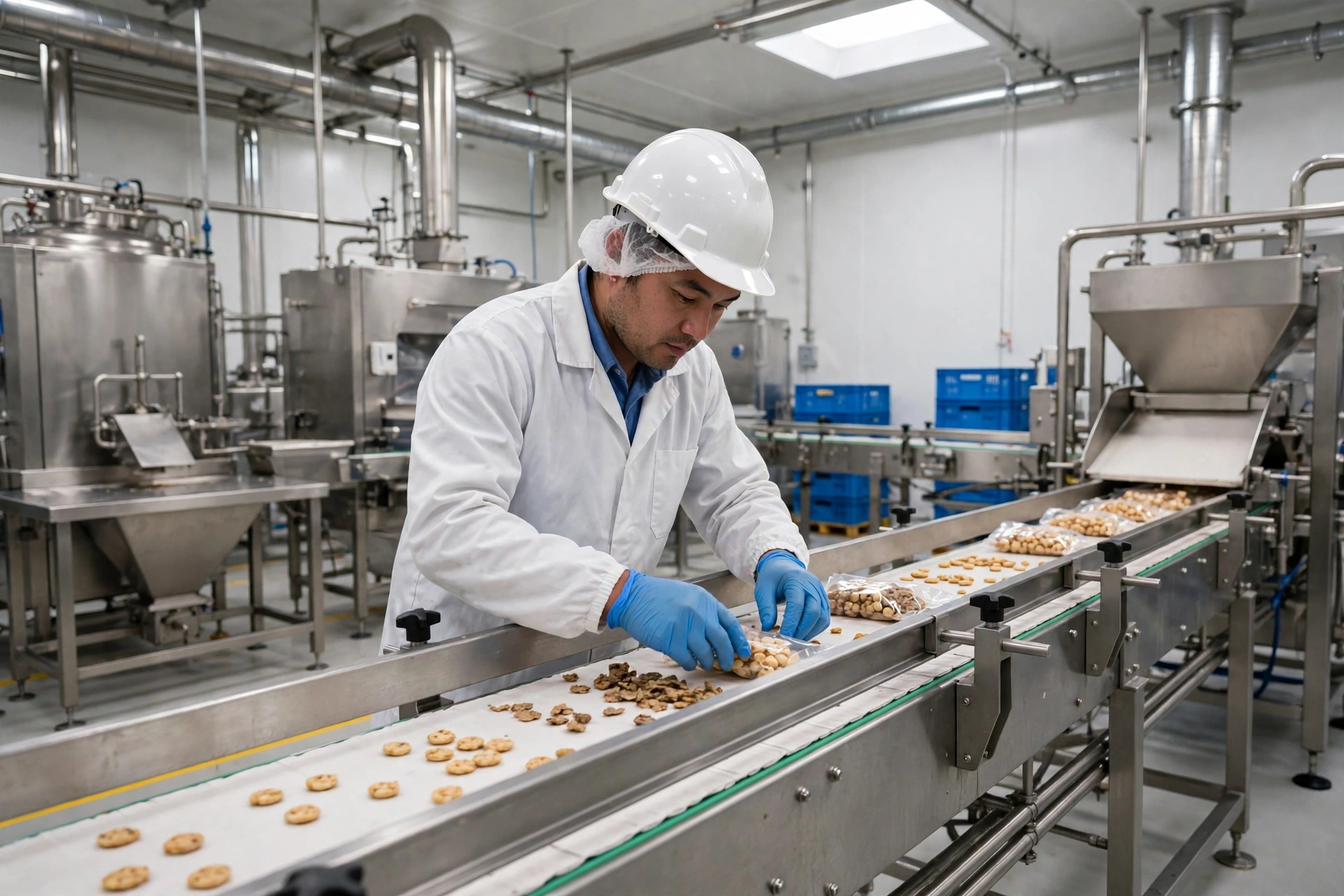
A food processing site helmet is an industrial safety helmet worn to protect workers from falling objects, bumps, and overhead hazards in a factory where food is made, packed, or stored — and in general terms, it is required wherever overhead work or moving loads create a risk to the head. It looks much like a hard hat used on a building site, but it must also suit the hygiene rules of a food factory, where anything that could fall into food or harbour dirt is a problem. That combination of impact protection and food safety is what makes it different.
Food processing sites are busy places: forklifts move pallets, conveyors run overhead, maintenance staff work on raised platforms, and ingredients arrive in bulk. This guide explains what a food processing site helmet is, when it is needed, what makes it suitable for a food environment, and how to choose and care for one.
When Is a Helmet Needed in a Food Processing Site?
A helmet is needed in any area of a food processing site where there is a risk of falling objects or head contact with fixed structures. That includes warehouses where pallets are stacked high, areas under mezzanines and overhead conveyors, loading bays, and anywhere maintenance work is going on above head height. If a forklift is placing goods on racking, anyone walking nearby should be wearing a helmet.
Many sites mark helmet zones clearly, with signs at the entrance to each area. The rule is simple: if you enter a signed helmet area, wear a helmet, even if you are only passing through for a few minutes. Accidents do not wait for you to finish your errand, and a short visit carries the same risk as a long shift.
What Makes a Helmet Suitable for a Food Processing Site?
A food processing helmet must first protect against impact, just like any industrial helmet, with a hard shell and a harness that holds it firmly on the head. It should meet the industrial helmet standard recognised in your country. Beyond that, it needs to suit a hygiene-controlled environment: a smooth, easy-to-clean shell, no fabric parts that trap dirt, and no loose fittings that could fall off.
Colour often matters on a food site. Many factories use different helmet colours to show who someone is — for example, one colour for production staff, another for maintenance, and another for visitors. This helps supervisors spot at a glance whether someone is in the right area and wearing the right protection. It also makes it easy to tell a visitor’s helmet from a regular worker’s.
How Do Helmets Fit with Food Hygiene Rules?
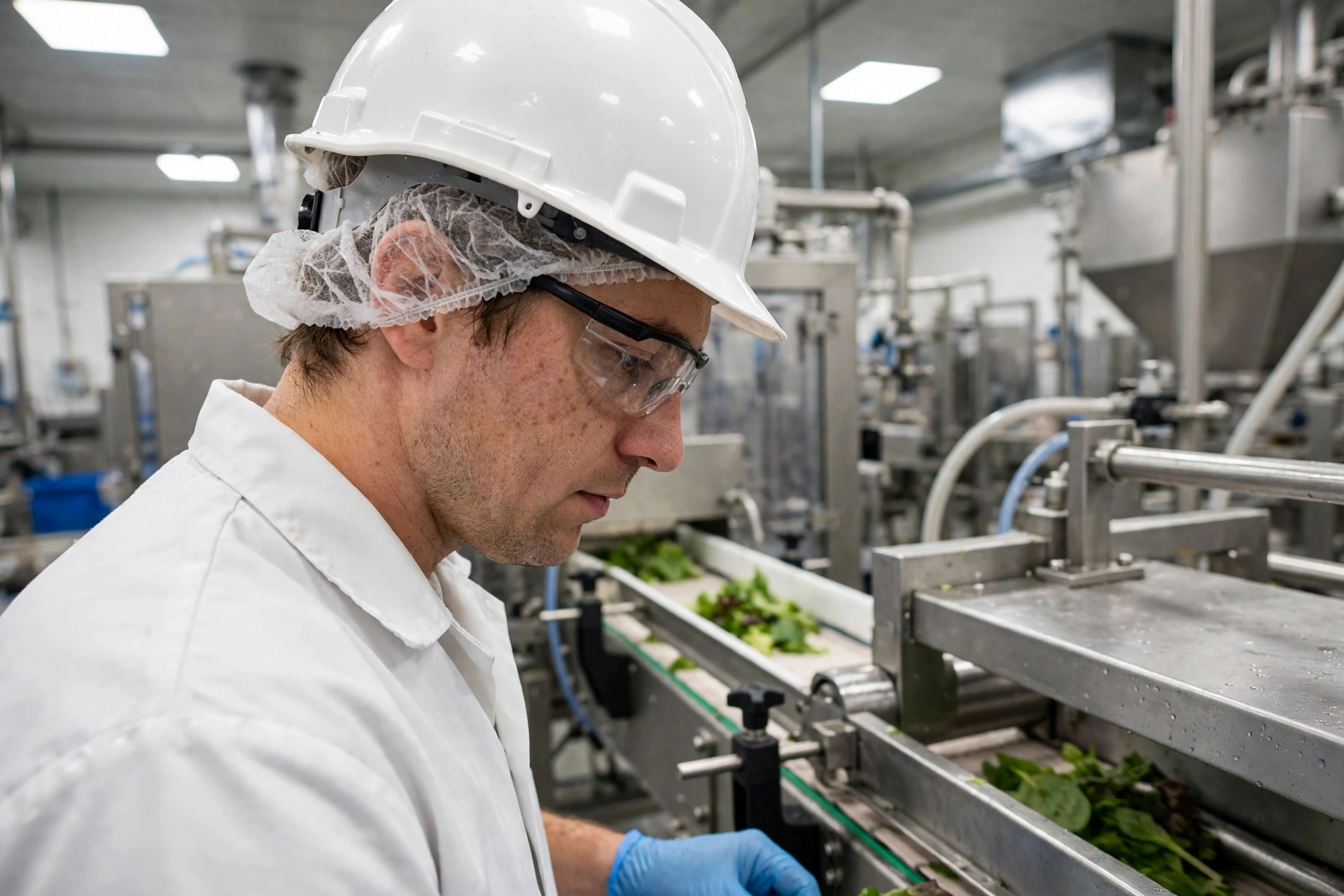
Helmets on a food site must work alongside hygiene rules, not against them. Hairnets are usually worn under the helmet, because loose hair is a contamination risk, and the helmet’s harness should sit over the hairnet without pushing it out of place. The helmet itself should be clean: wipe the shell before entering a production area, and never place a helmet on a work surface, conveyor, or food contact area.
Storage matters too. Helmets should be kept on a rack or hook in a designated area, never on the floor or on top of machinery where they can collect dirt. Each worker should have their own helmet, because sharing spreads dirt and makes it harder to keep track of damage and wear. If a helmet is dropped on the floor in a production area, clean it before putting it back on.
Some sites require helmets to be a particular colour or to carry no stickers or markings that could peel off. Stickers can lift, crack, and shed small pieces, which is why many food factories ban them on helmets used in production areas. If you need to mark a helmet, use the method your site allows, such as a coloured shell or a printed label that stays firmly attached.
How Should a Food Processing Helmet Fit and Be Checked?
A helmet should sit level on your head, covering the forehead without sliding down over your eyes. The harness should be adjusted so the helmet feels snug and stays in place when you bend over a line or look up at racking. If it wobbles when you move, tighten the harness or try a different size. A helmet that slips forward blocks your view of the work in front of you, which is a hazard in itself on a fast-moving line.
Check the helmet before every shift. Look for cracks in the shell, especially around the rim and the top, and check the harness for fraying, broken clips, or a sweatband that has come loose. If the shell has faded or gone brittle, it may have been weakened by sunlight or chemicals, and it should be replaced. A helmet that has taken a hard knock should be taken out of use, even if the damage is not easy to see.
Cleaning is part of the check. Wash the shell with mild soap and water, and let it air dry away from direct heat. Do not use solvents, strong cleaners, or abrasive pads, because they can damage the shell. If you are learning how helmets handle different kinds of impact, reading about what MIPS is for helmets can help you understand one of the technologies used in modern helmet design.
What Should Visitors and Contractors Wear on a Food Site?
Visitors and contractors must follow the same helmet rules as regular staff whenever they enter a helmet zone. Many food sites keep a supply of clean visitor helmets at the entrance, often in a bright colour so visitors are easy to spot. A visitor should be given a helmet that fits, shown how to adjust it, and told which areas require it before they walk onto the floor.
Contractors doing maintenance or installation work may need their own helmets, and the site should check that they meet the required standard before work starts. A contractor’s helmet should be clean and in good condition, just like a staff helmet, because the hygiene rules apply to everyone in the building, not only to the people on the payroll.
Supervisors have a role here too. If someone is seen in a helmet zone without a helmet, they should be stopped and reminded — politely but firmly — because one person ignoring the rule can encourage others to do the same. A site where everyone wears a helmet, from the manager to the newest visitor, is a site where the rule is taken seriously.
Frequently Asked Questions
Q: Do all workers in a food factory need a helmet?
A: No. Helmets are needed only in areas with overhead hazards, such as warehouses, loading bays, and maintenance zones. Office staff and workers on lines with no overhead risk usually do not need one.
Q: Can I wear a bump cap instead of a hard hat in a food plant?
A: In general terms, no. A bump cap protects against minor bumps but not against falling objects. Where the risk is a falling item, an industrial helmet is the right protection.
Q: How do I clean a helmet used in a food processing site?
A: Wipe the shell with mild soap and water, rinse, and let it air dry. Do not use solvents or abrasive cleaners, and store it on a rack away from food contact surfaces.

Olivia
Writer at Helmet Today, covering helmet reviews, fit and riding safety.