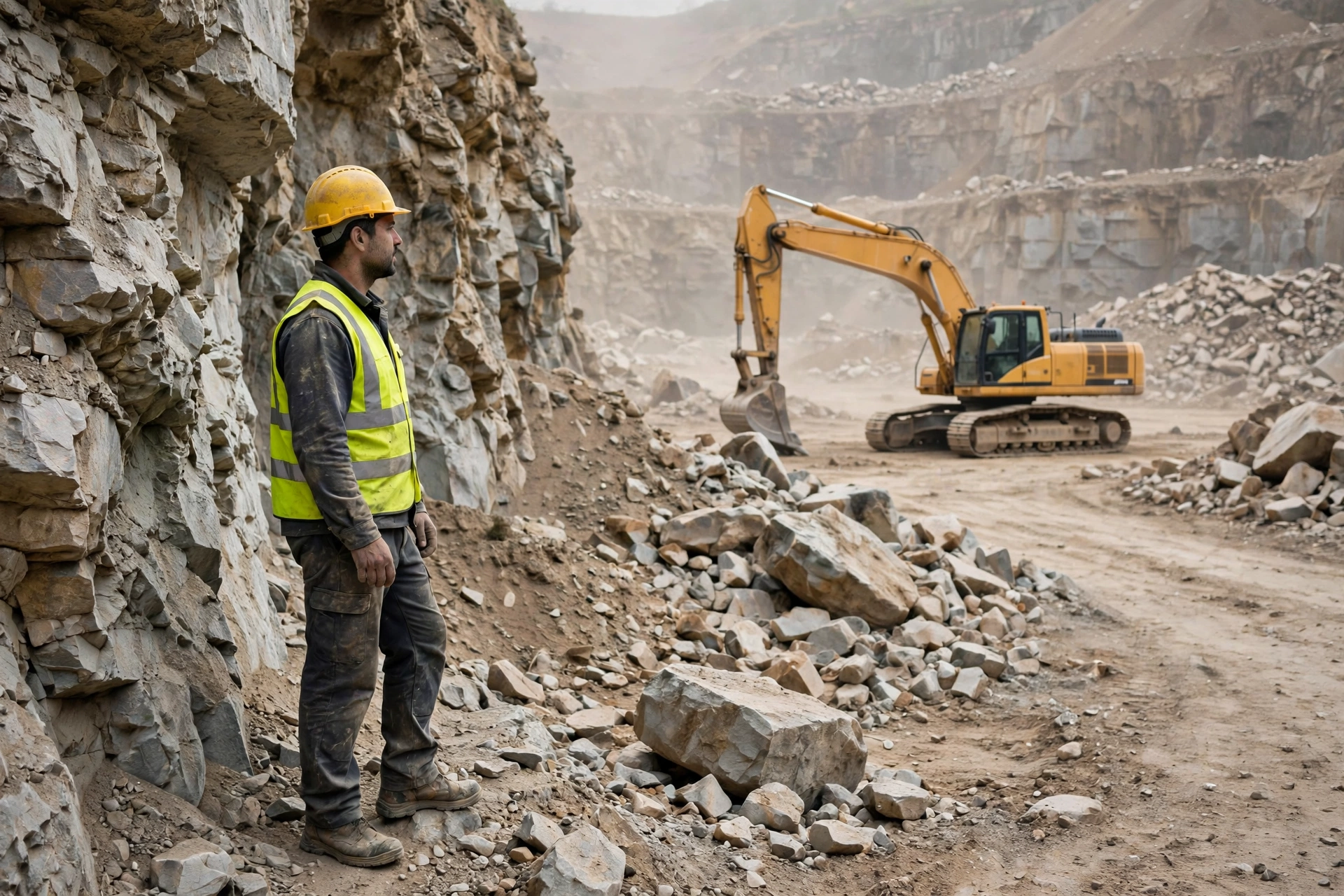
A quarry worker helmet is an industrial safety helmet worn to protect against falling rock, flying stone chips, and bumps from machinery in a quarry — and in general terms, it is required anywhere in the quarry where rock is being moved, broken, or loaded. Quarries are among the harshest workplaces for head protection: heavy rock faces, blasting, crushing plant, and huge loading machines all create hazards that a helmet must stand up to day after day.
A quarry combines the risks of a construction site with the risks of a mine, plus dust, noise, and rough ground. This guide explains what a quarry worker helmet is, what features it needs, when it must be worn, and how to keep it in working order in a tough environment.
What Hazards Does a Quarry Worker Helmet Protect Against?
The main hazard in a quarry is falling rock. Rock can come off a quarry face without warning, especially after rain, frost, or blasting, and even a small piece falling from height carries enough force to cause a serious head injury. A helmet spreads that force across the shell and the harness, reducing the impact on the skull.
Flying chips are another daily hazard. Drilling, cutting, and crushing stone throws small fragments through the air at speed, and a helmet with a brim helps deflect chips away from the head and face. Loading work adds its own risks: buckets, grabs, and conveyor parts move overhead, and a dropped tool or a loose bolt can fall from a machine.
What Type of Helmet Suits Quarry Work?
A standard industrial safety helmet is the usual choice for quarry work, with a hard shell and a strong harness. It should meet the industrial helmet standard recognised in your country. Many quarry helmets have a wide brim, which helps keep rain and falling debris off the face and neck, and gives extra protection against chips flying sideways.
Some quarry roles need a helmet with a chin strap. Anyone working at height on plant, climbing on a crusher, or working near a quarry face where a fall is possible should wear a helmet that stays on if they slip. A chin strap also helps in high wind on exposed benches, where a loose helmet can be blown off.
Accessories are often fitted to quarry helmets, and they need to be chosen carefully. Earmuffs are essential near crushers and drills, and they should clip firmly to the helmet without loosening the fit. A face shield or safety glasses protect the eyes from chips, and a lamp bracket can be useful for work in tunnels or enclosed plant areas. Every accessory adds weight, so keep the setup as simple as the job allows.
When Must a Helmet Be Worn in a Quarry?
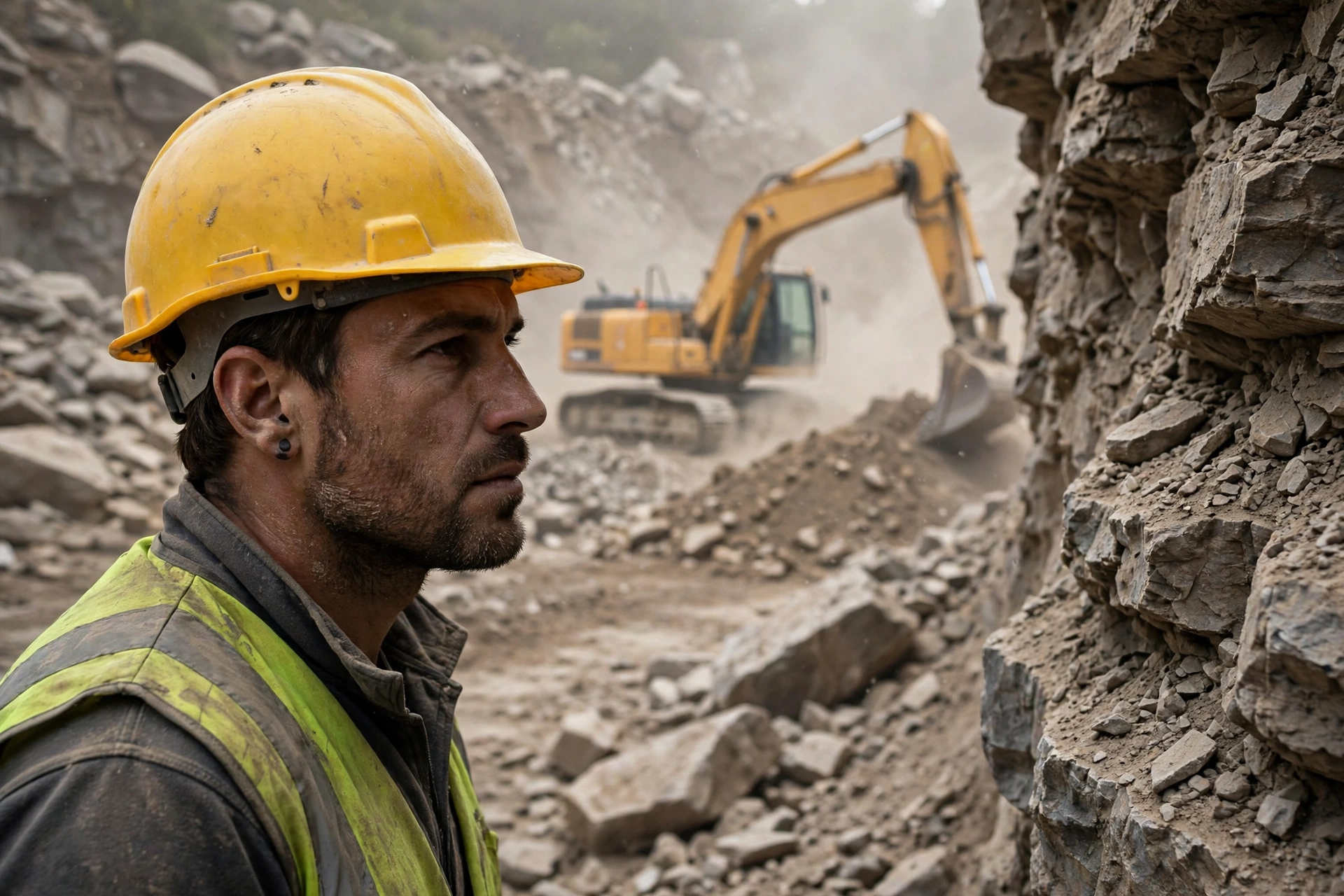
In most quarries, helmets are required everywhere outside the office and welfare buildings — the whole operational area is a helmet zone. That includes the quarry floor, the faces, the plant area, the stockpiles, and the haul roads. The reason is that hazards in a quarry are not confined to one spot: a rockfall can happen anywhere near a face, and a machine can pass anywhere on a haul road.
Drivers of large machines may be allowed to remove their helmet inside a closed cab, but they should put it back on before stepping out onto the ground. It is easy to forget this step when climbing down from a cab, so many sites make it a habit: helmet on before your feet touch the ground. Visitors must follow the same rule, and should be given a helmet and shown the helmet zones before they enter the site.
Blasting days carry extra rules. Before a blast, the area is cleared and everyone moves to a safe distance, but helmets are still worn in the muster areas and on the return to the face, because loose rock can still fall after the blast. Follow the shotfirer’s instructions and the site’s blasting procedure, and never re-enter a blasted area until it has been declared safe.
How Do Dust and Weather Affect a Quarry Helmet?
Quarry dust gets everywhere, including inside a helmet. Fine stone dust can clog ventilation slots, irritate the skin, and wear out the harness and sweatband faster than normal use would. Clean the helmet regularly — shake out dust, wash the shell with mild soap and water, and replace the sweatband when it becomes worn or uncomfortable. A clean helmet is more comfortable, and a comfortable helmet stays on.
Sun and heat are a challenge too. Quarries are open and exposed, and a dark helmet left in the sun can become very hot to wear. A light-coloured shell reflects more heat, and ventilation slots help air flow through the helmet. Take shade breaks where possible, and store the helmet out of direct sunlight when it is not being worn.
Rain and cold bring their own problems. A wide brim helps keep rain off the face, and a helmet that fits over a thin warm liner can be worn in cold weather — but check that the liner does not make the helmet sit too high or too loose. Never wear a bulky beanie under a helmet, because it changes the fit and reduces the protection the helmet offers.
How Should a Quarry Helmet Be Checked and Replaced?
Check the helmet before every shift. Look for cracks in the shell, especially around the rim and where accessories clip on, and check the harness for fraying, stretched straps, or broken clips. Quarry work is hard on helmets: they get knocked against steel, dropped on rock, and covered in dust, so damage shows up sooner than it would in a cleaner workplace.
Replace a helmet after any hard impact, including a rock strike or a fall from height, even if the shell looks undamaged. The liner and shell can be weakened in ways you cannot see, and a helmet that has already absorbed one impact may not protect as well next time. Follow the maker’s guidance on service life, and keep a record of when each helmet was issued if your site requires it.
Keep spare helmets available on site, so a damaged helmet can be swapped immediately rather than worn for one more shift. A worker with no spare may be tempted to keep using a cracked helmet, and that is exactly the situation a good store of spares prevents. If you are learning how helmets handle different kinds of impact, reading about what MIPS is for helmets can help you understand one of the technologies used in modern helmet design.
Frequently Asked Questions
Q: Do quarry visitors need to wear a helmet?
A: Yes. Visitors must wear a helmet in all operational areas of a quarry, and the site should provide a clean helmet that fits and explain the helmet zones before entry.
Q: Can a quarry worker wear a helmet with ventilation holes?
A: In general terms, yes, but dust can enter through the holes. Some workers prefer a solid shell or a helmet with a brim, and the shell should be cleaned regularly either way.
Q: How long does a quarry helmet last?
A: It depends on the conditions, but quarry helmets wear out faster than office-site helmets. Check before each shift, follow the maker’s guidance, and replace after any hard impact or visible damage.

Olivia
Writer at Helmet Today, covering helmet reviews, fit and riding safety.